Goodreads helps you follow your favorite authors. Be the first to learn about new releases!
Start by following Alan Light.

Showing 1-10 of 10
“She may have discovered how to solve the problem of aviation in music. What makes an aviator what he is? An aviator is a person who deals with getting heavier-than-air objects off the ground. She could do that, musically and emotionally. She could take a feeling and actually lift it off the ground, and it would stay there.”
― What Happened, Miss Simone?: A Biography
― What Happened, Miss Simone?: A Biography
“it’s a hymn of the heretic, a piyut [liturgical poem] of a modern, doubtful person.”
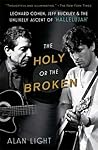
― The Holy or the Broken
― The Holy or the Broken
“There is something about a woman,' said comedian and activist Dick Gregory. “If you look at all the suffering that black folks went through, not one black man would dare to sing ‘Mississippi Goddamn.’ Not one black man would say what Billie Holiday did about being lynched [in “Strange Fruit”]-they wasn’t lynching women, they was lynching men, but it was women that talked about it, and nobody told them to talk about it. No manager going to tell you to talk about this, it’s just something inside them.”
― What Happened, Miss Simone?: A Biography
― What Happened, Miss Simone?: A Biography
“Hallelujah is a Hebrew word which means “Glory to the Lord.” The song explains that many kinds of hallelujahs do exist. I say all the perfect and broken hallelujahs have an equal value. It’s a desire to affirm my faith in life, not in some formal religious way, but with enthusiasm, with emotion. —Leonard Cohen
Whoever listens carefully to “Hallelujah” will discover that it is a song about sex, about love, about life on earth. The hallelujah is not an homage to a worshipped person, idol, or god, but the hallelujah of the orgasm. It’s an ode to life and love. —Jeff Buckley”
― The Holy or the Broken: Leonard Cohen, Jeff Buckley, and the Unlikely Ascent of "Hallelujah"
Whoever listens carefully to “Hallelujah” will discover that it is a song about sex, about love, about life on earth. The hallelujah is not an homage to a worshipped person, idol, or god, but the hallelujah of the orgasm. It’s an ode to life and love. —Jeff Buckley”
― The Holy or the Broken: Leonard Cohen, Jeff Buckley, and the Unlikely Ascent of "Hallelujah"
“Needless to say, the song ["Hallelujah"] was now a climax in every show [of the 2009 Leonard Cohen tour], received like holy scripture. It belonged in a category with seeing Bob Dylan sing "Like a Rolling Stone" or watching Bruce Springsteen perform "Born to Run"—it was an event that people simply wanted to witness, to say they had seen. It took on a power that had to do with the song's history first, its feeling second, and its details hardly at all. Every performance carried with it a sense of where this song had been, who had sung it,where and how every listener had first encountered it; it had reached a place where it was something to be experienced, rather than listened to.”
― The Holy or the Broken: Leonard Cohen, Jeff Buckley, and the Unlikely Ascent of "Hallelujah"
― The Holy or the Broken: Leonard Cohen, Jeff Buckley, and the Unlikely Ascent of "Hallelujah"
“Trained as a classical pianist, she was often called a jazz singer, but it was a label she deeply resented, seeing in it only a racial classification. She grudgingly accepted the popular nickname “the High Priestess of Soul” but gave it little significance. If anything, she claimed, she was a folk singer, and her dazzling, unpredictable repertoire—Israeli folk tunes, compositions by Bertolt Brecht and Kurt Weill, songs by the Bee Gees and Leonard Cohen and George Harrison, traditional ballads, jazz standards, spirituals, children’s songs—is perhaps unmatched in its range.”
― What Happened, Miss Simone?: A Biography
― What Happened, Miss Simone?: A Biography
“This world is full of conflicts and full of things that cannot be reconciled,” Cohen has said, “but there are moments when we can transcend the dualistic system and reconcile and embrace the whole mess, and that’s what I mean by ‘Hallelujah.’ That regardless of what the impossibility of the situation is, there is a moment when you open your mouth and you throw open your arms and you embrace the thing and you just say, ‘Hallelujah! Blessed is the name.’ . . . “The only moment that you can live here comfortably in these absolutely irreconcilable conflicts is in this moment when you embrace it all and you say, ‘Look, I don’t understand a fucking thing at all—Hallelujah!’ That’s the only moment that we live here fully as human beings.”
― The Holy or the Broken
― The Holy or the Broken
“If you’re striking at the heart of five thousand people, there’s more being plugged into you,” said Simone. “There’s more electricity coming from you, because you’re getting it from them and they’re getting it from you. It’s like when lightning strikes a town, or a hurricane or a tornado, it builds. If it’s getting ready to capture or to hurt thousands of people, it comes stronger as it goes through the oceans and the waves get bigger—it gets stronger all the time, because it’s been building wave by wave by wave all that time. That’s the way I think of myself.”
― What Happened, Miss Simone?: A Biography
― What Happened, Miss Simone?: A Biography
“It’s a rather joyous song,” Cohen said when Various Positions was released. “I like very much the last verse—‘And even though it all went wrong, / I’ll stand before the Lord of Song / with nothing on my lips but Hallelujah!”
― The Holy or the Broken
― The Holy or the Broken
“Though most cultural observers hadn't noticed it yet, everything was now in place for "Hallelujah" to sweep through the pop landscape. It was a song that had multiple strong, emotional connections with millions of listeners. Its mood was both fixed and malleable, universal and specific. It was familiar enough to resonate, obscure enough to remain cool. Though its most celebrated performer was gone forever, its mysterious creator had come back to the spotlight just in time.
After 2001, whether it signified an individual's solitude (human or monster or otherwise) or a population in mourning, "Hallelujah"—now far removed from Leonard Cohen's initial," rather joyous" intent—was established as the definitive representation of sadness for a new generation.”
― The Holy or the Broken: Leonard Cohen, Jeff Buckley, and the Unlikely Ascent of "Hallelujah"
After 2001, whether it signified an individual's solitude (human or monster or otherwise) or a population in mourning, "Hallelujah"—now far removed from Leonard Cohen's initial," rather joyous" intent—was established as the definitive representation of sadness for a new generation.”
― The Holy or the Broken: Leonard Cohen, Jeff Buckley, and the Unlikely Ascent of "Hallelujah"