Goodreads helps you follow your favorite authors. Be the first to learn about new releases!
Start by following J.R. Briggs.

Showing 1-22 of 22
“I end with a blessing from Larry Hine, Brennan Manning’s spiritual director, who delivered this benediction at Manning’s ordination service: May all of your expectations be frustrated, May all of your plans be thwarted, May all of your desires be withered into nothingness, That you may experience the powerlessness and poverty of a child, and can sing and dance in the love of God the Father, Son and Holy Spirit. Amen.”
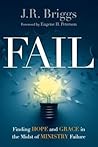
― Fail: Finding Hope and Grace in the Midst of Ministry Failure
― Fail: Finding Hope and Grace in the Midst of Ministry Failure
“Ministry flows out of being. In other words, we cannot export what we have not first imported.8”
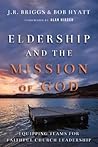
― Eldership and the Mission of God: Equipping Teams for Faithful Church Leadership
― Eldership and the Mission of God: Equipping Teams for Faithful Church Leadership
“The path of obedient, faithful ministry begins when we drop our roles as busy religious salespeople working for God and instead recapture our calling to live with him and, in turn, invite others into that life.2 Sadly, this is increasingly difficult because often what is measured and rewarded is quite the opposite.”
― Fail: Finding Hope and Grace in the Midst of Ministry Failure
― Fail: Finding Hope and Grace in the Midst of Ministry Failure
“Masks come off when the gospel is put on.”
― Fail: Finding Hope and Grace in the Midst of Ministry Failure
― Fail: Finding Hope and Grace in the Midst of Ministry Failure
“Leadership will “call the question” in your life: do you love God for God, or God as a means to an end? To put it another way, are you in love with him or are you seeing relationship with him as a necessary means to maintaining leadership and your reputation?”
― Eldership and the Mission of God: Equipping Teams for Faithful Church Leadership
― Eldership and the Mission of God: Equipping Teams for Faithful Church Leadership
“There is no circumstance, no trouble, no testing, that can ever touch me until, first of all, it has gone past God and past Christ, right through to me. If it has come that far, it has come with great purpose, which I may not understand at the moment.”
― Eldership and the Mission of God: Equipping Teams for Faithful Church Leadership
― Eldership and the Mission of God: Equipping Teams for Faithful Church Leadership
“don’t be swayed by degrees or past positions. See how people live and serve within your community before you give them a title, especially the title of elder. Let them prove themselves in your community of faith by being faithful with task-oriented jobs before moving them into ministry positions. Make sure they are servants before they become leaders.”
― Eldership and the Mission of God: Equipping Teams for Faithful Church Leadership
― Eldership and the Mission of God: Equipping Teams for Faithful Church Leadership
“Busyness is one of the pastor’s most effective tools of remaining at a safe relational and emotional distance.”
― Fail: Finding Hope and Grace in the Midst of Ministry Failure
― Fail: Finding Hope and Grace in the Midst of Ministry Failure
“It’s easy to trip and fall into a false dichotomy, believing that evangelism only occurs before conversion and discipleship only happens after it. It sounds all fine and good on the surface, but there’s one problem: we don’t see much evidence of that in the Gospels. It seems Jesus was discipling those who didn’t yet believe and also evangelizing those who already did.”
― The Sacred Overlap: Learning to Live Faithfully in the Space Between
― The Sacred Overlap: Learning to Live Faithfully in the Space Between
“We Will Let You Down:
If We’re Close Enough to Help, We’re Close Enough to Hurt Bob Nobody wants to be the church that hurts people. But at some point, every church ends up doing just that. Early in our church life we came to the painful realization that as much as we were determined to be a church that healed and not hurt, human nature and our own sinful tendencies were going to make it impossible to never cause hurt to anyone. More, we discovered that the nature of community ensured that at some point, some hurt would happen. As we moved through the early years of our church, we realized just how much emotional weight people were putting on the community. The fact that they had found in our church a safe place to be in process, a place where it seemed they could be their authentic selves and form close relationships, meant that when something happened that confused or consternated them, the dissonance between the idealized version of church that they held in their heads and hearts and the real flesh-and-blood community they were participating in felt like a betrayal. That’s when we knew we had to develop some language around the issue and help people to realize that at some point we, the pastors or other elders, or other people in the community, or perhaps the church as a whole, were going to let them down. We would not recognize or use their gifts in the ways they hoped we would. We would say something from the pulpit or make a decision as elders that they disagreed with or found hurtful. We would go left when everything in them screamed “right!” We wanted people to do three things with that information. First, we wanted them to know in advance that it was coming, so that when it happened it wasn’t a shock. It’s not as though we were claiming to be a perfect community, and certainly no one has ever said that they thought we were. But forewarning people that we would eventually let them down in some way seemed to lessen the impact when it happened.1 Second, we really wanted people to understand that the cost of real community is vulnerability to hurt. We loved all the close relationships we were seeing as people moved in together into community houses, or formed new friendships through our church as they found people who had been on a similar journey. But the cost of being close to others is that they now have the ability to step on your toes—hard. The closer the relationship, in fact, the more potential it has for impact in our lives, both positive and negative. As we occasionally had to come in and help untangle some knots people had gotten into with one another, we reminded them that if we’re close enough to help, we’re close enough to hurt. The only way to ever ensure we will never be hurt in community is to keep people at a distance, but that means cutting ourselves off from all the ways those people could help us as well.”
― Ministry Mantras: Language for Cultivating Kingdom Culture
If We’re Close Enough to Help, We’re Close Enough to Hurt Bob Nobody wants to be the church that hurts people. But at some point, every church ends up doing just that. Early in our church life we came to the painful realization that as much as we were determined to be a church that healed and not hurt, human nature and our own sinful tendencies were going to make it impossible to never cause hurt to anyone. More, we discovered that the nature of community ensured that at some point, some hurt would happen. As we moved through the early years of our church, we realized just how much emotional weight people were putting on the community. The fact that they had found in our church a safe place to be in process, a place where it seemed they could be their authentic selves and form close relationships, meant that when something happened that confused or consternated them, the dissonance between the idealized version of church that they held in their heads and hearts and the real flesh-and-blood community they were participating in felt like a betrayal. That’s when we knew we had to develop some language around the issue and help people to realize that at some point we, the pastors or other elders, or other people in the community, or perhaps the church as a whole, were going to let them down. We would not recognize or use their gifts in the ways they hoped we would. We would say something from the pulpit or make a decision as elders that they disagreed with or found hurtful. We would go left when everything in them screamed “right!” We wanted people to do three things with that information. First, we wanted them to know in advance that it was coming, so that when it happened it wasn’t a shock. It’s not as though we were claiming to be a perfect community, and certainly no one has ever said that they thought we were. But forewarning people that we would eventually let them down in some way seemed to lessen the impact when it happened.1 Second, we really wanted people to understand that the cost of real community is vulnerability to hurt. We loved all the close relationships we were seeing as people moved in together into community houses, or formed new friendships through our church as they found people who had been on a similar journey. But the cost of being close to others is that they now have the ability to step on your toes—hard. The closer the relationship, in fact, the more potential it has for impact in our lives, both positive and negative. As we occasionally had to come in and help untangle some knots people had gotten into with one another, we reminded them that if we’re close enough to help, we’re close enough to hurt. The only way to ever ensure we will never be hurt in community is to keep people at a distance, but that means cutting ourselves off from all the ways those people could help us as well.”
― Ministry Mantras: Language for Cultivating Kingdom Culture
“all of your expectations be frustrated, May all of your plans be thwarted, May all of your desires be withered into nothingness, That you may experience the powerlessness and poverty of a child, and can sing and dance in the love of God the Father, Son and Holy Spirit. Amen.”
― Fail: Finding Hope and Grace in the Midst of Ministry Failure
― Fail: Finding Hope and Grace in the Midst of Ministry Failure
“There is no circumstance, no trouble, no testing, that can ever touch me until, first of all, it has gone past God and past Christ, right through to me. If it has come that far, it has come with great purpose, which I may not understand at the moment. ALAN REDPATH”
― Eldership and the Mission of God: Equipping Teams for Faithful Church Leadership
― Eldership and the Mission of God: Equipping Teams for Faithful Church Leadership
“Many Christians in North America are educated well beyond their level of obedience.”
― Eldership and the Mission of God: Equipping Teams for Faithful Church Leadership
― Eldership and the Mission of God: Equipping Teams for Faithful Church Leadership
“When we wear the mask that we are only susceptible to small and respectable sins, we communicate to those around us a tame and tepid gospel.”
― Fail: Finding Hope and Grace in the Midst of Ministry Failure
― Fail: Finding Hope and Grace in the Midst of Ministry Failure
“And third, we wanted people to comprehend the inevitable struggles of “life together” as a means that God uses in order to form us. The question wasn’t whether or not we would disappoint them; it was what they would do with that disappointment when it happened. Would it drive them away from community, or would it deepen their commitment to see the life of Jesus worked out among us? Would it skew their view of God, or would it drive them into his arms? Would they learn to address the pain they were feeling as a result of others’ words and actions, or would they remain silent, growing ever more bitter? We use this mantra regularly to help people not only to have a realistic view of community, but also to have a formation view of what happens in community, especially some of the harder parts. As people come to your church, remind them of the potential costs and pains of community, and encourage them toward formation even through the letdowns, frustrations and disappointments that will surely occur.”
― Ministry Mantras: Language for Cultivating Kingdom Culture
― Ministry Mantras: Language for Cultivating Kingdom Culture
“I’ve often felt like the illegitimate pastor who was good enough to be a starter on the junior varsity team, but never good enough to do anything but sit at the end of the bench in my warm-ups on the varsity squad.”
― Fail: Finding Hope and Grace in the Midst of Ministry Failure
― Fail: Finding Hope and Grace in the Midst of Ministry Failure
“A plurality of elders and a focus on mutual submission between them has several benefits. In addition to accountability, it brings balance and allows for multiple gifts to be expressed and utilized for equipping the body. It embodies the New Testament approach and models unity and mutual submission to the church as a whole. When attacks, accusations, discouraging communications and criticism come from people within a congregation, they can be deflected, carried and dealt with by several elders, rather than one pastor trying to handle all of them. Finally, it can provide a supportive space for future leaders, elders and pastors to be developed within a church structure.”
― Eldership and the Mission of God: Equipping Teams for Faithful Church Leadership
― Eldership and the Mission of God: Equipping Teams for Faithful Church Leadership
“Most Christians are either too Christian or too pagan. The Christians who are too Christian are very comfortable within the Christian subculture and are ill at ease when in the world. On the other hand, Christians who are too pagan are at ease with the world but fail to integrate their faith into their everyday life. Taking Jesus into our world requires fully engaging both our faith and the world, yet few of us have learned to live a fully integrated life of faith and the world. Paradoxically, in my experience those who wholeheartedly embark on this path will end up seeming both too Christian for their pagan friends and too pagan for their Christian friends.”
― The Sacred Overlap: Learning to Live Faithfully in the Space Between
― The Sacred Overlap: Learning to Live Faithfully in the Space Between
“Sadly, this need to be needed fuels many of our pastoral motivations. Left unchecked, people begin to need us as pastor and confidant more than they need God as Savior and Father.”
― Fail: Finding Hope and Grace in the Midst of Ministry Failure
― Fail: Finding Hope and Grace in the Midst of Ministry Failure
“One of the four-letter F-words we use regularly in our churches reinforces a lack of authenticity: fine. As in, “How are you doing?” “Oh, I’m fine.” This exchange can be heard dozens of times Sunday morning. At times when we say this we aren’t fine—and we know it. Others may know it too, but we get a pass. How often are the regular Christian clichés we use nothing more than disguises for our hurt and pain?”
― Fail: Finding Hope and Grace in the Midst of Ministry Failure
― Fail: Finding Hope and Grace in the Midst of Ministry Failure
“If serving someone is beneath you, then leadership is above you. MIKE PILAVACHI”
― Eldership and the Mission of God: Equipping Teams for Faithful Church Leadership
― Eldership and the Mission of God: Equipping Teams for Faithful Church Leadership
“I’ve been a Christian for over three-and-a-half decades, and, truth be told, I still need others to evangelize me. I need to be told again and again about the saving message of Jesus, about my hopeless state before Christ and my hope-filled present and future with him. I need to be caught up again in the wonder of grace and the breathtaking vision of redemption and rescue. I need to be enamored again by the gospel—the good news, which is so good, I couldn’t make up such a story on my own if I tried.”
― The Sacred Overlap: Learning to Live Faithfully in the Space Between
― The Sacred Overlap: Learning to Live Faithfully in the Space Between