Goodreads helps you follow your favorite authors. Be the first to learn about new releases!
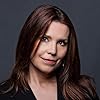
Start by following Annie Duke.

Showing 1-30 of 486
“What makes a decision great is not that it has a great outcome. A great decision is the result of a good process, and that process must include an attempt to accurately represent our own state of knowledge. That state of knowledge, in turn, is some variation of “I’m not sure.”
― Thinking in Bets: Making Smarter Decisions When You Don't Have All the Facts
― Thinking in Bets: Making Smarter Decisions When You Don't Have All the Facts
“In most of our decisions, we are not betting against another person. Rather, we are betting against all the future versions of ourselves that we are not choosing.”
― Thinking in Bets: Making Smarter Decisions When You Don't Have All the Facts
― Thinking in Bets: Making Smarter Decisions When You Don't Have All the Facts
“Improving decision quality is about increasing our chances of good outcomes, not guaranteeing them.”
― Thinking in Bets: Making Smarter Decisions When You Don't Have All the Facts
― Thinking in Bets: Making Smarter Decisions When You Don't Have All the Facts
“Thinking in bets starts with recognizing that there are exactly two things that determine how our lives turn out: the quality of our decisions and luck. Learning to recognize the difference between the two is what thinking in bets is all about.”
― Thinking in Bets: Making Smarter Decisions When You Don't Have All the Facts
― Thinking in Bets: Making Smarter Decisions When You Don't Have All the Facts
“Despite the popular wisdom that we achieve success through positive visualization, it turns out that incorporating negative visualization makes us more likely to achieve our goals.”
― Thinking in Bets: Making Smarter Decisions When You Don't Have All the Facts
― Thinking in Bets: Making Smarter Decisions When You Don't Have All the Facts
“The secret is to make peace with walking around in a world where we recognize that we are not sure and that’s okay. As we learn more about how our brains operate, we recognize that we don’t perceive the world objectively. But our goal should be to try.”
― Thinking in Bets: Making Smarter Decisions When You Don't Have All the Facts
― Thinking in Bets: Making Smarter Decisions When You Don't Have All the Facts
“Success does not lie in sticking to things. It lies in picking the right thing to stick to and quitting the rest.”
― Quit: The Power of Knowing When to Walk Away
― Quit: The Power of Knowing When to Walk Away
“When people quit on time, it will usually feel like they are quitting too early, because it will be long before they experience the choice as a close call.”
― Quit: The Power of Knowing When to Walk Away
― Quit: The Power of Knowing When to Walk Away
“Even research communities of highly intelligent and well-meaning individuals can fall prey to confirmation bias, as IQ is positively correlated with the number of reasons people find to support their own side in an argument”
― Thinking in Bets: Making Smarter Decisions When You Don't Have All the Facts
― Thinking in Bets: Making Smarter Decisions When You Don't Have All the Facts
“Contrary to popular belief, winners quit a lot. That’s how they win.”
― Quit: The Power of Knowing When to Walk Away
― Quit: The Power of Knowing When to Walk Away
“Truthseeking, the desire to know the truth regardless of whether the truth aligns with the beliefs we currently hold, is not naturally supported by the way we process information. We might think of ourselves as open-minded and capable of updating our beliefs based on new information, but the research conclusively shows otherwise. Instead of altering our beliefs to fit new information, we do the opposite, altering our interpretation of that information to fit our beliefs.”
― Thinking in Bets: Making Smarter Decisions When You Don't Have All the Facts
― Thinking in Bets: Making Smarter Decisions When You Don't Have All the Facts
“Chess, for all its strategic complexity, isn’t a great model for decision-making in life, where most of our decisions involve hidden information and a much greater influence of luck.”
― Thinking in Bets: Making Smarter Decisions When You Don't Have All the Facts
― Thinking in Bets: Making Smarter Decisions When You Don't Have All the Facts
“Outcomes don’t tell us what’s our fault and what isn’t, what we should take credit for and what we shouldn’t. Unlike in chess, we can’t simply work backward from the quality of the outcome to determine the quality of our beliefs or decisions. This makes learning from outcomes a pretty haphazard process.”
― Thinking in Bets: Making Smarter Decisions When You Don't Have All the Facts
― Thinking in Bets: Making Smarter Decisions When You Don't Have All the Facts
“frame: the smarter you are, the better you are at constructing a narrative that supports your beliefs, rationalizing and framing the data to fit your argument or point of view.”
― Thinking in Bets: Making Smarter Decisions When You Don't Have All the Facts
― Thinking in Bets: Making Smarter Decisions When You Don't Have All the Facts
“Experience can be an effective teacher. But, clearly, only some students listen to their teachers.”
― Thinking in Bets: Making Smarter Decisions When You Don't Have All the Facts
― Thinking in Bets: Making Smarter Decisions When You Don't Have All the Facts
“The decisions we make in our lives—in business, saving and spending, health and lifestyle choices, raising our children, and relationships—easily fit von Neumann’s definition of “real games.” They involve uncertainty, risk, and occasional deception, prominent elements in poker. Trouble follows when we treat life decisions as if they were chess decisions.”
― Thinking in Bets: Making Smarter Decisions When You Don't Have All the Facts
― Thinking in Bets: Making Smarter Decisions When You Don't Have All the Facts
“In large part, we are what we do, and our identity is closely connected with whatever we’re focused on, including our careers, relationships, projects, and hobbies. When we quit any of those things, we have to deal with the prospect of quitting part of our identity. And that is painful.”
― Quit: The Power of Knowing When to Walk Away
― Quit: The Power of Knowing When to Walk Away
“Over time, those world-class poker players taught me to understand what a bet really is: a decision about an uncertain future. The implications of treating decisions as bets made it possible for me to find learning opportunities in uncertain environments. Treating decisions as bets, I discovered, helped me avoid common decision traps, learn from results in a more rational way, and keep emotions out of the process as much as possible.”
― Thinking in Bets: Making Smarter Decisions When You Don't Have All the Facts
― Thinking in Bets: Making Smarter Decisions When You Don't Have All the Facts
“We might think of ourselves as open-minded and capable of updating our beliefs based on new information, but the research conclusively shows otherwise. Instead of altering our beliefs to fit new information, we do the opposite, altering our interpretation of that information to fit our beliefs.”
― Thinking in Bets: Making Smarter Decisions When You Don't Have All the Facts
― Thinking in Bets: Making Smarter Decisions When You Don't Have All the Facts
“Identifying a negative outcome doesn’t have the same personal sting if you turn it into a positive by finding things to learn from it. You don’t have to be on the defensive side of every negative outcome because you can recognize, in addition to things you can improve, things you did well and things outside your control. You realize that not knowing is okay.”
― Thinking in Bets: Making Smarter Decisions When You Don't Have All the Facts
― Thinking in Bets: Making Smarter Decisions When You Don't Have All the Facts
“not all situations are appropriate for truthseeking, nor are all people interested in the pursuit.”
― Thinking in Bets: Making Smarter Decisions When You Don't Have All the Facts
― Thinking in Bets: Making Smarter Decisions When You Don't Have All the Facts
“Pros and cons lists are flat, as if (payoff) size doesn’t matter. Because it is merely in list form, a pros and cons list treats the chance of an early arrival as equal to the possibility of getting into a serious traffic accident. Without explicit information about size, about the magnitude of any pro or con, it is unclear how you would compare the positive and negative sides of the list. If there are ten pros and five cons, does that mean you should go with the decision? It is impossible to say without information about the size of the payoffs, because without that you can’t figure out if the upside potential outweighs the downside.”
― How to Decide: Simple Tools for Making Better Choices
― How to Decide: Simple Tools for Making Better Choices
“this idea of casting yourself into the future, imagining a failure, and then looking back to try to figure out why is called a premortem. Using a premortem is a great tool to help develop high-quality kill criteria.”
― Quit: The Power of Knowing When to Walk Away
― Quit: The Power of Knowing When to Walk Away
“Barry Schwartz points out in his book, The Paradox of Choice, that this kind of sheep-in-wolf’s-clothing decision is more likely to come up the more options you have to choose from. The greater the number of available options, the greater the likelihood that more than one of those options will look pretty good to you. The more options that look pretty good to you, the more time you spend in analysis paralysis. That’s the paradox: more choice, more anxiety. Remember, if the only choices are between Paris and a trout cannery, no one has a problem. But what if the choices are Paris or Rome or Amsterdam or Santorini or Machu Picchu? You get the picture. THE ONLY-OPTION TEST For any options you’re considering, ask yourself, “If this were the only option I had, would I be happy with it?” A useful tool you can use to break the gridlock is the Only-Option Test. If this were the only thing I could order on the menu . . . If this were the only show I could watch on Netflix tonight . . . If this were the only place I could go for vacation . . . If this were the only college I got accepted to . . . If this were the only house I could buy . . . If this were the only job I got offered . . . The Only-Option Test clears away the debris cluttering your decision. If you’d be happy if Paris were your only option, and you’d be happy if Rome were your only option, that reveals that if you just flip a coin, you’ll be happy whichever way the coin lands.”
― How to Decide: Simple Tools for Making Better Choices
― How to Decide: Simple Tools for Making Better Choices
“If you feel like you’ve got a close call between quitting and persevering, it’s likely that quitting is the better choice.”
― Quit: The Power of Knowing When to Walk Away
― Quit: The Power of Knowing When to Walk Away
“Second, being wrong hurts us more than being right feels good. We know from Daniel Kahneman and Amos Tversky’s work on loss aversion, part of prospect theory (which won Kahneman the Nobel Prize in Economics in 2002), that losses in general feel about two times as bad as wins feel good. So winning $100 at blackjack feels as good to us as losing $50 feels bad to us. Because being right feels like winning and being wrong feels like losing, that means we need two favorable results for every one unfavorable result just to break even emotionally. Why not live a smoother existence, without the swings, especially when the losses affect us more intensely than the wins?”
― Thinking in Bets: Making Smarter Decisions When You Don't Have All the Facts
― Thinking in Bets: Making Smarter Decisions When You Don't Have All the Facts
“When someone asks you about a coin they flipped four times, there is a correct answer: “I’m not sure.”
― Thinking in Bets: Making Smarter Decisions When You Don't Have All the Facts
― Thinking in Bets: Making Smarter Decisions When You Don't Have All the Facts
“We behave according to what we bring to the occasion.” Our beliefs affect how we process all new things, “whether the ‘thing’ is a football game, a presidential candidate, Communism, or spinach.”
― Thinking in Bets: Making Smarter Decisions When You Don't Have All the Facts
― Thinking in Bets: Making Smarter Decisions When You Don't Have All the Facts
“As with visual illusions, we can’t make our minds work differently than they do no matter how smart we are. Just as we can’t unsee an illusion, intellect or willpower alone can’t make us resist motivated reasoning.”
― Thinking in Bets: Making Smarter Decisions When You Don't Have All the Facts
― Thinking in Bets: Making Smarter Decisions When You Don't Have All the Facts
“Forcing ourselves to express how sure we are of our beliefs brings to plain sight the probabilistic nature of those beliefs, that what we believe is almost never 100% or 0% accurate but, rather, somewhere in between.”
― Thinking in Bets: Making Smarter Decisions When You Don't Have All the Facts
― Thinking in Bets: Making Smarter Decisions When You Don't Have All the Facts