
Goodreads helps you follow your favorite authors. Be the first to learn about new releases!
Start by following Albert Glinsky.

Showing 1-16 of 16
“Theremin’s mentor, Soviet physicist Abram Ioffe, was reporting to Stalin with information leeched from the Manhattan Project, espionage that helped the Russians birth their own atomic bomb by 1949—an effort Theremin was likely involved in. Bob had no clue that Theremin had concocted elaborate bugging devices to spy on Western powers, or that he was still working for the other side in the Cold War, deeply entrenched in Soviet intelligence organizations”
― Switched On: Bob Moog and the Synthesizer Revolution
― Switched On: Bob Moog and the Synthesizer Revolution
“Tone Synthesizer’ Amazes Scientists.” The Times explained that the machine, “built about five years ago but kept secret during the war, has an almost infinite number of tones . . . so that not only every kind of tone ever produced (including the human voice) can be reproduced accurately by measurement but also millions of tones that no present musical instrument is able to make.”16”
― Switched On: Bob Moog and the Synthesizer Revolution
― Switched On: Bob Moog and the Synthesizer Revolution
“A player sitting at the Telharmonium’s master console with its touch-sensitive keyboards could trigger the device’s network of whirling rotors, generating electrical currents that corresponded to the notes being played. The currents were sent through telephone wires to “broadcast” the music to hotels, restaurants, and private homes as a subscription service. The sound quality was limited because amplification and electrically driven dynamic loudspeakers hadn’t been invented yet. The Telharmonium’s music was piped through what were essentially telephone receivers acoustically boosted with large megaphone horns—some as long as six feet—or channeled through carbon arc lamps that could oscillate with the electronic signal.”
― Switched On: Bob Moog and the Synthesizer Revolution
― Switched On: Bob Moog and the Synthesizer Revolution
“The Pottery Barn forager had commissioned Bob to make an envelope generator module to shape sounds in four discreet stages—what he called, “attack,” “decay,” “sustain,” and “release,” or ADSR. Ussachevsky had no clue that his idea would someday become the industry standard; at the moment he simply figured it was the most efficient way to plot the contour of a sound.”
― Switched On: Bob Moog and the Synthesizer Revolution
― Switched On: Bob Moog and the Synthesizer Revolution
“Two recent attempts at industrial espionage right under Bob’s nose were a portent that synths were on Japanese radar: in 1970, Nippon Gakki (later to be called the Yamaha Corporation) had ordered modules from Trumansburg, and in late 1971, two Minimoogs were purchased by the Yamaha Music Center. At the moment, an entrepreneurial Japanese inventor, Ikutaro Kakehashi, also had his eyes on the synth prize.”
― Switched On: Bob Moog and the Synthesizer Revolution
― Switched On: Bob Moog and the Synthesizer Revolution
“With the sales to high-profile buyers, Bob was ready to make a serious go of his modular systems. In the January 1965 AES Journal he placed an ad: R. A. MOOG announces the availability of ELECTRONIC INSTRUMENTS FOR THE COMPOSITION AND PERFORMANCE OF CONTEMPORARY MUSIC.”
― Switched On: Bob Moog and the Synthesizer Revolution
― Switched On: Bob Moog and the Synthesizer Revolution
“He remembered when he heard it on the sound system at a German store: “There was a girl there and I said, ‘I’m the composer!’ and she said ‘Sie haben dieses Stück Scheiße geschrieben?’ (‘You wrote this piece of shit?’).” In Hamburg’s Reeperbahn red-light district he witnessed an adult sex show at a strip club with “Popcorn” as the soundtrack.”
― Switched On: Bob Moog and the Synthesizer Revolution
― Switched On: Bob Moog and the Synthesizer Revolution
“Apparently, Schultz’s claim that his theremin could “mimic many instruments and even approximate the sound of a choir” was just a shot of snake oil—the device emitted a siren-like howl that could set the teeth on edge. It was nothing like a choir or an acoustic instrument.”
― Switched On: Bob Moog and the Synthesizer Revolution
― Switched On: Bob Moog and the Synthesizer Revolution
“At the seminar, participants also tried to come up with a name for Bob’s system. Somehow, Electronic Instruments for the Composition and Performance of Contemporary Music—the wording in the January AES ad—didn’t roll trippingly off the tongue. Nikolais’ “Moogaphone” wasn’t much better. The best the participants could come up with was “Goombars”—a jumbling of the letters of R. A. Moog with the “b” from Bob—but it was voted down.”
― Switched On: Bob Moog and the Synthesizer Revolution
― Switched On: Bob Moog and the Synthesizer Revolution
“The Telharmonium was installed in New York City in 1906. It wasn’t a single, self-contained musical instrument, but a vast 200-ton complex of equipment the size of a power plant. Each of its massive, electro-mechanical rotors—giant tone wheels—spun around to generate a sine wave (the basic building block of sound), along with other sine waves above it of a higher frequency. The idea was to simulate the physics that determine the distinct tone colors of different acoustic instruments, each note of these instruments being a fundamental sine wave tone, with overtones on top of it that give it its special character. Stacking up sine waves to build sounds of distinct timbres is the principle of “additive synthesis,” and Cahill, in his patent, anticipated the term “synthesizer” when he explained that, out of these “elemental electrical vibrations”
― Switched On: Bob Moog and the Synthesizer Revolution
― Switched On: Bob Moog and the Synthesizer Revolution
“He didn’t know about Clara Rockmore and her Town Hall debut. He had no idea she was still performing—just recently before a crowd of 4,500 in Manhattan’s Lewisohn Stadium. And he didn’t know the inventor was alive and living in Russia after fleeing New York as a Soviet spy a decade earlier. He just knew he had to build this thing.”
― Switched On: Bob Moog and the Synthesizer Revolution
― Switched On: Bob Moog and the Synthesizer Revolution
“Music man. Inventor Robert Moog is setting the tone for a new kind of music with his sound synthesizer.”16”
― Switched On: Bob Moog and the Synthesizer Revolution
― Switched On: Bob Moog and the Synthesizer Revolution
“and I even buy olives once in a while.”22 Bob’s staff, business partners, and customers were barely aware of the silent partner who held his world together. Shirleigh tirelessly answered every call to duty, from packing theremin kits or feeding 30 seminar participants on a $35-a-month food budget, to balancing the company books. She managed every household and mothering duty—cleaning, canning, cooking, baking, laundry, naptime, trips to the library, bedtime stories—and stole a few spare moments for herself to read a magazine. Her cycle of chores ran in a never-ending loop. Her situation, whether she realized it or not, typified the plight of most American women of her generation.”
― Switched On: Bob Moog and the Synthesizer Revolution
― Switched On: Bob Moog and the Synthesizer Revolution
“American hubris had backfired. The irony of the limitations the U.S. had imposed on Japanese manufacturing was plain: while postwar American industry focused strongly on defense, wooing its best engineers into military work, Japan’s top scientific minds quietly went about growing their country’s consumer electronics industry into a force of tidal wave proportions. The U.S. had won the battle over military might, but ultimately lost the economic war for world dominance of the electronics market.”
― Switched On: Bob Moog and the Synthesizer Revolution
― Switched On: Bob Moog and the Synthesizer Revolution
“Leon Theremin. He’d invented it in 1920, and by 1927 he was barnstorming through Europe with his electrical marvel, leaving a trail of headlines and press hysteria—“the greatest musical wonder of our time.”13 Theremin sailed for New York later that year, mesmerizing capacity audiences who thought he was a magician, conjuring music from the air with nothing but his hands. At the same time, the strange electrical voice was unlike anything people had ever heard. The instrument came to be known simply as “the theremin,” and a handful of musicians—amateur and professional—took it up seriously.”
― Switched On: Bob Moog and the Synthesizer Revolution
― Switched On: Bob Moog and the Synthesizer Revolution
“While Bob was busy with Clara’s recording, his modular had just notched another first in the world: it sired the genre of electronic dance music. “I Feel Love,” a hypnotic, seductive single by Donna Summer, the “Queen of Disco,” had cast the Moog in a central role. Soon after the song’s release in July 1977 it went to No. 1 in the UK, climbing to No. 6 in the U.S., and then perched atop charts internationally, eventually making the “top songs of all time” lists of magazines and critics worldwide. Donna Summer and her collaborator, composer Giorgio Moroder, had pushed the boundaries of disco permanently into the electronic sphere with this single song.”
― Switched On: Bob Moog and the Synthesizer Revolution
― Switched On: Bob Moog and the Synthesizer Revolution

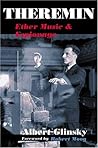

![Theremin: Ether Music and Espionage [First Printing]](https://s.gr-assets.com/assets/nophoto/book/111x148-675b3b2743c83e96e2540d2929d5f4d2.png "Theremin: Ether Music and Espionage [First Printing]")