Goodreads helps you follow your favorite authors. Be the first to learn about new releases!
Start by following Gary M. Burge.

Showing 1-14 of 14
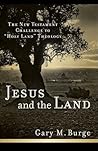
“For a Christian to return to a Jewish territoriality is to deny fundamentally what has transpired in the incarnation. It is to deflect appropriate devotion to the new place where God has appeared in residence,
namely, in his Son. This explains why the New Testament applies to the person of Christ religious language formerly devoted to the Holy Land or the Temple. He is the new spatiality, the new locale where God may be met.”
― Jesus and the Land: The New Testament Challenge to "Holy Land" Theology
namely, in his Son. This explains why the New Testament applies to the person of Christ religious language formerly devoted to the Holy Land or the Temple. He is the new spatiality, the new locale where God may be met.”
― Jesus and the Land: The New Testament Challenge to "Holy Land" Theology
“Evangelicals tend to be “crucicentric,” which means “centered on the cross.” And we fail to see the comprehensive nature of Christ’s work. As the early Christian bishop Irenaeus once argued, Christ moved through all stages of human life and experience and in this sense, recapitulated the life lived by humans. His holy obedience at every stage of human life created the possibility of a perfect humanity which he presented to the Father in his ascension. In his saving work, Jesus then became the author of a restored human race, something the world had never seen before.”
― Theology Questions Everyone Asks: Christian Faith in Plain Language
― Theology Questions Everyone Asks: Christian Faith in Plain Language
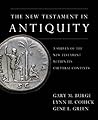
“When we imagine Jesus’ teaching in his own time and place, W ca we cannot use profiles of teachers from our own world to understand the nature of his work. Our culture is heir to the Greek tradition, where abstract reasoning and verbal prowess are the measure of the teacher. Jesus’ world was different. He communicated through word pictures, dramatic actions, metaphors, and stories. Rather than lecture about religious corruption, Jesus refers to the Pharisees as “whitewashed tombs.” Rather than outline the failings of the temple, he curses a fig tree. This means that we should think of Jesus as a “metaphorical theologian” for whom drama, humor, and storytelling were all a part of his method.”
― The New Testament in Antiquity: A Survey of the New Testament within Its Cultural Context
― The New Testament in Antiquity: A Survey of the New Testament within Its Cultural Context
“One of the odd features of the Christian life, and Scripture more broadly, is that times of suffering and sin can be renarrated in our ongoing progress as God’s people such that failures become a source of joy and thanksgiving as they set forth more clearly the mercy of Christ.”
― Theology Questions Everyone Asks: Christian Faith in Plain Language
― Theology Questions Everyone Asks: Christian Faith in Plain Language
“Here is how Basil of Caesarea puts it: “When the Lord taught us the doctrine of Father, Son, and Holy Spirit, . . . He blessed us with the knowledge given us by faith, by means of holy Names.”9 In other words: The one name of the one God is the threefold name of Father, Son and Holy Spirit. So, why do we address the Father as “Father”? Because Jesus did (John 17:1). Because this is the name of the first Person of the Trinity—and for no other reason.”
― Theology Questions Everyone Asks: Christian Faith in Plain Language
― Theology Questions Everyone Asks: Christian Faith in Plain Language
“Our excitement at living in “the last days” has led us to overlook some devastating facts about our faith, the Middle East, and what God would have us do. In some cases, we have not been told things, important things, about life as it really is in the Middle East.”
― Whose Land? Whose Promise?:: What Christians Are Not Being Told about Israel and the Palestinians
― Whose Land? Whose Promise?:: What Christians Are Not Being Told about Israel and the Palestinians
“It is possible to be outside God’s revealed will—by oppressing the poor, for instance, or rejecting the authority of Scripture—but we cannot, by definition, be outside God’s hidden will. Such a distinction entails both a warning and a promise. On the one hand, God does grant us the freedom to make decisions, and a repeated pattern of active disobedience against God may well result in our final separation from him. Herod and Pontius Pilate acted according to the “will” of God, but we do not want to follow their example (Acts 4:27-28).”
― Theology Questions Everyone Asks: Christian Faith in Plain Language
― Theology Questions Everyone Asks: Christian Faith in Plain Language
“That is why we began with a discussion on how to speak of God properly. Throughout our discussion we have seen that the witness of Scripture is consistent: God is simple (that is, not composed of parts), immutable, impassible, infinite, and that essence and existence are identical in God. It ought to be clear, then, that God does not have a genotype whose phenotypical expression would indicate maleness, like it does for us. Since God is not part of a category, it follows that God cannot be part of the category designated by the noun “male.”
― Theology Questions Everyone Asks: Christian Faith in Plain Language
― Theology Questions Everyone Asks: Christian Faith in Plain Language
“Grace is not merely an attribute of God. It is known when someone enjoys his goodness. It is the recipient who knows grace, not the theologian who has studied it.”
― John
― John
“The objective historical reality of Christ supplies our confidence in our knowledge of the truth and the certainty of our spiritual pursuits.”
― John
― John
“This is the pursuit of power and experience—of signs—without explanation or context. John insists that these two dimensions be wed or else misunderstanding of God’s interests will result. Sign must be linked to explanation; spiritual experience must be united with spiritual teaching or preaching.”
― John
― John
“Mary Daly so provocatively noted the incipient nature of this danger when she exclaimed: “If God is male, then the male is God.”7”
― Theology Questions Everyone Asks: Christian Faith in Plain Language
― Theology Questions Everyone Asks: Christian Faith in Plain Language
“The theologian Karl Barth spoke of religion as humanity’s faulty attempts to try to understand God on their own, while Jesus Christ is God’s self-disclosing revelation.”
― Theology Questions Everyone Asks: Christian Faith in Plain Language
― Theology Questions Everyone Asks: Christian Faith in Plain Language
“The connection between covenant fidelity and the promise of land is evident throughout the Torah (the five traditional books of Moses). Possessing the land was contingent on Israel’s consistently living by God’s righteous standards.10 One of the most surprising discoveries for me was how rarely this theme is sounded by evangelical writers.”
― Whose Land? Whose Promise?:: What Christians Are Not Being Told about Israel and the Palestinians
― Whose Land? Whose Promise?:: What Christians Are Not Being Told about Israel and the Palestinians