Goodreads helps you follow your favorite authors. Be the first to learn about new releases!
Start by following Matthew Salesses.

Showing 1-30 of 50
“What we call craft is in fact nothing more or less than a set of expectations. Those expectations are shaped by workshop, by reading, by awards and gatekeepers, by biases about whose stories matter and how they should be told. How we engage with craft expectations is what we can control as writers. The more we know about the context of those expectations, the more consciously we can engage with them.”
― Craft in the Real World: Rethinking Fiction Writing and Workshopping
― Craft in the Real World: Rethinking Fiction Writing and Workshopping
“Sometimes our passion is so strong that it makes a fool of us.”
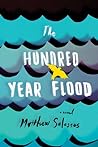
― The Hundred-Year Flood
― The Hundred-Year Flood
“For a marginalized writer writing to a normative audience, the writer has to be wary of normative craft. Much of what we learn about craft (about the expectations we are supposed to consider) implies a straight, white, cis, able (etc.) audience. It is easy to forget who we are writing for if we do not keep it a conscious consideration, and the default is not universal, but privileged.”
― Craft in the Real World: Rethinking Fiction Writing and Workshopping
― Craft in the Real World: Rethinking Fiction Writing and Workshopping
“Make no mistake—writing is power. What this fact should prompt us to ask is: What kind of power is it, where does it come from, and what does it mean?”
― Craft in the Real World: Rethinking Fiction Writing and Workshopping
― Craft in the Real World: Rethinking Fiction Writing and Workshopping
“Hell or high water, Cupid marches on. In which war, he didn’t say.”
― The Hundred-Year Flood
― The Hundred-Year Flood
“What is important to Aristotle is that what you feel can teach you what you think. Emotion is intelligent.”
― Craft in the Real World: Rethinking Fiction Writing and Workshopping
― Craft in the Real World: Rethinking Fiction Writing and Workshopping
“Prague might be the perfect place, after all: a city that valued anonymity, the desire to be no one and someone at once.”
― The Hundred-Year Flood
― The Hundred-Year Flood
“When you are workshopped, it is important to remember that you will not connect with everything that is said. You shouldn’t! Don’t listen to everything; don’t take every suggestion—trust your instincts. Think hard, though, about all the questions asked of you. Are you making your decisions consciously enough? Are there decisions you made subconsciously that turned out to be even better (or worse) than you expected? Don’t ever try to make your story into someone else’s story, or especially the group’s story. That will ruin what you love about your story and so will ruin your story. Part of being in a writing community is learning who is a good reader for your work, and how to incorporate suggestions into your own intentions and process. Also remember that while you might not like a suggestion, the most important thing about a critique might be simply its existence. The point remains that that part of your story might have tripped up this group of test readers, and if they are reading carefully, you can use that knowledge to find your own solution or even your own problem. Also remember that sometimes making a certain part of a story work isn’t about that part of the story, but about an earlier part, or a later part, or the whole thing, or the basic foundation. What is most important is to know that there’s still work to do and to be inspired to do it.”
― Craft in the Real World: Rethinking Fiction Writing and Workshopping
― Craft in the Real World: Rethinking Fiction Writing and Workshopping
“Craft is never neutral. Craft is the cure or injury that can be done in our shared world when it isn’t acknowledged that there are different ways that world is felt.”
― Craft in the Real World: Rethinking Fiction Writing and Workshopping
― Craft in the Real World: Rethinking Fiction Writing and Workshopping
“Realism insists on one representation of what is real. Not only through what is narrated on the page, but through the shape that narration takes.”
― Craft in the Real World: Rethinking Fiction Writing and Workshopping
― Craft in the Real World: Rethinking Fiction Writing and Workshopping
“Even if that world looks almost the same as ours, it will always be a representation, not a universal. If there is a distance tone inhabits, it is the distance between our world and the world of the story.”
― Craft in the Real World: Rethinking Fiction Writing and Workshopping
― Craft in the Real World: Rethinking Fiction Writing and Workshopping
“A workshop should not participate in the binding but in freeing the writer from the culturally regulated boundaries of what it is possible to say and how it is possible to say it.”
― Craft in the Real World: Rethinking Fiction Writing and Workshopping
― Craft in the Real World: Rethinking Fiction Writing and Workshopping
“Fiction does not “make it new;” it makes it felt. Craft does not separate the author from the real world.”
― Craft in the Real World: Rethinking Fiction Writing and Workshopping
― Craft in the Real World: Rethinking Fiction Writing and Workshopping
“A desperate longing stopped her breath, as if he’d jumped already, leaving her behind. “Please,” he said. She took his hand and stepped beside him. She should have run away with him as soon as she could. Maybe every act of faith, as they got older, was meant to make up for an earlier lack of faith.”
― The Hundred-Year Flood
― The Hundred-Year Flood
“Craft is about who has the power to write stories, what stories are historicized and who historicizes them, who gets to write literature and who folklore, whose writing is important and to whom, in what context. This is the process of standardization. If craft is teachable, it is because standardization is teachable. These standards must be challenged and disempowered. Too often craft is taught only as what has already been taught before.”
― Craft in the Real World: Rethinking Fiction Writing and Workshopping
― Craft in the Real World: Rethinking Fiction Writing and Workshopping
“We must reject the mystification/mythification of creative writing. The mystical writer uses the myth of his genius to gain power.”
― Craft in the Real World: Rethinking Fiction Writing and Workshopping
― Craft in the Real World: Rethinking Fiction Writing and Workshopping
“The argument that one should know the rules before breaking them is really an argument about who gets to make the rules, whose rules get to be the norms and determine the exceptions. To teach the writer from a “query” culture to use “ask” is not to teach her how to write better but to teach her whose writing is better. Writing that follows nondominant cultural standards is often treated as if it is “breaking the rules,” but why one set of rules and not another? What is official always has to do with power.”
― Craft in the Real World: Rethinking Fiction Writing and Workshopping
― Craft in the Real World: Rethinking Fiction Writing and Workshopping
“African fiction is written for Africans—what is easier to understand than that? Not that other people can’t read it, but, as Chinweizu et al. tell us, it might take “time and effort and a sloughing off of their racist superiority complexes and imperialist arrogance” to appreciate it.”
― Craft in the Real World: Rethinking Fiction Writing and Workshopping
― Craft in the Real World: Rethinking Fiction Writing and Workshopping
“This book is against the idea of “finding” an audience and for the idea of writing toward the audience whose expectations matter to you.”
― Craft in the Real World: Rethinking Fiction Writing and Workshopping
― Craft in the Real World: Rethinking Fiction Writing and Workshopping
“To say a work of fiction is unrelatable is to say, “I am not the implied audience, so I refuse to engage with the choices the author has made.”
― Craft in the Real World: Rethinking Fiction Writing and Workshopping
― Craft in the Real World: Rethinking Fiction Writing and Workshopping
“The next day, Tee climbed over the railing in Vyšehrad and sat on the cliff above the Vltava. Sailboats struggled to tack against the wind. Back in the ruins, a little boy knelt in the prayer maze, eyes closed. When the boy left, Tee walked into the center. He found a tiny blue thimble, just big enough to catch a drop of rain.”
― The Hundred-Year Flood
― The Hundred-Year Flood
“How strange the way we wade into disaster, step after step, not realizing how far we've gone until we're drowning.”
― The Hundred-Year Flood
― The Hundred-Year Flood
“You value your work by valuing your growth—both as a writer and as a person. Each submission is a chance for revision; each publication is a potential friendship.”-Matthew Salesses
@salesses”
―
@salesses”
―
“They are rarely told that these rules are more than “just craft” or “pure craft,” that rules are always cultural. The spread of craft starts to feel and work like colonization.”
― Craft in the Real World: Rethinking Fiction Writing and Workshopping
― Craft in the Real World: Rethinking Fiction Writing and Workshopping
“She was one of her kind, the most American she would ever be, the last American left in this hundred-year flood.”
― The Hundred-Year Flood
― The Hundred-Year Flood
“What was it like?” he demanded, “the Revolution?” He imagined falling in love over art, brushstrokes inciting a nation to freedom, Pavel’s paintings hanging on the facade of the museum in Wenceslas Square, an idealist burning himself beneath. Pavel sighed and traded brush for cigarette. “It was like something, history, could never being stopped.”
― The Hundred-Year Flood
― The Hundred-Year Flood
“Stop doubling the past with the present. They’re two things in a line, not two versions of something else.”
― The Hundred-Year Flood
― The Hundred-Year Flood
“Some of these protagonists end up happy and some unhappy, but all end up incorporated into society. A common craft axiom states that by the end of a story, a protagonist must either change or fail to change. These novels fulfill this expectation. In the end, it’s not only the characters who find themselves trapped by societal norms. It’s the novels.”
― Craft in the Real World: Rethinking Fiction Writing and Workshopping
― Craft in the Real World: Rethinking Fiction Writing and Workshopping
“Craft is support for a certain worldview.”
― Craft in the Real World: Rethinking Fiction Writing and Workshopping
― Craft in the Real World: Rethinking Fiction Writing and Workshopping
“Expectations belong to an audience. To use craft is to engage with an audience’s bias.”
― Craft in the Real World: Rethinking Fiction Writing and Workshopping
― Craft in the Real World: Rethinking Fiction Writing and Workshopping