Goodreads helps you follow your favorite authors. Be the first to learn about new releases!
Start by following Caroline Williams.

Showing 1-18 of 18
“Do not worry about your difficulties in Mathematics. I can assure you mine are still greater. —Albert Einstein”
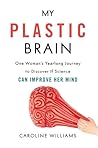
― My Plastic Brain: One Woman's Yearlong Journey to Discover If Science Can Improve Her Mind
― My Plastic Brain: One Woman's Yearlong Journey to Discover If Science Can Improve Her Mind
“Brainstem processing doesn’t involve thinking, but we certainly feel the knock-on effects if body signals get boosted there, and what happens is important for our state of mind, even when we are not consciously aware of it.”
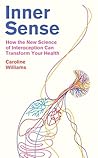
― Inner Sense: How the New Science of Interoception Can Transform Your Health
― Inner Sense: How the New Science of Interoception Can Transform Your Health
“As a result, our biological baseline is to be on our feet, moving and thinking at the same time. If we don’t do it, our brains make the sensible decision to save energy by cutting brain capacity. In better news, when we get on our feet and move, it primes the brain to be alert and to learn.”
― Move: How the New Science of Body Movement Can Set Your Mind Free – A Sunday Times Shortlisted Psychology of Brain Health
― Move: How the New Science of Body Movement Can Set Your Mind Free – A Sunday Times Shortlisted Psychology of Brain Health
“The downside is that walking isn’t quite enough to bring on a high unless it leaves you seriously breathless. The feeling-great part only really kicks in after an intense run at a pace where it’s difficult to hold a conversation.”
― Move: How the New Science of Body Movement Can Set Your Mind Free – A Sunday Times Shortlisted Psychology of Brain Health
― Move: How the New Science of Body Movement Can Set Your Mind Free – A Sunday Times Shortlisted Psychology of Brain Health
“The brain evolved not for us to think but to allow us to move – away from danger and towards rewards.”
― Move!: The New Science of Body Over Mind
― Move!: The New Science of Body Over Mind
“When we meet via video call from his home in California, Damasio recalls one eminent scientist telling him that feelings were ‘for girls’ and that he should stick to the ‘big stuff’ like intellect if he wanted to understand the mysteries of the mind.9 He ignored them and, working with his wife and long-term collaborator Hanna Damasio, has spent more than thirty years compiling evidence that the body is very much required for emotion and feelings.”
― Inner Sense: How the New Science of Interoception Can Transform Your Health
― Inner Sense: How the New Science of Interoception Can Transform Your Health
“The brain is neither the starting point for our mental experiences nor the end point for our body’s live updates. The brain isn’t the control centre of the mind; it is more a collaborative hub where body and brain work together to decide what is the most sensible plan of action, given the current state of affairs. Support for this view comes from recent evidence that the so-called ‘inputs’ to the brain are not the passive carriers of information that they have long been presumed to be. Studies of real-time activity in the spinal cord have found that, rather than staying quiet unless there’s something to report (such as an injury or change in temperature), the spinal cord – like the brain – generates its own background chatter, through which it communicates in local networks14 and with the brain.”
― Inner Sense: How the New Science of Interoception Can Transform Your Health
― Inner Sense: How the New Science of Interoception Can Transform Your Health
“The brain is neither the starting point for our mental experiences nor the end point for our body’s live updates. The brain isn’t the control centre of the mind; it is more a collaborative hub where body and brain work together to decide what is the most sensible plan of action, given the current state of affairs. Support for this view comes from recent evidence that the so-called ‘inputs’ to the brain are not the passive carriers of information that they have long been presumed to be. Studies of real-time activity in the spinal cord have found that, rather than staying quiet unless there’s something to report (such as an injury or change in temperature), the spinal cord – like the brain – generates its own background chatter, through which it communicates in local networks14 and with the brain.15”
― Inner Sense: How the New Science of Interoception Can Transform Your Health
― Inner Sense: How the New Science of Interoception Can Transform Your Health
“It’s worth a quick aside at this point to remember that evolution doesn’t work with an endgame in mind. Our minds and bodies didn’t get to be the way they are today because evolution had a plan to make us the cleverest, most self-aware species on the planet. We got here because the changes that brought us to this point must have provided some kind of survival advantage when they first appeared. Each of them had to be useful from the start, and they stuck around because they continued to supply benefits.”
― Move: How the New Science of Body Movement Can Set Your Mind Free – A Sunday Times Shortlisted Psychology of Brain Health
― Move: How the New Science of Body Movement Can Set Your Mind Free – A Sunday Times Shortlisted Psychology of Brain Health
“Damasio believes that the reason that consciousness has proven so tough to explain – both in human beings and in other species – is that most of our recent efforts have focused solely on the brain. ‘People talk about consciousness as the great mystery that will be revealed by understanding the brain – and that’s wrong. It’s not about the brain – it’s about what the brain achieves with the interoceptive system in relation to the body,’ he says.”
― Inner Sense: How the New Science of Interoception Can Transform Your Health
― Inner Sense: How the New Science of Interoception Can Transform Your Health
“Crucially, though, he recently found that putting your full body weight on your feet while you are exercising provides an added boost. In 2017 Greene reported that putting weight on your feet compresses the major arteries of the feet, increasing turbulence in the blood and increasing blood flow to the brain by a further 10–15 percent.”
― Move: How the New Science of Body Movement Can Set Your Mind Free – A Sunday Times Shortlisted Psychology of Brain Health
― Move: How the New Science of Body Movement Can Set Your Mind Free – A Sunday Times Shortlisted Psychology of Brain Health
“For all its bells and whistles, without the rest of the body, the brain has nothing to think – or care – about. Even memories would cease to make sense if there was no body for us to feel them through. So, for all the impressive discoveries in neuroscience over the past few decades, if we are to truly understand our minds, we need to look at the brain in the context of the body it works with. Anything less would be like trying to understand how a tree produces leaves and flowers while ignoring its trunk and roots, or how a great city came to be, without factoring in the flow of people, ideas and materials in and out of its borders over centuries or millennia.”
― Inner Sense: How the New Science of Interoception Can Transform Your Health
― Inner Sense: How the New Science of Interoception Can Transform Your Health
“That the past feels more distant as we physically move forwards is important, because a major risk factor for depression is the tendency to ruminate, getting stuck in a loop of over-analyzing things you’ve said, done or experienced in the past while getting steadily more despondent. Physically moving forwards can help prevent this by making the bad stuff seem further behind you.”
― Move: How the New Science of Body Movement Can Set Your Mind Free – A Sunday Times Shortlisted Psychology of Brain Health
― Move: How the New Science of Body Movement Can Set Your Mind Free – A Sunday Times Shortlisted Psychology of Brain Health
“When you get the urge to do a cartwheel in the supermarket, say something inappropriate in a meeting or run a red light, this is the part of the brain that jumps in and reminds you not to be so stupid. It’s a useful feature in all kinds of situations and saves us a lot of time and potential embarrassment, but the downside is that it does the same job for ideas, shutting down thoughts that are a bit out there but which might just work.”
― Move: How the New Science of Body Movement Can Set Your Mind Free – A Sunday Times Shortlisted Psychology of Brain Health
― Move: How the New Science of Body Movement Can Set Your Mind Free – A Sunday Times Shortlisted Psychology of Brain Health
“Signals that aren’t dealt with in the brainstem carry on up to the thalamus – a key organisational hub in the middle of the brain. From this point, it’s difficult to draw lines from one brain region to the next because connections go in so many directions, but the key regions include those involved in memory (the hippocampus), emotional processing (the amygdala), attention and control (the prefrontal cortex), and weighing priorities (including the cingulate cortex) (see Figure 2).”
― Inner Sense: How the New Science of Interoception Can Transform Your Health
― Inner Sense: How the New Science of Interoception Can Transform Your Health
“French neuroscientist Stanislas Dehaene has found that the less accurate, “there or thereabouts” bits of math processing uses visual and spatial brain areas, whereas the exact stuff requires the same areas as language processing.2 So to some extent, being a words person and a numbers person are kind of the same thing.”
― My Plastic Brain: One Woman's Yearlong Journey to Discover If Science Can Improve Her Mind
― My Plastic Brain: One Woman's Yearlong Journey to Discover If Science Can Improve Her Mind
“A study from 2014 found that when expert meditators were asked to focus their attention on a specific body part, there was significantly more activity in the section of the spinal cord that corresponded to the body part on which they were directing their attention, with less body-part-specific activity when novice meditators were asked to do the same thing. This raises the intriguing possibility that when a guided meditation invites you to focus on the strength in your legs or the tension in your neck, what you can feel isn’t in your imagination – it’s an actual sensation that, with practice, can become more vivid and easier to switch on and off.16 It’s early days for spine–brain imaging, but it raises the possibility that we might one day be able to look at activity across the whole body, and to spot – and begin to fix – any errant activity or blockages that may be causing problems, such as chronic pain.”
― Inner Sense: How the New Science of Interoception Can Transform Your Health
― Inner Sense: How the New Science of Interoception Can Transform Your Health
“But research coming from the fields of evolutionary biology, physiology and neuroscience is all pointing to the fact that walking a lot, and running a little, made our species what it is today. If we don’t do it enough, we risk losing our mental and emotional edge.”
― Move: How the New Science of Body Movement Can Set Your Mind Free – A Sunday Times Shortlisted Psychology of Brain Health
― Move: How the New Science of Body Movement Can Set Your Mind Free – A Sunday Times Shortlisted Psychology of Brain Health