Goodreads helps you follow your favorite authors. Be the first to learn about new releases!
Start by following M.C. Scott.

Showing 1-30 of 46
“He is wounded, but he is still the Leopard, still dangerous. His eyes look through you, until they don’t. That’s when he’ll kill you.”
― Rome: The Art of War
― Rome: The Art of War
“Silvanus, the camp prefect, took a step forward. I heard his voice every morning after parade, but had never listened to the tones of it as I did now. He was not afraid, that much was clear; he was angry.
"Pathetic. I should cashier you all now and destroy your Eagles." Silvanus spoke quietly; we had to strain to hear his voice. You could have heard the stars slide across the sky, we were so still and so silent. "If General Corbulo were here, he would destroy you. He dismissed half of the Fifth and the Tenth and sent them home. The rest are billeted in tents in the Armenian highlands with barley meal for fodder. He intends to make an army of them, to meet Vologases when he comes. I intend the same and therefore you will be treated the same as your betters in better legions. You will be proficient by the spring, or you will be dead." His gaze raked us, and we wondered which of us might die that night for the crime of being ineffectual. His voice rocked us. "To that end, you will spend the next three months in tents in the Mountains of the Hawk that lie between us and the sea. One hundred paces above the snow line, each century will determine an area suitable for three months’ stay and build its own base camp. You will alternate along the mountains’ length so that each century of the Fourth has a century of the Twelfth to either side, and vice versa. Each century will defend and maintain its own stocks against the men of the opposing legion; you are encouraged to avail yourselves of what you can. You may not remove stocks from camps belonging to other centuries of your own legion, and equally you may not aid in defending them against raiding parties from the opposing men. So that you may tell each other apart, the Twelfth legion will wear" – did I hear a note of distaste there? – "red cloth tied about their left arms at all times. The Fourth will wear blue. You will be provided with raw fleece with which to wrap your weapons that they might strike but not bite. A man who is careless enough to be captured by the other side will be flogged and returned to his unit. Any man who kills another will be flogged until dead and any man who wounds another will be staked out beyond the boundary of his camp for two days and nights; if he lives, he will be returned to his unit. Any man who dies of hunger, cold or fright, or who falls off the mountain, will be deemed to have died by his own hand. You have until the next watch to make ready. You are dismissed.”
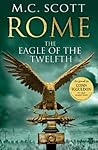
― Rome: The Eagle of the Twelfth
"Pathetic. I should cashier you all now and destroy your Eagles." Silvanus spoke quietly; we had to strain to hear his voice. You could have heard the stars slide across the sky, we were so still and so silent. "If General Corbulo were here, he would destroy you. He dismissed half of the Fifth and the Tenth and sent them home. The rest are billeted in tents in the Armenian highlands with barley meal for fodder. He intends to make an army of them, to meet Vologases when he comes. I intend the same and therefore you will be treated the same as your betters in better legions. You will be proficient by the spring, or you will be dead." His gaze raked us, and we wondered which of us might die that night for the crime of being ineffectual. His voice rocked us. "To that end, you will spend the next three months in tents in the Mountains of the Hawk that lie between us and the sea. One hundred paces above the snow line, each century will determine an area suitable for three months’ stay and build its own base camp. You will alternate along the mountains’ length so that each century of the Fourth has a century of the Twelfth to either side, and vice versa. Each century will defend and maintain its own stocks against the men of the opposing legion; you are encouraged to avail yourselves of what you can. You may not remove stocks from camps belonging to other centuries of your own legion, and equally you may not aid in defending them against raiding parties from the opposing men. So that you may tell each other apart, the Twelfth legion will wear" – did I hear a note of distaste there? – "red cloth tied about their left arms at all times. The Fourth will wear blue. You will be provided with raw fleece with which to wrap your weapons that they might strike but not bite. A man who is careless enough to be captured by the other side will be flogged and returned to his unit. Any man who kills another will be flogged until dead and any man who wounds another will be staked out beyond the boundary of his camp for two days and nights; if he lives, he will be returned to his unit. Any man who dies of hunger, cold or fright, or who falls off the mountain, will be deemed to have died by his own hand. You have until the next watch to make ready. You are dismissed.”
― Rome: The Eagle of the Twelfth
“So we left the spear in the wagon and I dressed and still was not sick and together we walked to the head of the century. Tears had been ready to lead them. Macer was there, holding his horn. I saw them both shrug and get ready to swap Tears’ shield for the horn.
‘No, stay as you are,’ I said. ‘It doesn’t hurt to have someone else learning the signals. Tears can stay as Macer’s shield-man. Taurus, stay with Horgias.’
‘And you?’ someone asked.
‘Don’t worry about me.’ I grinned, careless of the listening gods. ‘I’m indestructible. I’ll outlive you all.”
― Rome: The Eagle of the Twelfth
‘No, stay as you are,’ I said. ‘It doesn’t hurt to have someone else learning the signals. Tears can stay as Macer’s shield-man. Taurus, stay with Horgias.’
‘And you?’ someone asked.
‘Don’t worry about me.’ I grinned, careless of the listening gods. ‘I’m indestructible. I’ll outlive you all.”
― Rome: The Eagle of the Twelfth
“The dying go so swiftly at the end. Always the speed of their leaving catches me unawares; so much left to say, to promise, to pray for.”
― Rome: The Art of War
― Rome: The Art of War
“What of honour? What of courage? What of all the things that bind the legions together?’ He gave a shrug and a nod together, and a faint grin that was all the old Juvens; wild, erratic, carefree. His tilted palm said, ‘What of them? Life is too precious.”
― Rome: The Art of War
― Rome: The Art of War
“The Fates guide he who will. He who won’t, they drag.”
― Rome: The Coming of the King (Rome 2): A compelling and gripping historical adventure that will keep you turning page after page
― Rome: The Coming of the King (Rome 2): A compelling and gripping historical adventure that will keep you turning page after page
“I nursed that flame as if it were my only son, and all round the ram nineteen other men did likewise.”
― Rome: The Eagle of the Twelfth
― Rome: The Eagle of the Twelfth
“My lady, it is the lady empress Sextilia Augusta, mother to—’ ‘She knows to whom I am mother. The entire world knows to whom I am mother. The entire world shares my shame.’ The empress’s voice was sharp”
― Rome: The Art of War
― Rome: The Art of War
“Imagine Melitene, land of plenty, under snow and ice and high blue skies; imagine it in spring, with the meltwater running off the mountains and the herds going up to the high pastures to graze and their milk scented with mint and citrus; imagine it in high summer, limpid in the day’s heat, with the hawks circling high above and the mares full fat with foal, swatting flies with their tails.
Imagine that a man enters this idyll who does not know that he has come to paradise, who brings with him such ill luck as to make the statue of Fortune fall on her face at his passing and set the crows circling in murderous groups, eleven at a time, number of ill augur.
Imagine such a man causing the minted milk to sour, and the men to sour with it, even before he gives the word to prosecute an unwinnable war, against the orders of his betters; or at least against Corbulo’s explicit command.
Such a man was our new general and while you will have heard of the statue that fell on its face and the other ill omens – they became common enough currency in Rome soon after – you may not know that he disobeyed orders when he began his war.”
― Rome: The Eagle of the Twelfth
Imagine that a man enters this idyll who does not know that he has come to paradise, who brings with him such ill luck as to make the statue of Fortune fall on her face at his passing and set the crows circling in murderous groups, eleven at a time, number of ill augur.
Imagine such a man causing the minted milk to sour, and the men to sour with it, even before he gives the word to prosecute an unwinnable war, against the orders of his betters; or at least against Corbulo’s explicit command.
Such a man was our new general and while you will have heard of the statue that fell on its face and the other ill omens – they became common enough currency in Rome soon after – you may not know that he disobeyed orders when he began his war.”
― Rome: The Eagle of the Twelfth
“Tell me we’re not going to be stoking up the cook fires to build palisades through the night by their light.’ I stood, turning as I spoke.
Gravely, he said, ‘You’re not going to be stoking the cook fires and building palisades through the night by their light.’
Something was wrong with Lupus. He had never in his life made a joke, and his eyes were not laughing; quite the reverse.”
― Rome: The Eagle of the Twelfth
Gravely, he said, ‘You’re not going to be stoking the cook fires and building palisades through the night by their light.’
Something was wrong with Lupus. He had never in his life made a joke, and his eyes were not laughing; quite the reverse.”
― Rome: The Eagle of the Twelfth
“Dreams are rarely completely true. They show the essence of what might be; the skill is in the reading. But I had vivid dreams and they felt real to me, which was what mattered. And I acted on them, which mattered too. If you honour your dreams, they will honour you.”
― Rome: The Coming of the King (Rome 2): A compelling and gripping historical adventure that will keep you turning page after page
― Rome: The Coming of the King (Rome 2): A compelling and gripping historical adventure that will keep you turning page after page
“Seeking more information, I walked through the market listening to the gossip and discovered that our new general, the man sent to quell the unrest in the east, was the second son of a provincial tax collector whose only claims to recognition were that he had commanded some legions in Britain in the heady, early days of the invasion, that his brother had once stood for consul, and that he had been a governor in some African province, where the locals had thrown turnips at him.
Despairing, I returned to the house, and that despair deepened later when Horgias came home with the news that our new paragon of martial virtue had until recently been hiding in Greece, in disgrace for having fallen asleep during one of Nero’s recitals in the theatre.”
― Rome: The Eagle of the Twelfth
Despairing, I returned to the house, and that despair deepened later when Horgias came home with the news that our new paragon of martial virtue had until recently been hiding in Greece, in disgrace for having fallen asleep during one of Nero’s recitals in the theatre.”
― Rome: The Eagle of the Twelfth
“We all make mistakes that in later adulthood we look back on with dismay.”
― The Emperor's Spy
― The Emperor's Spy
“I despised myself for my weakness. I may have dreamed all my youth of life as a horse-trader like my father; I may have railed against my conscription and loathed the legions on principle, but even so, every morning in this place I cursed my lack of valour and every night, when I slept, my traitorous
mind brought me dreams drenched in the blood of our enemies as my comrades in the Vth launched themselves into battle, taking risks, winning glory, rising in the ranks, killing the enemy and so becoming men...all without my being there.
The fact that it was winter, when the weather forced a kind of peace on both sides, and that my comrades were currently enduring endless forced marches over the mountains in western Armenia because their general had deemed them unfit for battle, did nothing to hamper my fantasies.”
― Rome: The Eagle of the Twelfth
mind brought me dreams drenched in the blood of our enemies as my comrades in the Vth launched themselves into battle, taking risks, winning glory, rising in the ranks, killing the enemy and so becoming men...all without my being there.
The fact that it was winter, when the weather forced a kind of peace on both sides, and that my comrades were currently enduring endless forced marches over the mountains in western Armenia because their general had deemed them unfit for battle, did nothing to hamper my fantasies.”
― Rome: The Eagle of the Twelfth
“Do you have still the dye with which to turn your tunic red?’
‘The madder? Yes, I do.’
‘Enough of it for a century?’
‘Enough for the entire cohort, if you want it.’
He twitched a smile then; I was coming to know it, and to revel in the sight of it. I was his then, part of the XIIth, and he knew it.
‘Not the entire cohort yet, Demalion. The century will do. Henceforth we are the Bloody First. And I fancy we might have a mule’s tail on our standard. See to it on our return.”
― Rome: The Eagle of the Twelfth
‘The madder? Yes, I do.’
‘Enough of it for a century?’
‘Enough for the entire cohort, if you want it.’
He twitched a smile then; I was coming to know it, and to revel in the sight of it. I was his then, part of the XIIth, and he knew it.
‘Not the entire cohort yet, Demalion. The century will do. Henceforth we are the Bloody First. And I fancy we might have a mule’s tail on our standard. See to it on our return.”
― Rome: The Eagle of the Twelfth
“I watched a moment longer, studying the terrain and the scuffed earth beyond the bluffs, and then, more softly, said, ‘Tears, signal to Lupus. Ask for cavalry.’
We had cavalry...by heaven, did we have cavalry.”
― Rome: The Eagle of the Twelfth
We had cavalry...by heaven, did we have cavalry.”
― Rome: The Eagle of the Twelfth
“Given of the god,
Given to the god,
Taken by the god in valour, honour and glory.
May you journey safely to your destination.”
― Rome: The Eagle of the Twelfth
Given to the god,
Taken by the god in valour, honour and glory.
May you journey safely to your destination.”
― Rome: The Eagle of the Twelfth
“A man who had the legions of the east marching at his back could be bred by a donkey on a mule and the senate would have no choice but to accept him.”
― Rome: The Eagle of the Twelfth
― Rome: The Eagle of the Twelfth
“The enemy came towards us thick as mercury poured into a channel; a simmering tide oozing from the furnace of the risen sun into the pass below us. I felt Syrion tighten his grip on the banner haft, we were that close, that closely knit. On my left, I felt Tears... I felt him breathe, I felt his
heartbeat, I felt when he smiled, and when he did my soul sang in joy and glory and my only regret – I swear this to you now as the perfect truth – my sole regret was that the night could not have lasted longer.
I did not crave another night, only that the one we had might have been stretched a little, giving us time to learn more of each other, and perhaps with more privacy than a hollow in the woods where we could hear that other men were trying to sleep as easily as they could hear that we were not.”
― Rome: The Eagle of the Twelfth
heartbeat, I felt when he smiled, and when he did my soul sang in joy and glory and my only regret – I swear this to you now as the perfect truth – my sole regret was that the night could not have lasted longer.
I did not crave another night, only that the one we had might have been stretched a little, giving us time to learn more of each other, and perhaps with more privacy than a hollow in the woods where we could hear that other men were trying to sleep as easily as they could hear that we were not.”
― Rome: The Eagle of the Twelfth
“The mare on which the traitor had been seated at the time of his death was, obviously, no longer considered the best horse in Parthia. It was amazing that she had not been served as stew at one of the banquets.”
― Rome: The Eagle of the Twelfth
― Rome: The Eagle of the Twelfth
“They knew of the Vth, my legion, of their skill in battle, of how they had won Antium for Octavian, and then fought against Parthia for Tiberius; they were glad the Vth was not yet on their borders, although concerned that it was camped so close in Moesia. I may have loathed the Vth on principle when I was forced to march in its company, but here it was my legion; the men were my brothers. I caught myself smiling broadly once, or rather, Pantera caught me, and threw me a look that ensured I didn’t smile again for the rest of the meal.”
― Rome: The Eagle of the Twelfth
― Rome: The Eagle of the Twelfth
“The sun edged up until it caught the first heights of our standards. I saw the raised fist of Jupiter reach for the first rays, folding the light into its majesty so that it blazed with a life all its own.
I raised my hand to join it and the cheer that broke along the line was deeper than the enemy drumbeats, lasted longer, grew louder, and harder. It reached the oncoming cavalry and I saw them check in their advance, saw the horses pitch and stumble as they took the first rise of the hill.”
― Rome: The Eagle of the Twelfth
I raised my hand to join it and the cheer that broke along the line was deeper than the enemy drumbeats, lasted longer, grew louder, and harder. It reached the oncoming cavalry and I saw them check in their advance, saw the horses pitch and stumble as they took the first rise of the hill.”
― Rome: The Eagle of the Twelfth
“We broke camp together and set off in our opposite directions: we of the XIIth and our allies marched east, towards the rising sun, combat and honour; the IVth went west, to the setting sun, to ignominy and a wealth of digging. We sang as we marched. They did not.”
― Rome: The Eagle of the Twelfth
― Rome: The Eagle of the Twelfth
“Governor Paetus...’ Lupus closed his eyes that we might not read the rage in them. ‘Governor Paetus has informed us that he will return to our camp at Rhandaea with the Fourth legion, there to build the palisades and set up defences sufficient to deter the enemy. He will take with him the Eagles,
and keep them safe, so that if a legion is lost it can be re-formed, and its honour may live on.’
There was a moment’s silence as we all wrestled with the impossibility of what we had heard. The IVth leaving. And the Eagles going with them so that if a legion – our legion, there was no other one – was ‘lost’, which is to say annihilated, destroyed to the last man...
And that’s when our discipline broke apart.”
― Rome: The Eagle of the Twelfth
and keep them safe, so that if a legion is lost it can be re-formed, and its honour may live on.’
There was a moment’s silence as we all wrestled with the impossibility of what we had heard. The IVth leaving. And the Eagles going with them so that if a legion – our legion, there was no other one – was ‘lost’, which is to say annihilated, destroyed to the last man...
And that’s when our discipline broke apart.”
― Rome: The Eagle of the Twelfth
“Three old men with moon-silver hair and slow, ponderous movement took him in their arms and laid him on a marble slab and set silver coins on his eyes and swung incense over him, murmuring as
priests do to fill what might otherwise be a god-sent silence.”
― Rome: The Eagle of the Twelfth
priests do to fill what might otherwise be a god-sent silence.”
― Rome: The Eagle of the Twelfth
“Meanwhile, we must find ourselves a donkey colt. Zechariah was a rambling idiot who contradicted himself with each second word, but every child knows that the king comes in righteousness and salvation riding on an ass. We can’t let it pass.’
‘We can’, Pantera said. ‘We must. This is a battle, not a coronation. He will ride Iksahra’s mare. Nothing less will keep him alive.’
‘The ass is to signify peace.’
‘And righteousness, I heard. But to get to peace, he must live through war, and this mare is battle trained…’
‘But-’
‘But nothing. He’ll look better mounted on that mare than on anything else, trust me, and there are prophecies enough to go round; one of them probably mentions a white horse with black feet if you look hard enough. Put your effort into seeking that out if you find yourself with time on your hands through the morning.”
― Rome: The Coming of the King
‘We can’, Pantera said. ‘We must. This is a battle, not a coronation. He will ride Iksahra’s mare. Nothing less will keep him alive.’
‘The ass is to signify peace.’
‘And righteousness, I heard. But to get to peace, he must live through war, and this mare is battle trained…’
‘But-’
‘But nothing. He’ll look better mounted on that mare than on anything else, trust me, and there are prophecies enough to go round; one of them probably mentions a white horse with black feet if you look hard enough. Put your effort into seeking that out if you find yourself with time on your hands through the morning.”
― Rome: The Coming of the King
“Cadus spoke the local Greek better than I did; they stretch the vowels here, and round them off, so that words that look the same on the written page sound as if they are spoken by a goat with catarrh.”
― Rome: The Eagle of the Twelfth
― Rome: The Eagle of the Twelfth
“There are days in life where each moment passes and is remarkable in its own right, but not particular. Then, occasionally, there comes a day when a particular moment holds the key to different futures, and the gods hold their breath upon its turning.”
― Rome: The Coming of the King (Rome 2): A compelling and gripping historical adventure that will keep you turning page after page
― Rome: The Coming of the King (Rome 2): A compelling and gripping historical adventure that will keep you turning page after page
“I had to kneel to pull the blade out again, and stayed still afterwards. My heart was a bucking bull in my chest, my hands were slick with sweat, my face itched under drying blood. But for all that, I felt for the first time as I had the night we raided the camp of the IVth on the mountains; I felt alive, and
glad to be so. If I had died in that moment, fairly, I truly think I would not have minded. And I would not have traded places with any man then, not for all the wealth of Parthia. I had heard of this, but had never felt it for myself; that this is what battle does for a man when he has trained for it.”
― Rome: The Eagle of the Twelfth
glad to be so. If I had died in that moment, fairly, I truly think I would not have minded. And I would not have traded places with any man then, not for all the wealth of Parthia. I had heard of this, but had never felt it for myself; that this is what battle does for a man when he has trained for it.”
― Rome: The Eagle of the Twelfth
“At this moment,’ I said, ‘I think you will be surprised at what he will allow. Our centurion has just discovered what he lives for, and it is this.”
― Rome: The Eagle of the Twelfth
― Rome: The Eagle of the Twelfth