Goodreads helps you follow your favorite authors. Be the first to learn about new releases!
Start by following Omori Sogen.

Showing 1-30 of 160
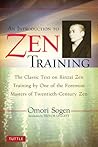
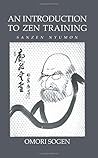
“The eternity of "anytime" shines in this moment "now" while the unlimitedness of "anyplace" is manifested in the limits of "here." When the universality of "anyone" dances out in the individual "I," for the first time you have the world of Zen.”
― An Introduction to Zen Training
― An Introduction to Zen Training
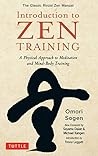
“In the distinguished book Zazen no Shokei by the lay Zen Master Kawajiri Hogin, he writes, “Because zazen is training to realize the One Mind of yourself, it is a mistake to set up an aim outside of yourself … Not setting up an aim is the true aim.”
― Introduction to Zen Training: A Physical Approach to Meditation and Mind-Body Training
― Introduction to Zen Training: A Physical Approach to Meditation and Mind-Body Training
“The act of correctly seeing this world from this state of concentration (jyo) and the world of samadhi is called “wisdom.” In other words, wisdom is the act of perceiving things of this world as they truly are.”
― Introduction to Zen Training: A Physical Approach to Meditation and Mind-Body Training
― Introduction to Zen Training: A Physical Approach to Meditation and Mind-Body Training
“it goes without saying that since time immemorial it has been forbidden to practice Zen as a means of accomplishing some purpose or other, for Zen should be without purposes and without acquisitions.”
― Introduction to Zen Training: A Physical Approach to Meditation and Mind-Body Training
― Introduction to Zen Training: A Physical Approach to Meditation and Mind-Body Training
“Kinhin means walking in the Zen hall after sitting in Zen meditation for some time. We walk meditatively with our hands held against our chests. The closed right hand held lightly against the chest is covered with the left hand, and both of the arms are held up horizontally.”
― Introduction to Zen Training: A Physical Approach to Meditation and Mind-Body Training
― Introduction to Zen Training: A Physical Approach to Meditation and Mind-Body Training
“It goes without saying that the method of melting the ice of our egos into water, as they originally are, lies in samadhi.”
― Introduction to Zen Training: A Physical Approach to Meditation and Mind-Body Training
― Introduction to Zen Training: A Physical Approach to Meditation and Mind-Body Training
“The second chapter in Master Harada Sogaku’s Sanzen no Hiketsu mentions that direct knowledge of the practice of zazen corresponds to those topics I have already covered.”
― Introduction to Zen Training: A Physical Approach to Meditation and Mind-Body Training
― Introduction to Zen Training: A Physical Approach to Meditation and Mind-Body Training
“As long as we make the Truth and the Absolute our primary objects without transcending the duality of subject and object, we are not said to be in zazen, even if we formally sit in strict conformity to its requirements.”
― Introduction to Zen Training: A Physical Approach to Meditation and Mind-Body Training
― Introduction to Zen Training: A Physical Approach to Meditation and Mind-Body Training
“By emptying ourselves we become one with objects, deeply absorbed in our work. To be thus thoroughly one with everything with which we are confronted is the true essence of mu. It is the state of both physical and spiritual liberation, to which kufu in movement should point.”
― Introduction to Zen Training: A Physical Approach to Meditation and Mind-Body Training
― Introduction to Zen Training: A Physical Approach to Meditation and Mind-Body Training
“His own clothes were simple but always clean and neat. When some hippies argued that this was not “natural,” Omori said nothing but pointed to a nearby cat, busy cleaning and smoothing its fur.”
― Introduction to Zen Training: A Physical Approach to Meditation and Mind-Body Training
― Introduction to Zen Training: A Physical Approach to Meditation and Mind-Body Training
“think that what Master Hakuin means by his words “beyond dualism” is that it is not only we, who transcend such playful dualism, but also all other things in their own no self-nature that are in operation according to their selfless essence.”
― Introduction to Zen Training: A Physical Approach to Meditation and Mind-Body Training
― Introduction to Zen Training: A Physical Approach to Meditation and Mind-Body Training
“But when we break through that delusion, the illusion caused by selfish desires and doubt, and come into contact with the Absolute for a fraction of a second, we realize our original True Self. This experience is called satori or kensho.12 In short, this is awakening to one’s True Self. It may be said that the aim of Zen is to have that kind of experience.”
― Introduction to Zen Training: A Physical Approach to Meditation and Mind-Body Training
― Introduction to Zen Training: A Physical Approach to Meditation and Mind-Body Training
“When one holds one’s sword face to face with one’s opponent, there is no separation between the two. The undivided indivisible state of integration is maintained with the Self as the one and only general striding over Heaven and Earth. However, at the same time, a living opportunity waits for one to act spontaneously at any moment in response to the slightest change in the surroundings. Sitter and surrounding must be like this. We should take care not to become like the stone images of Jizo abandoned to the loneliness and emptiness of mountains.”
― Introduction to Zen Training: A Physical Approach to Meditation and Mind-Body Training
― Introduction to Zen Training: A Physical Approach to Meditation and Mind-Body Training
“I would like to explain the three aspects of sitting in the following order: (1) seating the body; (2) regulating the breath; (3) stabilizing the mind. Before I begin, however, I would like to briefly discuss the preliminary precautions to take in order to settle the mind and body for sitting. In Zazen-gi, it states, First awaken your compassionate mind with a deep longing to save all sentient beings. You must practice samadhi meditation with great care, and promise to ferry these sentient beings over to the other shore, refusing to practice zazen only for your own emancipation.2 In other words, our sitting must be based on the compassionate desire to save all sentient beings by means of calming the mind.”
― Introduction to Zen Training: A Physical Approach to Meditation and Mind-Body Training
― Introduction to Zen Training: A Physical Approach to Meditation and Mind-Body Training
“In short, all this should emphasize the concentration of power in the whole body by simultaneously placing strength in the tanden and by infusing the whole body with energy moving away from the tanden. Thus, by means of the equilibrium of the centrifugal and the centripetal force, the whole body is brought to a state of zero and spiritual power will pervade the whole body intensely.”
― Introduction to Zen Training: A Physical Approach to Meditation and Mind-Body Training
― Introduction to Zen Training: A Physical Approach to Meditation and Mind-Body Training
“It is especially desirable to let the concentrated state of mind, samadhi, operate in our everyday activities.”
― Introduction to Zen Training: A Physical Approach to Meditation and Mind-Body Training
― Introduction to Zen Training: A Physical Approach to Meditation and Mind-Body Training
“In Tendai’s Shoshikan,38 the way to get out of samadhi is discussed in detail. According to it, we must harmonize mind, breath and body in getting out of samadhi, just as we do in getting into it. When we start sitting, we should move the upper body back and forth and from side to side to balance it, and then put breath and mind in order. When we are going to get out of the state of samadhi, on the other hand, we should carefully relax the mind, and then exhale, and last of all move the body. Before we stand up after sitting for a certain duration of time, we should move the body in the above manner.”
― Introduction to Zen Training: A Physical Approach to Meditation and Mind-Body Training
― Introduction to Zen Training: A Physical Approach to Meditation and Mind-Body Training
“Kawajiri Hogin classifies those who sit for wrong reasons as: 1) those who sit in order to tranquilize their minds; 2) those who sit to be empty in their minds; 3) those who solve koan as if they were guessing games; 4) those who start sitting, motivated by their wish for escape from this disturbing world.”
― Introduction to Zen Training: A Physical Approach to Meditation and Mind-Body Training
― Introduction to Zen Training: A Physical Approach to Meditation and Mind-Body Training
“When I speak about zazen, what comes to mind first is the following passage from the Dan-gyo, a record of the life and sayings of the Sixth Patriarch of Zen Buddhism, Eno Daikan (Hui-neng Ta-chien):30 Za (sitting) means to not give rise to thoughts (no dualism) under any circumstance. Zen (meditation) means to see your original nature and not become confused.”
― Introduction to Zen Training: A Physical Approach to Meditation and Mind-Body Training
― Introduction to Zen Training: A Physical Approach to Meditation and Mind-Body Training
“Hogin further writes that by doing so “such a man practices zazen in the wrong way.” Here lies the mistake of the believers of “no-thought and no-thinking.” These people forget that the true meaning of the phrase comes alive when they become one with susoku and koan.”
― Introduction to Zen Training: A Physical Approach to Meditation and Mind-Body Training
― Introduction to Zen Training: A Physical Approach to Meditation and Mind-Body Training
“In the Soto sect, however, the issue of kensho (seeing one’s original self-nature) is seldom discussed for it is already evident in Shakyamuni’s enlightenment attained under the bodhi tree. The content of his enlightenment later developed and was incorporated into Buddhist teachings. In view of this fact, everything should be correctly perceived in samadhi by all Buddhists. Therefore, in the Soto sect, one is expected to sit in zazen, not out of necessity for seeing one’s true self, but for the sake of discipline in enlightenment. All one is expected to do is to forget and abandon both mind and body, throw them into the house of Buddha and act as Buddha in every move of one’s hands and in every step of one’s feet.”
― Introduction to Zen Training: A Physical Approach to Meditation and Mind-Body Training
― Introduction to Zen Training: A Physical Approach to Meditation and Mind-Body Training
“The Rinzai sect of Zen Buddhism came to fruition during this extremely violent, war-ridden age, hence, its naturally sharp and vigorous spirit. Its special emphasis on independence from words came from its denial of the empty ideas and words cherished by the intelligentsia. And its insistence on thorough insight into one’s original self-nature alludes to its protest against the intellectuals who spent their time repeating and criticizing second and third-hand theories without possessing any philosophy of their own formulation. At any rate, it may be safely said that the characteristic of the Rinzai Sect lies in its emphasis on the spontaneous operation of the spirit of Zen, arising from the standpoint of the awakened Self. Regarding the Soto sect, it is stated in Ninden Ganmoku:”
― Introduction to Zen Training: A Physical Approach to Meditation and Mind-Body Training
― Introduction to Zen Training: A Physical Approach to Meditation and Mind-Body Training
“The second type of Zen is Bompu Zen (Common Zen). According to Shumitsu, it entails “correctly understanding cause and effect though still training with the dualism of joy and loathing.” In general, though expounding a belief that good causes bring good effects and bad causes bring bad effects, it is a type of training which does not embody any penetrating truth. Those who practice Zen to cure an illness or for the sake of their health should probably look at this type of Zen. In general, though, Gedo Zen and Bompu Zen are called “Zen in the midst of delusion.”
― Introduction to Zen Training: A Physical Approach to Meditation and Mind-Body Training
― Introduction to Zen Training: A Physical Approach to Meditation and Mind-Body Training
“Nembutsu is the invocation of Buddha’s name. It is said, “When I invoke the name of Buddha, there is neither I nor Buddha.” This is the true nembutsu. It pertains to the realm of oneness, rather than to that of dualism in which self and Buddha are deemed to be separate as subject and object of invocation respectively. Thus, it is not too much to say that the samadhi of Mahayana Zen Buddhism is the most supreme form of nembutsu.”
― Introduction to Zen Training: A Physical Approach to Meditation and Mind-Body Training
― Introduction to Zen Training: A Physical Approach to Meditation and Mind-Body Training
“also mention in the same book that Master Imakita Kosen likewise writes in the fourth chapter of Zenkai Ichiran that the consistent way of a superior man lies nowhere but in saying, “Yes!”7 Master Takuan calls this mind that answers, “Yes!” Immovable Wisdom. I think that this spontaneous response to anything in the affirmative selflessly and with mu-shin (no mind) is “praising the practice of zazen and faithfully following it.”
― Introduction to Zen Training: A Physical Approach to Meditation and Mind-Body Training
― Introduction to Zen Training: A Physical Approach to Meditation and Mind-Body Training
“Therefore, in the Soto sect, one is expected to sit in zazen, not out of necessity for seeing one’s true self, but for the sake of discipline in enlightenment. All one is expected to do is to forget and abandon both mind and body, throw them into the house of Buddha and act as Buddha in every move of one’s hands and in every step of one’s feet. In this sense, one sits in meditation in such a way that by doing so one is regarded as a Buddha. It is for this reason that, in the Soto sect, neither koan nor kufu for the sake of enlightenment is required. Only in sitting with all one’s might will Dharma be realized. Zazen anticipates nothing. The physical form of one in zazen in itself is the form of the enlightened Buddha.”
― Introduction to Zen Training: A Physical Approach to Meditation and Mind-Body Training
― Introduction to Zen Training: A Physical Approach to Meditation and Mind-Body Training
“When all are seated, the jikijitsu claps the taku (wooden clappers) once, followed by the four successive rings of the small metal bell called inkin at measured intervals. This is the sign of shijo, which means the beginning of samadhi or zazen. In the ensuing period of quietness, the slightest movement of our bodies, even coughing, is forbidden.”
― Introduction to Zen Training: A Physical Approach to Meditation and Mind-Body Training
― Introduction to Zen Training: A Physical Approach to Meditation and Mind-Body Training
“According to the dictionary, “en” of “enza” is defined “to be peaceful and to rest peacefully.” Thus, “za” means “to rest in peace.” Therefore, “enza” is “to sit peacefully.” It is the same as samadhi.”
― Introduction to Zen Training: A Physical Approach to Meditation and Mind-Body Training
― Introduction to Zen Training: A Physical Approach to Meditation and Mind-Body Training
“Eventually there will be a time when the pursuing self and the pursued mu are brought into oneness. It is then that mu becomes the self, and the self becomes mu. Both will then be smashed and transcended simultaneously.”
― Introduction to Zen Training: A Physical Approach to Meditation and Mind-Body Training
― Introduction to Zen Training: A Physical Approach to Meditation and Mind-Body Training
“When we are confronted with something white, we become completely white; when we see something red, we become completely united as if red is self and self is red. This is when we are said to be in samadhi. To become completely the other means for us to be one with them. It is to give life to them by means of dedicating all of ourselves to them. Therefore, it is as if two mirrors reflect each other without any specific images reflected between them. In such a state there is no sign of perceiving and being perceived. Hence, it is called “no receiving.” If we come to think of it this way, if we differentiate between Zen and samadhi, samadhi is what we attain when we train in Zen. Combining the two gives us Zen concentration (zenjyo in Japanese).”
― Introduction to Zen Training: A Physical Approach to Meditation and Mind-Body Training
― Introduction to Zen Training: A Physical Approach to Meditation and Mind-Body Training