Goodreads helps you follow your favorite authors. Be the first to learn about new releases!
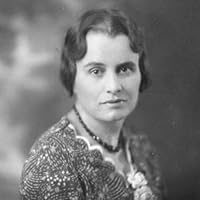
Start by following Grace Lee Nute.
Showing 1-3 of 3
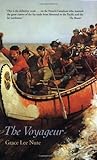
“The following year a famous English author, Captain Frederick Marryat, visited Fort Snelling. In the book he published later, A Diary in America, with Remarks on Its Institutions, he refers to the voyageur hamlet:23 “The French Canadians, who are here employed by the Fur Company, are a strange set of people. There is no law here, or appeal to law; yet they submit to authority, and are managed with very little trouble. They bind themselves for three years, and during that time … they work diligently and faithfully; ready at all seasons and at all hours, and never complaining, although the work is often extremely hard. Occasionally they return to Canada with their earnings, but the major part have connected themselves with Indian women and have numerous families; for children in this fine climate are so numerous, that they almost appear to spring from the earth.”
― The Voyageur
― The Voyageur
“From these unions with Indian women developed the large class called indiscriminately half-breeds, métis, bois brulés, which formed such a large percentage of all American and Canadian frontier settlements. Many of their descendants are men and women of distinction and social standing in the modern cities that have developed from old posts, such as Detroit, Milwaukee, St. Paul, Winnipeg, and St. Louis.”
― The Voyageur
― The Voyageur
“Christmas and the New Year were celebrated with vastly more acclaim and spontaneity than in most civilized countries, and there were many other gala days which no voyageur ever passed up without the celebration prescribed in the pays d’en haut. Harmon’s first Christmas in the interior came as somewhat of a shock to him, accustomed to the proprieties of the New England mode of celebration, for he says, “This day being Christmas, our people have spent it as usual in drinking and fighting.”11 Kennicott, however, was alive to the picturesqueness of this class of men and more in sympathy with their methods of self-expression. Consequently his remarks on a Christmas celebration in the Northwest are more detailed and full of interest. “The day after Christmas, Flett gave a Christmas ball…. The dancing was, I may say without vulgarity, decidedly ‘stunning.’ I should hardly call it graceful. The figures, if they may be called such, were only Scotch reels of four, and jigs; and … the main point to which the dancers’ efforts seemed to tend, was to get the largest amount of exercise out of every muscle in the frame…. The music consisted of a very bad performance of one vile, unvarying tune, upon a worse old fiddle, accompanied by a brilliant accompaniment upon a large tin pan.”
― The Voyageur
― The Voyageur