Goodreads helps you follow your favorite authors. Be the first to learn about new releases!
Start by following Dan Abrams.

Showing 1-30 of 55
“At times he became so entangled in his thoughts that he completely forgot his destination. He wandered, but used the time well.”
― Lincoln's Last Trial: The Murder Case That Propelled Him to the Presidency
― Lincoln's Last Trial: The Murder Case That Propelled Him to the Presidency
“Make few statements,” Lincoln once explained, “for if I made too many the opposite side might make me prove them.”
― Lincoln's Last Trial: The Murder Case That Propelled Him to the Presidency
― Lincoln's Last Trial: The Murder Case That Propelled Him to the Presidency
“say only the truth. It’s been my experience that no man has a good enough memory to be a successful liar.”
― Lincoln's Last Trial: The Murder Case That Propelled Him to the Presidency
― Lincoln's Last Trial: The Murder Case That Propelled Him to the Presidency
“He had seen a scribbled copy of a letter Lincoln had written to Justice of the Peace John King, who had been elected only a year earlier and had turned to him for advice on the administration of justice. The letter had been circulated by friends eager to push Lincoln’s political prospects, and Hitt had been so taken with it he’d made a copy for himself. He’d figured it was pretty good advice: “Listen well to all the evidence,” Lincoln had written, “stripping yourself of all prejudice, if any you have, and throwing away if you can all technical law knowledge, hear the lawyers make their arguments as patiently as you can, and after the evidence and the lawyers’ arguments are through, then stop one moment and ask yourself: What is the justice in this case? And let that sense of justice be your decision.”
― Lincoln's Last Trial: The Murder Case That Propelled Him to the Presidency
― Lincoln's Last Trial: The Murder Case That Propelled Him to the Presidency
“It is good policy to never plead what you need not, lest you oblige yourself to prove what you cannot.”
― Lincoln's Last Trial: The Murder Case That Propelled Him to the Presidency
― Lincoln's Last Trial: The Murder Case That Propelled Him to the Presidency
“But say only the truth. It’s been my experience that no man has a good enough memory to be a successful liar.”
― Lincoln's Last Trial: The Murder Case That Propelled Him to the Presidency
― Lincoln's Last Trial: The Murder Case That Propelled Him to the Presidency
“His craft had enabled him to perfect the art of dispassion,”
― Lincoln's Last Trial: The Murder Case That Propelled Him to the Presidency
― Lincoln's Last Trial: The Murder Case That Propelled Him to the Presidency
“The right to a trial by jury probably became the bedrock of the legal system in May 1215, when landowners, barons as they were known, forced King John at knifepoint to sign the Magna Carta on the meadow at Runnymede. One clause of it read, “(N)o freeman shall be taken or imprisoned or seized or exiled or in any way destroyed...except by the”
― Lincoln's Last Trial: The Murder Case That Propelled Him to the Presidency
― Lincoln's Last Trial: The Murder Case That Propelled Him to the Presidency
“In 1832, in Lincoln’s first attempt to win public office, the good Reverend Cartwright had defeated him for a seat in the Illinois state legislature. They met a second time in the congressional election of 1846, an especially nasty campaign. Running as a Whig, Lincoln objected strongly to Cartwright’s insistence on bringing his religion into the public square. The Democrat Cartwright responded by tarring Lincoln as “an infidel,” a man unfit to represent good Christians. Lincoln had won that election, and neither of the men had seen fit to apologize.”
― Lincoln's Last Trial: The Murder Case That Propelled Him to the Presidency
― Lincoln's Last Trial: The Murder Case That Propelled Him to the Presidency
“judge sits higher than the participants to mark the fact that he is above the fray. According to legend, this tradition goes back more than one thousand years, when the British king conducted the court from his raised throne. As the court system spread throughout his realm, the king’s chosen representatives served as judges, and to signify their importance they sat higher than anyone else. In addition to its practicality—the high seat enabled the judge to view the entire courtroom—it also became symbolic of the fact that the impartial keeper of the law was not a participant in the dispute. So Judge Andrews, in his soft, steady voice, decided, “I can agree with a great many of the propositions that both sides have laid down in this argument...”
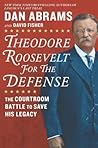
― Theodore Roosevelt for the Defense: The Courtroom Battle to Save His Legacy – A NYT Bestseller Historical Nonfiction Study of a Great American Trial
― Theodore Roosevelt for the Defense: The Courtroom Battle to Save His Legacy – A NYT Bestseller Historical Nonfiction Study of a Great American Trial
“The Supreme Court justice Oliver Wendell Holmes, then in the midst of his second decade on the court, once observed, “Lawyers spend a great deal of their time shoveling smoke.”
― Theodore Roosevelt for the Defense: The Courtroom Battle to Save His Legacy – A NYT Bestseller Historical Nonfiction Study of a Great American Trial
― Theodore Roosevelt for the Defense: The Courtroom Battle to Save His Legacy – A NYT Bestseller Historical Nonfiction Study of a Great American Trial
“If you live and you haven’t stood for anything, you didn’t live for anything either.”
― Alabama v. King: Martin Luther King Jr. and the Criminal Trial That Launched the Civil Rights Movement – A Gripping 1950s Nonfiction Account of the Courtroom Battle for Freedom
― Alabama v. King: Martin Luther King Jr. and the Criminal Trial That Launched the Civil Rights Movement – A Gripping 1950s Nonfiction Account of the Courtroom Battle for Freedom
“and federal courts have “judicial knowledge that harmony between Negro and white races in this city depends on continued segregation.”
― Alabama v. King: Martin Luther King Jr. and the Criminal Trial That Launched the Civil Rights Movement – A Gripping 1950s Nonfiction Account of the Courtroom Battle for Freedom
― Alabama v. King: Martin Luther King Jr. and the Criminal Trial That Launched the Civil Rights Movement – A Gripping 1950s Nonfiction Account of the Courtroom Battle for Freedom
“Hitt knew Lincoln to be a man who carried most of what he needed in his mind, although when necessary he actually carried his legal papers in his tall hat, and spent as little time as possible on the mundane chores that chewed up the day.”
― Lincoln's Last Trial: The Murder Case That Propelled Him to the Presidency
― Lincoln's Last Trial: The Murder Case That Propelled Him to the Presidency
“While there was some question about whether the doctrine of self-defense was proper in a manslaughter case, and how strongly Selfridge had actually made this claim, the Grand Jury had decided, “A man may repel force by force in defense of his person against anyone who manifestly intends, or endeavors by violence or surprise, feloniously to kill him. And he is not obliged”
― Lincoln's Last Trial: The Murder Case That Propelled Him to the Presidency
― Lincoln's Last Trial: The Murder Case That Propelled Him to the Presidency
“It’s been my experience that no man has a good enough memory to be a successful liar.”
― Lincoln's Last Trial: The Murder Case That Propelled Him to the Presidency
― Lincoln's Last Trial: The Murder Case That Propelled Him to the Presidency
“Young attorney Royal France, a member of the Brooklyn Young Republican Club, then testified that Barnes had told him direct elections were not practical, “because it exposed the candidates to too much publicity; that the double campaign for the same office threw too much limelight on the candidates and that he could ruin the reputation of any man living if he threw enough limelight on it.” France had disagreed, he said, saying the kind of man who could stand any kind of limelight was the “kind of man we wanted to get into public office.”
― Theodore Roosevelt for the Defense: The Courtroom Battle to Save His Legacy – A NYT Bestseller Historical Nonfiction Study of a Great American Trial
― Theodore Roosevelt for the Defense: The Courtroom Battle to Save His Legacy – A NYT Bestseller Historical Nonfiction Study of a Great American Trial
“Lincoln’s own words: “I do mean to say that, although bad laws, if they exist, should be repealed as soon as possible, still while they continue in force...they should be religiously observed.”
― Lincoln's Last Trial: The Murder Case That Propelled Him to the Presidency
― Lincoln's Last Trial: The Murder Case That Propelled Him to the Presidency
“lone gunman acting entirely on his own had assassinated the president from over 250 feet away and then been murdered while in police custody by another lone gunman who simply walked into the police station.”
― Kennedy's Avenger: Assassination, Conspiracy, and the Forgotten Trial of Jack Ruby – A Gripping True Crime and Political History Book
― Kennedy's Avenger: Assassination, Conspiracy, and the Forgotten Trial of Jack Ruby – A Gripping True Crime and Political History Book
“King would later write of the legal system: “I have a deep and abiding admiration for the legal profession and the tremendous role it has played in the service of the cause with which I have been identified. The road to freedom is now a highway because lawyers throughout the land, yesterday and today, have helped clear the obstructions, have helped eliminate roadblocks, by their selfless, courageous espousal of difficult and unpopular causes.”
― Alabama v. King: Martin Luther King Jr. and the Criminal Trial That Launched the Civil Rights Movement – A Gripping 1950s Nonfiction Account of the Courtroom Battle for Freedom
― Alabama v. King: Martin Luther King Jr. and the Criminal Trial That Launched the Civil Rights Movement – A Gripping 1950s Nonfiction Account of the Courtroom Battle for Freedom
“Scottish journalist Charles Mackay described broadly what became known as confirmation bias in his 1852 book, Extraordinary Popular Delusions and the Madness of Crowds. “When men wish to construct or support a theory, how they torture facts into their service!”
― Kennedy's Avenger: Assassination, Conspiracy, and the Forgotten Trial of Jack Ruby – A Gripping True Crime and Political History Book
― Kennedy's Avenger: Assassination, Conspiracy, and the Forgotten Trial of Jack Ruby – A Gripping True Crime and Political History Book
“Before the twelfth century the legal system depended primarily on Church-established ecclesiastical courts, which believed that God protected the innocent and so relied in criminal cases on “ordeal,” a physical test like carrying a red-hot iron a certain distance without blistering, to determine guilt or innocence. Civil cases were resolved through “compurgation,” in which the litigant producing the most witnesses willing to take an oath in support won the case.”
― Lincoln's Last Trial: The Murder Case That Propelled Him to the Presidency
― Lincoln's Last Trial: The Murder Case That Propelled Him to the Presidency
“This visit to Syracuse was for a trial, in which Teddy Roosevelt was the accused. Sued by the former head of the state Republican Party, Mr. William Barnes, for libel. The supposed offense that brought him here: while endorsing a nonpartisan candidate for governor more than a year earlier, Roosevelt had railed against two-party political boss rule, claiming Republican and Democratic political bosses had worked together to “secure the appointment to office of evil men whose activities so deeply taint and discredit our whole governmental system.” The result, he said, is a government “that is rotten throughout in almost all of its departments” and that this “invisible government...is responsible for the maladministration and corruption in the public offices” and the good citizens of the state would never “secure the economic, social and industrial reforms...until this invisible government of the party bosses working through the alliance between crooked business and crooked politics is rooted out of the government system.”
― Theodore Roosevelt for the Defense: The Courtroom Battle to Save His Legacy – A NYT Bestseller Historical Nonfiction Study of a Great American Trial
― Theodore Roosevelt for the Defense: The Courtroom Battle to Save His Legacy – A NYT Bestseller Historical Nonfiction Study of a Great American Trial
“There are in the body politic, economic and social, many and grave evils and there is urgent necessity for the sternest war upon them... I hail as a benefactor every writer or speaker, every man who, on the platform or in book, magazine or newspaper, with merciless severity makes such attack, provided always that he in his turn remembers that the attack is of use only if it is absolutely truthful. The liar is no whit better than the thief, and if his mendacity takes the form of slander he may be worse than most thieves. It puts a premium upon knavery untruthfully to attack an honest man, or even with hysterical exaggeration to assail a bad man with untruth... “...The effort to make financial or political profit out of their destruction of character can only result in public calamity. Gross and reckless assaults on character, whether on the stump or in newspaper or magazine or book, create a morbid and vicious public sentiment, and at the same time act as a profound deterrent to able men of normal sensitiveness and tend to prevent them from entering the public service at any price.”
― Theodore Roosevelt for the Defense: The Courtroom Battle to Save His Legacy – A NYT Bestseller Historical Nonfiction Study of a Great American Trial
― Theodore Roosevelt for the Defense: The Courtroom Battle to Save His Legacy – A NYT Bestseller Historical Nonfiction Study of a Great American Trial
“to retreat, but may pursue his adversary until he has secured himself from all danger; and if he kill him in so doing, it is justifiable self-defense. But if the party killing had reasonable grounds for believing that the person slain had a felonious design against him, although it should afterward appear that there was no such design, it will not be murder, but will be either manslaughter or excusable homicide, according to the degree of caution and the probable grounds for such belief.”
― Lincoln's Last Trial: The Murder Case That Propelled Him to the Presidency
― Lincoln's Last Trial: The Murder Case That Propelled Him to the Presidency
“Years earlier Roosevelt had said, “No man is above the law and no man is below it, nor do we ask any man’s permission when we ask him to obey it. Obedience to the law is demanded as a right, not asked as a favor.”
― Theodore Roosevelt for the Defense: The Courtroom Battle to Save His Legacy – A NYT Bestseller Historical Nonfiction Study of a Great American Trial
― Theodore Roosevelt for the Defense: The Courtroom Battle to Save His Legacy – A NYT Bestseller Historical Nonfiction Study of a Great American Trial
“When I have a particular case in hand, I have that motive and feel an interest... in ferreting out the questions to the bottom, love to dig up the question by the roots and hold it up and dry before the fires of the mind.” At times, he had found, if he did not try to focus his thoughts on one point or another, his mind took him to unexpected places and showed him a different path.”
― Lincoln's Last Trial: The Murder Case That Propelled Him to the Presidency
― Lincoln's Last Trial: The Murder Case That Propelled Him to the Presidency
“And when necessary lawyers were expected to be truthful in their memories.”
― Lincoln's Last Trial: The Murder Case That Propelled Him to the Presidency
― Lincoln's Last Trial: The Murder Case That Propelled Him to the Presidency
“Faced with having to explain away the threats uttered by the prisoners, the young lawyer made a claim that hence became a staple of lawyers faced with foul words uttered by their client: “Words are often misrepresented, whether through ignorance, inattention or malice...for the tone of voice, the gesture, all that proceeds, accompanies and follows the different ideas which men annex to the same word, may so alter or modify a man’s discourse that it is almost impossible to repeat them precisely in the manner in which they were spoken. Besides, violent and uncommon actions...leave a trace in the multitude of circumstances that attend them, but words remain only in the memory of the hearers, who are commonly negligent or prejudiced.”
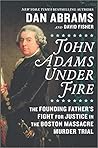
― John Adams Under Fire: The Founding Father's Fight for Justice in the Boston Massacre Murder Trial
― John Adams Under Fire: The Founding Father's Fight for Justice in the Boston Massacre Murder Trial
“Herndon, William H., and Jesse William Weik. Herndon’s Lincoln: The True Story of a Great Life. Chicago: Belford, Clarke, 1889.”
― Lincoln's Last Trial: The Murder Case That Propelled Him to the Presidency
― Lincoln's Last Trial: The Murder Case That Propelled Him to the Presidency