Goodreads helps you follow your favorite authors. Be the first to learn about new releases!
Start by following John Markoff.

Showing 1-30 of 84
“However, one intriguing shift that suggests there are limits to automation was the recent decision by Toyota to systematically put working humans back into the manufacturing process. In quality and manufacturing on a mass scale, Toyota has been a global leader in automation technologies based on the corporate philosophy of kaizen (Japanese for “good change”) or continuous improvement. After pushing its automation processes toward lights-out manufacturing, the company realized that automated factories do not improve themselves. Once Toyota had extraordinary craftsmen that were known as Kami-sama, or “gods” who had the ability to make anything, according to Toyota president Akio Toyoda.49 The craftsmen also had the human ability to act creatively and thus improve the manufacturing process. Now, to add flexibility and creativity back into their factories, Toyota chose to restore a hundred “manual-intensive” workspaces.”
― Machines of Loving Grace: The Quest for Common Ground Between Humans and Robots
― Machines of Loving Grace: The Quest for Common Ground Between Humans and Robots
“By the 1980's and 1990's, Moore's Law had emerged as the underlying assumption that governed almost everything in the Valley, from technology to business, education, and even culture. The "law" said the number of transistors would double every couple of years. It dictated that nothing stays the same for more than a moment; no technology is safe from its successor; costs fall and computing power increases not at a constant rate but exponentially: If you're not running on what became known as " Internet time," you're falling behind.”
― What the Dormouse Said: How the Sixties Counterculture Shaped the Personal Computer Industry
― What the Dormouse Said: How the Sixties Counterculture Shaped the Personal Computer Industry
“What will happen if our labor is no longer needed? If jobs for warehouse workers, garbage collectors, doctors, lawyers, and journalists are displaced by technology?”
― Machines of Loving Grace: The Quest for Common Ground Between Humans and Robots
― Machines of Loving Grace: The Quest for Common Ground Between Humans and Robots
“I believe that sociable technology will always disappoint because it promises what it can’t deliver,” Turkle writes. “It promises friendship but can only deliver ‘performances.’ Do we really want to be in the business of manufacturing friends that will never be friends?”
― Machines of Loving Grace: The Quest for Common Ground Between Humans and Robots
― Machines of Loving Grace: The Quest for Common Ground Between Humans and Robots
“Gradually, he began to understand that the AI community was actually his philosophical enemy. After all, their vision was to replace humans with machines, while he wanted to extend and empower people.”
― What the Dormouse Said: How the Sixties Counterculture Shaped the Personal Computer Industry
― What the Dormouse Said: How the Sixties Counterculture Shaped the Personal Computer Industry
“One of those was Gary Bradski, an expert in machine vision at Intel Labs in Santa Clara. The company was the world’s largest chipmaker and had developed a manufacturing strategy called “copy exact,” a way of developing next-generation manufacturing techniques to make ever-smaller chips. Intel would develop a new technology at a prototype facility and then export that process to wherever it planned to produce the denser chips in volume. It was a system that required discipline, and Bradski was a bit of a “Wild Duck”—a term that IBM originally used to describe employees who refused to fly in formation—compared to typical engineers in Intel’s regimented semiconductor manufacturing culture. A refugee from the high-flying finance world of “quants” on the East Coast, Bradski arrived at Intel in 1996 and was forced to spend a year doing boring grunt work, like developing an image-processing software library for factory automation applications. After paying his dues, he was moved to the chipmaker’s research laboratory and started researching interesting projects. Bradski had grown up in Palo Alto before leaving to study physics and artificial intelligence at Berkeley and Boston University. He returned because he had been bitten by the Silicon Valley entrepreneurial bug.”
― Machines of Loving Grace: The Quest for Common Ground Between Humans and Robots
― Machines of Loving Grace: The Quest for Common Ground Between Humans and Robots
“The separation of the fields of AI and human-computer interaction, or HCI, is partly a question of approach, but it’s also an ethical stance about designing humans either into or out of the systems we create.”
― Machines of Loving Grace: The Quest for Common Ground Between Humans and Robots
― Machines of Loving Grace: The Quest for Common Ground Between Humans and Robots
“It may take seconds for a human sitting in the driver’s seat, possibly distracted by an email or worse, to return to “situational awareness” and safely resume control of the car. Indeed the Google researchers may have already come up against the limits to autonomous driving. There is currently a growing consensus that the “handoff” problem—returning manual control of an autonomous car to a human in the event of an emergency—may not actually be a solvable one.”
― Machines of Loving Grace: The Quest for Common Ground Between Humans and Robots
― Machines of Loving Grace: The Quest for Common Ground Between Humans and Robots
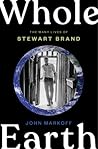
“Although he was largely an observer of the technical community that created Silicon Valley, his various ideas and crusades around the Whole Earth Catalog, which he created in the fall of 1968, foreshadow and resonate with the techno-utopian culture that the Valley spawned. He went on to rethink modern architecture from a biological perspective and later publicly broke with the environmental movement over nuclear power and GMO food.”
― Whole Earth: The Many Lives of Stewart Brand
― Whole Earth: The Many Lives of Stewart Brand
“Although it was still more than seven years before the first hobbyist personal computer would appear, the Catalog was sprinkled with hints that the power of computing might be seized from corporations and the military.”
― Whole Earth: The Many Lives of Stewart Brand
― Whole Earth: The Many Lives of Stewart Brand
“religious experience, inspiring the same kinds of passion that Vannevar Bush’s Memex article had given rise to for Engelbart twenty-three years earlier. Computing was just beginning to have an impact on society.”
― What the Dormouse Said: How the Sixties Counterculture Shaped the Personal Computer Industry
― What the Dormouse Said: How the Sixties Counterculture Shaped the Personal Computer Industry
“Both as a young man and more recently, he first figuratively and then literally set out to “play God,” initially by making the claim that humans had the power of gods and then during the past decade by creating an organization to save and restore endangered species with modern biotechnology.”
― Whole Earth: The Many Lives of Stewart Brand
― Whole Earth: The Many Lives of Stewart Brand
“His marriage to Jennings was disintegrating. It seemed that the world was starting to close in, and he had become agoraphobic. In the end, he kept up appearances, putting out the last Catalog, but he had begun to contemplate suicide.”
― Whole Earth: The Many Lives of Stewart Brand
― Whole Earth: The Many Lives of Stewart Brand
“between 2007 and 2012 the U.S. workforce gained 387,000 managers while losing almost two million clerical jobs.”
― Machines of Loving Grace: The Quest for Common Ground Between Humans and Robots
― Machines of Loving Grace: The Quest for Common Ground Between Humans and Robots
“National recognition, however, meant more pressure and more work, and it quickly began to take a toll. In September, after just eleven months, Brand announced, “The CATALOG has but 20 months to live.” Then he added: “The function of the skyrocket is to get as high as possible before it blows.”
― Whole Earth: The Many Lives of Stewart Brand
― Whole Earth: The Many Lives of Stewart Brand
“work. At the same time, Zakos attended conferences, making assertions that when companies ran A-B testing that compared the way the Cybertwins responded to text-based questions to the way humans in call centers responded to text-based questions, the Cybertwins outperformed the humans in customer satisfaction. They boasted that when they deployed a commercial system on the website of National Australia Bank, the country’s largest bank, more than 90 percent of visitors to the site believed that they were interacting with a human rather than a software program.”
― Machines of Loving Grace: The Quest for Common Ground Between Humans and Robots
― Machines of Loving Grace: The Quest for Common Ground Between Humans and Robots
“The Last Whole Earth Catalog, published in 1971, would offer a vast menu of items sprawling over almost 500 pages.”
― Whole Earth: The Many Lives of Stewart Brand
― Whole Earth: The Many Lives of Stewart Brand
“A microphone was set up in the audience, the one-inch-thick envelope of hundred-dollar bills was handed to each speaker, and people started walking up to the mike, taking the envelope, stating what they thought should be done with the money, and then handing it to the next person.”
― Whole Earth: The Many Lives of Stewart Brand
― Whole Earth: The Many Lives of Stewart Brand
“It was soon even clearer that they were riding a rocket ship. Brand had advanced the project about $25,000 from his family inheritance to produce the first Catalog. After selling out the first two thousand, they did ten thousand more in the spring, followed by a second run of twenty thousand. In July of 1969, the Catalog operation had its first profitable month, taking in almost $16,000 in income against $8,000 in expenses. For the Fall 1969 issue, they printed sixty thousand copies and had four thousand subscribers.”
― Whole Earth: The Many Lives of Stewart Brand
― Whole Earth: The Many Lives of Stewart Brand
“If you put a stake in the ground at Kepler’s, an eclectic bookstore run by pacifist Roy Kepler that was located on El Camino Real in Menlo Park beginning in the 1950s, and drew a five-mile circle around it, you would have captured Engelbart’s Augment research group at SRI, McCarthy’s Stanford Artificial Intelligence Laboratory, and Xerox’s Palo Alto Research Center, as well as the hobbyists who made up the People’s Computer Company and the Homebrew Computer Club. It”
― What the Dormouse Said: How the Sixties Counterculture Shaped the Personal Computer Industry
― What the Dormouse Said: How the Sixties Counterculture Shaped the Personal Computer Industry
“There is a fundamental distinction, however, between approaches to designing technology to benefit humans and designing technology as an end in itself. Today, that distinction is expressed in whether increasingly capable computers, software, and robots are designed to assist human users or to replace them.”
― Machines of Loving Grace: The Quest for Common Ground Between Humans and Robots
― Machines of Loving Grace: The Quest for Common Ground Between Humans and Robots
“Although driverless cars will displace millions of jobs, they will also save many lives. Today, decisions about implementing technologies are made largely on the basis of profitability and efficiency, but there is an obvious need for a new moral calculus. The devil, however, is in more than the details. As with nuclear weapons and nuclear power, artificial intelligence, genetic engineering, and robotics will have society-wide consequences, both intended and unintended, in the next decade.”
― Machines of Loving Grace: The Quest for Common Ground Between Humans and Robots
― Machines of Loving Grace: The Quest for Common Ground Between Humans and Robots
“The Catalog itself was first announced to the world in May 1968 in a Portola Institute marketing brochure, offering $8 annual subscriptions covering two issues and two supplements, and setting the single-issue price at $5.”
― Whole Earth: The Many Lives of Stewart Brand
― Whole Earth: The Many Lives of Stewart Brand
“Whole Earth ’Lectronic Link, or WELL, a computer conferencing system that Brand launched in 1985.”
― Whole Earth: The Many Lives of Stewart Brand
― Whole Earth: The Many Lives of Stewart Brand
“Both the Whole Earth Catalog and the Homebrew Computer Club, which gave rise to several dozen companies that forged the personal computer industry—including Apple—emerged from the fertile ground that Raymond created.”
― Whole Earth: The Many Lives of Stewart Brand
― Whole Earth: The Many Lives of Stewart Brand
“It was a worldview that both resonated and broke with the New Left, for Brand rejected traditional politics and focused instead on what he called direct power—a focus on tools and skills for the individual—emerging from his early libertarian sympathies.”
― Whole Earth: The Many Lives of Stewart Brand
― Whole Earth: The Many Lives of Stewart Brand
“decade later, Apple Computer made several attempts at commercializing computers inspired by the Xerox Alto prototypes, but it wasn’t actually until 1987, with the introduction of the Mac II personal computer, that the technology that Kay and his group assembled in 1973”
― What the Dormouse Said: How the Sixties Counterculture Shaped the Personal Computer Industry
― What the Dormouse Said: How the Sixties Counterculture Shaped the Personal Computer Industry
“Today Shakey’s original DNA can be found in everything from the Kiva warehouse robot and Google’s autonomous car to Apple’s Siri intelligent assistant.”
― Machines of Loving Grace: The Quest for Common Ground Between Humans and Robots
― Machines of Loving Grace: The Quest for Common Ground Between Humans and Robots
“(In a second printing of the first edition it was edited to read “get good at it. . . .”) The notion, he later acknowledged, was borrowed from Edmund Leach, the British social anthropologist who in 1967 had given a series of lectures focused on the interconnectedness of the world and humanity’s relationship to the environment”
― Whole Earth: The Many Lives of Stewart Brand
― Whole Earth: The Many Lives of Stewart Brand
“Telling someone they had to get to a particular place was ultimately much less effective than providing them the tools by which they might leapfrog from curiosity to curiosity until they got there—or somewhere else that was even better.”
― Whole Earth: The Many Lives of Stewart Brand
― Whole Earth: The Many Lives of Stewart Brand