Goodreads helps you follow your favorite authors. Be the first to learn about new releases!
Start by following Joseph E. LeDoux.

Showing 1-30 of 138
“You are your synapses”
―
―
“In order to eliminate negative emotions and avoidance and secure enduring therapeutic changes, Beck argues that it is necessary to identify and evaluate the maladaptive beliefs (some of which are unconscious) and replace them with more realistic thought patterns, which will result in healthier thinking, behaviors, and feelings.46”
― Anxious
― Anxious
“Suppose you unexpectedly see a person you care about. Suddenly you feel the love you have, for that person. Let's follow the flow of information from the visual system through the brain to the point of the experience of love as best we can. First of all, the stimulus will flow from the visual system to the prefrontal cortex (putting an image of the loved one in working memory). The stimulus also reaches the explicit memory system of the temporal lobe and activates memories and integrates them with the image of the person. Simultaneously with these processes, the subcortical areas presumed to be involved in attachment will be activated (the exact paths by which the stimulus reaches these areas is not known, however). Activation of attachment circuits then impacts on working memory in several ways. One involves direct connections from the attachment areas to the prefrontal cortex (as with fear, it is the medial prefrontal region that is connected with subcortical attachment areas). Activation of attachment circuits also leads to activation of brain stem arousal networks, which then participate in the focusing of attention on the loved one by working memory. Bodily responses will also be initiated as outputs of attachment circuits, and contrast with the alarm responses initiated by fear and stress circuits. We approach rather than try to escape from or avoid the person, and these behavioral differences are accompanied by different physiological conditions within the body. This pattern of inputs to working memory from within the brain and from the body biases us more toward an open and accepting mode of processing than toward tension and vigilance. The net result in working memory is the feeling of love.”
―
―
“It was as if the amygdala was the accelerator of defensive reactions and the prefrontal cortex the brake upon them (Figure 11.1). Malfunction of the brake makes the expression of the reactions hard to control. This idea has since been supported by research in animals and humans and is now commonly accepted.10”
― Anxious
― Anxious
“Collectively this work suggests that the prefrontal cortex and the amygdala are reciprocally related. That is, in order for the amygdala to respond to fear reactions, the prefrontal region has to be shut down. By the same logic, when the prefrontal region is active, the amygdala would be inhibited, making it harder to express fear. Pathological fear, then, may occur when the amygdala is unchecked by the prefrontal cortex, and treatment of pathological fear may require that the patient learn to increase activity in the prefrontal region so that the amygdala is less free to express fear. Clearly, decision-making ability in emotional situations is impaired in humans with damage to the medial and ventral prefrontal cortex, and abnormalities there also may predispose people to develop fear and anxiety disorders. These abnormalities could be due to genetic or epigenetic organization of prefrontal synapses or to experiences that subtly alter prefrontal synaptic connections. Indeed, the behavior of animals with abmormalities of the medial prefrontal cortex is reminiscent of humans with anxiety disorders: they develop fear reactions that are difficult to regulate. Although objective information about the world may indicate that a situation is not dangerous, because they cannot properly regulate fear circuits, they experience fear and anxiety in these safe situations.”
―
―
“Fear and anxiety are not biologically wired. They do not erupt from a brain circuit in a prepackaged way as a fully formed conscious experience. They are a consequence of the cognitive processing of nonemotional ingredients. They come about in the brain the same way any other conscious experience comes about but have ingredients that nonemotional experiences lack.108”
― Anxious
― Anxious
“Stress can also prevent extinction from taking place.53 This is thought to be due to the fact that stressful events release the hormone cortisol via the pituitary-adrenal system (see Chapter 3); this hormone has impairing effects on PFCVM function.54 Thus, the very factor needed to induce extinction—exposure to stressful threats—can prevent extinction. This is an argument against the use of flooding and related exposure procedures that elicit high levels of “fear.” However, the hormones released during stress that impair extinction have complex and sometimes opposing effects on different phases of learning (acquisition, memory consolidation, memory retrieval, extinction, and memory reconsolidation).”
― Anxious
― Anxious
“Learning is indeed a lifelong process. And as Alison Gopnik and colleagues argued in another recent book, every time the infant learns something, his or her brain is changed in a way that helps it learn something else. In a review of this book, a prominent developmental expert, Mark Johnson, noted that the early years are crucial not because the window of opportunity closes but because what is learned at this time becomes the foundation for subsequent learning. Indeed, much of the self is learned by making new memories out of old ones. Just as learning is the process of creating memories, the memories created are dependent on things we've learned before.”
―
―
“Restating Kierkegaard, the cultural historian Louis Menand noted, “Anxiety is the price tag on human freedom.”2 Kierkegaard believed that we are free to choose our future actions, and this defines who we are.3 But modern science has concluded that our freedom is often more illusory than we think.4 Regardless of how free our will really is, though, the fact that we believe it is free makes us anxious when we perceive that we do not actually have control, when we face risky options in situations of uncertainty, or when we ruminate over how the present and future might be different if we had acted differently in the past.”
― Anxious
― Anxious
“Autonoetic consciousness is our best friend and worst enemy. It enables us to write and revise our narrative, our self-story, as we live each moment of each day.”
― Anxious
― Anxious
“For example, one promising target is the peptide oxytocin, which has been reported to reduce anxiety, promote affiliation, attachment, and affection,33 and facilitate extinction of threat conditioning.”
― Anxious
― Anxious
“When split-brain patients fabricate verbal (left hemisphere based) explanations for behaviors that were produced by the right hemisphere, the left hemisphere is generating explanations of behaviors produced by nonconscious systems and does so in the maintenance of a sense of self. That is, our behavior is an important way we come to know who we are. This is the essence of Gazzaniga’s interpreter theory of consciousness (see Chapter 6).”
― Anxious
― Anxious
“The full sequence of communication between neurons is thus usually electrical-chemical-electrical: electrical signals coming down axons get converted into chemical messages that help trigger electrical signals in the next cell. There are also synapses through which communication between presynaptic and postsynaptic sites is purely electrical, but chemical transmission is the more prevalent form. Thus, much of what the brain does involves electrical-to-chemical-to-electrical coding of experience. As hard as it may be to imagine, electrochemical conversations between neurons make possible all of the wondrous (and sometimes dreadful) accomplishments of human minds. Your very understanding that the brain works this way is itself an electrochemical event.”
―
―
“twin studies of anxiety have revealed that genetic factors account for roughly 30 percent to 50 percent of an individual’s tendency to be generally anxious or to have a specific anxiety disorder.50”
― Anxious
― Anxious
“Anxious people exhibit: (1) increased attention to threats; (2) deficient discrimination of threat and safety; (3) increased avoidance of possible threats; (4) inflated estimates of threat likelihood and consequences; (5) heightened reactivity to threat uncertainty; and (6) disrupted cognitive and behavioral control in the presence of threats.”
― Anxious
― Anxious
“Emotional responses are not always external mirrors of internal feelings. but are rather controlled by more fundamental processes.”
―
―
“Fear and other emotions are based on assumptions, presuppositions, and expectations; they are constructed in the brain from nonemotional ingredients.”
― Anxious
― Anxious
“To be rid of fear, the theory goes, one has to overcome habitual avoidance and be reexposed to the fear-arousing stimulus, experience the fear, and then learn, via extinction, that the stimulus is not really the portent of a harmful outcome. The”
― Anxious
― Anxious
“Acceptance and commitment therapy, a variant on cognitive therapy, attempts to teach people to accept rather than change their emotions and make decisions within the context of what they value, as opposed to letting negative feelings control their behavior.”
― Anxious
― Anxious
“These narrative moves reduce dissonance and help maintain a sense of control and personal unity.”
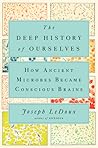
― The Deep History of Ourselves: The Four-Billion-Year Story of How We Got Conscious Brains
― The Deep History of Ourselves: The Four-Billion-Year Story of How We Got Conscious Brains
“Because emotion systems coordinate learning, the broader the range of emotions that a child experiences the broader will be the emotional range of the self that develops. This is why childhood abuse is so devastating. If a significant proportion of the early emotional experiences one has are due to activation of the fear system rather than positive systems, then the characteristic personality that begins to build up from the parallel learning processes coordinated by the emotional state is one characterized by negativity and hopelessness rather than affection and optimism.”
―
―
“But protozoa, being single-cell organisms, don’t have nervous systems, since that would require special cells—neurons—and they only possess one all-purpose cell. Yet they have a robust behavioral life—they swim away from harmful chemicals and toward useful ones—and they even use past experience to guide their present responses, suggesting that they have the ability to learn and remember. The logical conclusion is that behavior, learning, and memory don’t actually require a nervous system. This was eye-opening to me, so I did a little research to see what was known about”
― The Deep History of Ourselves: The Four-Billion-Year Story of How We Got Conscious Brains
― The Deep History of Ourselves: The Four-Billion-Year Story of How We Got Conscious Brains
“The balance between excitatory and inhibitory inputs to a neuron determines whether it will fire.”
―
―
“Hebb's notion, as you'll recall, is that "when an axon of cell A is near enough to excite cell B or repeatedly and consistently takes part in firing it, some growth process or metabolic changes take place in one or both cells such that A's efficiency, as one of the cells firing B, is increased." Let's expand this idea a little so we can see how it might apply to memory, and especially to a memory of the fact that two stimuli once occurred together.
In order for two stimuli to be bound together in the mind, to become associated, the neural representations of the two events have to meet up in the brain. This means that there has to be some neuron (or a set of neurons) that receives information about both stimuli. Then, and only then, can the stimuli be linked together and an association be formed between them.”
―
In order for two stimuli to be bound together in the mind, to become associated, the neural representations of the two events have to meet up in the brain. This means that there has to be some neuron (or a set of neurons) that receives information about both stimuli. Then, and only then, can the stimuli be linked together and an association be formed between them.”
―
“The problem is that there may not be any way to really prove animal consciousness with data. Clever experiments can show that animals perform behaviorally in ways that people behave when they are in a particular state of phenomenal consciousness. But we can create robots that behave the way humans behave when we are having a phenomenal experience. Consciousness is, and probably always will be, an inner experience that is unobservable to anyone other than the experiencing organism. And in the absence of verbal report, there is little to measure.”
― Anxious
― Anxious
“The most obvious way that defensive motivational states make themselves known to us is, in fact, through our own behavior. The ability to observe one’s behavior and thus create representations of behavior in working memory is called monitoring.77 By directing our attention to our behavioral output, we can acquire information about what we are doing and intentionally adjust our behavior in light of thoughts, memories, and feelings. As an executive function of working memory, monitoring, not surprisingly, involves circuits in the prefrontal cortex.78 We use observations of our own behavior to regulate how we act in social situations.79 If you become aware that your behavior is negatively affecting others, you can make adjustments as a social situation evolves. Or if you notice you are acting in a biased way toward some group, you can make corrections. In addition, through monitoring one can observe undesirable habits and seek to change these through therapy or other means. Not everyone is equally adept at using monitoring to improve self-awareness. The field of emotional intelligence is all about how people differ in such abilities and how one can be trained to do better.80”
― Anxious
― Anxious
“In line with contemporary learning theory, emotional processing theory holds that new information does not replace old information in the fear structure but instead creates a competing memory that suppresses the old memory.75”
― Anxious
― Anxious
“The amygdala plays an important role in the acquisition, storage, expression, and extinction of threat memories. The ventromedial prefrontal cortex (PFCVM) regulates the acquisition, storage, expression, and extinction of threat memories by the amygdala. The hippocampus learns about the context of acquisition and modulates the expression and extinction of threat memories in relation to context.”
― Anxious
― Anxious
“The machinery includes all of the biological requirements of being a self-sustaining organism, including a set of mutually compatible genes, immunological self-recognition, and a homeostatic mechanism that maintains self-regulating body functions. It also includes a variety of behavioral tendencies, often referred to as personality or temperament, that depend on either genetic influences or learning and that are expressed automatically—you don’t have to consciously remember your core personality.”
― The Deep History of Ourselves: The Four-Billion-Year Story of How We Got Conscious Brains
― The Deep History of Ourselves: The Four-Billion-Year Story of How We Got Conscious Brains
“Your conscious experiences are personal. They are yours, and could not exist without you. And a major fact that makes them personal is that they are experienced and interpreted through the lens of your memories. Conscious experiences, including experiences of fear and anxiety, are colored by memory.”
― Anxious
― Anxious