Goodreads helps you follow your favorite authors. Be the first to learn about new releases!
Start by following Oliver Bullough.

Showing 1-30 of 50
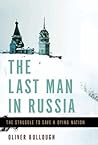
“He realized that trust between people is what makes us happy. Any totalitarian state is based on betrayal. It needs people to inform on each other, to avoid socializing to interact only through the state and to avoid unsanctioned meetings.”
― The Last Man in Russia: The Struggle to Save a Dying Nation
― The Last Man in Russia: The Struggle to Save a Dying Nation
“This may read like a mad journey through some of the most dangerous places on earth, but it is much more than that as well. Sheets witnessed most of the wars, disasters, and revolutions that followed the end of communism, and his accounts of them--from Chechnya to Chernobyl, and from Abkhazia to Afghanistan--serve as a passionate but considered obituary for the vanished Soviet empire.”
― Let Our Fame Be Great: Journeys Among the Defiant People of the Caucasus
― Let Our Fame Be Great: Journeys Among the Defiant People of the Caucasus
“The Soviet state was, in fact, almost perfectly designed to make people unhappy. It denied its citizens not just hope, but also trust. Every activity had to be sanctioned by the state. Any person could be an informant. No action could be guaranteed to be without consequence. Father Dmitry preached friendship and warmth and belief to his parishioners, and inspired a generation to live as humans and not as parts of a machine.”
― The Last Man in Russia: The Struggle to Save a Dying Nation
― The Last Man in Russia: The Struggle to Save a Dying Nation
“Russians consider themselves civilized Europeans, but have to endure the humiliation of daily encounters with officials that belong in a squalid dictatorship.”
― The Last Man in Russia: The Struggle to Save a Dying Nation
― The Last Man in Russia: The Struggle to Save a Dying Nation
“As with almost all the troubling aspects of Moneyland, this near-impossibility of retrieving assets once they have vanished offshore is driven by the basic rule that money can travel where it wishes, while law enforcement stops at a country’s borders.”
― Moneyland: Why Thieves and Crooks Now Rule the World and How To Take It Back
― Moneyland: Why Thieves and Crooks Now Rule the World and How To Take It Back
“In this way, the Church was a true reflection of the whole of Russian society. The KGB and the Russian people had penetrated each other to such an extent that they could not be separated. The culture of betrayal and suspicion and distrust that the KGB relied on had become part of the national culture, poisoning politics in the 1990s and beyond: decades of corruption, murder and sordid sex scandals. If it cannot purge itself, however, the Russian nation will never rid itself of the illness that has driven people to alcohol. Russians need to trust each other again.”
―
―
“The media squabble over Shchepotin’s final day at the Cancer Institute, and the doubts it raised over the motivation of all concerned, were appropriate, because the most corrosive aspect of corruption is the way that it undermines trust. When corruption is widespread, it becomes impossible to know whom to believe, since the money infects every aspect of state and society. Every newspaper article can be criticized as paid for, every politician can be called corrupt, every court decision can be called into question. Charities are set up by oligarchs to lobby for their interests, and those then provoke doubts about every other non-governmental organization. If even doctors are on the take, can you trust their diagnoses? Are they claiming a patient needs treatment only because that would be to their profit? If policemen are crooked, and courts are paid for, are criminals really criminals? Or are they honest people who interfered in criminals’ business? Not knowing whom to believe, you retreat into trusting only those closest to you—your oldest friends, and your relatives—and that reinforces the divisions in society that corruption thrives on. It is impossible to build a thriving economy, or a healthy democracy, without a society whose members fundamentally trust each other. If you take that away, you are left with something far darker and more mercenary.”
― Moneyland: The Inside Story of the Crooks and Kleptocrats Who Rule the World
― Moneyland: The Inside Story of the Crooks and Kleptocrats Who Rule the World
“For the US to be like Russia today,” he wrote, “it would be necessary to have massive corruption by the majority of members of Congress as well as by the Departments of Justice and Treasury, and agents of the FBI, CIA, DIA, IRS, Marshall Service, Border Patrol, state and local police officers, the Federal Reserve Bank, Supreme Court justices, US district court judges, support of the varied organized crime families, the leadership of the Fortune 500 companies, at least half of the banks in the US, and the New York Stock Exchange.”
― Moneyland: The Inside Story of the Crooks and Kleptocrats Who Rule the World
― Moneyland: The Inside Story of the Crooks and Kleptocrats Who Rule the World
“In the early 1980s, the key political rivalry in St. Kitts and Nevis was between the Labour Party and the People’s Action Movement (PAM).”
― Moneyland: The Inside Story of the Crooks and Kleptocrats Who Rule the World
― Moneyland: The Inside Story of the Crooks and Kleptocrats Who Rule the World
“In the British case, some £133 billion had entered the economy since the mid-1970s, without anyone noticing, with £96 billion of that in the last decade. (The rate is accelerating, with current inflows totalling around a billion pounds a month.)”
― Moneyland: Why Thieves and Crooks Now Rule the World and How To Take It Back
― Moneyland: Why Thieves and Crooks Now Rule the World and How To Take It Back
“All money corrupts, and big money corrupts bigly.”
― Moneyland: Why Thieves and Crooks Now Rule the World and How To Take It Back
― Moneyland: Why Thieves and Crooks Now Rule the World and How To Take It Back
“Criminal wealth is reinvested, which makes criminals richer and more potent adversaries, while companies in the City poach law enforcement officers to work in their compliance departments. It’s like expecting the army to fight a war against an adversary that gets stronger all the time, while its service men and women are continually lured away to work as private security contractors or, worse still, as mercenaries for their former adversaries. You don’t have to be a conspiracy theorist to start wondering if there isn’t something going on, because this is a system that is not working at all.”
― Butler to the World: The book the oligarchs don’t want you to read - how Britain became the servant of tycoons, tax dodgers, kleptocrats and criminals
― Butler to the World: The book the oligarchs don’t want you to read - how Britain became the servant of tycoons, tax dodgers, kleptocrats and criminals
“[Father Dmitry] “lived through collectivization, the crushing of the 80 percent of Russians that were peasants. He served as a soldier in World War Two, when millions of peasants died defending the government that had crushed them. He spent eight years in the gulag, the network of labour camps created to break the spirit of anyone who still resisted. He rose again to speak out for his parishioners in the 1960’s and 1970’s, striving to help young Russians create a freer and fairer society.”
― The Last Man in Russia: The Struggle to Save a Dying Nation
― The Last Man in Russia: The Struggle to Save a Dying Nation
“Where there are loopholes, there is Moneyland, and there are professionals making sure that the world’s richest people have access to privileges and possibilities denied to everyone else. In some ways, the citizenships and residencies being touted at Henley’s conference act like a Moneyland passport, but the passport-for-sale industry did not begin like this.”
― Moneyland: The Inside Story of the Crooks and Kleptocrats Who Rule the World
― Moneyland: The Inside Story of the Crooks and Kleptocrats Who Rule the World
“Father Dmitry had thought he had been serving his nation by spreading trust, and fighting abortion and despair, but, in doing so, he was defying the state. And that was not allowed. That was why he had to be crushed. His fate parallels the fate of his whole nation. Through the twentieth century, the government in Moscow taught the Russians that hope and trust are dangerous, inimical and treacherous. That is the root of the social breakdown that has caused the epidemic of alcoholism, the collapsing birth rate, the crime and the misery.”
―
―
“But there were some islands that didn’t fit easily into this pattern, above all Anguilla, which was adjacent to the Dutch/French island of Sint Maarten/St. Martin, but annoyingly distant from anywhere British.”
― Moneyland: The Inside Story of the Crooks and Kleptocrats Who Rule the World
― Moneyland: The Inside Story of the Crooks and Kleptocrats Who Rule the World
“Prosperity and democracy does seem to be a good way to wean a population off massive alcohol abuse.”
― The Last Man in Russia: The Struggle to Save a Dying Nation
― The Last Man in Russia: The Struggle to Save a Dying Nation
“The annual cost of organised crime to people in Britain itself is estimated at £37 billion, with fraud costing another £193 billion – that’s almost £4,000 for every adult in the country.”
― Butler to the World: The book the oligarchs don’t want you to read - how Britain became the servant of tycoons, tax dodgers, kleptocrats and criminals
― Butler to the World: The book the oligarchs don’t want you to read - how Britain became the servant of tycoons, tax dodgers, kleptocrats and criminals
“Commentators from all sides of politics have expressed concerns about the effect of inequality on the fabric of society in the United States, where the share of wealth held by the richest 1 percent rose from a quarter to two-fifths between 1990 and 2012. But if you think that’s bad, look what’s happened to the world as a whole: in just the decade after 2000, the richest 1 percent of the world’s population increased its wealth from one-third of everything to a half. The top three and a half dozen people now own as much as the bottom three and a half billion. How is democracy possible with that kind of gulf in wealth and power between citizens?”
― Moneyland: The Inside Story of the Crooks and Kleptocrats Who Rule the World
― Moneyland: The Inside Story of the Crooks and Kleptocrats Who Rule the World
“Essentially, it’s: we’re going to find a way to screw legitimate creditors out of collecting a legitimate debt; that’s the business these people are in, but they call it something different, and they throw a lot of money at it and they’re able to propagate it that way.”
― Moneyland: The Inside Story of the Crooks and Kleptocrats Who Rule the World
― Moneyland: The Inside Story of the Crooks and Kleptocrats Who Rule the World
“As a result of the reductions in public expenditure, Butler Britain is providing a two-tier justice system. Wealthy individuals or companies can buy justice in a way that ordinary people cannot.”
― Butler to the World: The book the oligarchs don’t want you to read - how Britain became the servant of tycoons, tax dodgers, kleptocrats and criminals
― Butler to the World: The book the oligarchs don’t want you to read - how Britain became the servant of tycoons, tax dodgers, kleptocrats and criminals
“That was the choice that Father Dmitri was given. As a Russian, he wanted to support Russia. As a Christian, he wanted to oppose the Soviet Union. But, if he opposed the Soviet Union, he was allying with foreigners and thus fighting against Russia. He had to choose, therefore, between his religion and his country and he chose his country. That was how he himself justified his choice.”
― The Last Man in Russia: The Struggle to Save a Dying Nation
― The Last Man in Russia: The Struggle to Save a Dying Nation
“According to Horrocks, who still has contacts with police officers and sees what they’re prepared to investigate when he takes his clients’ cases to them, the authorities only get involved in a case if it will earn them good press coverage. ‘If there’s a celebrity involved, Simon Cowell or whatever-her-name-is Ecclestone, the police are all over it,’ he said, ‘but if old Mrs Smith gets defrauded on a phone scam, and every penny to her name has gone, which might be only a few thousand quid but which has destroyed her life, no one looks at that.”
― Butler to the World: The book the oligarchs don’t want you to read - how Britain became the servant of tycoons, tax dodgers, kleptocrats and criminals
― Butler to the World: The book the oligarchs don’t want you to read - how Britain became the servant of tycoons, tax dodgers, kleptocrats and criminals
“When dictators want somewhere to hide their money, they turn to Britain. When oligarchs want someone to launder their reputation, they come to Britain.”
― Butler to the World: The book the oligarchs don’t want you to read - how Britain became the servant of tycoons, tax dodgers, kleptocrats and criminals
― Butler to the World: The book the oligarchs don’t want you to read - how Britain became the servant of tycoons, tax dodgers, kleptocrats and criminals
“Boiled down to its essentials, finance always does the same thing: it takes money from people who have it but don’t need it, and gives it to people who need it and don’t have it, and earns a fee for its trouble. Governments try to regulate this process, to direct the funding toward the causes they care about, and financial institutions try to avoid those rules so they can direct the funding toward the causes that will pay the largest fees. That is financial innovation, which is simply an artificial way of exploiting artificial rules governing the artificial thing we call money, and normally involves finding mismatches between regulations in different countries. It’s clever, but it adds nothing to the sum of human achievement.”
― Butler to the World: The Book the Oligarchs Don't Want You to Read - How Britain Helps the World's Worst People Launder Money, Commit Crimes, and Get Away with Anything
― Butler to the World: The Book the Oligarchs Don't Want You to Read - How Britain Helps the World's Worst People Launder Money, Commit Crimes, and Get Away with Anything
“The only reference to it came from a meeting on November 16, 1983, when the ministers agreed that a passport should cost each potential investor $50,000 plus a “substantial fee.”
― Moneyland: The Inside Story of the Crooks and Kleptocrats Who Rule the World
― Moneyland: The Inside Story of the Crooks and Kleptocrats Who Rule the World
“The truth is different: the empire was about profit, and about eradicating anything that stood in the way of that profit.”
― Butler to the World: The book the oligarchs don’t want you to read - how Britain became the servant of tycoons, tax dodgers, kleptocrats and criminals
― Butler to the World: The book the oligarchs don’t want you to read - how Britain became the servant of tycoons, tax dodgers, kleptocrats and criminals
“It was hard, the authors said, to put a cost on the damage that gambling causes, but politicians needed to recognise that there was a trade-off. If you allowed gambling in order to raise revenue, you were causing damage to people’s lives by doing so and ultimately undermining society. Unlike insurance or other productive financial services, this is a zero sum industry: bookies’ profits are simply gamblers’ losses, and there is no broader societal benefit.”
― Butler to the World: The book the oligarchs don’t want you to read - how Britain became the servant of tycoons, tax dodgers, kleptocrats and criminals
― Butler to the World: The book the oligarchs don’t want you to read - how Britain became the servant of tycoons, tax dodgers, kleptocrats and criminals
“On 12 March 2014 Austrian police officers arrested Dmitry Firtash in Vienna at the FBI’s request. It was exactly a fortnight after the final approval of his purchase of the Brompton Road Tube station from the British government. Rarely if ever have the contrasting approaches of the US and Butler Britain towards fortunes of questionable origin been displayed in starker contrast.”
― Butler to the World: The book the oligarchs don’t want you to read - how Britain became the servant of tycoons, tax dodgers, kleptocrats and criminals
― Butler to the World: The book the oligarchs don’t want you to read - how Britain became the servant of tycoons, tax dodgers, kleptocrats and criminals
“In 2020 Parliament’s Intelligence and Security Committee published a report on Russian influence in the UK. The report failed to gain as much attention as it deserved thanks in part to Prime Minister Boris Johnson dismissing it as an attempt to delegitimise the Brexit referendum. This was a shame because it was a thoughtful analysis of the kind of blind spot that has led Britain to accept money directly from Russian oligarchs, as well as from Russia-allied businessmen like Firtash, without looking into where it comes from.”
― Butler to the World: The book the oligarchs don’t want you to read - how Britain became the servant of tycoons, tax dodgers, kleptocrats and criminals
― Butler to the World: The book the oligarchs don’t want you to read - how Britain became the servant of tycoons, tax dodgers, kleptocrats and criminals