Goodreads helps you follow your favorite authors. Be the first to learn about new releases!
Start by following Jordan Flaherty.

Showing 1-9 of 9
“Housing is a human right. There can be no fairness or justice in a society in which some live in homelessness, or in the shadow of that risk, while others cannot even imagine it.”
― Floodlines: Community and Resistance from Katrina to the Jena Six
― Floodlines: Community and Resistance from Katrina to the Jena Six
“Those who have not lived in New Orleans have missed an incredible, glorious, vital city--a place with an energy unlike anywhere else in the world, a majority-African American city where resistance to white supremacy has cultivated and supported a generous, subversive, and unique culture of vivid beauty. From jazz, blues, and and hip-hop to secondlines, Mardi Gras Indians, jazz funerals, and the citywide tradition of red beans and rice on Monday nights, New Orleans is a place of art and music and food and traditions and sexuality and liberation.”
― Floodlines: Community and Resistance from Katrina to the Jena Six
― Floodlines: Community and Resistance from Katrina to the Jena Six
“Another site of Leftist struggle [other than Detroit] that has parallels to New Orleans: Palestine. From the central role of displacement to the ways in which culture and community serve as tools of resistance, there are illuminating comparisons to be made between these two otherwise very different places.
In the New Orleans Black community, death is commemorated as a public ritual (it's often an occasion for a street party), and the deceased are often also memorialized on t-shirts featuring their photos embellished with designs that celebrate their lives. Worn by most of the deceased's friends and family, these t-shirts remind me of the martyr posters in Palestine, which also feature a photo and design to memorialize the person who has passed on. In Palestine, the poster's subjects are anyone who has been killed by the occupation, whether a sick child who died at a checkpoint or an armed fighter killed in combat. In New Orleans, anyone with family and friends can be memorialized on a t-shift. But a sad truth of life in poor communities is that too many of those celebrate on t-shirts lost their lives to violence. For both New Orleans and Palestine, outsiders often think that people have become so accustomed to death by violence that it has become trivialized by t-shirts and posters.
While it's true that these traditions wouldn't manifest in these particular ways if either population had more opportunities for long lives and death from natural causes, it's also far from trivial to find ways to celebrate a life. Outsiders tend to demonize those killed--especially the young men--in both cultures as thugs, killers, or terrorists whose lives shouldn't be memorialized in this way, or at all. But the people carrying on these traditions emphasize that every person is a son or daughter of someone, and every death should be mourned, every life celebrated.”
― Floodlines: Community and Resistance from Katrina to the Jena Six
In the New Orleans Black community, death is commemorated as a public ritual (it's often an occasion for a street party), and the deceased are often also memorialized on t-shirts featuring their photos embellished with designs that celebrate their lives. Worn by most of the deceased's friends and family, these t-shirts remind me of the martyr posters in Palestine, which also feature a photo and design to memorialize the person who has passed on. In Palestine, the poster's subjects are anyone who has been killed by the occupation, whether a sick child who died at a checkpoint or an armed fighter killed in combat. In New Orleans, anyone with family and friends can be memorialized on a t-shift. But a sad truth of life in poor communities is that too many of those celebrate on t-shirts lost their lives to violence. For both New Orleans and Palestine, outsiders often think that people have become so accustomed to death by violence that it has become trivialized by t-shirts and posters.
While it's true that these traditions wouldn't manifest in these particular ways if either population had more opportunities for long lives and death from natural causes, it's also far from trivial to find ways to celebrate a life. Outsiders tend to demonize those killed--especially the young men--in both cultures as thugs, killers, or terrorists whose lives shouldn't be memorialized in this way, or at all. But the people carrying on these traditions emphasize that every person is a son or daughter of someone, and every death should be mourned, every life celebrated.”
― Floodlines: Community and Resistance from Katrina to the Jena Six
“I didn't really understand community until I moved to New Orleans.”
― Floodlines: Community and Resistance from Katrina to the Jena Six
― Floodlines: Community and Resistance from Katrina to the Jena Six
“What are the actions for social justice and movement building that don’t center you as a protagonist?”
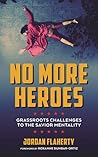
― No More Heroes: Grassroots Challenges to the Savior Mentality
― No More Heroes: Grassroots Challenges to the Savior Mentality
“when you’re accustomed to privilege, equality feels like oppression.4”
― No More Heroes: Grassroots Challenges to the Savior Mentality
― No More Heroes: Grassroots Challenges to the Savior Mentality
“We need to stop thinking we can "rescue" the world from problems we helped create. Haiti has no money because the United States, France, and other colonial powers stole it. When we buy a twenty-dollar shirt that a Haitian was paid pennies to make, we are continuing to steal from them. When a U.S. aid worker in Haiti is paid a salary equivalent to that of fifty Haitians, we are continuing to steal from them. This is not aid. Aid is reparations. Relief is overthrowing a system of colonial domination, and eliminating debt. Support is standing in solidarity with Haitians ... [who] are organizing and fighting and leading their own struggles for an end to colonialism.”
― No More Heroes: Grassroots Challenges to the Savior Mentality
― No More Heroes: Grassroots Challenges to the Savior Mentality
“even when we pursue limited reforms, we should be sure that they will not strengthen the system we wish to end. Instead, those who seek change should strengthen entities outside the state. “Structural reform is by definition a reform implemented or controlled by those who demand it,” wrote Gorz. Be it in agriculture, the university, property relations, the region, the administration, the economy, etc., a structural reform always requires the creation of new centers of democratic power. Whether”
― No More Heroes: Grassroots Challenges to the Savior Mentality
― No More Heroes: Grassroots Challenges to the Savior Mentality
“If [international] aid does not address the structural issues that create injustice, then it only creates a more stable status quo, locking injustice into place.”
― No More Heroes: Grassroots Challenges to the Savior Mentality
― No More Heroes: Grassroots Challenges to the Savior Mentality