Goodreads helps you follow your favorite authors. Be the first to learn about new releases!
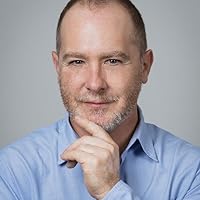
Start by following Jesse Bering.
Showing 1-17 of 17
“In adopting a patently false but stubbornly clung-to mythology of human sexuality that makes demons out of natural drives, we've entered a stage of moral sickness, not of moral health.”
― Perv: The Sexual Deviant in All of Us
― Perv: The Sexual Deviant in All of Us
“The public debate plays out in an infinite regress of blame over who’s responsible for those who fail to fit the standard erotic mold. This is variously ascribed to the people choosing to be the deviants they are, porn, the Devil (always a shoo-in), bad parents, poor role models, our sexually repressed culture, or the psychiatrists who keep needling sexual minorities by branding them mentally ill. It’s a rabbit hole of endless (and usually endlessly bad) arguments. Morally, all that matters—and allow me to reiterate that because I feel it’s quite important, all that matters—is whether a person’s sexual deviancy is demonstrably harmful. If it’s not, and we reject the person anyway, then we’re not the good guys in this scenario; we’re the bad guys.”
― Perv: The Sexual Deviant in All of Us
― Perv: The Sexual Deviant in All of Us
“Aways remember: You’re going to die soon enough anyway; even if it’s a hundred years from now, that’s still the blink of a cosmic eye. In the meantime, live like a scientist—even a controversial one with only an ally or two in all the world—and treat life as a grand experiment, blood, sweat, tears and all. Bear in mind that there's no such thing as a failed experiment—only data.”
―
―
“Someone could be paraphilic in both his erotic target and his favorite sex act. I mean, really, any pellismophilic nebulophile (someone whose most passionate moments involve masturbating in the foggy mist while listening to a person stutter) can see that.”
― Perv: The Sexual Deviant in All of Us
― Perv: The Sexual Deviant in All of Us
“For the longest time, in fact, to be a pervert wasn’t to be a sex deviant; it was to be an atheist.”
― Perv: The Sexual Deviant in All of Us
― Perv: The Sexual Deviant in All of Us
“The psychologist Charles Moser, for example, pointed out that those inclined to divide the "sane" from the "insane" in terms of frequency of sex and intensity of desires overlook the possibility that sex itself may be the most meaningful part of a person's life, "which appropriately can take precedence over other activities".”
― Perv: The Sexual Deviant in All of Us
― Perv: The Sexual Deviant in All of Us
“There’s a spiritual power in nihilism.”
― Suicidal: Why We Kill Ourselves
― Suicidal: Why We Kill Ourselves
“Thoughts said aloud are mutant by nature. No matter how expertly one plumbs the depths of subjective understanding, Gorgias realized to his horror, or how artistically rendered and devastatingly precise language may be, truth still falls on ears that hear something altogether different from what exists in reality.”
― The Belief Instinct: The Psychology of Souls, Destiny, and the Meaning of Life
― The Belief Instinct: The Psychology of Souls, Destiny, and the Meaning of Life
“theistic equivalent of slapstick or a clumsy God or perhaps one sneezing or kicking up a pebble—can account considerably better for our present situation than can an intentional act of Creation. The humanlike God we’re prone to worshipping could be a long-dead intergalactic sea horse that, rooting through an ancient seabed for plankton in some unknown dimension, incidentally dislodged the one grain of sand that held all of our own infinite cosmos intact.”
― The Belief Instinct: The Psychology of Souls, Destiny, and the Meaning of Life
― The Belief Instinct: The Psychology of Souls, Destiny, and the Meaning of Life
“We’ve become so focused as a society on the question of whether a given sexual behavior is evolutionarily “natural” or “unnatural” that we’ve lost sight of the more important question: Is it harmful? In many ways, it’s an even more challenging question, because although naturalness can be assessed by relatively straightforward queries about statistical averages—for example, “How frequently does it appear in other species?” and “In what percentage of the human population does it occur?”—the experience of harm is largely subjective. As such, it defies such direct analyses and requires definitions that resonate with people in vastly different ways. When it comes to sexual harm in particular, what’s harmful to one person not only is completely harmless to another but may even, believe it or not, be helpful or positive. If the supermodel Kate Upton were to walk into my office right now and tie me to my chair before doing a slow striptease and depositing her vagina in my face, I think I’d require therapy for years. But if this identical event were to happen to my heterosexual brother or to one of my lesbian friends, I suspect their brains would process such a “tragic” experience very differently. (And that of my not-very-amused sister-in-law would see my brother’s encounter with said vagina differently still.)”
― Perv: The Sexual Deviant in All of Us
― Perv: The Sexual Deviant in All of Us
“Human beings operate with an “optimism bias,” a way of looking at the future that causes us to downplay the likelihood of negative personal outcomes. Among other things, this bias leads us to assume that we’ll be successful at tasks in which we feel we’re even remotely competent, including, sometimes, antisocial acts. Our prisons are filled with people who had very different plans for themselves.”
― The Belief Instinct: The Psychology of Souls, Destiny, and the Meaning of Life
― The Belief Instinct: The Psychology of Souls, Destiny, and the Meaning of Life
“Being poised to shatter the adaptive illusion of God is arguably one of the most significant turning points our species has ever faced in its relatively brief 150,000-year history. The belief instinct may never be completely deprogrammed in our animal brains, but by understanding it for what it is rather than subscribing uncritically to the intuitions it generates, we can distance ourselves from an adaptive system that was designed, ultimately, to keep us hobbled in fear.”
―
―
“almost succeeded in single-handedly shooing the faithful out of their pews in the French cathedrals. Unfortunately for him, this notion of God the Creator is nearly as rampant in the world today as it was when the first prophet sat down to put words in God’s mouth.”
― The Belief Instinct: The Psychology of Souls, Destiny, and the Meaning of Life
― The Belief Instinct: The Psychology of Souls, Destiny, and the Meaning of Life
“The poet Charles Bukowski once observed:
"drinking is a form of suicide where you’re allowed to return to life and begin all over the next day. It’s like killing yourself, and then you’re reborn. I guess I’ve lived about ten or fifteen thousand lives now.”
― Suicidal: Why We Kill Ourselves
"drinking is a form of suicide where you’re allowed to return to life and begin all over the next day. It’s like killing yourself, and then you’re reborn. I guess I’ve lived about ten or fifteen thousand lives now.”
― Suicidal: Why We Kill Ourselves
“Contrary to the common assumption that superstitious beliefs represent a childish mode of sloppy and undeveloped thinking, therefore, the ability to be superstitious actually demands some mental sophistication. At the very least, it’s an acquired cognitive skill.”
― The Belief Instinct: The Psychology of Souls, Destiny, and the Meaning of Life
― The Belief Instinct: The Psychology of Souls, Destiny, and the Meaning of Life
“Yet some modern scientists believe that zoophilia is a genuine sexual orientation represented by as much as a full 1 percent of the human population.”
― Perv: The Sexual Deviant in All of Us
― Perv: The Sexual Deviant in All of Us
“This type of psychological loneliness is perhaps felt most acutely when we are as close to another person’s body as is humanly possible. As the poet William Butler Yeats wrote rather dramatically, “The tragedy of sexual intercourse is the perpetual virginity of the soul.”
― The Belief Instinct: The Psychology of Souls, Destiny, and the Meaning of Life
― The Belief Instinct: The Psychology of Souls, Destiny, and the Meaning of Life