Goodreads helps you follow your favorite authors. Be the first to learn about new releases!
Start by following Charles Euchner.

Showing 1-15 of 15
“In Aristotle’s classic form, outlined in The Poetics, drama takes a three-part form. In Part 1, which I call the World of the Story, we are introduced to the characters, the story’s setting, and the crisis that the hero faces. At the end of this part, the hero takes on a challenge—sometimes by choice, sometimes without choice. In Part 2, known as The Rising Action, we see the hero—and other characters—struggle to confront the challenge. They face one obstacle after another. Each obstacle sharpens their minds, tests their resolve, and pushes the story forward. These challenges get more and more intense. Finally, they achieve some breakthrough. Part 3, known as the Resolution and Denouement, brings the drama to closure. The hero and other characters begin to settle into a new way of living, often chastened but always wiser. All the issues get settled. In Cold Blood does not seem to follow a strict three-act format. The book is, after all, broken into four sections. But when we look closely, we see that the middle two sections show the rising action.”
― In Cold Type: How To Use the Techniques That Made Truman Capote's "In Cold Blood" a Masterpiece
― In Cold Type: How To Use the Techniques That Made Truman Capote's "In Cold Blood" a Masterpiece
“An old TV commercial for Berlitz showed the training of a German coast guard watchman. The supervisor shows the new man all of the monitoring equipment and then leaves him alone to man the controls. Later, a distress signal comes in: “SOS, we’re sinking! We are sinking.” The new watchman is confused. “What are you sinking about?” he asks. Success and failure in communications often depend on a single word—even a letter or two. The way most people write today—in business, education, government, even journalism and publishing—is the result of an accidental, ad-hoc process of learning and mislearning.”
― The Elements of Writing: The Only Writing Guide You Will Ever Need
― The Elements of Writing: The Only Writing Guide You Will Ever Need
“Consider one of the most useful verbs you’ll ever see: To say. Novices often use different words to say said, especially when writing dialogue. So they say that a president argues, declares, and cajoles. A ballplayer stutters, barks, muses, and mumbles. A philosopher cogitates, elucidates, complains, and demurs. These synonyms disrupt the flow of ideas. Avoid that distraction; just say said. If someone says something interesting, you don’t need to dress it up with synonyms.”
― The Elements of Writing: The Only Writing Guide You Will Ever Need
― The Elements of Writing: The Only Writing Guide You Will Ever Need
“The trick is to relate the unknown to the known. To explain density, McPhee makes references to lead and footballs. To describe radioactivity, he reassures us that we can hold on our laps, without any danger, the same amount of U-235 that comprised the bomb dropped on Hiroshima.”
― The Elements of Writing: The Only Writing Guide You Will Ever Need
― The Elements of Writing: The Only Writing Guide You Will Ever Need
“The senses affect us so powerfully that we often use one sense to describe another. We use physical words—for heaviness and lightness, hardness and softness—to describe colors. We use visual words—for brightness and darkness, focus and blurriness—to talk about sounds. So we use metaphors to describe metaphors”
― The Elements of Writing: The Only Writing Guide You Will Ever Need
― The Elements of Writing: The Only Writing Guide You Will Ever Need
“Consider a favorite story—even a story from your own life. On a piece of paper, express this story in three ways. First, draw a straight line from left to right, with hash marks to indicate moments in time. Create a simple chronology: “just one thing after another.” Then create a series of circles, showing recurring patterns in the story. Then create a series of triangles, showing trios of characters or ideas at different stages of the story.”
― The Elements of Writing: The Only Writing Guide You Will Ever Need
― The Elements of Writing: The Only Writing Guide You Will Ever Need
“Martin Scorcese, the film director, was once asked the secret to a good scene. “Put three people in a room,” he said.”
― In Cold Type: How To Use the Techniques That Made Truman Capote's "In Cold Blood" a Masterpiece
― In Cold Type: How To Use the Techniques That Made Truman Capote's "In Cold Blood" a Masterpiece
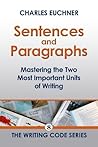
“If the sentence is the most important unit of writing, the paragraph comes a close second place. All writing is a march of paragraphs, each of which provides a clear step forward in the progress of the piece.”
― Sentences and Paragraphs: Mastering the Two Most Important Units of Writing
― Sentences and Paragraphs: Mastering the Two Most Important Units of Writing
“In philosophy, dialectics captures the same dynamic. Ideas move through three stages: thesis, antithesis, and synthesis. The thesis represents an idea that somehow dominates some sphere of life. The antithesis represents its opposite. When two ideas clash, they create a synthesis—a higher development of those two opposing ideas. The tech entrepreneur Jon Lonsdale explains this process, common in business: “Deep truths exist at both extremes of a dialectic, and the wisest stance on an issue will incorporate both of the opposites within itself.” Nothing is absolute; nothing is forever; meaning is never fixed. Truth can only be found in change.”
― The Elements of Writing: The Only Writing Guide You Will Ever Need
― The Elements of Writing: The Only Writing Guide You Will Ever Need
“All writing explores action and change. The most important tool for that exploration is the verb. The verb makes sentences move.”
― Sentences and Paragraphs: Mastering the Two Most Important Units of Writing
― Sentences and Paragraphs: Mastering the Two Most Important Units of Writing
“Never confuse movement with action. —Ernest Hemingway”
― In Cold Type: How To Use the Techniques That Made Truman Capote's "In Cold Blood" a Masterpiece
― In Cold Type: How To Use the Techniques That Made Truman Capote's "In Cold Blood" a Masterpiece
“Use sounds that describe texture. Hard consonants sound rough and sharp, while soft consonants sound smooth. The word crackling sounds rough, while luminescent and slither sound smooth.”
― The Elements of Writing: The Only Writing Guide You Will Ever Need
― The Elements of Writing: The Only Writing Guide You Will Ever Need
“Because writing is a creative process. One idea sparks our imagination, so we often go off on a tangent to explore that new idea. Then another idea sparks a new idea, so we go off on another tangent. But to stay on course—not just in a paragraph, but also in a larger piece as well—we need to make sure every paragraph states and develops just one idea.”
― Sentences and Paragraphs: Mastering the Two Most Important Units of Writing
― Sentences and Paragraphs: Mastering the Two Most Important Units of Writing
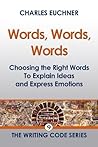
“John Maeda, a designer at the MIT Media Lab, puts the matter, well, simply: “Complexity implies the feeling of being lost; simplicity implies the feeling of being found.” When people feel “found,” they can join the conversation.”
― Words, Words, Words: Choosing the Right Words to Explain Ideas and Express Emotions
― Words, Words, Words: Choosing the Right Words to Explain Ideas and Express Emotions
“But to stay on course—not just in a paragraph, but also in a larger piece as well—we need to make sure every paragraph states and develops just one idea.”
― Sentences and Paragraphs: Mastering the Two Most Important Units of Writing
― Sentences and Paragraphs: Mastering the Two Most Important Units of Writing