Goodreads helps you follow your favorite authors. Be the first to learn about new releases!
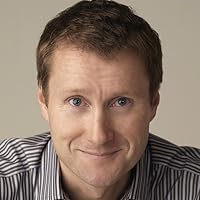
Start by following Thomas Asbridge.
Showing 1-30 of 58
“when Latin crusading armies arrived in the Near East to wage what essentially were frontier wars, they were not actually invading the heartlands of Islam. Instead, they were fighting for control of a land that, in some respects, was also a Muslim frontier,”
― The Crusades: The Authoritative History of the War for the Holy Land
― The Crusades: The Authoritative History of the War for the Holy Land
“Eleventh-century Europe was not in a state of fully fledged anarchy, but the ravening violence of feud and vendetta was commonplace, and lawlessness endemic.”
― The Crusades: The Authoritative History of the War for the Holy Land
― The Crusades: The Authoritative History of the War for the Holy Land
“Adopting and extending the existing system of mamluk recruitment, he purchased thousands of young male slaves, drawn from Kipchak Turkish and, later, Caucasian stock. These boys were trained and indoctrinated as mamluk troops, and then at the age of eighteen freed to serve their masters within the Mamluk sultanate. This approach created a constantly self-rejuvenating military force–what one modern historian has called a ‘one-generation nobility’–because children born of mamluks were not regarded as being part of the martial elite, although they were permitted to enrol in the army’s second-tier halqa reserves.”
― The Crusades: The Authoritative History of the War for the Holy Land
― The Crusades: The Authoritative History of the War for the Holy Land
“Concepts such as love, charity, obligation and tradition all helped to shape medieval attitudes to devotion, but perhaps the most powerful conditioning influence was fear;”
― The Crusades: The Authoritative History of the War for the Holy Land
― The Crusades: The Authoritative History of the War for the Holy Land
“Almost all were assured a degree of renown for their exploits, and it became common for these crusaders to be celebrated with the nickname ‘Hierosolymitani’, or ‘travellers to Jerusalem’.”
― The Crusades: The Authoritative History of the War for the Holy Land
― The Crusades: The Authoritative History of the War for the Holy Land
“King Henry was carried back to Chinon on a litter and confined to bed, but he could find no peace. The Old King now became fixated by the desire to make a last account of his supporters. The keeper of the royal seal, Roger Malchael, was sent to Tours to demand the list of turncoats promised by Philip. When Roger returned he was hurriedly ushered into a private audience with Henry, but could hardly bring himself to reveal the bleak truth, saying: ‘My lord, so Jesus Christ help me, the first name written down on this list here is that of your son, count John.’ When King Henry heard that the person he most expected to do right, and who he most loved, was in the act of betraying him, he said nothing more except this: ‘You have said enough.’ This final act of treachery crushed the Old King’s spirits. He soon collapsed into a ‘burning hot’ feverish stupor, and ‘his blood so boiled within him that his complexion became clouded, dark, blue and livid’. Unmanned by agonising pain, he ‘lost his mental faculties, hearing and seeing nothing’, and though he spoke ‘nobody could understand a word of what he said’. On the night of 6 July 1189, with only a handful of servants in attendance, Henry’s will finally gave out. In the words of the History: ‘Death simply burst his heart with her own hands’, and a ‘stream of clotted blood burst forth from his nose and mouth’.”
― The Greatest Knight: The Remarkable Life of William Marshal, The Power Behind Five English Thrones
― The Greatest Knight: The Remarkable Life of William Marshal, The Power Behind Five English Thrones
“on 4 July 1187 and, three months later, Jerusalem fell into Muslim hands. This calamity sent a shockwave through Western Europe and, with the preaching of a massive new crusade to avenge these injuries and reclaim the Holy Land, thousands of knights took up arms. According to the History of William Marshal ‘the number of those taking the cross was so great . . . that there was no man convinced of his worth who did not abandon wife and children to become a crusader.”
― The Greatest Knight: The Remarkable Life of William Marshal, The Power Behind Five English Thrones
― The Greatest Knight: The Remarkable Life of William Marshal, The Power Behind Five English Thrones
“Islam had, from its earliest days, embraced warfare. Muhammad himself prosecuted a series of military campaigns while subjugating Mecca, and the explosive expansion of the Muslim world during the seventh and eighth centuries was fuelled by an avowed devotional obligation to spread Islamic rule. The union of faith and violence within the Muslim religion, therefore, was more rapid and natural than that which gradually developed in Latin Christianity.”
― The Crusades: The Authoritative History of the War for the Holy Land
― The Crusades: The Authoritative History of the War for the Holy Land
“Churchmen are too hard on us, shaving us too closely. If, simply because I’ve taken 500 knights and kept their arms, horses and all their equipment, the kingdom of heaven is closed in my face, then there is no way for me to enter in, for I am unable to return these things. I believe I can do no more as regards God but surrender myself up to him as a penitent for all the sins I have committed and all the wrongs I have done. They might well wish to push me, but they can push me no further; either their argument is false on this score or no man can find salvation.”
― The Greatest Knight: The Remarkable Life of William Marshal, The Power Behind Five English Thrones
― The Greatest Knight: The Remarkable Life of William Marshal, The Power Behind Five English Thrones
“It was this document, validated by Guala and Marshal, which resurrected Magna Carta – the discarded pact of 1215. This development represented a critical step in English history, for without this reissue and those that followed in later years, the Great Charter would have been forgotten.”
― The Greatest Knight: The Remarkable Life of William Marshal, The Power Behind Five English Thrones
― The Greatest Knight: The Remarkable Life of William Marshal, The Power Behind Five English Thrones
“The 1216 Magna Carta was distinctive in two further regards. It was not a mere peace treaty, extracted under duress from an embattled monarch, but a freely given assurance of rights. Crucially, the document was also issued with the full and unequivocal support of the papal legate, Guala.”
― The Greatest Knight: The Remarkable Life of William Marshal, The Power Behind Five English Thrones
― The Greatest Knight: The Remarkable Life of William Marshal, The Power Behind Five English Thrones
“The first Latin up a ladder was Aubery Clements, marshal of France, one of Philip’s leading knights. It was said later among the Christians’ forces that, before climbing the breach, Aubery had called out defiantly: ‘Either I shall die today, or God willing, I will enter Acre.”
― The Crusades: The Authoritative History of the War for the Holy Land
― The Crusades: The Authoritative History of the War for the Holy Land
“Only the History of William Marshal described this encounter in close terms, though the broad details of its account were confirmed in other contemporary sources. One thing seems certain. This was to be no fair fight. So intent had Richard been upon hunting down his father, that he had begun his chase wearing only a doublet and light helm. This added speed to his pursuit, but left him dreadfully exposed to attack. Worse still, the Lionheart was armed with only a sword. Marshal, by contrast, had a shield and lance. The biographer described how: [William] spurred straight on to meet the advancing [Duke] Richard. When the [duke] saw him coming he shouted at the top of his voice: ‘God’s legs, Marshal! Don’t kill me. That would be a wicked thing to do, since you find me here completely unarmed.’ In that instant, Marshal could have slain Richard, skewering his body with the same lethal force that dispatched Patrick of Salisbury in 1168. Had there been more than a split second to ponder the choice, William might perhaps have reacted differently. As it was, instinct took over. Marshal simply could not bring himself to kill an un-armoured opponent, let alone the heir-apparent to the Angevin realm, King Henry II’s eldest surviving son. Instead, he was said to have shouted in reply: ‘Indeed I won’t. Let the Devil kill you! I shall not be the one to do it’, and at the last moment, lowering his lance fractionally, he drove it into Richard’s mount. With that ‘the horse died instantly; it never took another step forward’ and, as it fell, the Lionheart was thrown to the ground and his pursuit of the king brought to an end.”
― The Greatest Knight: The Remarkable Life of William Marshal, The Power Behind Five English Thrones
― The Greatest Knight: The Remarkable Life of William Marshal, The Power Behind Five English Thrones
“When Stephen reported that the Franks by now had most likely been defeated, the emperor elected to retreat to Constantinople. At this crucial moment Byzantium failed the crusade, and the Greeks were never fully forgiven. Stephen”
― The Crusades: The Authoritative History of the War for the Holy Land
― The Crusades: The Authoritative History of the War for the Holy Land
“His notion of knighthood, and that entertained by the society around him, was also profoundly shaped by the archetype of the preudhomme – the ideal warrior, literally the ‘best kind of a man’. By the mid-twelfth century, worthy knights were increasingly expected to display the ‘right stuff’, to conform to an evolving code of behaviour. An admirable and respected warrior – a preudhomme – was skilled in combat and courageous, faithful, wise and able to give good counsel, but also canny, even wily, in war when necessary. He was the exact opposite of the type of serpent-tongued deceivers (or losengiers) who had tried to persuade King Stephen to execute young William back in 1152 – men of dubious loyalty and questionable judgement. William arrived at Tancarville hoping to become a preudhomme. Indeed, in many respects his life served to define that archetype.”
― The Greatest Knight: The Remarkable Life of William Marshal, The Power Behind Five English Thrones
― The Greatest Knight: The Remarkable Life of William Marshal, The Power Behind Five English Thrones
“They even faced a profound communication barrier: the northern French crusader Fulcher of Chartres remarked, ‘Who ever heard such a mixture of languages in one army?”
― The Crusades: The Authoritative History of the War for the Holy Land
― The Crusades: The Authoritative History of the War for the Holy Land
“One remedy he pursued was the foundation of a new monastery within his county of Anjou, at Beaulieu. According to Fulk’s own testimony, he did this ‘so that monks would be joined together there and pray day and night for the redemption of [my] soul’. This idea of tapping into the spiritual energy produced in monasteries through lay patronage was still at work in 1091,”
― The Crusades: The Authoritative History of the War for the Holy Land
― The Crusades: The Authoritative History of the War for the Holy Land
“With the safety of his family secured, Marshal’s mind turned to the well-being of his knights. He had spent the first forty years of his own life in service, and cherished the intimate bonds of friendship and trust forged with the members of his own mesnie. Most of William’s closest retainers had already been well rewarded with lands and offices, but the obligation to provide for his warriors remained a pressing concern. In these final weeks, one of Marshal’s clerks suggested that the store of eighty fine, fur-trimmed scarlet robes held in the manor house might be sold off. He apparently told the earl that the money raised could be used ‘to deliver you from your sins’, but William was appalled by this suggestion. ‘Hold your tongue you wretch,’ he reputedly countered, ‘I have had enough of your advice.’ Marshal’s firmly held view was that these robes should be distributed to his men, as a last token of his duty to provide for their needs, and he bid John of Earley to commend him to all the household knights to whom he had been unable to speak in person. Beyond the inner circle of his family, the mesnie had been the cradle of William’s life – a priceless sanctuary – and it remained so to the very end.”
― The Greatest Knight: The Remarkable Life of William Marshal, The Power Behind Five English Thrones
― The Greatest Knight: The Remarkable Life of William Marshal, The Power Behind Five English Thrones
“Time and again in the Middle Ages, warrior-kings, seen by their men in the thick of fighting, turned the tide of battle, assuring victory.”
― The Crusades: The Authoritative History of the War for the Holy Land
― The Crusades: The Authoritative History of the War for the Holy Land
“Byzantine Empire and the sprawling Arab-Islamic world. These long-established ‘superpowers’ were historic centres of wealth, culture and military might. As such, they tended to regard the West as little more than a barbarian backwater–the dismal homeland of savage tribesmen”
― The Crusades: The Authoritative History of the War for the Holy Land
― The Crusades: The Authoritative History of the War for the Holy Land
“enemy than to suffer his people to be exposed to rapine,”
― The Crusades: The Authoritative History of the War for the Holy Land
― The Crusades: The Authoritative History of the War for the Holy Land
“By now the crusaders had christened the most powerful French catapult 'Mal Voisine', or 'Bad Neighbour', while nicknaming the Muslim stone-thrower that targeted it for conter-bombardment 'Mal Cousine', or 'Bad Relation'.”
―
―
“A remarkable treatise on manners dating from the late twelfth century – Daniel of Beccles’ Book of the Civilised Man – gives some insight into how nobles were expected to behave in a medieval great hall. In this public milieu, a measure of decorum was advised. Nobles were warned not to comb their hair, clean their nails, scratch themselves or look for fleas in their breeches. As a rule, shoes should not be removed and urinating was to be avoided, unless of course you were a lord in his own hall, in which case it was permissible.”
― The Greatest Knight: The Remarkable Life of William Marshal, The Power Behind Five English Thrones
― The Greatest Knight: The Remarkable Life of William Marshal, The Power Behind Five English Thrones
“WILLIAM MARSHAL: IN LIFE AND LEGEND In many respects, William Marshal was the archetypal medieval knight. His qualities epitomised, perhaps even defined, those valued in late twelfth- and early- thirteenth-century Western European aristocratic culture. His storied career stood as testament to what knights could achieve: the heights to which they could rise and the extent to which they could shape history. In spite of Archbishop Stephen’s reputed pronouncement at his funeral, Marshal was not the only great knight of his generation. Other warriors, such as William des Barres and William des Roches, could match his prowess and reputation. Yet they never reached such astonishing heights. William Marshal’s life represents both a model of knightly experience and a unique example of unparalleled success, for in the end, his story transcended the normal boundaries of his warrior class.”
― The Greatest Knight: The Remarkable Life of William Marshal, The Power Behind Five English Thrones
― The Greatest Knight: The Remarkable Life of William Marshal, The Power Behind Five English Thrones
“They harboured a collective memory of a more peaceful and prosperous past; a golden age when Christian emperors ruled in God’s name, bringing order to the world in accordance with His divine will. This rather hazily imagined ideal was by no means a perfect recollection of Europe’s history, but it did encapsulate some shards of truth.”
― The Crusades: The Authoritative History of the War for the Holy Land
― The Crusades: The Authoritative History of the War for the Holy Land
“But the concept of knighthood only began to emerge in the second half of the eleventh century and it remained in its infancy even as William Marshal arrived at Tancarville and grew towards manhood. William lived through the precise period in which the ideas, rituals and customs of knighthood coalesced. Indeed, his own celebrated career as one of Europe’s greatest knights helped to mould this warrior class.”
― The Greatest Knight: The Remarkable Life of William Marshal, The Power Behind Five English Thrones
― The Greatest Knight: The Remarkable Life of William Marshal, The Power Behind Five English Thrones
“Not surprisingly, the crusaders developed an intense hatred of Greek fire. One unfortunate Turkish emir thus paid a heavy price when wounded in a skirmish beside a Frankish siege tower. He had been carrying a container of Greek fire, hoping to destroy the engine, but now a Latin knight ‘stretched him out on the ground, emptying the contents of the phial on his private parts, so that his genitals were burned’.”
― The Crusades: The Authoritative History of the War for the Holy Land
― The Crusades: The Authoritative History of the War for the Holy Land
“For men like William, the need for an audience was a simple fact of knightly life.”
― The Greatest Knight: The Remarkable Life of William Marshal, The Power Behind Five English Thrones
― The Greatest Knight: The Remarkable Life of William Marshal, The Power Behind Five English Thrones
“As des Roches moved to intercept one of the duke’s knights, William charged forward to confront Richard himself. The great tournament champion was about to meet the Lionheart in single combat.”
― The Greatest Knight: The Remarkable Life of William Marshal, The Power Behind Five English Thrones
― The Greatest Knight: The Remarkable Life of William Marshal, The Power Behind Five English Thrones
“The once fashionable myth that crusaders were self-serving, disinherited, land-hungry younger sons must be discarded. Crusading was instead an activity that could bring spiritual and material rewards, but was in the first instance both an intimidating and extremely costly activity. Devotion inspired Europe to crusade, and in the long years to come the First Crusaders proved time and again that their most powerful weapon was a shared sense of purpose and indestructible spiritual resolution.”
― The Crusades: The Authoritative History of the War for the Holy Land
― The Crusades: The Authoritative History of the War for the Holy Land