Goodreads helps you follow your favorite authors. Be the first to learn about new releases!
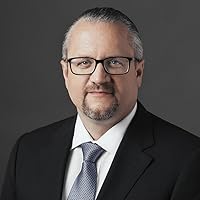
Start by following David L. Bahnsen.
Showing 1-20 of 20
“It is not true that Congress spends money like a drunken sailor. Drunken sailors spend their own money. Congress spends our money.” - Dr. Art Laffer”
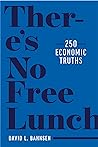
― There’s No Free Lunch: 250 Economic Truths
― There’s No Free Lunch: 250 Economic Truths
“Currency doesn’t chase anything, people with currency chase things. Gold doesn’t horde itself, people with gold horde it. Printing presses don’t expand the currency, officials at the Fed make their decisions to expand the currency, and then go home to dinner. In other words, monetary policy, and the economic consequences of monetary policy, are personal. And when all these people are making their respective decisions, they are doing so out of the framework of a particular worldview.”
― Mis-Inflation: The Truth about Inflation, Pricing, and the Creation of Wealth
― Mis-Inflation: The Truth about Inflation, Pricing, and the Creation of Wealth
“I make it a habit of not fighting the bond market for the same reason I do not argue with my wife—I am not going to win, ever.”
― Mis-Inflation: The Truth about Inflation, Pricing, and the Creation of Wealth
― Mis-Inflation: The Truth about Inflation, Pricing, and the Creation of Wealth
“God is not served by technical incompetence; and incompetence and untruth always result when the secular vocation is treated as a thing alien to religion.”
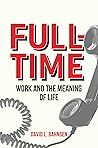
― Full-Time: Work and the Meaning of Life
― Full-Time: Work and the Meaning of Life
“The infantilization of young adult men, in particular, is so well-known that it has become the stuff of memes, skits, sitcoms, and movies. It is a theological choice by pastors to preach endlessly about the dangers of work, career, and professional ambitions when video game obsessions are a deeper cultural reality.”
― Full-Time: Work and the Meaning of Life
― Full-Time: Work and the Meaning of Life
“wealth as the growth of goods and services that comes from knowledge, ideas, and risk.”
― Mis-Inflation: The Truth about Inflation, Pricing, and the Creation of Wealth
― Mis-Inflation: The Truth about Inflation, Pricing, and the Creation of Wealth
“We can never at one and the same time question all [traditional] values. Such absolute doubt could lead only to the destruction of our civilization and—in view of the numbers to which economic progress has allowed the human race to grow—to extreme misery and starvation. Complete abandonment of all traditional values is, of course, impossible; it would make man incapable of acting.” - F.A. Hayek Human action flows out of value systems. Those who hold traditional values in disdain have every right to put the burden of legitimacy on those who hold to them. But human action throughout history has led to greater growth and less misery. Those who would dismiss the traditions and values that have accompanied human action throughout civilization carry a burden themselves—accounting for what value system will replace that which we dismiss without wreaking havoc on civilization. It’s a tall order.”
― There’s No Free Lunch: 250 Economic Truths
― There’s No Free Lunch: 250 Economic Truths
“With regulation comes cronyism, always and forever.”
― Mis-Inflation: The Truth about Inflation, Pricing, and the Creation of Wealth
― Mis-Inflation: The Truth about Inflation, Pricing, and the Creation of Wealth
“It is because freedom means the renunciation of direct control of individual efforts that a free society can make use of so much more knowledge than the mind of the wisest ruler could comprehend.” - F.A. Hayek You may want to read this one several times to let it sink in. In a free society, the collective knowledge of all the individuals in it is at use—it is not suppressed, it has distributive powers, and its applications are monumental and miraculous. The conscious decision to replace the power of that collective knowledge expressed in a free and open marketplace with the limited, broken, misapplied, and misaligned knowledge of a central planner is one of the great mysteries of modern times, and one of its great iniquities. “The most basic question is not what is best, but who shall decide what is best.” - Thomas Sowell This is, indeed, the question. Defenders of free enterprise do not believe in a perfect administration under a market economy. Rather, we do not believe in the possibility of such. To the extent imperfect decision-making is accepted, we then seek to solve for who has the best chance of answering the question correctly, he with local knowledge or he without? He who will reap the consequences of his decision, or he who will not? Better decisions that are imperfect are superior to worse ones that are also imperfect. And accountability where a decision is made is better than no accountability where a decision is also made. One simply must abandon belief in the omnipotent disinterested third party (which no one explicitly believes in but too many implicitly do). Once we have accepted the inevitability of imperfect decision-making, choosing who decides is the easy part.”
― There’s No Free Lunch: 250 Economic Truths
― There’s No Free Lunch: 250 Economic Truths
“We talk about loneliness as if it were simply the lack of a friend or a spouse, when I believe it should be wholly understood as the lack of a purpose.”
― Full-Time: Work and the Meaning of Life
― Full-Time: Work and the Meaning of Life
“It turns out that ergois agathois (ἔργοις ἀγαθοῖς) is an important choice of words in this Ephesians passage. The good work we are created to do, according to Paul, is indistinguishable from vocational work in translation.”
― Full-Time: Work and the Meaning of Life
― Full-Time: Work and the Meaning of Life
“Put another way, it would be better to be the kind of man who took risks in order to build, invest, and provide—in other words, to love—than to be the kind of man who hesitated with regard to everything because he was tangled up in fear and insecurity. Even if he turned out to be right about the gold, he would have been wrong about himself, which means that he wouldn’t be any good managing his store of gold through the zombie apocalypse. A lifetime of risk aversion would be no help at all during a zombie apocalypse, or so it would seem. And another man who—again for the sake of love—had thrown himself into the exigencies of life for the sake of his people, may have “lost money” as he did it, but he would be the kind of man you would want to have by your side while shotgunning zombies. Again, so to speak.”
― Mis-Inflation: The Truth about Inflation, Pricing, and the Creation of Wealth
― Mis-Inflation: The Truth about Inflation, Pricing, and the Creation of Wealth
“Where humans are acting in faithful obedience to God’s design for us as creative risk-takers and producers, we crush the inflation of too much money chasing too few goods, and the deflation of economic stagnation.”
― Mis-Inflation: The Truth about Inflation, Pricing, and the Creation of Wealth
― Mis-Inflation: The Truth about Inflation, Pricing, and the Creation of Wealth
“Believing in a pending big bang economic earthquake and thinking gold will somehow help in such a case is a sociological construction. Believing in and acting on the realities of enterprise and markets as a condition for human flourishing is a theological construction. I pick B.”
― Mis-Inflation: The Truth about Inflation, Pricing, and the Creation of Wealth
― Mis-Inflation: The Truth about Inflation, Pricing, and the Creation of Wealth
“It is because freedom means the renunciation of direct control of individual efforts that a free society can make use of so much more knowledge than the mind of the wisest ruler could comprehend.” - F.A. Hayek You may want to read this one several times to let it sink in. In a free society, the collective knowledge of all the individuals in it is at use—it is not suppressed, it has distributive powers, and its applications are monumental and miraculous. The conscious decision to replace the power of that collective knowledge expressed in a free and open marketplace with the limited, broken, misapplied, and misaligned knowledge of a central planner is one of the great mysteries of modern times, and one of its great iniquities.”
― There’s No Free Lunch: 250 Economic Truths
― There’s No Free Lunch: 250 Economic Truths
“Money doesn’t do things. People do things. As von Mises has it in his title, economics is all about human action. Money simply measures the things that people do, and if we are going to be jealous about any resource, the thing we should be most jealous about is the greatest resource—which is the people who take risks. And this is why we should want to preach the kind of hot gospel that creates the kind of people who take those risks. The way we sometimes talk, it is as though we think the yard markers on the sidelines of the football game are capable of making first downs.”
― Mis-Inflation: The Truth about Inflation, Pricing, and the Creation of Wealth
― Mis-Inflation: The Truth about Inflation, Pricing, and the Creation of Wealth
“And in a free economy, people don’t take risks (for the most part) because they are daredevils. They take risks because of who and what they love. Civilizations are built by men who have families to feed. And this means that no currency was ever corrupted unless the worldview of the people is corrupted first. No talent was ever buried in the ground unless the faithless steward entrusted with it was buried in the ground first. In other words, all the disasters of monetary policy we might be able to itemize, and there have been many, they all have a counterpart in the hearts of the people. And that is where the real trouble is.”
― Mis-Inflation: The Truth about Inflation, Pricing, and the Creation of Wealth
― Mis-Inflation: The Truth about Inflation, Pricing, and the Creation of Wealth
“Career ambition” does not automatically entail “low view of family,” nor does high value of family compel a low view of career.”
― Full-Time: Work and the Meaning of Life
― Full-Time: Work and the Meaning of Life
“A recasting of purpose as a fundamental driver of work will do more for the social inequalities of various professional choices than economic interventions by the state. A society that rediscovers and reappreciates purpose in work and the concept of service in finding existential benefit no longer has to presuppose a hierarchy that elevates certain white-collar professions above blue-collar professions. Market forces may price the work of a lawyer or professor differently than that of a waitress or plumber in a monetary sense (dependent on subjective values embedded in supply and demand), and certain professions may require greater use of the mind than others and some greater use of the hands than others. But income, skill, intellect, and education are all disintermediated when it comes to the appreciation of purpose. A truck driver and a bond trader are on an even playing field in that important category. The way that we formulate our own hierarchies of one’s importance should never have become based on income level or social strata, yet the surest way to reverse this unhealthy trend is to reframe our understanding of work as a productive act of purposeful service, not merely an act of economic climbing.”
― Full-Time: Work and the Meaning of Life
― Full-Time: Work and the Meaning of Life
“So the issue is not really the money. The issue is what kind of person the investor is becoming. A risk averse person can easily think that it is also about the money, when it is actually all about him.”
― Mis-Inflation: The Truth about Inflation, Pricing, and the Creation of Wealth
― Mis-Inflation: The Truth about Inflation, Pricing, and the Creation of Wealth