Goodreads helps you follow your favorite authors. Be the first to learn about new releases!
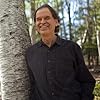
Start by following Allan G. Johnson.

Showing 1-21 of 21
“It is easier to allow a few women to occupy positions of authority and dominance than to question whether social life should be organized around principles of hierarchy, control, and dominance at all, to allow a few women to reach the heights of the corporate hierarchy rather than question whether people's needs should depend on an economic system based on dominance, control, and competition. It is easier to allow women to practice law than to question adversarial conflict as a model for resolving disputes and achieving justice. It has even been easier to admit women to military combat roles than to question the acceptability of warfare and its attendant images of patriarchal masculine power and heroism as instruments of national policy. And it has been easier to elevate and applaud a few women than to confront the cultural misogyny that is never far off, waiting in the wings and available for anyone who wants to use it to bring women down and put them in their place.”
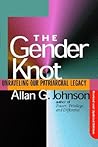
― The Gender Knot: Unraveling Our Pariarchal Legacy
― The Gender Knot: Unraveling Our Pariarchal Legacy
“People are tagged with other labels that point to the lowest-status group they belong to, as in "woman doctor" or "black writer," but never "white lawyer" or male senator". Any category that lowers our status relative to others' can be used to mark us; to be privileged is to go through life with the relative ease of being unmarked.”
― Privilege, Power, and Difference
― Privilege, Power, and Difference
“It is more likely that the paths others have chosen influence the paths I choose. This suggests that the simplest way to help others make different choices is to make them myself, and to do it openly. As I shift the patterns of my own participation in the systemps of privilege, I make it easier for others to do so as well, and harder for them not to. Simply by setting an example - rather than trying to change them - I crate the possibility of their participating in change in their own time and in their own way. In this way I widen the circle of change without provoking the kind of defensiveness that perpetuates paths of least resistance and the oppressive systems they serve.”
― Privilege, Power, and Difference
― Privilege, Power, and Difference
“The public response to feminism has been ferociously defensive precisely because feminism touches such a deep nerve of truth and the denial that keeps us from it. If feminism were truly ridiculous, it would be ignored. But it isn't ridiculous, and so provokes a vigorous backlash.”
― The Gender Knot: Unraveling Our Pariarchal Legacy
― The Gender Knot: Unraveling Our Pariarchal Legacy
“As a system, patriarchy encourages men to accept male privilege and perpetuate women's oppression, if only through silence.”
― The Gender Knot: Unraveling Our Pariarchal Legacy
― The Gender Knot: Unraveling Our Pariarchal Legacy
“There is no such thing as doing nothing. There is no such thing as neutral or uninvolved. At every moment, social life involves all of us.”
― Privilege, Power, and Difference
― Privilege, Power, and Difference
“The truth doesn't matter because ideology isn't about truth or accuracy. Rather, its purpose is to support and perpetuate the status quo by making it appear normal and legitimate... And when someone dares to challenge that comforting reality, it's easy to confuse the bearer of bad news with the bad news itself. When people of color call attention to the divisions caused by white privilege, for example, they're often accused of creating those divisions, as if racism isn't a problem unless you talk about it.”
― Privilege, Power, and Difference
― Privilege, Power, and Difference
“Healing imagery is also problematic because it implies that the damage being done is primarily emotional. The goal becomes one of "getting along" better by being nicer and more tolerant toward one another, forgiving and forgetting, living in more authentic ways. I don’t object to this goal, but it ignores the fact that a lot of the trouble doesn’t begin and end with interpersonal relations and emotional wounds. Much of it is embedded in structures of power and inequality that shape almost every aspect of life in this society, from economics to politics to religion to schools and the family. The idea that we’re going to get out of this by somehow getting to a place where we’re kinder and more sensitive to one another ignores most of what we have to overcome. It sets us up to walk right past the trouble toward an alternative that doesn’t exist and can’t exist until we do something about what creates privilege and oppression in the first place. And that is something that needs to be changed, not healed.”
― Privilege, Power, and Difference
― Privilege, Power, and Difference
“This was especially true of the Irish in Ireland in relation to the British, who for centuries treated them as an inferior race. Note, however, that their skin color was indistinguishable from that of those considered to be "white". If anything, the skin of most people of Irish descent is "fairer" than that of others of European heritage. But their actual complexion didn't matter, because the dominant racial group has the cultural authority to define the boundaries around "white" as it chooses.”
― Privilege, Power, and Difference
― Privilege, Power, and Difference
“To justify such direct forms of imperialism and oppression, whites developed the IDEA of whiteness to define a privileged social category elevated above everyone who wasn't included in it. This made it possible to reconcile conquest, treachery, slavery, and genocide, with the nation's newly professed ideals of democracy, freedom, and human dignity. If whiteness define what it meant to be human, then it was seen as less off an offense against the Constitution (not to mention God) to dominate and oppress those who happened to fall outside that definition as the United States marched onward toward what was popularly perceived as its Manifest Destiny.”
― Privilege, Power, and Difference
― Privilege, Power, and Difference
“A student of color in one of my classes, for example, once told me that she noticed my cutting her off during class, something she didn't think I did with white students. I could have weighed in with my professional authority and said it wasn't true, that she was imagining it, that I treated all my students that way, that she was being too sensitive, that I travel all over the country speaking about issues of inequality and injustice, so certainly I was above such things. But what I said to her was that I was truly sorry she'd had that experience. I wasn't aware of doing that, I told her, and the fact that I didn't consciously mean to was beside the point.
To respond in this way, I had to de-center myself from my privilege and make her experience and not mine the point of the conversation. I ended by telling her I would do everything I could to oay attention to this problem in the future to make sure it didn't happen again.”
― Privilege, Power, and Difference
To respond in this way, I had to de-center myself from my privilege and make her experience and not mine the point of the conversation. I ended by telling her I would do everything I could to oay attention to this problem in the future to make sure it didn't happen again.”
― Privilege, Power, and Difference
“If we are serious about change, we have to dig - preferably with plenty of company and with a full appreciation of the fact that although we did not start the fire, it belongs to us now.”
― The Gender Knot: Unraveling Our Patriarchal Legacy
― The Gender Knot: Unraveling Our Patriarchal Legacy
“Male experience is what patriarchal culture uses to represent human experience, even when it is women who most often live it.”
― The Gender Knot: Unraveling Our Patriarchal Legacy
― The Gender Knot: Unraveling Our Patriarchal Legacy
“Women's potential to disrupt patriarchy and make men vulnerable is why it's so easy for women to make men feel foolish or emasculated through the mildest humor that focuses on maleness and hints at women's power to stop going along with the status quo.”
― The Gender Knot: Unraveling Our Pariarchal Legacy
― The Gender Knot: Unraveling Our Pariarchal Legacy
“One way to see the constructed nature of reality is to notice how the definitions of different "races" change historically, by including groups at one time that were excluded in another. The Irish, for example, were long considered by the dominant white Anglo-Saxon Protestants of England and the United States to be members of a nonwhite "race", as were Italians, Jews, and people from a number of Eastern European countries. As such, immigrants from these groups to England and the United States were excluded and subjugated and exploited in much the same way that blacks were.”
― Privilege, Power, and Difference
― Privilege, Power, and Difference
“Privilege increases the odds of having things your own way, of being able to set the agenda in a social situation and determine the rules and standards and how they're applied. Privilege grants the cultural authority to make judgments about others and to have those judgments stick. It allows people to define reality and to have prevailing definitions of reality fit their experience. Privilege means being able to decide who gets taken seriously, who receives attention, who is accountable to whom and for what. And it grants a presumption of superiority and social permission to act on that presumption without having to worry about being challenged.”
― Privilege, Power, and Difference
― Privilege, Power, and Difference
“subordinate groups are often pitted against one another in ways that draw attention away from the system of privilege that hurts them all.”
― Privilege, Power, and Difference
― Privilege, Power, and Difference
“The odds are loaded toward a path of least resistance in several ways. We often choose a path because it is the only one we see. When I get on an elevator, for example, I turn and face front along with everyone else. It rarely occurs to me to do it any other way, such as facing the rear. If I did, I'd soon feel how some paths bring on more social resistance than others.”
― Privilege, Power, and Difference
― Privilege, Power, and Difference
“A society is patriarchal to the degree that it promotes male privilege by being male dominated, male identified, and male centered. It is also organized around an obsession with control and involves as one of its key aspects the oppression of women.... If men occupy superior positions, it's a short leap to the idea that men must be superior...[and that] whatever men do will tend to be seen as having greater value.”
― The Gender Knot: Unraveling Our Patriarchal Legacy
― The Gender Knot: Unraveling Our Patriarchal Legacy
“The more powerful a woman is under patriarchy, the more ‘unsexed’
she becomes in the eyes of others as her female cultural identity recedes beneath the mantle of male-identified power and the masculine images associated with it. With men the effect is just the opposite: the more powerful they
are, the more aware they are of their manhood. In other words, in a patriarchal
culture, power looks sexy on men but not on women.”
― The Gender Knot: Unraveling Our Patriarchal Legacy
she becomes in the eyes of others as her female cultural identity recedes beneath the mantle of male-identified power and the masculine images associated with it. With men the effect is just the opposite: the more powerful they
are, the more aware they are of their manhood. In other words, in a patriarchal
culture, power looks sexy on men but not on women.”
― The Gender Knot: Unraveling Our Patriarchal Legacy
“No woman (or man) becomes a corporate manager, gets tenure at a university, or is elected to public office by showing their capacity for cooperation, sharing, emotional sensitivity, and nurturing.”
― Privilege, Power, and Difference
― Privilege, Power, and Difference