Goodreads helps you follow your favorite authors. Be the first to learn about new releases!
Start by following Robert Hass.

Showing 1-30 of 58
“It's hell writing and it's hell not writing. The only tolerable state is having just written.”
―
―
“After a while I understood that, talking this way, everything dissolves: justice, pine, hair, woman, you and I. There was a woman I made love to and I remembered how, holding her small shoulders in my hands sometimes, I felt a violent wonder at her presence like a thirst for salt, for my childhood river with its island willows, silly music from the pleasure boat, muddy places where we caught the little orange-silver fish called pumpkinseed. It hardly had to do with her. Longing, we say, because desire is full of endless distances.”
―
―
“A Faint Music by Robert Hass
Maybe you need to write a poem about grace.
When everything broken is broken,
and everything dead is dead,
and the hero has looked into the mirror with complete contempt,
and the heroine has studied her face and its defects
remorselessly, and the pain they thought might,
as a token of their earnestness, release them from themselves
has lost its novelty and not released them,
and they have begun to think, kindly and distantly,
watching the others go about their days—
likes and dislikes, reasons, habits, fears—
that self-love is the one weedy stalk
of every human blossoming, and understood,
therefore, why they had been, all their lives,
in such a fury to defend it, and that no one—
except some almost inconceivable saint in his pool
of poverty and silence—can escape this violent, automatic
life’s companion ever, maybe then, ordinary light,
faint music under things, a hovering like grace appears.
As in the story a friend told once about the time
he tried to kill himself. His girl had left him.
Bees in the heart, then scorpions, maggots, and then ash.
He climbed onto the jumping girder of the bridge,
the bay side, a blue, lucid afternoon.
And in the salt air he thought about the word “seafood,”
that there was something faintly ridiculous about it.
No one said “landfood.” He thought it was degrading to the rainbow perch
he’d reeled in gleaming from the cliffs, the black rockbass,
scales like polished carbon, in beds of kelp
along the coast—and he realized that the reason for the word
was crabs, or mussels, clams. Otherwise
the restaurants could just put “fish” up on their signs,
and when he woke—he’d slept for hours, curled up
on the girder like a child—the sun was going down
and he felt a little better, and afraid. He put on the jacket
he’d used for a pillow, climbed over the railing
carefully, and drove home to an empty house.
There was a pair of her lemon yellow panties
hanging on a doorknob. He studied them. Much-washed.
A faint russet in the crotch that made him sick
with rage and grief. He knew more or less
where she was. A flat somewhere on Russian Hill.
They’d have just finished making love. She’d have tears
in her eyes and touch his jawbone gratefully. “God,”
she’d say, “you are so good for me.” Winking lights,
a foggy view downhill toward the harbor and the bay.
“You’re sad,” he’d say. “Yes.” “Thinking about Nick?”
“Yes,” she’d say and cry. “I tried so hard,” sobbing now,
“I really tried so hard.” And then he’d hold her for a while—
Guatemalan weavings from his fieldwork on the wall—
and then they’d fuck again, and she would cry some more,
and go to sleep.
And he, he would play that scene
once only, once and a half, and tell himself
that he was going to carry it for a very long time
and that there was nothing he could do
but carry it. He went out onto the porch, and listened
to the forest in the summer dark, madrone bark
cracking and curling as the cold came up.
It’s not the story though, not the friend
leaning toward you, saying “And then I realized—,”
which is the part of stories one never quite believes.
I had the idea that the world’s so full of pain
it must sometimes make a kind of singing.
And that the sequence helps, as much as order helps—
First an ego, and then pain, and then the singing”
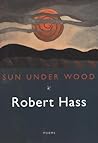
― Sun under Wood
Maybe you need to write a poem about grace.
When everything broken is broken,
and everything dead is dead,
and the hero has looked into the mirror with complete contempt,
and the heroine has studied her face and its defects
remorselessly, and the pain they thought might,
as a token of their earnestness, release them from themselves
has lost its novelty and not released them,
and they have begun to think, kindly and distantly,
watching the others go about their days—
likes and dislikes, reasons, habits, fears—
that self-love is the one weedy stalk
of every human blossoming, and understood,
therefore, why they had been, all their lives,
in such a fury to defend it, and that no one—
except some almost inconceivable saint in his pool
of poverty and silence—can escape this violent, automatic
life’s companion ever, maybe then, ordinary light,
faint music under things, a hovering like grace appears.
As in the story a friend told once about the time
he tried to kill himself. His girl had left him.
Bees in the heart, then scorpions, maggots, and then ash.
He climbed onto the jumping girder of the bridge,
the bay side, a blue, lucid afternoon.
And in the salt air he thought about the word “seafood,”
that there was something faintly ridiculous about it.
No one said “landfood.” He thought it was degrading to the rainbow perch
he’d reeled in gleaming from the cliffs, the black rockbass,
scales like polished carbon, in beds of kelp
along the coast—and he realized that the reason for the word
was crabs, or mussels, clams. Otherwise
the restaurants could just put “fish” up on their signs,
and when he woke—he’d slept for hours, curled up
on the girder like a child—the sun was going down
and he felt a little better, and afraid. He put on the jacket
he’d used for a pillow, climbed over the railing
carefully, and drove home to an empty house.
There was a pair of her lemon yellow panties
hanging on a doorknob. He studied them. Much-washed.
A faint russet in the crotch that made him sick
with rage and grief. He knew more or less
where she was. A flat somewhere on Russian Hill.
They’d have just finished making love. She’d have tears
in her eyes and touch his jawbone gratefully. “God,”
she’d say, “you are so good for me.” Winking lights,
a foggy view downhill toward the harbor and the bay.
“You’re sad,” he’d say. “Yes.” “Thinking about Nick?”
“Yes,” she’d say and cry. “I tried so hard,” sobbing now,
“I really tried so hard.” And then he’d hold her for a while—
Guatemalan weavings from his fieldwork on the wall—
and then they’d fuck again, and she would cry some more,
and go to sleep.
And he, he would play that scene
once only, once and a half, and tell himself
that he was going to carry it for a very long time
and that there was nothing he could do
but carry it. He went out onto the porch, and listened
to the forest in the summer dark, madrone bark
cracking and curling as the cold came up.
It’s not the story though, not the friend
leaning toward you, saying “And then I realized—,”
which is the part of stories one never quite believes.
I had the idea that the world’s so full of pain
it must sometimes make a kind of singing.
And that the sequence helps, as much as order helps—
First an ego, and then pain, and then the singing”
― Sun under Wood
“One may prefer spring and summer to autumn and winter, but preference is hardly to the point. The earth turns, and we live in the grain of nature, turning with it.”
― Twentieth Century Pleasures: Prose on Poetry
― Twentieth Century Pleasures: Prose on Poetry
“Take the time to write. You can do your life's work in half an hour a day.”
―
―
“Imagination runs through the places where we live like water. We need both things-a living knowledge of the land and a live imagination of it and our place in it- if we are going to preserve it.”
―
―
“Nostalgia locates desire in the past where it suffers no active conflict and can be yearned toward pleasantly.”
― Twentieth Century Pleasures: Prose on Poetry
― Twentieth Century Pleasures: Prose on Poetry
“The basis of art is change in the universe.”
― The Essential Haiku: Versions of Basho, Buson, and Issa
― The Essential Haiku: Versions of Basho, Buson, and Issa
“All the new thinking is about loss. In this it resembles all the old thinking”
―
―
“The whole difference between the nineteenth century and the twentieth century could be summed up in two words, graveyard and cemetery.”
― Twentieth Century Pleasures: Prose on Poetry
― Twentieth Century Pleasures: Prose on Poetry
“The first fact of the world is that it repeats itself. I had been taught to believe that the freshness of children lay in their capacity for wonder at the vividness and strangeness of the particular, but what is fresh in them is that they still experience the power of repetition, from which our first sense of the power of mastery comes. Though predictable is an ugly little world in daily life, in our first experience of it we are clued to the hope of a shapeliness in things. To see that power working on adults, you have to catch them out: the look of foolish happiness on the faces of people who have just sat down to dinner is their knowledge that dinner will be served. Probably, that is the psychological basis for the power and the necessity of artistic form...Maybe our first experience of form is the experience of our own formation...And I am not thinking mainly of poems about form; I’m thinking of the form of a poem, the shape of its understanding. The presence of that shaping constitutes the presence of poetry.”
―
―
“When you are composing a verse, let there not be a hair's breadth separating your mind from what you write. Quickly say what is in your mind; never hesitate a moment.”
― The Essential Haiku: Versions of Basho, Buson, and Issa
― The Essential Haiku: Versions of Basho, Buson, and Issa
“It is good sometimes for poetry to disenchant us.”
― Time and Materials
― Time and Materials
“Such tenderness, those afternoons and evenings, saying blackberry, blackberry, blackberry.”
―
―
“We asked the captain what course
of action he proposed to take toward
a beast so large, terrifying, and
unpredictable. He hesitated to
answer, and then said judiciously:
“I think I shall praise it."”
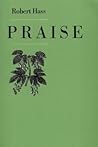
― Praise
of action he proposed to take toward
a beast so large, terrifying, and
unpredictable. He hesitated to
answer, and then said judiciously:
“I think I shall praise it."”
― Praise
“Golf is a worrier's game, inward, concentrated, a matter of inches, invented by the same people who gave us Presbyterianism.”
― Twentieth Century Pleasures: Prose on Poetry
― Twentieth Century Pleasures: Prose on Poetry
“What would you do if you were me? she said.
If I were you-you, or if I were you-me?
If you were me-me.
If I were you-you, he said, I'd do exactly
what you're doing.”
― Time and Materials
If I were you-you, or if I were you-me?
If you were me-me.
If I were you-you, he said, I'd do exactly
what you're doing.”
― Time and Materials
“Poetry is a fireplace in summer or a fan in winter.”
― The Essential Haiku: Versions of Basho, Buson, and Issa
― The Essential Haiku: Versions of Basho, Buson, and Issa
“Sometimes from this hillside just after sunset
The rim of the sky takes on a tinge
Of the palest green, like the flesh of a cucumber
When you peel it carefully.”
― Time and Materials
The rim of the sky takes on a tinge
Of the palest green, like the flesh of a cucumber
When you peel it carefully.”
― Time and Materials
“The love of books
is for children
who glimpse in them
a life to come, but
I have come
to that life and
feel uneasy
with the love of books.
This is my life,
time islanded
in poems of dwindled time.”
― Praise
is for children
who glimpse in them
a life to come, but
I have come
to that life and
feel uneasy
with the love of books.
This is my life,
time islanded
in poems of dwindled time.”
― Praise
“But usually not. Usually she thinks of the path to his house, whether deer had eaten the tops of the fiddleheads, why they don't eat the peppermint saprophytes sprouting along the creek; or she visualizes the approach to the cabin, its large windows, the fuchsias in front of it where Anna's hummingbirds always hover with dirty green plumage and jeweled throats. Sometimes she thinks about her dream, the one in which her mother wakes up with no hands. The cabin smells of oil paint, but also of pine. The painter's touch is sexual and not sexual, as she herself is....When the memory of that time came to her, it was touched by strangeness because it formed no pattern with the other events in her life. It lay in her memory like one piece of broken tile, salmon-coloured or the deep green of wet leaves, beautiful in itself but unusable in the design she was making”
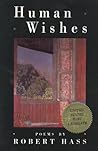
― Human Wishes
― Human Wishes
“ ‘Paradise Lost’ was printed in an edition of no more than 1,500 copies and transformed the English language. Took a while. Wordsworth had new ideas about nature: Thoreau read Wordsworth, Muir read Thoreau, Teddy Roosevelt read Muir, and we got a lot of national parks. Took a century. What poetry gives us is an archive, the fullest existent archive of what human beings have thought and felt by the kind of artists who loved language in a way that allowed them to labor over how you make a music of words to render experience exactly and fully.”
―
―
“What is older than desire?
the bare tree asked.
Sorrow, said the sky.
Sorrow is a river
older than desire.
— Robert Hass, from “February: Question” in “February Notebooks: The Rains,” Summer Snow: New Poems (Ecco, 2020)”
― Summer Snow: New Poems
the bare tree asked.
Sorrow, said the sky.
Sorrow is a river
older than desire.
— Robert Hass, from “February: Question” in “February Notebooks: The Rains,” Summer Snow: New Poems (Ecco, 2020)”
― Summer Snow: New Poems
“Images are not quite ideas, they are stiller than that, with less implication outside themselves. And they are not myth, they do not have the explanatory power; they are nearer to pure story. Nor are they always metaphors; they do not say this is that, they say this is.”
―
―
“It is like the keening sound the moon makes sometimes,/rising.”
―
―
“So few things we need to know.
And the old wisdoms shudder in us and grow slack.
Like renunciation. Like the melancholy beauty
of giving it all up. Like walking steadfast
in the rhythms, winter light and summer dark.
And the time for cutting furrows and the dance”
― Praise
And the old wisdoms shudder in us and grow slack.
Like renunciation. Like the melancholy beauty
of giving it all up. Like walking steadfast
in the rhythms, winter light and summer dark.
And the time for cutting furrows and the dance”
― Praise
“Don’t imitate me;
it’s as boring
as the two halves of a melon.”
― The Essential Haiku: Versions of Basho, Buson, and Issa
it’s as boring
as the two halves of a melon.”
― The Essential Haiku: Versions of Basho, Buson, and Issa