Goodreads helps you follow your favorite authors. Be the first to learn about new releases!
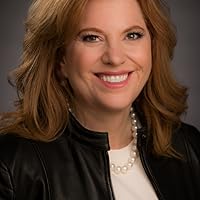
Start by following Halee Fischer-Wright.
Showing 1-8 of 8
“I’ve argued that the good data that effective metrics provide are essential to advancing the science at the heart of evidence-based medicine. But I’ve also argued that not all metrics or standards are created equal, and we should not equate metric-tracking with trust-building, because to do so misses a crucial point: What looks good on paper and what drives the best outcomes in practice can be two very different things. Too often, what looks good on paper is what is possible to measure, not necessarily what is actually the best approach to caring for patients. And when we consider the costs of abiding by and tracking and reporting all of these metrics—the four hours of physician time, the eight hours of care team time, the $8 billion we spend as a nation every year—it’s pretty clear that we’re interfering with those best, relationship-building approaches. Instead of spending so much more of our national time, resources, and attention in medicine on creating artificial metrics designed to incentivize good physician and provider behavior while unwittingly reinforcing bad behavior, let’s give the art of medicine the room it needs to build trusting relationships in the way that the best doctors and medical practices have always done so: honestly, naturally, compassionately, and with the best outcomes for the patient squarely in mind.”
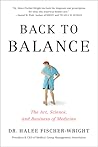
― Back To Balance: The Art, Science, and Business of Medicine
― Back To Balance: The Art, Science, and Business of Medicine
“Studies confirm what instinct has told us from the very beginning: When doctors have the time to do what’s necessary with their patients—look patients in the eye, listen to them, learn from them, lay hands on them, empathize with them, communicate with them, give trust, and earn trust—patients are much more likely to take the steps necessary to get healthy or stay healthy. When the art of medicine isn’t present, everything in health care becomes more of an uphill fight.”
― Back To Balance: The Art, Science, and Business of Medicine
― Back To Balance: The Art, Science, and Business of Medicine
“We have lost our focus on strengthening the one thing that we know has always produced healthier patients, happier doctors, and better results: namely, strong relationships between patients and physicians, informed by smart science and enabled by good business, that create the trust necessary to ensure that patients do what they need to do to achieve the outcomes we all want from health care. Instead, we have reached a point of serious imbalance, and each new change that rolls through the industry just keeps layering more weight in all of the wrong places.”
― Back To Balance: The Art, Science, and Business of Medicine
― Back To Balance: The Art, Science, and Business of Medicine
“If you talk with any patient, physician, or medical practice leader about the practice of medicine, you quickly realize that all three have the same thing in common: as much as they recognize the significance of the science of medicine and the importance of the business of medicine, the part of medicine that’s most important to them is the human side—the big-hearted, patient-focused, high-touch, active-listening, caring, compassionate, empathetic part of medicine that has been at the heart of the doctor-patient relationship from the very beginning. For physicians, it is the place where experience, instinct, and passion for the skill of medicine converge. For patients, it is the home of care, connection, and communication—the things that make them feel valued, listened to, and cared for in moments of pain, fear, and vulnerability. For administrators, it’s the place where value and impact can be seen and measured, where the sense of purpose and meaning that motivates them are found.”
― Back To Balance: The Art, Science, and Business of Medicine
― Back To Balance: The Art, Science, and Business of Medicine
“Here’s the real irony: The human side of medicine—the compassion, communication, and empathy that lie at the heart of the art of medicine—is essential to achieving the outcomes that matter most to the business and science sides of medicine. Within health care, there has been an unyielding assumption embedded in both the protocols of science and the metrics of business: that patients will comply with what their doctors ask them to do. This is why balance matters: Study after study has shown that when the art of medicine disappears, there’s a significant and negative impact on health. When patients don’t feel valued and heard as human beings, their overall sense of well-being and willingness to trust the system will suffer. And then they’re much less likely to follow the steps that can help them manage their diabetes, lose weight, or deal with whatever their specific health challenge may be. If patients don’t feel a connection to their doctors when problems come up, they are less likely to seek help until those problems become much worse and more expensive. In other words, in losing the art of medicine, we’re sabotaging the broader goals we hold for America’s health-care system.”
― Back To Balance: The Art, Science, and Business of Medicine
― Back To Balance: The Art, Science, and Business of Medicine
“As data analytics, superfast computers, digital technology, and other breakthroughs enabled by science play a bigger and bigger role in informing medical decision-making, science has carved out a new and powerful role as the steadfast partner of the business of medicine—which is also enjoying a new day in the sun. It may surprise some people to learn that the business of medicine is not a twenty-first-century invention. Health care has always been a business, as far back as the days when Hippocrates and his peers practiced medicine. Whether it was three goats, a gold coin, or a bank note, some type of payment was typically exchanged for medical services, and institutions of government or learning funded research. However, since the 1970s, business has been the major force directing the practice of medicine. Together, the business and science of medicine are the new kids on the block—the bright, shiny new things. Ideally, as I’ve suggested, the art, science, and business of medicine would work together in a harmonious partnership, each upholding the other and contributing all it has to offer to the whole. And sometimes (as we’ll find in later chapters) this partnership works well. When it does, the results are magnificent for patients and doctors, not to mention for scientists and investors.”
― Back To Balance: The Art, Science, and Business of Medicine
― Back To Balance: The Art, Science, and Business of Medicine
“The art of medicine is being crowded out by the science of medicine—and its emphasis on evidence-based procedures, well-meaning protocols, and advances in Big-Health-Data-churning information technology. And it’s being squeezed out by the business of medicine—and its focus on time-consuming but questionable quality metrics, endless billing procedures, and an adherence to process that doesn’t necessarily put patients first. Put another way, the science and business of medicine have combined with a superficial focus on things like hospital gowns to essentially act like a Quentin Tarantino character going “medieval” on the art of medicine. But perhaps I understate.”
― Back To Balance: The Art, Science, and Business of Medicine
― Back To Balance: The Art, Science, and Business of Medicine
“When Art Disappears This is the sleeper issue that too few people are talking about, the real reason for the American health-care crisis that lurks right around the corner: An entire generation of doctors in their thirties, forties, and fifties is disenchanted with their profession in ways that could have severe consequences for the long-term health of America. Not because they’re at retirement age, but because they are tired of sacrificing the human side of medicine to the complicated bureaucratic hurdles, clerical demands, and regulatory controls that are defining an ever-growing part of our health-care system today.”
― Back To Balance: The Art, Science, and Business of Medicine
― Back To Balance: The Art, Science, and Business of Medicine