Goodreads helps you follow your favorite authors. Be the first to learn about new releases!
Start by following Derren Brown.

Showing 1-30 of 113
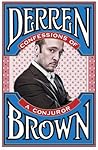
“Each of us is leading a difficult life, and when we meet people we are seeing only a tiny part of the thinnest veneer of their complex, troubled existences. To practise anything other than kindness towards them, to treat them in any way save generously, is to quietly deny their humanity.”
― Confessions of a Conjuror
― Confessions of a Conjuror
“Few kids seek to learn a skill specifically designed to impress people unless they feel less than impressive themselves.”
― Tricks of the Mind
― Tricks of the Mind
“We are, each of us, a product of the stories we tell ourselves”
― Happy: Why more or less everything is absolutely fine
― Happy: Why more or less everything is absolutely fine
“Moreover, knowledge and investigation help promote wonder they do not destroy it. Whatever our tastes, we can generally appreciate such things as music, art or wine better when we understand a bit about them. We read up on our favourite singers or artists because we feel we can appreciate their work better when we know how they think and what they bring to their work. The giddy delight and curiosity that comes from marvelling at the beauty of this universe is deepened, not cheapened, by the laws and facts science gives us to aid our understanding. In a similar way, the psychological tricks at work behind many seemingly paranormal events are truly more fascinating than the explanation of other-worldiness precisely because they are of this world, and say something about how rich and complex and mysterious we are as human beings to be convinced by such trickery, indeed to want to perpetuate it in the first place.”
― Tricks of the Mind
― Tricks of the Mind
“There is a common response from people when they hear that in the absence of evidence to convince me otherwise I don’t have any particular belief in ghosts, psychic powers or an afterlife. It normally runs something along the lines of ‘So you think we just live, die and that’s it? Come on...’ There’s a clear implication there that this earthly life – the wonder of being human – is somehow worthless. That it’s cheap and disappointing enough to warrant that ‘just’ and the accompanying incredulous tone, which are usually reserved for sentences like ‘After all that it was just a little spider? Come on...’ I live, I am sure, in a fairly narrow band of life, and make an embarrassingly pitiful attempt to explore the world I find myself upon. I ache with guilt and conflict when I hear of people living as adventurers, abandoning mainstream lives and living each day with abandon. But I really hope I have a brighter vision for this life and a greater curiosity for its richness than one who can say, and mean, ‘You think we just live, die and that’s it?”
― Confessions of a Conjuror
― Confessions of a Conjuror
“learn to desire what you already have, and you will have all you need.”
― Happy: Why More or Less Everything is Absolutely Fine
― Happy: Why More or Less Everything is Absolutely Fine
“What upsets people is not things themselves but their judgements about these things.”
― Happy: Why More or Less Everything is Absolutely Fine
― Happy: Why More or Less Everything is Absolutely Fine
“Everything worthwhile in your life draws its meaning from the fact you will die.”
― Happy: Why more or less everything is absolutely fine
― Happy: Why more or less everything is absolutely fine
“He who is not satisfied with a little, is satisfied with nothing”
― Happy: Why More or Less Everything is Absolutely Fine
― Happy: Why More or Less Everything is Absolutely Fine
“Schopenhauer wrote, ‘Every man takes the limits of his own field of vision for the limits of the world.”
― Happy: Why More or Less Everything is Absolutely Fine
― Happy: Why More or Less Everything is Absolutely Fine
“We see the illusion of individual predilection being maintained, for example, in the array of different styles of iPhone cases available to us. We wonder which of the provided range of colourful or sophisticated sheaths best communicates to the world our unique character. Thus we lean towards the wood effect, or the Batman one (ironically sported, of course), or the vintage Union Jack. Meanwhile, it is much harder to honestly ask ourselves whether our lives would be improved were we not to be attached to our devices quite as umbilically, and how much misery they bring us alongside the various conveniences and amusements. Whether we might be more authentically ourselves if, with a pioneering and curious spirit, we occasionally left them at home. It”
― Happy: Why More or Less Everything is Absolutely Fine
― Happy: Why More or Less Everything is Absolutely Fine
“we are terrible at reading each other’s thoughts. Yet we consistently behave as if we have been endowed with this entirely handsome ability.”
― Happy: Why More or Less Everything is Absolutely Fine
― Happy: Why More or Less Everything is Absolutely Fine
“Many atheists might proudly proclaim that our lives have no ultimate meaning, yet the business of finding significance in one's life is perhaps the most important part of being human. When we drift into a life without meaning, we soon become a pack of symptoms and pathologies; and without any feeling of significance, many choose to end their lives altogether.”
― Happy: Why more or less everything is absolutely fine
― Happy: Why more or less everything is absolutely fine
“If you do grow up feeling as though you don't quite fit in as a child, it's very easy to decide you're certain not going to fit in as an adult. You hang on to your eccentricities and hate the idea of conforming. It's a common pattern.”
― Tricks of the Mind
― Tricks of the Mind
“I also find Mill’s words to be of use when considering relationships. Often we want our friends, partners and people we love to be like us, because that allows us to feel validated and accepted. It is a powerful thing to find people in this world who share our values and instincts. But it is also important to celebrate the differences between our partners and us. Would we really want to be in a relationship where the other person reminds us every day of ourselves? Wouldn’t it just be like having rich chocolate cake every day? Do we even especially like people who are very much like us? Don’t we find ourselves cynical of their motives, believing we can see right through them? Love seems to come without a template. We may think we know what we want in a partner and then one day find ourselves in love for very different reasons. In the same way that differing, developed individuals contribute to Mill’s view of society and make it worth belonging to, so too the differences between people in a relationship can be precisely the substance of what makes it valuable. And then, rather than falling for that old fallacy of entering into a relationship thinking you will ‘change’ the other person to more comfortably reflect your values, you might see the qualities that separate them from you as precisely the features to celebrate. These qualities can complement our own: our laid-back approach to life can be challenged by the more active, dynamic ambition we might see in a partner, or vice versa. When the time comes, it will be useful to have them in mind as a role model. And to echo Mill: as our partners develop their own unique qualities, they can become of more value to themselves and therefore to the relationship as a whole.”
― Happy: Why More or Less Everything is Absolutely Fine
― Happy: Why More or Less Everything is Absolutely Fine
“the mantra of ‘you can be anything’ creates more pain than pleasure.”
― Happy: Why More or Less Everything is Absolutely Fine
― Happy: Why More or Less Everything is Absolutely Fine
“We might never rid ourselves of a lingering anxiety regarding our death; this is a kind of tax we pay in return for self-awareness.”
― Happy: Why more or less everything is absolutely fine
― Happy: Why more or less everything is absolutely fine
“1. If you are pained by external things, it is not they that disturb you, but your own judgement of them. And it is in your power to wipe out that judgement now.8”
― Happy: Why More or Less Everything is Absolutely Fine
― Happy: Why More or Less Everything is Absolutely Fine
“It is intoxicating in the first six months of love to pledge ourselves for the rest of our lives. It is also brave and deeply caring to accept, at least quietly to oneself, that this may prove untenable, or that a lifespan may not turn out to be the generous stretch of time we imagined. That knowledge might then flood us with a more steadfast kind of love that values the present rather than venerating an imagined future and, unlike the inflamed delirium of its early incarnation that flickers and wanes, grows only brighter with bounded time.”
― Happy: Why More or Less Everything is Absolutely Fine
― Happy: Why More or Less Everything is Absolutely Fine
“The True Believer ignores anything that doesn't fit his belief system. Instead, he inevitably comes to hold those beliefs at a very profound level. They can become absolutely part of his identity. It is this that brings together the religious, the psychic, the cynic (as opposed to the open skeptic) and the narrow-minded of all kinds. It is something I encountered a lot among my fellow Christians. At one level it can be seen in the circular discussion which goes as follows:
Why do you believe in the bible?
Because it is Gods word.
And why do you believe in God?
Because of what it says in the bible.
At a less obvious level, it can be seen in the following common exchange:
Why do you believe Christianity is true?
Because I have the experience of a personal relationship with God.
So how do you know you're not fooling yourself?
Because i know it is real.
Even as an enthusiastic believer myself I could see this kind of tautology at work, and over time I realized that it is common to all forms of True Belief., regardless of the particular belief in question. The fact is, it's enormously difficult - and you need to be fantastically brave - to overcome the circularity of your own ideologies. But just because our identity might be tied up with what we believe, it doesn't make that belief any more correct. One wishes that True Believers of any sort would learn a little modesty in their convictions.”
― Tricks of the Mind
Why do you believe in the bible?
Because it is Gods word.
And why do you believe in God?
Because of what it says in the bible.
At a less obvious level, it can be seen in the following common exchange:
Why do you believe Christianity is true?
Because I have the experience of a personal relationship with God.
So how do you know you're not fooling yourself?
Because i know it is real.
Even as an enthusiastic believer myself I could see this kind of tautology at work, and over time I realized that it is common to all forms of True Belief., regardless of the particular belief in question. The fact is, it's enormously difficult - and you need to be fantastically brave - to overcome the circularity of your own ideologies. But just because our identity might be tied up with what we believe, it doesn't make that belief any more correct. One wishes that True Believers of any sort would learn a little modesty in their convictions.”
― Tricks of the Mind
“Forget motivation; just get used to doing things straight away.”
― Tricks of the Mind
― Tricks of the Mind
“To grow up is to endure the equivocal, to permit the ambiguous.”
― Happy: Why More or Less Everything is Absolutely Fine
― Happy: Why More or Less Everything is Absolutely Fine
“The science fiction master Arthur C. Clarke gave us the law ‘Any sufficiently advanced technology is indistinguishable from magic”
― Happy: Why More or Less Everything is Absolutely Fine
― Happy: Why More or Less Everything is Absolutely Fine
“Aristotle also felt strongly that virtue requires action; mere noble intentions are not enough.”
― Happy: Why More or Less Everything is Absolutely Fine
― Happy: Why More or Less Everything is Absolutely Fine
“You will become way less concerned with what other people think of you when you realise how seldom they do.”
― Happy: Why More or Less Everything is Absolutely Fine
― Happy: Why More or Less Everything is Absolutely Fine
“We are, each of us, a product of the stories we tell ourselves.”
― Happy: Why More or Less Everything is Absolutely Fine
― Happy: Why More or Less Everything is Absolutely Fine
“The sign of the true expert is his modest awareness of how much more there is to know;”
― Happy: Why More or Less Everything is Absolutely Fine
― Happy: Why More or Less Everything is Absolutely Fine
“The kind of self-image we may be best advised to seek, then, is not of ourselves as beautiful winners (as we are often told we should), but one wherein our strengths and weaknesses are realistically appraised with neither self-aggrandisement nor abnegation, and our share of inevitable failings looked upon with kindness and good humour.”
― Happy: Why More or Less Everything is Absolutely Fine
― Happy: Why More or Less Everything is Absolutely Fine
“When others inspire us, they tend to do so through the clear expression of these sketchy, adumbrated thoughts we ourselves have known but never had the perspicacity for formulate with certainty.”
― Happy: Why more or less everything is absolutely fine
― Happy: Why more or less everything is absolutely fine
“The single most valuable human trait, the one quality every schoolchild and adult should be taught to nurture, is, quite simply, kindness.
Kindness. If you prefer, compassion. Even benevolence. It is the quality that makes people lovely. If that sounds rather anaemic, it’s because it is the opposite of setting goals and learning how to persuade and close deals; the antithesis of self-reliance and get-what-you-want thinking which form the backbone of modern self-improvement. Its simplicity and obviousness mean that we forget it constantly when we try to impress people, yet it is the most impressive trait we can ever show. It has nothing to do with intelligence or witty banter. We make the mistake of thinking we have to be funny and clever among the ranks of the funny and clever, or match the more obvious qualities of people we would like to like us, when in fact few of us seek out in others those outward aspects of personality we ourselves emanate.”
― Confessions of a Conjuror
Kindness. If you prefer, compassion. Even benevolence. It is the quality that makes people lovely. If that sounds rather anaemic, it’s because it is the opposite of setting goals and learning how to persuade and close deals; the antithesis of self-reliance and get-what-you-want thinking which form the backbone of modern self-improvement. Its simplicity and obviousness mean that we forget it constantly when we try to impress people, yet it is the most impressive trait we can ever show. It has nothing to do with intelligence or witty banter. We make the mistake of thinking we have to be funny and clever among the ranks of the funny and clever, or match the more obvious qualities of people we would like to like us, when in fact few of us seek out in others those outward aspects of personality we ourselves emanate.”
― Confessions of a Conjuror