Goodreads helps you follow your favorite authors. Be the first to learn about new releases!
Start by following S. David Scott.

Showing 1-1 of 1
“In the late Cretaceous Period, a global catastrophe resulted in massive extinctions across the planet. Likely the consequence of a collision with a sizeable meteor, the ensuing devastation rid the world of Dinosauria, most of which had for some time already been losing ground on Earth. Many of the existing bird species died out as well, but a number survived-the relatives of the geese, ducks, loons, and other shorebirds that we know today. Vast open spaces across the globe were left relatively unoccupied, and the evolutionary process hastened to fill available niches. Bird life raced to the task, developing with impressive rapidity; within ten million years every order of birds that we know today, with the exception of small passerines, existed. Since the
early Jurassic, when birds first made their appearance, some 150,000 species of birds have inhabited the Earth. Today, nearly two hundred million years later, the number of bird species inhabiting the Earth sits at around 9,672 (Sibley and Monroe 1990).”
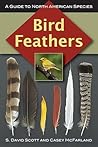
― Bird Feathers: A Guide to North American Species
early Jurassic, when birds first made their appearance, some 150,000 species of birds have inhabited the Earth. Today, nearly two hundred million years later, the number of bird species inhabiting the Earth sits at around 9,672 (Sibley and Monroe 1990).”
― Bird Feathers: A Guide to North American Species