Goodreads helps you follow your favorite authors. Be the first to learn about new releases!
Start by following Jim Paul.

Showing 1-30 of 100
“Smart people learn from their mistakes and wise people learn from somebody else’s mistakes.”
― What I Learned Losing a Million Dollars
― What I Learned Losing a Million Dollars
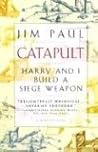
“We live in the world we made up.”
― Catapult: Harry and I Build a Siege Weapon
― Catapult: Harry and I Build a Siege Weapon
“A fool must now and then be right by chance. —WILLIAM COWPER”
― What I Learned Losing A Million Dollars
― What I Learned Losing A Million Dollars
“There’s nothing worse than two people who have on the same position talking to each other about the position.”
― What I Learned Losing a Million Dollars
― What I Learned Losing a Million Dollars
“Personalizing successes sets people up for disastrous failure. They begin to treat the success as a personal reflection rather than the result of capitalizing on a good opportunity, being at the right place at the right time, or even being just plain lucky.”
― What I Learned Losing A Million Dollars
― What I Learned Losing A Million Dollars
“All I'm trying to say is that if you're not willing to observe this, if you're just going to condemn it, you're never going to see it. It's there, whether you like it or not. This is stupid life-force we're dealing with here," he said. "Think how old it is, Jim. Think how huge it is. Understanding it doesn't make any difference.”
― Catapult: Harry and I Build a Siege Weapon
― Catapult: Harry and I Build a Siege Weapon
“Speculating is the application of intellectual examination and systematic analysis to the problem of the uncertain future.”
― What I Learned Losing A Million Dollars
― What I Learned Losing A Million Dollars
“Success can be built upon repeated failues when the failures aren't taken personally; likewise, failure can be built upon repeated successes when the successes are taken personally.”
― What I Learned Losing a Million Dollars
― What I Learned Losing a Million Dollars
“Speculating (and this includes investing and trading) is the only human endeavor in which what feels good is the right thing to do.”
― What I Learned Losing a Million Dollars
― What I Learned Losing a Million Dollars
“Are you long because you are bullish or bullish because you are long?”
― What I Learned Losing a Million Dollars
― What I Learned Losing a Million Dollars
“the herd instinct and crowd behavior arise out of our desire to replace uncertainty with certainty,”
― What I Learned Losing A Million Dollars
― What I Learned Losing A Million Dollars
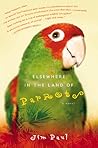
“The jet switched everything, one setting gone and the other there, like a conjuring act. This disorienting and instantaneous change of scene made places seem like channels on TV.”
― Elsewhere in the Land of Parrots: A Novel
― Elsewhere in the Land of Parrots: A Novel
“Weber sandstone a billion years old. This rock was Precambrian, I read, a term like postmodern, suggesting that what it names is so mysterious as to require identification by what it isn’t.”
― Catapult: Harry and I Build a Siege Weapon
― Catapult: Harry and I Build a Siege Weapon
“The basic distinction between the individual and the crowd is that the individual acts after reasoning, deliberation, and analysis; a crowd acts on feeling, emotion, and impulses.”
― What I Learned Losing A Million Dollars
― What I Learned Losing A Million Dollars
“For instance, we lose points for wrong answers on tests in school.”
― What I Learned Losing A Million Dollars
― What I Learned Losing A Million Dollars
“The basic distinction between the individual and the crowd is that the individual acts after reasoning, deliberation, and analysis; a crowd acts on feeling, emotion, and impulses. An individual will think out his opinions whereas a crowd is swayed by emotional viewpoints rather than by reasoning. In the crowd, emotional and thoughtless opinions spread widely via imitation and contagion.4 Learning the characteristics of a crowd and how it forms will provide a structure that shows how emotionalism affects your decision making. Once you know the structure, you’ll know what to avoid in order to prevent emotionalism.”
― What I Learned Losing A Million Dollars
― What I Learned Losing A Million Dollars
“On the other hand, a discrete event (e.g., a football game, roulette, blackjack, or other casino game) has a defined ending point, which is characteristic of external losses.”
― What I Learned Losing A Million Dollars
― What I Learned Losing A Million Dollars
“The aim of the “professional gambler,” as he is called, is to make money. He can be recognized by deliberate and extremely disciplined wagering. His wagering is systematic and usually limited to infrequent but highly favorable opportunities. The behavior of the professional gambler is highly controlled and usually the result of a studied approach to his chosen game. He concentrates on games where the element of skill is sufficient to produce the possibility of a player advantage, such as blackjack and parimutuel betting. The professional gambler is similar to the stock arbitrageur in that they both take calculated risks. They are dealing with an uncertain outcome and seek to profit from their ability to anticipate the future or to see the future—in other words, to speculate. Professional gamblers are actually speculators because of the characteristics they exhibit when risking money. They are not seeking entertainment at the tables like gamblers do, and they are not trying to be right. They are trying to make money.”
― What I Learned Losing A Million Dollars
― What I Learned Losing A Million Dollars
“gambling creates risk while investing/speculating assumes and manages risk that already exists.”
― What I Learned Losing A Million Dollars
― What I Learned Losing A Million Dollars
“However, in the markets losses should be viewed like the light bulbs or rotten fruit mentioned earlier: part of the business and taken with equanimity. Loss is not the same as wrong, and loss is not necessarily bad.”
― What I Learned Losing A Million Dollars
― What I Learned Losing A Million Dollars
“So when an individual adheres to a market position despite the mounting losses, he is a crowd.”
― What I Learned Losing A Million Dollars
― What I Learned Losing A Million Dollars
“In betting and gambling games if you stop acting and do nothing, the losses will stop. But when investing, trading, or speculating, if you’re losing and stop acting, the losses don’t stop; they can continue to grow almost indefinitely.”
― What I Learned Losing A Million Dollars
― What I Learned Losing A Million Dollars
“After you know where you want to get out of the market, then you can ascertain whether and where you are comfortable getting into the market. In contrast to what most people do, your entry point should be a function of the exit point.”
― What I Learned Losing A Million Dollars
― What I Learned Losing A Million Dollars
“Market losses are external, objective losses. It’s only when you internalize the loss that it becomes subjective. This involves your ego and causes you to view it in a negative way, as a failure, something that is wrong or bad. Since psychology deals with your ego, if you can eliminate ego from the decision-making process, you can begin to control the losses caused by psychological factors. The trick to preventing market losses from becoming internal losses is to understand how it happens and then avoid those processes.”
― What I Learned Losing A Million Dollars
― What I Learned Losing A Million Dollars
“Almost all commentary on the development of a plan will list the ingredients as entry, stop-loss, and price objective. However, to be effective as a loss-control tool, the plan must be derived by deciding STOP, ENTRY, then PRICE OBJECTIVE. Failure to choose a price objective could cost the trader some potential profits. A poor entry price could increase losses or reduce profits. But not having a predetermined stop-loss can, and ultimately will, cost you a lot of money.”
― What I Learned Losing A Million Dollars
― What I Learned Losing A Million Dollars
“Your plan is a script of what you expect to happen based on your particular method of analysis and provides a clear course of action if it doesn’t happen;”
― What I Learned Losing A Million Dollars
― What I Learned Losing A Million Dollars
“The minute it doesn’t feel good, stop doing it. It’s that simple.”
― What I Learned Losing A Million Dollars
― What I Learned Losing A Million Dollars
“Next, you must select a method of market analysis that you are going to use. Otherwise, you will jump back and forth among several methods in search of supporting evidence to justify holding onto a market position.”
― What I Learned Losing A Million Dollars
― What I Learned Losing A Million Dollars
“Broadly speaking, the decision-making process is as follows: (1) Decide what type of participant you’re going to be, (2) select a method of analysis, (3) develop rules, (4) establish controls, and (5) formulate a plan.”
― What I Learned Losing A Million Dollars
― What I Learned Losing A Million Dollars
“The stock investor can stay in the position forever. A futures speculator, on the other hand, will be forced out of the market when the contract expires. So even if he has financed a losing futures position, he is forced into making a new decision at expiration as to whether to stay with the position. The stock player has no such forcing point, which is why it’s especially important to decide what type of participant you’re going to be when you’re in the stock market.”
― What I Learned Losing A Million Dollars
― What I Learned Losing A Million Dollars