Goodreads helps you follow your favorite authors. Be the first to learn about new releases!
Start by following David Hinton.
Showing 1-30 of 36
“If you aren’t free of yourself how will you ever become yourself?”
― The Four Chinese Classics: Tao Te Ching, Analects, Chuang Tzu, Mencius
― The Four Chinese Classics: Tao Te Ching, Analects, Chuang Tzu, Mencius
“Wherever the mind dwells apart is itself a distant place.”
― Classical Chinese Poetry: An Anthology
― Classical Chinese Poetry: An Anthology
“Gazing at the Sacred Peak
What is this ancestor Exalt Mountain like?
Endless greens of north and south meeting
Where Changemaker distills divine beauty,
Where yin and yang cleave dusk and dawn.
Chest heaving breathes out cloud, and eyes
Open dusk bird-flight home. One day soon,
On the summit, peaks ranging away will be
small enough to hold, all in a single glance.
Tu Fu”
― Awakened Cosmos: The Mind of Classical Chinese Poetry
What is this ancestor Exalt Mountain like?
Endless greens of north and south meeting
Where Changemaker distills divine beauty,
Where yin and yang cleave dusk and dawn.
Chest heaving breathes out cloud, and eyes
Open dusk bird-flight home. One day soon,
On the summit, peaks ranging away will be
small enough to hold, all in a single glance.
Tu Fu”
― Awakened Cosmos: The Mind of Classical Chinese Poetry
“We are the empty awareness (empty mind) that watches identity rehearsing itself in thoughts and memories relentlessly coming and going. Eventually the stream of thought falls silent, and you inhabit empty mind, free of that center of identity -free, that is, of the self-absorbed and relentless process of thought that precludes CONTACT in our day to day experience. It is here that you inhabit the full depth of immediate.
Chinese poetry gets back near the process of nature by means of its vivid image, and its wealth of images. The prehistoric poets who created language discovered the whole harmonious framework of nature. We should avoid “is” and bring in a wealth of neglected English verbs.”
― The Wilds of Poetry: Adventures in Mind and Landscape
Chinese poetry gets back near the process of nature by means of its vivid image, and its wealth of images. The prehistoric poets who created language discovered the whole harmonious framework of nature. We should avoid “is” and bring in a wealth of neglected English verbs.”
― The Wilds of Poetry: Adventures in Mind and Landscape
“Tu Fu’s wandering through the thousands of miles of ancestor peaks was always the Tao/Cosmos open to itself- ancestor wandering itself and gazing into itself; thinking itself and feeling itself, lamenting itself, and celebrating itself, writing poems about itself.”
― Awakened Cosmos: The Mind of Classical Chinese Poetry
― Awakened Cosmos: The Mind of Classical Chinese Poetry
“Keep up self-definition and you’ll never be apparent.”
― The Four Chinese Classics: Tao Te Ching, Analects, Chuang Tzu, Mencius
― The Four Chinese Classics: Tao Te Ching, Analects, Chuang Tzu, Mencius
“In perennial Absence you see mystery, and in perennial Presence you see appearance. Though the two are one and the same, once they arise, they differ in name.”
― The Four Chinese Classics: Tao Te Ching, Analects, Chuang Tzu, Mencius
― The Four Chinese Classics: Tao Te Ching, Analects, Chuang Tzu, Mencius
“There’s an ancient legend that infuses China’s Yangtze and Yellow Rivers with cosmological dimensions. After flowing east and out to sea, the rivers ascend and rarify, becoming the Star River (Milky Way), crosses the heavens westward and descends into western mountains to form the headwaters of the rivers, a return to earth and the cycle. China’s rivers were an extension of the Milky Way, creating a cosmological cocoon and nestles humans into the ten thousand things, and prefigures the idea that the stars as embryonic origins of chi.”
― Awakened Cosmos: The Mind of Classical Chinese Poetry
― Awakened Cosmos: The Mind of Classical Chinese Poetry
“Rather than simply obey political power and implore the spirits to shape your fate in positive ways, the question of wisdom arises, and the empowerment that wisdom offers: act wisely and good things happen, act unwisely and bad things happen.”
― I Ching: The Book of Change
― I Ching: The Book of Change
“Exalt Mountain was one of China’s five sacred peaks, and in its popular sense, Exalt-Mountain Ancestor refers to the mountain as a deity. But given the cosmological ways Tu Fu describes Exalt Mountain, it’s clear he sees something quite different. That mountain cosmology begins here in this poem with Changemaker, which also sounds like a kind of deity. But it is in fact Tao, that generative existence-tissue that is the maker of change. In gazing at the mountain, Tu Fu is gazing at a dramatic manifestation of the wild Taoist Cosmos; he sees Exalt Mountain as a center-point where space stretches endlessly away north and south, where the divine beauty of all existence is condensed into a single dramatic sight by Changemaker Tao. But changemaker, the Tao, is not separate from the mountains. Instead the mountain is an intensification or distillation of Tao.”
― Awakened Cosmos: The Mind of Classical Chinese Poetry
― Awakened Cosmos: The Mind of Classical Chinese Poetry
“Dharma companions filling mountains, a sangha forms of itself: chanting, sitting ch’an stillness. Looking out from distant city walls, people see only white clouds.”
― Mountain Home: The Wilderness Poetry of Ancient China
― Mountain Home: The Wilderness Poetry of Ancient China
“While native cultures had inhabited the Maine woods for ten thousand years and left the ecosystem intact, white colonizers devasted it in a matter of decades. Enlightenment science was showing how false traditional cosmology was and replacing it in intellectual history by various kinds of post-Christian/scientific pantheism-most notably Deism, which had been the prevailing conceptual framework among America’s intellectuals…including America’s Founding Fathers. Deism considered art and science to the true religion because those practices engaged us with the immediate reality of the cosmos and that reality itself was the divine. There were various versions of pantheism among Romantic poets and painters, for who the natural world evoked a profound sense of awe, awe they could only explain as a kind of religious experience.”
― The Wilds of Poetry: Adventures in Mind and Landscape
― The Wilds of Poetry: Adventures in Mind and Landscape
“They are the most profound questions possible, really, for at their deepest level they allow no answer. They simply pose the unsayable reality of contact, which is all question and all mystery-a moment in which the mind’s orienting certainties fail, even the certainty of self-identity, leaving one open to the experience of sheer immediacy. It is the experience of a mind perfectly emptied of all content, all the received explanations and assumptions about who we are and where we are; and so, a mind open to the fundamental reality of the material Cosmos in and of itself, open therefore to these very wilds we inhabit day by day, however rarely we are aware of that existential level of immediacy.”
― The Wilds of Poetry: Adventures in Mind and Landscape
― The Wilds of Poetry: Adventures in Mind and Landscape
“Amid spring mountains, alone, I set out to find you.
Axe strokes crack-crack, and quit. Quiet mystery
Deepens. I follow a stream up into last snow and ice
And beyond, dusk light aslant, to Stone Gate forests.
Deer roam all morning here, for you harm nothing.
Wanting nothing, you know chi gold and silver all
Night. Facing you on a whim in such dark, the way
Home lost- I feel it drifting, this whole empty boat.
Tu Fu”
― Awakened Cosmos: The Mind of Classical Chinese Poetry
Axe strokes crack-crack, and quit. Quiet mystery
Deepens. I follow a stream up into last snow and ice
And beyond, dusk light aslant, to Stone Gate forests.
Deer roam all morning here, for you harm nothing.
Wanting nothing, you know chi gold and silver all
Night. Facing you on a whim in such dark, the way
Home lost- I feel it drifting, this whole empty boat.
Tu Fu”
― Awakened Cosmos: The Mind of Classical Chinese Poetry
“Facing Snow
Thin slice of ascending light, radiant arc
Tipped aside bellied dark- the first moon
Appears, and barely risen beyond ancient
Frontier passes, edges into clouds. Silver,
Changeless, the Star River spreads across
Mountains empty in their own cold. Lucent
Frost dusts the courtyard, chrysanthemum
Blossoms clotted there with solemn dark.
Tu Fu”
― Awakened Cosmos: The Mind of Classical Chinese Poetry
Thin slice of ascending light, radiant arc
Tipped aside bellied dark- the first moon
Appears, and barely risen beyond ancient
Frontier passes, edges into clouds. Silver,
Changeless, the Star River spreads across
Mountains empty in their own cold. Lucent
Frost dusts the courtyard, chrysanthemum
Blossoms clotted there with solemn dark.
Tu Fu”
― Awakened Cosmos: The Mind of Classical Chinese Poetry
“Honor is a contagion deep as fear,”
― The Four Chinese Classics: Tao Te Ching, Analects, Chuang Tzu, Mencius
― The Four Chinese Classics: Tao Te Ching, Analects, Chuang Tzu, Mencius
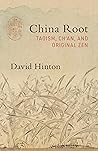
“And so, there is nothing to practice because we are always already enlightened, always already Absence somehow open to the world.”
― China Root: Taoism, Ch’an, and Original Zen
― China Root: Taoism, Ch’an, and Original Zen
“Just do what you do, and then leave: such is the Way of heaven.”
― The Four Chinese Classics: Tao Te Ching, Analects, Chuang Tzu, Mencius
― The Four Chinese Classics: Tao Te Ching, Analects, Chuang Tzu, Mencius
“Try to improve it and you ruin it. Try to hold it and you lose it.”
― The Four Chinese Classics: Tao Te Ching, Analects, Chuang Tzu, Mencius
― The Four Chinese Classics: Tao Te Ching, Analects, Chuang Tzu, Mencius
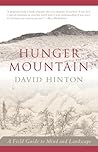
“Autumn Begins Autumn begins unnoticed. Nights slowly lengthen, and little by little, clear winds turn colder and colder, summer’s blaze giving way. My thatch hut grows still. At the bottom stair, in bunchgrass, lit dew shimmers. We”
― Hunger Mountain: A Field Guide to Mind and Landscape
― Hunger Mountain: A Field Guide to Mind and Landscape
“In classical Chinese, there is no fundamental distinction between heart and mind: the term hsin connotes all that we associate with both of those concepts. But in Wang Wei, as in most classical poets, this sense is almost always secondary to the technical use of hsin in Taoism and Ch'an Buddhism, where it means consciousness emptied of all content, or perhaps consciousness as empty awareness. At this fundamental level, mind is nothing other than the pregnant emptiness from which all things are engendered.”
― The Selected Poems of Wang Wei
― The Selected Poems of Wang Wei
“Words go on failing and failing,”
― The Four Chinese Classics: Tao Te Ching, Analects, Chuang Tzu, Mencius
― The Four Chinese Classics: Tao Te Ching, Analects, Chuang Tzu, Mencius
“Thoreau made two attempts to climb Mt Ktaadn in Maine and failed because the mountain was smothered in wind-blown clouds, though it almost seems he found the raw wildness of the place as daunting and impassable as the billowing cloud-cover. It was on the descent that Thoreau’s experience of existential CONTACT occurred: a moment where all the explanations and assumptions fell away…his failure left him open to absorb unexpected implications of his disorienting experience on the mountain…his reason became “dispersed and shadowy, more thin and subtil, like the air” as he faced “vast, Titanic, inhuman Nature…”
― The Wilds of Poetry: Adventures in Mind and Landscape
― The Wilds of Poetry: Adventures in Mind and Landscape
“In bare philosophical outline, meditation begins with the practice of sitting quietly, attending to the rise and fall of breath, and watching thoughts similarly appear and disappear in a field of silent emptiness. From this attention to thought’s movement comes meditation’s first revelation: that we are not, as a matter of observable fact, our thoughts and memories. That is, we are not that center of identity we assume ourselves to be in our day-to-day lives, that identity-center defining us as fundamentally separate from the empirical Cosmos. Instead, we are an empty awareness that can watch identity rehearsing itself in thoughts and memories relentlessly coming and going. Suddenly, and in a radical way, Ch’an’s demolition of concepts and assumptions has begun. And it continues as meditation practice deepens.”
― China Root: Taoism, Ch’an, and Original Zen
― China Root: Taoism, Ch’an, and Original Zen
“Self is but a fleeting form taken on by earth's process of change--born out of it, and returned to it in death. Or more precisely, never out of it: totally unborn. Our truest self, being unborn, is all and none of earth's fleeting forms simultaneously. This leads to the very core of Taoist thought and Ch'an practice. As natural process emerges from nonbeing, to say we are unborn is to say that we are most essentially nonbeing.”
― The Selected Poems of Wang Wei
― The Selected Poems of Wang Wei
“In such meditative practice, we see that we are fundamentally separate from the mental processes we normally identify with (thought, memory, etc.), that we are most essentially the very emptiness that watches thought coming and going.”
― The Selected Poems of Wang Wei
― The Selected Poems of Wang Wei
“endeavor’s nobility is ability, action’s nobility is timing. When you never strive you never go wrong.”
― The Four Chinese Classics: Tao Te Ching, Analects, Chuang Tzu, Mencius
― The Four Chinese Classics: Tao Te Ching, Analects, Chuang Tzu, Mencius
“Standing Alone
Empty skies. And beyond, one hawk.
Between river banks, two white gulls
Laze, wind-drifted. Fit for an easy kill,
To and fro, they follow contentment.
Grasses all frost-singed. Spiderwebs
Still hung. Heaven’s loom of origins
Tangling our human ways too, I stand
Facing sorrow’s ten thousand sources.
Tu Fu”
― Awakened Cosmos: The Mind of Classical Chinese Poetry
Empty skies. And beyond, one hawk.
Between river banks, two white gulls
Laze, wind-drifted. Fit for an easy kill,
To and fro, they follow contentment.
Grasses all frost-singed. Spiderwebs
Still hung. Heaven’s loom of origins
Tangling our human ways too, I stand
Facing sorrow’s ten thousand sources.
Tu Fu”
― Awakened Cosmos: The Mind of Classical Chinese Poetry
“In Ch’an, the process of thoughts appearing and disappearing manifests Taoism’s generative cosmology, reveals it there within the mind. And with this comes the realization that the cosmology of Absence and Presence defines consciousness too, where thoughts are forms of Presence emerging from and vanishing back into Absence, exactly as the ten thousand things of the empirical world do. That is, consciousness is part of the same cosmological tissue as the empirical world, with thoughts emerging from the same generative emptiness as the ten thousand things.”
― China Root: Taoism, Ch’an, and Original Zen
― China Root: Taoism, Ch’an, and Original Zen
“Returning Late
Past midnight, eluding tigers on the road, I return
Home in mountain darkness. Family asleep inside.
I watch the Northern Dipper drift low to the river,
And Venus lofting huge into empty space, radiant.
Holding a candle in the courtyard, I call for more
Light. A gibbon in the gorge, startled, shrieks once.
Old and tired, my hair white, I dance and sing out:
Rickety cane, no sleep… Catch me if you can!
Tu Fu”
― Awakened Cosmos: The Mind of Classical Chinese Poetry
Past midnight, eluding tigers on the road, I return
Home in mountain darkness. Family asleep inside.
I watch the Northern Dipper drift low to the river,
And Venus lofting huge into empty space, radiant.
Holding a candle in the courtyard, I call for more
Light. A gibbon in the gorge, startled, shrieks once.
Old and tired, my hair white, I dance and sing out:
Rickety cane, no sleep… Catch me if you can!
Tu Fu”
― Awakened Cosmos: The Mind of Classical Chinese Poetry