Goodreads helps you follow your favorite authors. Be the first to learn about new releases!
Start by following Lee Sandlin.

Showing 1-7 of 7
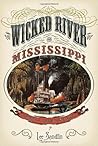
“The Mississippi is surrounded by a vast network of concealed plumbing that underlies the whole of the American Midwest. As for the great river at the heart of this maze, it is now for all intents and purposes a man-made artifact. Every inch of its course from its headwaters to its delta is regulated by synthetic means—by locks and dams and artificial lakes, revetments and spillways and control structures, chevrons and wing dams and bendway weirs. The resulting edifice can barely be called a river at all, in any traditional sense. The Mississippi has been dredged, and walled in, and reshaped, and fixed; it has been turned into a gigantic navigation canal, or the world’s largest industrial sewer. It hasn’t run wild as a river does in nature for more than a hundred years. Its waters are notoriously foul. In the nineteenth century, the Mississippi was well known for its murkiness and filth, but today it swirls with all the effluvia of the modern age. There’s the storm runoff, thick with the glistening sheen of automotive waste. The drainage from the enormous mechanized farms of the heartland, and from millions of suburban lawns, is rich with pesticides and fertilizers like atrazine, alachlor, cyanazine, and metolachlor. A ceaseless drizzle comes from the chemical plants along the riverbanks that manufacture neoprene, polychloroprene, and an assortment of other refrigerants and performance elastomers. And then there are the waste products of steel mills, of sulfuric acid regeneration facilities, and of the refineries that produce gasoline, fuel oil, asphalt, propane, propylene, isobutane, kerosene, and coke. The Mississippi is one of the busiest industrial corridors in the world.”
― Wicked River: The Mississippi When It Last Ran Wild
― Wicked River: The Mississippi When It Last Ran Wild
“Hersey was describing for the first time the war's true legacy: a permanent condition of helpless anger and universal dread. Hiroshima was the end of the line for the archaic idea that war was something that soldiers did on battlefields, somewhere on the far side of the horizon. The great strategic breakthrough of the war had been the targeting of civilian populations with weapons of mass destruction -- so that for the first time in history everybody, soldier and civilian alike, could share equally in the horror of battle. Now the postwar world was elevating this principle, making it the organizing fact of existence. After Hiroshima, Armageddon could erupt anytime, anywhere on earth, without warning, by accident. Even as people walked heedlessly in the streets, the bombs could be spiraling down from an invisible plane passing in the stratosphere; at dinnertime in the heartland, as the local news droned on about the Middle East, the missiles could already be arching over the north pole, like the ribs of a strange new cathedral.”
―
―
“What had happened, for instance, at one of the war's biggest battles, the Battle of Midway? It was in the Pacific, there was something about aircraft carriers. Wasn't there a movie about it, one of those Hollywood all-star behemoths in which a lot of admirals look worried while pushing toy ships around a map? (Midway, released in 1976 and starring Glenn Ford, Charlton Heston, and -- inevitably -- Henry Fonda.) A couple of people were even surprised to hear that Midway Airport was named after the battle, though they'd walked past the ugly commemorative sculpture in the concourse so many times. All in all, this was a dispiriting exercise. The astonishing events of that morning, the "fatal five minutes" on which the war and the fate of the world hung, had been reduced to a plaque nobody reads, at an airport with a vaguely puzzling name, midway between Chicago and nowhere at all.”
―
―
“Oblivion has always been the most trustworthy guardian of classified files.”
― Losing the War
― Losing the War
“War ends at the moment when peace permanently wins out. Not when the articles of surrender are signed or the last shot is fired, but when the last shout of a sidewalk battle fades, when the next generation starts to wonder whether the whole thing ever really happened. World War II ended as war always ends -- by trailing off into nothingness and doubt. Its final monument has never been seen by mortal eyes. It's a phantom image at the edge of a rumor: an unmarked grave in the depths of the South American jungle where a weird and decrepit old man, half forgotten by the world, at last entered the lists of oblivion.”
― Losing the War
― Losing the War
“The Vikings would have understood it anyway. They didn't have a word for the prolongation of war long past any rational goal -- they just knew that's what always happened. It's the subject of their longest and greatest saga, the Brennu-njalasaga, or The Saga of Njal Burned Alive. The saga describes a trivial feud in backcountry Iceland that keeps escalating for reasons nobody can understand or resolve until it engulfs the whole of northern Europe. Provocation after fresh provocation, peace conference after failed peace conference, it has its own momentum, like a hurricane of carnage. The wise and farseeing hero Njal, who has never met the original feuders and has no idea what their quarrel was about, ultimately meets his appalling death (the Vikings thought there was nothing worse than being burned alive) as part of a chain of ever-larger catastrophes that he can tell is building but is helpless to stop -- a fate that seems in the end to be as inevitable as it is inexplicable.
...
In Njal's saga the war's end comes only through divine intervention; the two leaders of the last feuding factions reconcile after they're both converted to Christianity. They meet by chance in the middle of a blizzard and, as a mutual test of their newfound faith, one wordlessly offers shelter for the night, and the other accepts. As they sit silently in the hall before the fire, neither willing to make any overt sign of peace, they realize that their feud has already ended. It has somehow passed from their world as mysteriously as it came, the way a storm will pass by morning.”
―
...
In Njal's saga the war's end comes only through divine intervention; the two leaders of the last feuding factions reconcile after they're both converted to Christianity. They meet by chance in the middle of a blizzard and, as a mutual test of their newfound faith, one wordlessly offers shelter for the night, and the other accepts. As they sit silently in the hall before the fire, neither willing to make any overt sign of peace, they realize that their feud has already ended. It has somehow passed from their world as mysteriously as it came, the way a storm will pass by morning.”
―
“But it seems somehow paltry and wrong to call what happened at Midway a "battle." It had nothing to do with battles the way they were pictured in the popular imagination. There were no last-gasp gestures of transcendent heroism, no brilliant counterstrategies that saved the day. It was more like an industrial accident. It was a clash not between armies, but between TNT and ignited petroleum and drop-forged steel. The thousands who died there weren't warriors but bystanders -- the workers at the factory who happened to draw the shift when the boiler exploded.”
― Losing the War
― Losing the War