Goodreads helps you follow your favorite authors. Be the first to learn about new releases!
Start by following Lindsey A. Holcomb.

Showing 1-8 of 8
“Sin and the effects of sin are similar to the laws of inertia: a person (or object) in motion will continue on that trajectory until acted upon by an outside force.”
―
―
“The abuse does not define you or have the last word on your identity. Yes, it is part of your story, but not the end of your story.”
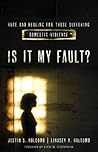
― Is It My Fault?: Hope and Healing for Those Suffering Domestic Violence.
― Is It My Fault?: Hope and Healing for Those Suffering Domestic Violence.
“We are all powerless to heal ourselves. Research shows that self-help statements have been found to be ineffective and even harmful by making some people with low self-esteem feel even worse about themselves in the long term.39 As a matter of fact, positive self-statements frequently end up reinforcing and strengthening one’s original negative self-perception they were trying to change.”
―
―
“Intentional: The abuser consciously or subconsciously sets out to use deliberate abusive tactics to achieve his/her ends. The abuser chooses to abuse and he can choose to stop abusing at any time. • Methodical: The abuser systematically uses a series of abusive tactics to gain power over the partner and to control her. • Pattern: The abused partner often at first sees the abusive tactics as isolated and unrelated incidents, but they are really a series of related acts that form a pattern of behaviors. • Tactics: The abuser uses a variety of tactics to gain power and to control his partner such as threats, violence, humiliation, exploitation, or even self-pity. • Power: The abuser aims to acquire and employ power in the relationship. For example, the abuser may use force or threats of physical harm to intimidate his or her partner, thereby gaining physical and emotional power. Or the abuser may prohibit the partner from working, making the partner financially dependent on the abuser, and thereby gaining financial power. • Control: With sufficient power, the abuser can control his partner—forcing or coercing her to do as the abuser wishes. For example, the abuser controls the decision making for the relationship, or controls who has social contact with the partner, or determines the sexual practices of the partner. The goal of the abuser is to force compliance. • Desires: The abuser’s ultimate goal is to get his emotional and physical desires met and he aims to selfishly make use of his partner to meet those needs. Most abusers are afraid their desires will not be fulfilled through a normal healthy relationship. Fear motivates them to use abuse to ensure that their desires will be met.”
― Is It My Fault?: Hope and Healing for Those Suffering Domestic Violence.
― Is It My Fault?: Hope and Healing for Those Suffering Domestic Violence.
“We are all powerless to heal ourselves. Research shows that self-help statements have been found to be ineffective and even harmful by making some people with low self-esteem feel even worse about themselves in the long term. As a matter of fact, positive self-statements frequently end up reinforcing and strengthening one’s original negative self-perception they were trying to change.”
―
―
“We are all powerless to heal ourselves. Research shows that self-help statements have been found to be ineffective and even harmful by making some people with low self-esteem feel even worse about themselves in the long term.39 As a matter of fact, positive self-statements frequently end up reinforcing and strengthening one’s original negative self-perception they were trying to change.40”
―
―
“Too often women who resist abuse are seen to be at fault when they resist or stand up to the abuser. However, if you’ve resisted your abuser, you’re showing that you’ve maintained something of your humanity and self-esteem in the face of horrendous abuse. If this is you, you should be supported, celebrated, assisted, and encouraged—not blamed, offered platitudes, asked suspicious questions, and told bad theology.”
― Is It My Fault?: Hope and Healing for Those Suffering Domestic Violence.
― Is It My Fault?: Hope and Healing for Those Suffering Domestic Violence.
“Furthermore, Jesus took the definition of violence to an even deeper level when He condemned physical violence and verbal violence as equal offenses. In Matthew 5:21, He says, “You have heard that it was said to the people long ago, ‘You shall not murder, and anyone who murders will be subject to judgment.’ But I tell you that anyone who is angry with a brother or sister will be subject to judgment.” Also, in Matthew 12:36–37, Jesus says, “But I tell you that everyone will have to give account on the day of judgment for every empty word they have spoken. For by your words you will be acquitted, and by your words you will be condemned.”
― Is It My Fault?: Hope and Healing for Those Suffering Domestic Violence.
― Is It My Fault?: Hope and Healing for Those Suffering Domestic Violence.