Goodreads helps you follow your favorite authors. Be the first to learn about new releases!
Start by following Jessica J. Lee.

Showing 1-13 of 13
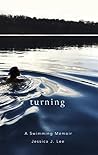
“But there’s a kind of offering in the generosity of water holding you afloat. In the way water holds feeling, how the body is most alive submerged and enveloped, there is the fullness of grace given freely.”
― Turning: Lessons from Swimming Berlin's Lakes
― Turning: Lessons from Swimming Berlin's Lakes
“I think of what the lakes meant to me then and what they mean to me now. In the middle of the lake, I'm completely present. I'm no longer afraid to be alone. I've conditioned myself to the lake, to the cold, to the pain of it. I can hold it. I've made it mine.”
― Turning
― Turning
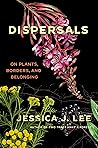
“... when we speak of conservation, it is essential to ask exactly which vision of a place we are conserving. Which means doing history.”
― Dispersals: On Plants, Borders, and Belonging
― Dispersals: On Plants, Borders, and Belonging
“Our pictures of the world are only ever fragmentary. Our language for plants is much the same.”
― Dispersals: On Plants, Borders and Belonging. A poetic and intimate essay collection on the lives of plants and their entanglement with our human worlds
― Dispersals: On Plants, Borders and Belonging. A poetic and intimate essay collection on the lives of plants and their entanglement with our human worlds
“Saving seeds is an act of belief in a future that the present tells me cannot exist”
― Dispersals: On Plants, Borders and Belonging. A poetic and intimate essay collection on the lives of plants and their entanglement with our human worlds
― Dispersals: On Plants, Borders and Belonging. A poetic and intimate essay collection on the lives of plants and their entanglement with our human worlds
“The instincts I had to order and make sense of the past fell flat. I knew only that there were words she could not speak, explanations that dwelt only in the darkness between feeling and form. There exist losses impossible to distill into mere stories.”
― Two Trees Make a Forest: In Search of My Family's Past Among Taiwan's Mountains and Coasts
― Two Trees Make a Forest: In Search of My Family's Past Among Taiwan's Mountains and Coasts
“In a matter of decades, fruit had become extraordinarily fraught, and mangoes, in particular, had the unfortunate tendency of signifying exoticism performed for a white gaze.”
― Dispersals: On Plants, Borders and Belonging. A poetic and intimate essay collection on the lives of plants and their entanglement with our human worlds
― Dispersals: On Plants, Borders and Belonging. A poetic and intimate essay collection on the lives of plants and their entanglement with our human worlds
“When I read of the sago pondweed’s recolonisation of that Berlin lake, I learn that it spread itself not by seed, but through tubers reaching beneath the lakebed, slow and persistent. What would it mean to move and stay rooted—to have roots that can span continents?”
― Dispersals: On Plants, Borders and Belonging. A poetic and intimate essay collection on the lives of plants and their entanglement with our human worlds
― Dispersals: On Plants, Borders and Belonging. A poetic and intimate essay collection on the lives of plants and their entanglement with our human worlds
“To hold a seed is to be oriented to the future”
― Dispersals: On Plants, Borders, and Belonging
― Dispersals: On Plants, Borders, and Belonging
“Plants are often considered static. The word we often use to describe them, “rooted,” is also how we might describe our human belonging to a place. But when I think of seed, of blossom, root, and rhizome, it is movement that I think of.”
― Dispersals: On Plants, Borders and Belonging. A poetic and intimate essay collection on the lives of plants and their entanglement with our human worlds
― Dispersals: On Plants, Borders and Belonging. A poetic and intimate essay collection on the lives of plants and their entanglement with our human worlds
“Wading into silver grass is akin to bathing in a sharpened pool of reeds, the fronds of seed holding fast to the rain. A wet slap is followed by the leaves, whetted as a blade, leaving paper cuts on the skin of our necks and hands. The grass rises above us, screening our view of the trail ahead, leaving us to traverse a patch just wide enough to set one foot in front of the other. I soon find myself lost in the task of swimming through them.”
― Two Trees Make a Forest: In Search of My Family's Past Among Taiwan's Mountains and Coasts
― Two Trees Make a Forest: In Search of My Family's Past Among Taiwan's Mountains and Coasts
“There’s a famous saying18 that what we call tea in a language depends entirely on the workings of trade during the period of empire: “‘Tea’ if by sea, ‘cha’ if by land.” If your culture first received tea via trade routes by sea from Fujian in the south of China, your language likely calls it something like the Min Nan (Hokkien) word “te”: thé, Tee, tea. If trade over land brought you tea, you likely call it something like the standard Mandarin 茶 (chá): chai, shay, cha. The very notion of movement, of trade and empire, is written into this plant and how we describe it.”
― Dispersals: On Plants, Borders and Belonging. A poetic and intimate essay collection on the lives of plants and their entanglement with our human worlds
― Dispersals: On Plants, Borders and Belonging. A poetic and intimate essay collection on the lives of plants and their entanglement with our human worlds