Goodreads helps you follow your favorite authors. Be the first to learn about new releases!
Start by following L.L. Barkat.

Showing 1-27 of 27
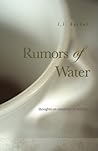
“Writing starts with living.
—Rumors of Water: Thoughts on Creativity & Writing”
―
—Rumors of Water: Thoughts on Creativity & Writing”
―
“Writing starts with living.”
― Rumors of Water: Thoughts on Creativity & Writing
― Rumors of Water: Thoughts on Creativity & Writing
“We will need to find people who will provide a safe writing space for us, where criticism comes late and love and delight come early.
—from Rumors of Water: Thoughts on Creativity & Writing”
―
—from Rumors of Water: Thoughts on Creativity & Writing”
―
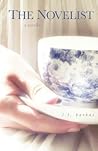
“Tea was more than boiling water. There were decisions to be made and a frame of mind to develop, no matter how imperceptible.”
― The Novelist
― The Novelist
“Have tea, might write,” Laura returned.”
― The Novelist
― The Novelist
“A writer is always writing for someone.”
― The Novelist
― The Novelist
“If she was going to write a novel, she felt defeated before she began, because someone might be coming along to pick it apart, looking for symbols like The Conch or The Whale, which seemed to have mythic proportions.”
― The Novelist
― The Novelist
“Maybe you didn’t need to know anything special to write a work of fiction. Maybe you didn’t need to delve into some kind of life question you knew you’d lived. Perhaps your subconscious would do the job for you, if only you dared to dream.”
― The Novelist
― The Novelist
“Her tea basket was still lost, but that didn’t seem to matter now. People used to eat loose tea on long journeys. They’d pack it into hard little cakes they’d pull out later, to gnaw on while they warmed their hands by a fire. The tea provided physical sustenance, but it was also considered good for the soul.”
― The Novelist
― The Novelist
“Maybe the real problem wasn’t that she had nothing to write about, but that she had too much. Maybe she wasn’t afraid of her finiteness after all, but rather Infinity and how it called her to begin somewhere, anywhere. To begin might be an acceptance that indeed she was some kind of creator, with tremendous powers.
It might mean taking people’s lives into her hands–her own life, her friends’, even her father’s or mother’s. And maybe she was afraid they would think she had animated a wandering Frankenstein no one wanted to hold.”
― The Novelist
It might mean taking people’s lives into her hands–her own life, her friends’, even her father’s or mother’s. And maybe she was afraid they would think she had animated a wandering Frankenstein no one wanted to hold.”
― The Novelist
“Earth care, as it turns out, is really about self-care and other-care. What we design today impacts how we live tomorrow. For better or for worse, it impacts far into upcoming generations.”
― Earth to Poetry: A 30-Days, 30-Poems Earth, Self, and Other Care Challenge
― Earth to Poetry: A 30-Days, 30-Poems Earth, Self, and Other Care Challenge
“She meant you have to live a story for a time.'
'And?'
'And then you can write it, in time. What have you lived?'
'Kind of a personal question for Twitterland.'
'Kind of the perfect question to answer in fiction.”
― The Novelist
'And?'
'And then you can write it, in time. What have you lived?'
'Kind of a personal question for Twitterland.'
'Kind of the perfect question to answer in fiction.”
― The Novelist
“Had Mary Shelley fretted so? Maybe yes, maybe no. She’d begun her classic work on a dare. Had culled a dream to bring it into being. But it was not lost on Laura that the story might be a prolonged exercise in Shelley’s personal terrors. The subtitle of the work was 'Prometheus Unbound,' and Laura wondered if Shelley herself was not Prometheus in the form of the wandering monster, who desperately sought love and acceptance but was ultimately driven to face an icy landscape that seemed almost fantastical—the way our own subconscious could be, white and frozen-slippery.”
― The Novelist
― The Novelist
“One Bagatelle, and I’ll raise you a novel,” Megan had tweeted back.
“Writing for tea? Now that would have been a solution for the British empire,” Laura returned.
“Writing for me,” Megan had typed.
“I’ll write you a tea fortune.”
“No deal. I want a novel. September sounds good.”
―
“Writing for tea? Now that would have been a solution for the British empire,” Laura returned.
“Writing for me,” Megan had typed.
“I’ll write you a tea fortune.”
“No deal. I want a novel. September sounds good.”
―
“Whenever we face challenges, we have the privilege of framing them in words—words that express our hopes, our losses, our dreams; words that transform our personal vision or the world's. These words can become a source of sustenance and discovery, for the sometimes long work of bringing to birth necessary change.”
― Earth to Poetry: A 30-Days, 30-Poems Earth, Self, and Other Care Challenge
― Earth to Poetry: A 30-Days, 30-Poems Earth, Self, and Other Care Challenge
“You could use a moth like that as a symbol in a novel, but it was trite, wasn’t it? The old moth-to-the-flame image had been used and used again. It was the stuff of amateur poetry. And she, having so little experience crafting a story, would be the most in danger of falling into trite approaches. If she wrote a novel, it probably would be about her father. And the male Luna moth would haunt its pages. Everyone would recognize the work as that of a first novelist. “She wrote about herself through the lens of her father.”
The really good novelists, Laura thought, put their fathers, and maybe their mothers too, deeper into the stories. Which, she suddenly thought, might redeem Melville just the littlest bit.”
― The Novelist
The really good novelists, Laura thought, put their fathers, and maybe their mothers too, deeper into the stories. Which, she suddenly thought, might redeem Melville just the littlest bit.”
― The Novelist
“If Laura was so prolific with poems, and in truth she was, then what was the problem with Megan’s request? Couldn’t Laura, with a little doing, keep stringing together line after line of words and construct, in time, a novel? It seemed logical, but there was the matter of finding an idea and sustaining it. Only fire could do that. The fire of rebellion.
Mario Vargas Llosa had not used the term “fire” exactly, but rather had discussed the presence of “seditious roots” that could “dynamite the world” the writer inhabited. He claimed that writing stories was an exercise in freedom and quarreling—out-and-out rebellion, whether or not the writer was conscious of it. And this rebellion, Vargas Llosa reminded his readers, was why the Spanish Inquisition had strictly censored works of fiction, prohibiting them for three hundred years in the American colonies.”
― The Novelist
Mario Vargas Llosa had not used the term “fire” exactly, but rather had discussed the presence of “seditious roots” that could “dynamite the world” the writer inhabited. He claimed that writing stories was an exercise in freedom and quarreling—out-and-out rebellion, whether or not the writer was conscious of it. And this rebellion, Vargas Llosa reminded his readers, was why the Spanish Inquisition had strictly censored works of fiction, prohibiting them for three hundred years in the American colonies.”
― The Novelist
“Maybe Laura’s real problem came in admitting this: there was nothing new under the sun. To write a story would be, somehow deep down, to embrace her limits, to admit that, indeed, she would someday die—if not of a worm or a ceiling, then of something else. The very nature of a story admitted this reality. To be a writer was to say, yes, I am just another Murasaki, and it is quite possible that no one will remember my name.”
― The Novelist
― The Novelist
“This is what Laura loved about literature. You could see things in it that perhaps weren’t there, but might be. And even that didn’t matter if, in the end, readers needed something to be there. They could bring their somethings to a text, as co-creators, embedding a needed reality in the story that, if it was flexible enough, would allow new threads to take their place beside the author’s.”
― The Novelist
― The Novelist
“Laura thought Bell would have a few things to say to Pynchon. And Laura had a few things to say to Bell, like, How the hell was a writer supposed to know when she was one-fifth through her novel-writing, so she could cut a door into the wall and shove her character out into the forest?”
― The Novelist
― The Novelist
“I don’t want to talk to us about what we can’t do. I want to talk to us about what we can do. And what we can do, if we are going to do it with some level of aplomb and commitment, needs to stem from love...”
― Earth to Poetry: A 30-Days, 30-Poems Earth, Self, and Other Care Challenge
― Earth to Poetry: A 30-Days, 30-Poems Earth, Self, and Other Care Challenge
“Images of both distance and closeness, smallness and vastness, exist in 'North on the Illahee Ferry.' Every life is sustained by both.”
― Earth to Poetry: A 30-Days, 30-Poems Earth, Self, and Other Care Challenge
― Earth to Poetry: A 30-Days, 30-Poems Earth, Self, and Other Care Challenge
“What is retained within something, even when it is removed from its ordinary setting or becomes broken?”
― Earth to Poetry: A 30-Days, 30-Poems Earth, Self, and Other Care Challenge
― Earth to Poetry: A 30-Days, 30-Poems Earth, Self, and Other Care Challenge
“Love certainly draws us on, making learning feel more like discovery and making work feel worth it, even when that work doesn’t exactly feel like play.”
― Earth to Poetry: A 30-Days, 30-Poems Earth, Self, and Other Care Challenge
― Earth to Poetry: A 30-Days, 30-Poems Earth, Self, and Other Care Challenge
“When we begin a deeper journey into earth care, sometimes we are struck by the breadth of ruin, even ugliness, that it is our challenge to recover and redeem.
While it is very necessary to acknowledge the true problems that call on our creative solutions, a continual focus on the difficulties can damage our own souls over time. Putting into place a daily or weekly practice of 'looking for the lovely thing,' can help sustain us and keep us creative—for, it is in a spirit of gratitude, hope and creativity that we can maintain our energy and continue to craft better and better solutions together.”
― Earth to Poetry: A 30-Days, 30-Poems Earth, Self, and Other Care Challenge
While it is very necessary to acknowledge the true problems that call on our creative solutions, a continual focus on the difficulties can damage our own souls over time. Putting into place a daily or weekly practice of 'looking for the lovely thing,' can help sustain us and keep us creative—for, it is in a spirit of gratitude, hope and creativity that we can maintain our energy and continue to craft better and better solutions together.”
― Earth to Poetry: A 30-Days, 30-Poems Earth, Self, and Other Care Challenge
“Writer Lorraine Hansberry has said, 'There is always some- thing left to love.'
Similarly, there is always something left for which we can feel gratitude—something to love about our days, despite our occasional brushes with doubt or despair.”
― Earth to Poetry: A 30-Days, 30-Poems Earth, Self, and Other Care Challenge
Similarly, there is always something left for which we can feel gratitude—something to love about our days, despite our occasional brushes with doubt or despair.”
― Earth to Poetry: A 30-Days, 30-Poems Earth, Self, and Other Care Challenge
“Why don’t people 'look up'? In other words, why do they almost blindly do things that are counter to their well-being or survival?”
― Earth to Poetry: A 30-Days, 30-Poems Earth, Self, and Other Care Challenge
― Earth to Poetry: A 30-Days, 30-Poems Earth, Self, and Other Care Challenge