Goodreads helps you follow your favorite authors. Be the first to learn about new releases!
Start by following Eva Brann.

Showing 1-19 of 19
“You will be educated, which means that you will be interested where others are bored, that you will notice unities where others experience randomness, and that you will intend meanings where others are just spouting words. For exactly that is supposed to be the result of becoming literate: The world becomes a thick texture of significance that you know how to “access.”--Eva Brann”
― The Past-Present: Selected Writings Of Eva Brann
― The Past-Present: Selected Writings Of Eva Brann
“We save up the events of our days to tell our friends, feeling that until our affairs have been told they haven’t quite happened: Thus do our friends confirm our lives.”
― Open Secrets / Inward Prospects: Reflections on World and Soul
― Open Secrets / Inward Prospects: Reflections on World and Soul
“Tyranny and imagination are archenemies.”
― The World of the Imagination: Sum and Substance
― The World of the Imagination: Sum and Substance
“Beauty, like an animal, doesn’t always behave.”
― The Music of the Republic: Essays on Socrates' Conversations and Plato's Writings
― The Music of the Republic: Essays on Socrates' Conversations and Plato's Writings
“What a reflection on yourself to despise those who admire you! That said, one's usually of two minds: 1. You're ludicrously overdoing it; 2. You don't know the half of it.”
― Open Secrets / Inward Prospects: Reflections on World and Soul
― Open Secrets / Inward Prospects: Reflections on World and Soul
“Wonder is the sense, which comes in a flash but won’t go away, that things are not as straightforward as they seem, that the ordinary way, or explanation and argument leaves you with unbearable contradictions and impossibilities.”
― The Past-Present: Selected Writings Of Eva Brann
― The Past-Present: Selected Writings Of Eva Brann
“Respect is better than tolerance (2) for the very obverse and complement of its sternness: It does not just “bear” the others, nor just forbear to judge them. It takes them seriously, for respect is engaged regard, even appreciative receptivity. Tolerance permits, even finds, convenient slanting glances, averted eyes; respect looks the others full in the face, hears their words.”
― Homage to Americans: Mile-High Meditations, Close Readings, and Time-Spanning Speculations
― Homage to Americans: Mile-High Meditations, Close Readings, and Time-Spanning Speculations
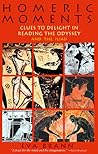
“Did the gods once mingle with humankind, or is Homer a visionary madman, or, what is worse, a mere poet, a maker-up of beautiful falsities, an elegant liar? I shall grapple with that perplexity, only to emerge as I went in, in a cloud of unknowing, if perhaps a little the wiser.”
― Homeric Moments: Clues to Delight in Reading the Odyssey and the Iliad
― Homeric Moments: Clues to Delight in Reading the Odyssey and the Iliad
“Odysseus is the statesman of the Iliad, the man in the middle, keeping what balance he can among the parties. He shows himself at Troy, as later on Ithaca, as a firm conservative, in the sense that he props up the status quo—in this case, his insufficient chief. In his own poem a complementary side to his law-and-order propensity will show itself: a wide and deep imagination. The man of order, balance, and tradition, the centrist par excellence in public life, is a vividly imagining free spirit in his inner life.”
― Homeric Moments: Clues to Delight in Reading the Odyssey and the Iliad
― Homeric Moments: Clues to Delight in Reading the Odyssey and the Iliad
“Wisdom-loving” translates philosophos. (If I dared, I’d translate it “wannabe-wise” as opposed to sophos, “having smarts,” skillful.)”
― The Logos of Heraclitus
― The Logos of Heraclitus
“But I also think that the young especially ought to learn how to live with the array of conditions associated with excellence: That what is finest often denies itself to easy access; that to live admiringly with things above oneself is a source of dignity; that genuine hierarchies confer respect on all their members; that even what is greatest, or especially what is greatest, offers itself for critical judgment.”
―
―
“Imaginative. Here used for a way of informing and rectifying the actual world through the imagination, a theme of never-ending charm.”
― The World of the Imagination: Sum and Substance
― The World of the Imagination: Sum and Substance
“It is a maxim of learning: To learn anything requires letting it be, but not letting it alone. Is there a way, a mode of engagement, of not letting things or people alone that yet lets them be—not tolerably, not as bearable, but really be?”
― Homage to Americans: Mile-High Meditations, Close Readings, and Time-Spanning Speculations
― Homage to Americans: Mile-High Meditations, Close Readings, and Time-Spanning Speculations
“READING HOMER’S POEMS is one of the purest, most inexhaustible pleasures life has to offer—a secret somewhat too well kept in our time.”
― Homeric Moments: Clues to Delight in Reading the Odyssey and the Iliad
― Homeric Moments: Clues to Delight in Reading the Odyssey and the Iliad
“A wisdom-loving man must be inquiring into many things. (35)”
― The Logos of Heraclitus
― The Logos of Heraclitus
“This lack of leisure and of intimacy is not a peripheral matter—nothing Socrates thinks can be expeditiously conveyed by public deliverance; it must always be slowly engendered in leisurely direct conversation with its accompanying inner dialogue (Theaetetus 172 d). Socrates’ positive wisdom stated concisely in public would appear simply bizarre.”
― The Music of the Republic: Essays on Socrates' Conversations and Plato's Writings
― The Music of the Republic: Essays on Socrates' Conversations and Plato's Writings
“In learning as in traveling and, of course, in lovemaking, all the charm lies in not coming too quickly to the point, but in meandering around for a while.”
― The Past-Present: Selected Writings Of Eva Brann
― The Past-Present: Selected Writings Of Eva Brann
“an engaged solitary, an inward-turned observer of the world,”
― The Logos of Heraclitus
― The Logos of Heraclitus
“So I imagine that the soul is in one aspect a pervasive, transformable matter and in another a particular, personal intelligence; it is envelopingly cosmic and individually human. (pp. 134-135).”
― The Logos of Heraclitus
― The Logos of Heraclitus