Goodreads helps you follow your favorite authors. Be the first to learn about new releases!
Start by following Bruce Fink.

Showing 1-30 of 77
“For once desire is articulated in words it does not sit still, but displaces, drifting metonymically from one thing to the next. Desire is a product of language and cannot be satisfied with an object.”
― A Clinical Introduction to Lacanian Psychoanalysis: Theory and Technique
― A Clinical Introduction to Lacanian Psychoanalysis: Theory and Technique
“Can we, after all, love someone who seems to us to be perfect, someone who seems to us to have everything? Isn’t it often the case that although we may be fascinated or captivated by someone who appears to have only good qualities, we only begin to love him or her from the moment we suspect that he or she is somewhat (if not deeply) unhappy, quite clueless about something, rather awkward, clumsy, or helpless? Isn’t it in his or her nonmastery or incompleteness that we see a possible place for ourselves in his or her affections – that is, that we glimpse the possibility that we may be able to do something for that person, be something to that person? In this sense, we perhaps love not what they have, but what they do not have; moreover, we show our love by giving what we ourselves do not have.”
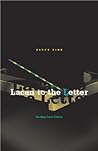
― Lacan on Love: An Exploration of Lacan's Seminar VIII, Transference
― Lacan on Love: An Exploration of Lacan's Seminar VIII, Transference
“Desire is an end in itself: it seeks only more desire, not fixation on a specific object.29”
― A Clinical Introduction to Lacanian Psychoanalysis: Theory and Technique
― A Clinical Introduction to Lacanian Psychoanalysis: Theory and Technique
“Now Lacan comments that our fixation on physical beauty is a lure, illusion, or mirage, insofar as it turns our eyes away from death. We seek some sort of immortality in the perfection of the human form. Our fascination with or fixation on beauty is thus related to or motivated by our nonacceptance of death. There is a flight from aging and a preoccupation with youth. Beauty helps us come to grips with death by hiding our desire for death, and leads us on toward immortality (Lacan, 2015, pp. 125–) – hence the connection between beauty and death. Tragedy as an art form evokes and broaches our death wish, which explains part of its allure and frightfulness.”
― Lacan on Love: An Exploration of Lacan's Seminar VIII, Transference
― Lacan on Love: An Exploration of Lacan's Seminar VIII, Transference
“This is an obsessive configuration insofar as the obsessive’s desire is always for something impossible: to attain an unattainable status (e.g., perfection, omniscience, or immortality), to complete an uncompletable project, or to possess what he cannot possess. In saying that the obsessive is characterized by an impossible desire, Lacan goes so far as to add that his desire is for impossibility itself.”
― Lacan on Love: An Exploration of Lacan's Seminar VIII, Transference
― Lacan on Love: An Exploration of Lacan's Seminar VIII, Transference
“It is when patients begin to throw such things into question-when the what, why, and who of their utterances become problematic to them-that they are genuinely engaged in analysis.”
― A Clinical Introduction to Lacanian Psychoanalysis: Theory and Technique
― A Clinical Introduction to Lacanian Psychoanalysis: Theory and Technique
“Ultimately, as Lacan puts it, all speech constitutes a demand for love. Whenever we speak, we are unconditionally asking to be heard (Lacan, 2015, p. 356), we are asking for our request to be recognized, we are asking to be responded to, we are asking to be loved.”
― Lacan on Love: An Exploration of Lacan's Seminar VIII, Transference
― Lacan on Love: An Exploration of Lacan's Seminar VIII, Transference
“As I said earlier, to admit and verbally declare that we love is to admit that we lack. But this goes further still, for Lacan suggests that we in fact admit that we are lacking in some way whenever we open our mouths to say something. As infants we opened our mouths to convey that we were lacking in food, nourishment, warmth, or attention, and we learned to speak to express our wants in such a way that they would be less at the mercy of the interpretations of those who cared for us, for our caregivers could not always figure out what it was we wanted and their ministrations often left a great deal to be desired. All speech is a request or demand for something we are missing, or at least to be heard and recognized as missing something, as lacking in some respect. Ultimately, as Lacan puts it, all speech constitutes a demand for love. Whenever we speak, we are unconditionally asking to be heard (Lacan, 2015, p. 356), we are asking for our request to be recognized, we are asking to be responded to, we are asking to be loved.
This is one of the reasons why psychoanalysts must not speak too much during sessions, and should even avoid presenting themselves as the authors of the little they do say when possible, preferring to reiterate and punctuate the analysand’s speech. They must not reveal much about themselves, for when they do they are essentially asking or even begging (Lacan, 2015, p. 370) to be loved, which puts the shoe on the wrong foot, as it were; this is one of the many reasons why self-disclosure is such a bad idea. As we shall see, it is not so much in order to refuse to admit to be lacking that analysts must not speak so much, for analysis structurally puts analysts in the position of loving the analysand, and that loving itself reveals their lack. Analysts must not speak much in their own names or talk about themselves so as not to demand to be loved in return by their analysands.”
― Lacan on Love: An Exploration of Lacan's Seminar VIII, Transference
This is one of the reasons why psychoanalysts must not speak too much during sessions, and should even avoid presenting themselves as the authors of the little they do say when possible, preferring to reiterate and punctuate the analysand’s speech. They must not reveal much about themselves, for when they do they are essentially asking or even begging (Lacan, 2015, p. 370) to be loved, which puts the shoe on the wrong foot, as it were; this is one of the many reasons why self-disclosure is such a bad idea. As we shall see, it is not so much in order to refuse to admit to be lacking that analysts must not speak so much, for analysis structurally puts analysts in the position of loving the analysand, and that loving itself reveals their lack. Analysts must not speak much in their own names or talk about themselves so as not to demand to be loved in return by their analysands.”
― Lacan on Love: An Exploration of Lacan's Seminar VIII, Transference
“For when there is no desire in her partner to excavate, she feels that he is dead – and then she might as well be too. Desire is, as Spinoza tells us, the essence of humankind,11 and we must ever be looking for something or engaged in a quest of some kind. Just as the obsessive must always have a rival rendering his desire impossible, the hysteric must always locate a desire in her partner for something outside of or beyond herself, suggesting that he is dissatisfied or suffers from a lack of satisfaction.”
― Lacan on Love: An Exploration of Lacan's Seminar VIII, Transference
― Lacan on Love: An Exploration of Lacan's Seminar VIII, Transference
“Desire springs from lack.”
― A Clinical Introduction to Lacanian Psychoanalysis: Theory and Technique
― A Clinical Introduction to Lacanian Psychoanalysis: Theory and Technique
“We are told here that we should make an irrevocable decision, come hell or high water, to stay with someone, not for the happiness or satisfactions it will bring, but just because (pp. 332–3/308).”
― Lacan on Love: An Exploration of Lacan's Seminar VIII, Transference
― Lacan on Love: An Exploration of Lacan's Seminar VIII, Transference
“It seems that it is incredibly easy to end up on the slippery slope where something about ourselves, our faithfulness in this case, becomes more important than our partner. The Otherness of the other again drops out of the picture, and we wind up dealing with the One (an idea, ideal, or signifier), not the Other. Libido becomes inextricably bound up with the symbolic, steering clear of the real.”
― Lacan on Love: An Exploration of Lacan's Seminar VIII, Transference
― Lacan on Love: An Exploration of Lacan's Seminar VIII, Transference
“Lacan even goes so far as to classify ignorance as a passion greater than love or hate: a passion not to know.”
― A Clinical Introduction to Lacanian Psychoanalysis: Theory and Technique
― A Clinical Introduction to Lacanian Psychoanalysis: Theory and Technique
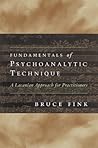
“Uma interpretação que contém um significado que pode ser facilmente compreendido não será uma interpretação psicanalí tica, precisamente falando. É, isso sim, equivalente à sugestão. A particularidade da interpretação psicanalítica, como as diversas outras técnicas psicanalíticas que já mencionei em capítulos anteriores, não serve para dar ao paciente algum significado em que ele se apegue, e sim para fazê-lo trabalhar. Questionamentos, pontuações, escansões são destinados a descobrir, revelar e, em alguns momentos, destruir os significados implícitos na fala do paciente, levando-o a se esforçar para colocar em palavras o que nunca disse antes.”
― Fundamentals of Psychoanalytic Technique: A Lacanian Approach for Practitioners
― Fundamentals of Psychoanalytic Technique: A Lacanian Approach for Practitioners
“in a world in which, for the time being at least, “one can never be too thin or too rich,”
― A Clinical Introduction to Freud: Techniques for Everyday Practice
― A Clinical Introduction to Freud: Techniques for Everyday Practice
“Although the association between women and cats who are standoffish and wrapped up in themselves is a longstanding one, there are, as we saw in Chapter 3, plenty of women who feel a need to love and not simply to be loved. (Does Freud restrict women to loving either themselves or children as extensions of themselves, but not men?) In any case, Freud introduces here a curious facet of love, which would seem to apply not only to men, which is that we human beings are attracted to people (women and children, for example) and animals (cats, for example) that show little or no interest in us. Are we then interested in anything that seems narcissistically wrapped up in itself (its interest in itself pointing the way for our own interest or desire?) or are we interested in these things precisely because they seem inaccessible? Do we pursue them because they shun us and wound our own narcissism? Do we pursue them because they seem the most valuable – valuable precisely because they are so difficult to win – because we suspect that we will never win them? Or do we pursue them because we identify with something about them or want to be like them?”
― Lacan on Love: An Exploration of Lacan's Seminar VIII, Transference
― Lacan on Love: An Exploration of Lacan's Seminar VIII, Transference
“Patients do not spontaneously home in on the subjects that are most important, psychoanalytically speaking; they spontaneously avoid them, for the most part. Even if they recognize that sexuality should be dwelt upon, for example, they nevertheless tend to avoid associating to the elements in dreams and fantasies that are the most sexually charged.”
― A Clinical Introduction to Lacanian Psychoanalysis: Theory and Technique
― A Clinical Introduction to Lacanian Psychoanalysis: Theory and Technique
“In this way we give our lack, we give what we do not have, Aristophanes’ claim that such a thing is impossible notwithstanding. Men in Western culture generally seem to have a harder time than women do admitting to lack, a harder time verbally admitting that they are missing something, incomplete in some respect, limited in some way – in a word, castrated. (The reader will, I hope, allow me to momentarily associate men with obsession here, and women with hysteria, in a way that vastly overgeneralizes things, in order to highlight something schematically at first.) I do not mean simply admitting that they do not actually know how to drive somewhere in particular or that they do not know some specific fact about something that has come up in a conversation – I mean a lack that is more far-reaching than that! To love is to admit to lack (Soler, 2003, p. 243), and Lacan even goes so far at one point – and here I am jumping ahead some 15 years in his work – to suggest that when a man loves, it is insofar as he is a woman (Lacan, 1973–4, class given on February 12, 1974). Insofar as he is a man, he can admit to desiring the so-called partial objects he sees in his partner, but he generally feels that perfectly good partial objects of much the same kind can be found in many different partners. Insofar as he is a man, he contents himself with the enjoyment he derives from the partial objects he finds in a whole series of interchangeable partners, and avoids like the plague showing that he lacks.But unlike desire, “Love demands love,” as Lacan (1998a, p. 4) puts it in Seminar XX; love insistently requests love in return. When one is fascinated by or lusts after a sexual partner, one’s desire does not necessarily wither or disappear if one does not feel desired in return. Even if “desire is the Other’s desire” (a claim often repeated by Lacan; see, for example, Lacan, 2015, p. 178), in the sense that we wish to be desired in return by the object of our desire, desire can do just fine without being requited. But “to love is to want to be loved” (Lacan, 2006a, p. 853): to love – at least in our times – is to implicitly ask the beloved for love that can make good or somehow compensate one for one’s own lack, the hollow or emptiness one feels inside. In this sense, all love seems to constitute a request for love in return. (In Alcibiades’ case, this takes the form of a pressing demand for Socrates to prove that he returns Alcibiades’ passion for Socrates.) Since to love is to show and declare one’s lack, love is feminine, as Colette Soler (2003, p. 97) says, following Lacan’s statements to their logical conclusion.”
― Lacan on Love: An Exploration of Lacan's Seminar VIII, Transference
― Lacan on Love: An Exploration of Lacan's Seminar VIII, Transference
“The ecstatic investment of libido in the ideal image of ourselves that is made at the time of the mirror stage is mirrored, reflected, or paralleled by the ecstatic investment of libido in the ideal image of our beloved that occurs during this first moment of falling in love. Indeed, there is very often a will to see the beloved as exactly like oneself in this early stage of crystallization: one wants to find and attribute to the other the very same perfections one would like to believe one has oneself. Indeed, there is quite often a confusion of self and other at this stage.”
― Lacan on Love: An Exploration of Lacan's Seminar VIII, Transference
― Lacan on Love: An Exploration of Lacan's Seminar VIII, Transference
“According to Freud here, it is only by inhibiting or prohibiting sexual satisfaction that a more enduring investment can be made in someone. When real sexual satisfactions are thwarted, sexual desire for that person gives rise to a kind of symbolic idealization of him or her, leading to an affectionate current which is secondary, not primary. Idealization of the partner and affectionate love itself (we perhaps see the fullest expression of idealization in courtly love, as we shall see in Chapter 7) thus involve endless deferral and sublimation of the sexual drives. Affectionate love, which earlier in his work was either anaclitic or narcissistic (we shall turn to the latter of these in the second part of this book), here seems to involve idealization of the object, attention being paid to its spiritual merits as opposed to its sensual merits.
Love is not considered here to precede sexual desire, but rather to result from the inhibition of sexual satisfaction. It leads to far greater excitement about the potential sexual partner than would have existed without such inhibition. In other words, restricted sexual access to the partner intensifies sexual excitation, ultimately leading to greater sexual satisfaction than would have been possible otherwise.
Education or socialization channels the sexual drives so extensively into narrow pathways that they reach a feverish pitch and the sexual act becomes, in a certain sense, overvalued – this, Freud believes, is especially true of men. The idea here seems to be that the more a certain activity is inhibited or restricted, the more intense our desire for it becomes. As I have put it elsewhere, “prohibition eroticizes.”
― Lacan on Love: An Exploration of Lacan's Seminar VIII, Transference
Love is not considered here to precede sexual desire, but rather to result from the inhibition of sexual satisfaction. It leads to far greater excitement about the potential sexual partner than would have existed without such inhibition. In other words, restricted sexual access to the partner intensifies sexual excitation, ultimately leading to greater sexual satisfaction than would have been possible otherwise.
Education or socialization channels the sexual drives so extensively into narrow pathways that they reach a feverish pitch and the sexual act becomes, in a certain sense, overvalued – this, Freud believes, is especially true of men. The idea here seems to be that the more a certain activity is inhibited or restricted, the more intense our desire for it becomes. As I have put it elsewhere, “prohibition eroticizes.”
― Lacan on Love: An Exploration of Lacan's Seminar VIII, Transference
“One might say that, for Stendhal, it is the uncertainty of the metaphor of love – of whether the beloved will become in her turn a lover – that keeps the lover interested. If he becomes certain of her love for him, he might well become blasé. Without doubt, without constant vacillation and uncertainty orchestrated by the woman’s sudden moods and fits of bad temper, the lover would become complacent and lose his passion.”
― Lacan on Love: An Exploration of Lacan's Seminar VIII, Transference
― Lacan on Love: An Exploration of Lacan's Seminar VIII, Transference
“Isn’t it often the case that although we may be fascinated or captivated by someone who appears to have only good qualities, we only begin to love him or her from the moment we suspect that he or she is somewhat (if not deeply) unhappy, quite clueless about something, rather awkward, clumsy, or helpless.”
― Lacan on Love: An Exploration of Lacan's Seminar VIII, Transference
― Lacan on Love: An Exploration of Lacan's Seminar VIII, Transference
“Insofar as desire is always for something we do not have, in order for desire to persist in a relationship, there must always be something we do not have, that we do not yet have, or have not yet received from our beloved. As Lacan puts it (p. 124), desire can never have or possess anything other than lack, for as soon as it possesses its object, it disappears. To give oneself body and soul to one’s beloved may then kill his or her desire; hence the difficulty and dance (à la Stendhal) around keeping the partner’s desire alive.”
― Lacan on Love: An Exploration of Lacan's Seminar VIII, Transference
― Lacan on Love: An Exploration of Lacan's Seminar VIII, Transference
“There appears to be something ecstatic about this self-imposed limitation or castration, the author seeming to believe that it might compensate the person who makes it with love and perhaps even passion further down the road. We see here, it seems to me, a kind of passion to restrict one’s own passion on the basis of a decision that is described as based on faith alone, without any rhyme or reason. This is a form of love for love’s sake, or art for art’s sake, love being an art pursued for no good reason, thumbing its nose at life itself as life becomes “artified.”
― Lacan on Love: An Exploration of Lacan's Seminar VIII, Transference
― Lacan on Love: An Exploration of Lacan's Seminar VIII, Transference
“As I said earlier, to admit and verbally declare love is to admit that we lack. But this goes further still, for Lacan suggests that we in fact admit that we are lacking in some way whenever we open our mouths to say something. As infants we opened our mouths to convey that we were lacking in food, nourishment, warmth, or attention, and we learned to speak to express our wants in such a way that they would be less at the mercy of the interpretations of those who cared for us, for our caregivers could not always figure out what it was we wanted and their ministrations often left a great deal to be desired. All speech is a request or demand for something we are missing, or at least to be heard and recognized as missing something, as lacking in some respect. Ultimately, as Lacan puts it, we are unconditionally asking to be heard, we are asking for our request to be recognized, we are asking to be responded to, we are asking to be loved.”
― Lacan on Love: An Exploration of Lacan's Seminar VIII, Transference
― Lacan on Love: An Exploration of Lacan's Seminar VIII, Transference
“The very foundation of interhuman discourse is misunderstanding.
-Lacan, Seminar III, 184”
― A Clinical Introduction to Lacanian Psychoanalysis: Theory and Technique
-Lacan, Seminar III, 184”
― A Clinical Introduction to Lacanian Psychoanalysis: Theory and Technique
“Why do we care what it is we have that we are loved for, as long as we are loved? Isn’t it because we do not want to be loved for something our partner might well find in a better form or greater abundance in someone else or in many other people? We do not want to be loved for our hair color if plenty of other people can be found with the same hair color, or for our height and figure, since so many other people probably fill the same bill. Being situated in the position of someone’s beloved automatically makes us subject to comparison with everyone our lover might come into contact with. What do we have that those others do not have?”
― Lacan on Love: An Exploration of Lacan's Seminar VIII, Transference
― Lacan on Love: An Exploration of Lacan's Seminar VIII, Transference
“("Desire is a remedy for anxiety," as Lacan says in Seminar VIII, 430).”
― A Clinical Introduction to Lacanian Psychoanalysis: Theory and Technique
― A Clinical Introduction to Lacanian Psychoanalysis: Theory and Technique
“where they love they do not desire and where they desire they cannot love” (p. 183).”
― Lacan on Love: An Exploration of Lacan's Seminar VIII, Transference
― Lacan on Love: An Exploration of Lacan's Seminar VIII, Transference
“Some argue that it is the very attempt to institutionalize love that destroys it. The more love is rendered obligatory, a duty, whether religious, moral, or otherwise, the more it shrivels up and dies like a plant cultivated under the wrong conditions. “If we really love each other, why do we need a stupid piece of paper?” they ask.”
― Lacan on Love: An Exploration of Lacan's Seminar VIII, Transference
― Lacan on Love: An Exploration of Lacan's Seminar VIII, Transference