Goodreads helps you follow your favorite authors. Be the first to learn about new releases!
Start by following Luke Timothy Johnson.

Showing 1-18 of 18
“We all know that parents do not make children but that children make parents…Authentic parenting is one long sacrificial act…parenting reveals the way that sacrifice at once diminishes our life as we knew it…while at the same time revealing to us larger and infinitely more fascinating forms of life…Parents know experientially that the very process which makes them suffer also makes them grow.”
― The Living Gospel
― The Living Gospel
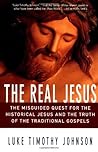
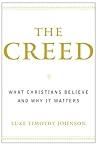
“It is a form of generational narcissism to change texts to suit one's own needs.”
― The Creed: What Christians Believe and Why it Matters
― The Creed: What Christians Believe and Why it Matters
“Those who are in pain – most of the world’s populations at any given moment – do not do a lot of thinking, speaking, or writing about suffering. All their energy goes into surviving. That is why a lot of what is said and written about suffering seems hollow to those actually in pain.”
― The Living Gospel
― The Living Gospel
“Any profession of faith…entrusts the mind and heart to a truth that cannot be proven but can be lived.”
― The Creed: What Christians Believe and Why it Matters
― The Creed: What Christians Believe and Why it Matters
“It is our contemporary culture’s tragedy to have lost any sense of suffering as a positive dimension of human existence. Beginning with the premise that life ought to be without pain, we make suffering something to be avoided at all cost. We consider the equation between evil and suffering so self-evident that we make avoiding suffering the equal of fighting evil. No wonder we are the most narcotized generation ever to inhabit the earth, searching for ever more effective addictive patterns to anaesthetize our existence.”
― The Living Gospel
― The Living Gospel
“God's image…is found not best in individual humans, but in humans as they relate to each other.”
― The Creed: What Christians Believe and Why it Matters
― The Creed: What Christians Believe and Why it Matters
“The roots of idolatry lie deep within the human heart, in the terror generated by the awareness that we are empty, powerless, dependent, contingent beings… Idolatry therefore seeks something powerful enough to give us being, life, and worth, yet controllable enough so that it will be our being, life, and worth… Where does the lie come in? It comes first in the denial of the one ultimate power that holds me in existence at every moment; it appears second in the pretension that anything created by that one power could replace it as a source of life and worth.”
―
―
“We must let go of any fantasy concerning the church as a stable, predictable, well-regulated organization. If the church is truly the place in the world where the existence of God is brought to the level of narrative discernment, the the church will always be disorderly.
…We must let go of the desire for theology to be a finished product of complete conceptual symmetry. If theology is in fact the attempt to understand living faith, then it must always be an unfinished process, for the data continues to come in, as the Living God persists in working through the lives of people and being revealed in their stories.
…We must let go of any pretense of closing the New Testament within some comprehensive, all-purpose, singular reading which reduces its complexity to simplicity. We must recognize our attempts to reduce multiplicity to unity. We must recognize our tendency to seek a stable package of meaning that we can then apply to other situations or fit within our systematic theological constructs, so that, ideally, we need never really read the texts again.”
― Scripture & Discernment: Decision Making in the Church
…We must let go of the desire for theology to be a finished product of complete conceptual symmetry. If theology is in fact the attempt to understand living faith, then it must always be an unfinished process, for the data continues to come in, as the Living God persists in working through the lives of people and being revealed in their stories.
…We must let go of any pretense of closing the New Testament within some comprehensive, all-purpose, singular reading which reduces its complexity to simplicity. We must recognize our attempts to reduce multiplicity to unity. We must recognize our tendency to seek a stable package of meaning that we can then apply to other situations or fit within our systematic theological constructs, so that, ideally, we need never really read the texts again.”
― Scripture & Discernment: Decision Making in the Church
“For if there is an actual and present rule of God in the world, then it must be found, not in the conquest of visible enemies, but in the triumph of love and life, however halting and partial, over sin and death. And this is the work of the Spirit. And it is the calling of the Church.”
― The Creed: What Christians Believe and Why it Matters
― The Creed: What Christians Believe and Why it Matters
“Faith is first of all not attachment to a body of doctrines but a process of responding in obedience and trust to God’s Word. God has given us the possibility of hearing the Word, since it was spoken in the humanity of Jesus, which we share, and since it continues to be spoken through the Holy Spirit, which dwells in us. So also theology is first of all not the study of doctrines, but a process of reflection on this response in faith. The classic definition of theology, “faith seeking understanding”, remains always valid. Faith seeks to understand the one to whom it responds. It also, thereby, seeks to understand itself, and the implications of being so called and so gifted to respond. … Who, then, is qualified for theology? The theological task is implied by the very life of faith itself. Every Christian is therefore called to do theology in this sense. Every Christian must seek an understanding of his or her response to God and the implications of that response for the rest of life.”
― Scripture & Discernment: Decision Making in the Church
― Scripture & Discernment: Decision Making in the Church
“Religious experience involves an encounter with the holy, the mystery of the totally other that opens like a chasm before humans in unexpected ways, making impossible the denial of its presence.”
― Writings of New Testament 3rd Ed: Third Edition
― Writings of New Testament 3rd Ed: Third Edition
“If we are called to attention by God’s Life and Holy Spirit, then the ‘spiritual life’ is not a pleasant option we might like to pursue when we have space and time; it is that which is now creating its own space and time within us, and to neglect it is to lose ourselves.”
― The Living Gospel
― The Living Gospel
“Luke thus provides the last part of the prophetic pattern, that of rejection by the people. As Simeon foretold, this will be worked out in the subsequent narrative in terms of a division within Israel between those who do and those who do not accept this prophet. But this ominous opening already suggests a reason why many Jews later on in Acts reject the Gospel, precisely because it is meant for all (cf. e.g., Acts 13:44–52).”
― Sacra Pagina: The Gospel of Luke: Sacra Pagina, Paperback
― Sacra Pagina: The Gospel of Luke: Sacra Pagina, Paperback
“On the other hand, inspiration - a criterion for canonization we might expect to play a great role - is not a factor. The Shepherd of Hermas and many writings either claimed inspiration or had it claimed for them, yet were neither universally nor ultimately accepted as canonical. In contrast, no NT writing claims inspiration for itself. The statement in 2 Tim. 3:16 that all Scripture is inspired by God (theopneustos) refers to Torah. Second Peter 3:16 refers to Paul's letters as though they were Scripture but does not say they were 'inspired.' In Revelation, 'inspiration' is certainly implied but not explicitly claimed. No doubt there was an increasingly widespread conviction that the NT writings were divinely inspired, but that notion did not appear to factor in as a criterion for canonization.”
― The Writings of the New Testament: An Interpretation
― The Writings of the New Testament: An Interpretation
“What is it, really, that we could lose if we handed ourselves over to the discernment of faith? Would we really lose anything except the illusion of control? This question suggests that there may be an idolatrous project underlying resistance to spiritual discernment: the desire for a decision-making process that we can predict and control.
But the obedience of faith offers no certainties, not even that of being certain of our our fidelity. We cannot know if the decision we make here and now are correct. We only know that they are the best we are able to make, and that in the future we might both regret them and need to change them. The reason has nothing to do with our sinfulness and everything to do with the fact that faith has to do with the Living God, who always moves ahead of us in surprising and sometimes shocking ways. “It is a fearful thing to fall into the hands of the living God” (Heb. 10:31).”
― Scripture & Discernment: Decision Making in the Church
But the obedience of faith offers no certainties, not even that of being certain of our our fidelity. We cannot know if the decision we make here and now are correct. We only know that they are the best we are able to make, and that in the future we might both regret them and need to change them. The reason has nothing to do with our sinfulness and everything to do with the fact that faith has to do with the Living God, who always moves ahead of us in surprising and sometimes shocking ways. “It is a fearful thing to fall into the hands of the living God” (Heb. 10:31).”
― Scripture & Discernment: Decision Making in the Church
“authentic faith is more than a matter of right belief; it is the response of human beings in trust and obedience to the one whom Scripture designates as the Living God, in contrast to the dead idols that are constructed by humans as projections of their own desires. The Living God of whom Scripture speaks both creates the world at every moment and challenges the ways in which human freedom tends toward the distortion of creation — and indeed of the Creator.”
― The Revelatory Body: Theology as Inductive Art
― The Revelatory Body: Theology as Inductive Art
“authentic faith is more than a matter of right belief; it is the response of human beings in trust and obedience to the one whom Scripture designates as the Living God, in contrast to the dead idols that are constructed by humans as projections of their own desires.”
― The Revelatory Body: Theology as Inductive Art
― The Revelatory Body: Theology as Inductive Art
“amen, I tell you: The locution is peculiar to Jesus. The term “amen” would ordinarily respond to the speech of another (“so be it,” “yes”), and come at the end. The Gospels show Jesus validating his own speech beforehand; an unmistakable sign of prophetic self-consciousness.”
― Sacra Pagina: The Gospel of Luke: Sacra Pagina, Paperback
― Sacra Pagina: The Gospel of Luke: Sacra Pagina, Paperback