Goodreads helps you follow your favorite authors. Be the first to learn about new releases!
Start by following Bruce Fudge.

Showing 1-2 of 2
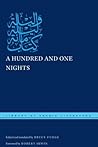
“In the third and final section of the Alf laylah frame, the two men return home. The King Shahriyār eventually adopts a policy of taking a virgin each night and having her killed in the morning, which he continues until, suitable virgins in increasingly short supply, his vizier’s daughter offers herself, and thus the king meets the formidable. [Emmanuel] Cosquin asserted that the “fabric” of this motif was Indian, and he gave various instances in which a young woman delays a dreaded event by telling a succession of stories.”
― A Hundred and One Nights
― A Hundred and One Nights
“It is surely significant that all of the known manuscripts are in Maghribi (or possibly Andalusian) script. Further, the manuscripts contain, in varying degrees, traces of Maghribi dialect and vocabulary. It is also curious that in all manuscripts the hero of Shahrazād’s first story is named Muḥammad ibn ʿAbdallāh al-Qayrawānī, i.e., “of Qayrawān,” or Kairouan in present-day Tunisia. This would be an unusual, though by no means implausible, choice of name for a story originating in the eastern part of the Arab-Islamic world. Such regional and dialectal features can creep into a tradition over time, but they are not definitive indications of the collection’s regional origins.
The other reason for the claim that Miʾat laylah has North African or Andalusian origins is the predominance of figures from the Umayyad caliphate (661–750). The Umayyads were overthrown by the Abbasids (750–1258), who founded Baghdad and presided over one of the most glorious periods in Islamic history. A scion of the Umayyads managed to escape and founded a counter-caliphate in the Iberian Peninsula, based in Cordoba (756–1031). In al-Andalus, a nostalgia developed for the glories of Umayyad power and for memories of Damascus. In most of the Abbasid lands, however, the Umayyads were viewed less favorably overall. Thus the fact that A Hundred and One Nights features a number of Umayyad caliphs and notables as heros might be seen a sign of an Andalusian attitude. This is possible. But this interpretation neglects the fact that A Hundred and One Nights also contains stories featuring the Abbasids in contexts that are not unfavorable. One might note as well that most of the tales here involving the Umayyads are set in the lands of jihād, along the Byzantine frontier, or at least stem from that milieu, and that stories of Arab heroics in the Umayyad period are known also in Eastern sources. This is the case even in the Thousand and One Nights. In the present work, for instance, “Story of Maslamah ibn ʿAbd al-Malik” (d. 121/738) is set on the Byzantine frontier, and the historical Maslamah was renowned for leading an assault on Constantinople in 98–99/716–18.”
― A Hundred and One Nights
The other reason for the claim that Miʾat laylah has North African or Andalusian origins is the predominance of figures from the Umayyad caliphate (661–750). The Umayyads were overthrown by the Abbasids (750–1258), who founded Baghdad and presided over one of the most glorious periods in Islamic history. A scion of the Umayyads managed to escape and founded a counter-caliphate in the Iberian Peninsula, based in Cordoba (756–1031). In al-Andalus, a nostalgia developed for the glories of Umayyad power and for memories of Damascus. In most of the Abbasid lands, however, the Umayyads were viewed less favorably overall. Thus the fact that A Hundred and One Nights features a number of Umayyad caliphs and notables as heros might be seen a sign of an Andalusian attitude. This is possible. But this interpretation neglects the fact that A Hundred and One Nights also contains stories featuring the Abbasids in contexts that are not unfavorable. One might note as well that most of the tales here involving the Umayyads are set in the lands of jihād, along the Byzantine frontier, or at least stem from that milieu, and that stories of Arab heroics in the Umayyad period are known also in Eastern sources. This is the case even in the Thousand and One Nights. In the present work, for instance, “Story of Maslamah ibn ʿAbd al-Malik” (d. 121/738) is set on the Byzantine frontier, and the historical Maslamah was renowned for leading an assault on Constantinople in 98–99/716–18.”
― A Hundred and One Nights