Goodreads helps you follow your favorite authors. Be the first to learn about new releases!
Start by following Michael Quinn Patton.

Showing 1-13 of 13
“Complexity theory shows that great changes can emerge
from small actions. Change involves a belief in the possible, even the “impossible.”
Moreover, social innovators don’t follow a
linear pathway of change; there are ups and
downs, roller-coaster rides along cascades
of dynamic interactions, unexpected and
unanticipated divergences, tipping points
and critical mass momentum shifts. Indeed,
things often get worse before they get better
as systems change creates resistance to and
pushback against the new.
Traditional evaluation approaches”
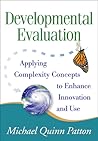
― Developmental Evaluation: Applying Complexity Concepts to Enhance Innovation and Use
from small actions. Change involves a belief in the possible, even the “impossible.”
Moreover, social innovators don’t follow a
linear pathway of change; there are ups and
downs, roller-coaster rides along cascades
of dynamic interactions, unexpected and
unanticipated divergences, tipping points
and critical mass momentum shifts. Indeed,
things often get worse before they get better
as systems change creates resistance to and
pushback against the new.
Traditional evaluation approaches”
― Developmental Evaluation: Applying Complexity Concepts to Enhance Innovation and Use
“Complexity writings are filled
with metaphors that try to make complex
phenomena understandable to the human
brain’s hardwired need for order, meaning,
patterns, sense making, and control, ever
feeding our illusion that we know what’s
going on. We often don’t. But the pretense
that we do is comforting—and sometimes
necessary for some effort at action.”
― Developmental Evaluation: Applying Complexity Concepts to Enhance Innovation and Use
with metaphors that try to make complex
phenomena understandable to the human
brain’s hardwired need for order, meaning,
patterns, sense making, and control, ever
feeding our illusion that we know what’s
going on. We often don’t. But the pretense
that we do is comforting—and sometimes
necessary for some effort at action.”
― Developmental Evaluation: Applying Complexity Concepts to Enhance Innovation and Use
“Accountability-focused evaluators report independently to decision makers charged with making sure that resources
are spent on what they’re supposed to be
spent on.
In contrast, for vision-and-values-driven
social innovators the highest form of accountability is internal. Are we walking the
talk? Are we being true to our vision? Are
we dealing with reality? Are we connecting
the dots between here-and-now reality and
our vision? And how do we know? What are
we observing that’s different, that’s emerging? These become internalized questions,
asked ferociously, continuously, because
they want to know.”
― Developmental Evaluation: Applying Complexity Concepts to Enhance Innovation and Use
are spent on what they’re supposed to be
spent on.
In contrast, for vision-and-values-driven
social innovators the highest form of accountability is internal. Are we walking the
talk? Are we being true to our vision? Are
we dealing with reality? Are we connecting
the dots between here-and-now reality and
our vision? And how do we know? What are
we observing that’s different, that’s emerging? These become internalized questions,
asked ferociously, continuously, because
they want to know.”
― Developmental Evaluation: Applying Complexity Concepts to Enhance Innovation and Use
“Developmental evaluation
likewise centers on situational sensitivity, responsiveness, and adaptation, and is an approach to evaluation especially appropriate
for situations of high uncertainty where what
may and does emerge is relatively unpredictable and uncontrollable.”
― Developmental Evaluation: Applying Complexity Concepts to Enhance Innovation and Use
likewise centers on situational sensitivity, responsiveness, and adaptation, and is an approach to evaluation especially appropriate
for situations of high uncertainty where what
may and does emerge is relatively unpredictable and uncontrollable.”
― Developmental Evaluation: Applying Complexity Concepts to Enhance Innovation and Use
“Complex environments for social interventions and innovations are those in which what to do to solve
problems is uncertain and key stakeholders
are in conflict about how to proceed. Informed by systems thinking and sensitive to
complex nonlinear dynamics, developmental evaluation supports social innovation and
adaptive management. Evaluation processes
include asking evaluative questions, applying evaluation logic, and gathering realtime data to inform ongoing decision making and adaptations. The evaluator”
― Developmental Evaluation: Applying Complexity Concepts to Enhance Innovation and Use
problems is uncertain and key stakeholders
are in conflict about how to proceed. Informed by systems thinking and sensitive to
complex nonlinear dynamics, developmental evaluation supports social innovation and
adaptive management. Evaluation processes
include asking evaluative questions, applying evaluation logic, and gathering realtime data to inform ongoing decision making and adaptations. The evaluator”
― Developmental Evaluation: Applying Complexity Concepts to Enhance Innovation and Use
“they immersed themselves paradoxically in vision-directed reality testing: no
rose-colored glasses, no blind spots, no positive thinking. Ruthless attention to reality was
the common path to attaining their visions.”
― Developmental Evaluation: Applying Complexity Concepts to Enhance Innovation and Use
rose-colored glasses, no blind spots, no positive thinking. Ruthless attention to reality was
the common path to attaining their visions.”
― Developmental Evaluation: Applying Complexity Concepts to Enhance Innovation and Use
“Complexity theory shows that great changes can emerge
from small actions. Change involves a belief in the possible, even the “impossible.”
Moreover, social innovators don’t follow a
linear pathway of change; there are ups and
downs, roller-coaster rides along cascades
of dynamic interactions, unexpected and
unanticipated divergences, tipping points
and critical mass momentum shifts. Indeed,
things often get worse before they get better
as systems change creates resistance to and
pushback against the new.
Traditional evaluation approaches are
not well suited for such turbulence. Traditional evaluation aims to control and predict, to bring order to chaos. Developmental
evaluation accepts such turbulence as the
way the world of social innovation unfolds
in the face of complexity. Developmental
evaluation adapts to the realities of complex
nonlinear dynamics rather than trying to
impose order and certainty on a disorderly
and uncertain world.”
― Developmental Evaluation: Applying Complexity Concepts to Enhance Innovation and Use
from small actions. Change involves a belief in the possible, even the “impossible.”
Moreover, social innovators don’t follow a
linear pathway of change; there are ups and
downs, roller-coaster rides along cascades
of dynamic interactions, unexpected and
unanticipated divergences, tipping points
and critical mass momentum shifts. Indeed,
things often get worse before they get better
as systems change creates resistance to and
pushback against the new.
Traditional evaluation approaches are
not well suited for such turbulence. Traditional evaluation aims to control and predict, to bring order to chaos. Developmental
evaluation accepts such turbulence as the
way the world of social innovation unfolds
in the face of complexity. Developmental
evaluation adapts to the realities of complex
nonlinear dynamics rather than trying to
impose order and certainty on a disorderly
and uncertain world.”
― Developmental Evaluation: Applying Complexity Concepts to Enhance Innovation and Use
“The great unexplored frontier
is evaluation under conditions of complexity.
Developmental evaluation explores that frontier.”
― Developmental Evaluation: Applying Complexity Concepts to Enhance Innovation and Use
is evaluation under conditions of complexity.
Developmental evaluation explores that frontier.”
― Developmental Evaluation: Applying Complexity Concepts to Enhance Innovation and Use
“Complex environments for social interventions and innovations are those in which what to do to solve
problems is uncertain and key stakeholders
are in conflict about how to proceed. Informed by systems thinking and sensitive to
complex nonlinear dynamics, developmental evaluation supports social innovation and
adaptive management. Evaluation processes
include asking evaluative questions, applying evaluation logic, and gathering realtime data to inform ongoing decision making and adaptations. The evaluator is often
part of a development team whose members
collaborate to conceptualize, design, and
test new approaches in a long-term, ongoing
process of continuous development, adaptation, and experimentation, keenly sensitive
to unintended results and side effects. The
evaluator’s primary function in the team
is to infuse team discussions with evaluative questions, thinking, and data, and to
facilitate systematic data-based reflection”
― Developmental Evaluation: Applying Complexity Concepts to Enhance Innovation and Use
problems is uncertain and key stakeholders
are in conflict about how to proceed. Informed by systems thinking and sensitive to
complex nonlinear dynamics, developmental evaluation supports social innovation and
adaptive management. Evaluation processes
include asking evaluative questions, applying evaluation logic, and gathering realtime data to inform ongoing decision making and adaptations. The evaluator is often
part of a development team whose members
collaborate to conceptualize, design, and
test new approaches in a long-term, ongoing
process of continuous development, adaptation, and experimentation, keenly sensitive
to unintended results and side effects. The
evaluator’s primary function in the team
is to infuse team discussions with evaluative questions, thinking, and data, and to
facilitate systematic data-based reflection”
― Developmental Evaluation: Applying Complexity Concepts to Enhance Innovation and Use
“Systems thinking, complexity theory, and
developmental evaluation together offer
an interpretive framework for engaging in
sense making. As a complexity-sensitive, developmental”
― Developmental Evaluation: Applying Complexity Concepts to Enhance Innovation and Use
developmental evaluation together offer
an interpretive framework for engaging in
sense making. As a complexity-sensitive, developmental”
― Developmental Evaluation: Applying Complexity Concepts to Enhance Innovation and Use
“single-loop learning, people modify their
actions as they evaluate the difference between desired and actual outcomes and
make changes to increase attainment of
desired outcomes. In essence, a problemdetection-and-correction process is singleloop learning. Single-loop learning is like a
thermostat that knows when it is too hot or
too cold and turns the heat off or on. The
thermostat can perform this task because it
can receive information (the temperature
of the room) and take immediate corrective
action.”
― Developmental Evaluation: Applying Complexity Concepts to Enhance Innovation and Use
actions as they evaluate the difference between desired and actual outcomes and
make changes to increase attainment of
desired outcomes. In essence, a problemdetection-and-correction process is singleloop learning. Single-loop learning is like a
thermostat that knows when it is too hot or
too cold and turns the heat off or on. The
thermostat can perform this task because it
can receive information (the temperature
of the room) and take immediate corrective
action.”
― Developmental Evaluation: Applying Complexity Concepts to Enhance Innovation and Use
“In double-loop learning, those involved
go beyond the single loop of identifying
the problem and finding a solution to a second loop that involves questioning the assumptions, policies, practices, values, and
system dynamics that led to the problem in
the first place and intervening in ways that
involve the modification of underlying system relationships and functioning. Making
changes to improve immediate outcomes is
single-loop learning; making changes to the
system either to prevent the problem or to
embed the solution in a changed system involves double-loop learning.”
― Developmental Evaluation: Applying Complexity Concepts to Enhance Innovation and Use
go beyond the single loop of identifying
the problem and finding a solution to a second loop that involves questioning the assumptions, policies, practices, values, and
system dynamics that led to the problem in
the first place and intervening in ways that
involve the modification of underlying system relationships and functioning. Making
changes to improve immediate outcomes is
single-loop learning; making changes to the
system either to prevent the problem or to
embed the solution in a changed system involves double-loop learning.”
― Developmental Evaluation: Applying Complexity Concepts to Enhance Innovation and Use
“from blindness, a positive outcome. But digging deeper, the doctors asked why so many
severe eye injuries were occurring. Interviewing their patients, they learned that the
young soldiers weren’t wearing their protective goggles because they considered them
too ugly and uncool. They recommended
that the military switch to “cooler-looking
Wiley X ballistic eyewear. The soldiers wore
their eyegear more consistently and the eyeinjury rate dropped immediately” (p. A23).
By asking these kinds of deeper questions
about what’s really going on and questioning basic assumptions about why things are
happening, developmental evaluators help
get at fundamental systems change implications and understandings. That’s doubleloop learning.”
― Developmental Evaluation: Applying Complexity Concepts to Enhance Innovation and Use
severe eye injuries were occurring. Interviewing their patients, they learned that the
young soldiers weren’t wearing their protective goggles because they considered them
too ugly and uncool. They recommended
that the military switch to “cooler-looking
Wiley X ballistic eyewear. The soldiers wore
their eyegear more consistently and the eyeinjury rate dropped immediately” (p. A23).
By asking these kinds of deeper questions
about what’s really going on and questioning basic assumptions about why things are
happening, developmental evaluators help
get at fundamental systems change implications and understandings. That’s doubleloop learning.”
― Developmental Evaluation: Applying Complexity Concepts to Enhance Innovation and Use