Goodreads helps you follow your favorite authors. Be the first to learn about new releases!
Start by following Rayne Hall.

Showing 1-30 of 31
“Research" is a wonderful word for writers. It serves as excuse for EVERYTHING”
―
―
“I don't think writers need to be insane. Just crazy.”
―
―
“I trust my characters. They know their stories better than I do.”
―
―
“Writing style can be descriptive without being wordy - and wordy without being descriptive”
―
―
“Authors today need a publisher as much as they need a tapeworm in their guts.”
―
―
“I've never yet run out of ideas what to write about... only out of time to write it in.”
―
―
“Fear is essential in horror fiction. Gore is optional.”
―
―
“Writers are the target audience for my Writer’s Craft books. I’m happy to answer questions about writing, publishing and related topics, and I’m delighted when people on Twitter advise one another, “Ask @RayneHall. She’ll know the answer.”
― Twitter for Writers: The Author's Guide to Tweeting Success
― Twitter for Writers: The Author's Guide to Tweeting Success
“Non-stop gore doesn’t shock; it bores.”
― Writing Dark Stories: How to Write Horror and Other Disturbing Short Stories
― Writing Dark Stories: How to Write Horror and Other Disturbing Short Stories
“pleasant guy, and you may want to fool your reader into believing he can be trusted. Instead of using scare techniques, plant hints in the reader's mind, so subtle that they don't give away the villain's true”
― Writing Scary Scenes
― Writing Scary Scenes
“Readers don’t really want to know all the minutiae of what a character looks like and wears. Pick a few relevant details, and allow the reader’s imagination to fill in the rest of the picture.”
― Writing Vivid Characters: Professional Techniques for Fiction Authors
― Writing Vivid Characters: Professional Techniques for Fiction Authors
“Find little ways to weave behaviourisms into the story. The reader will observe these clues –consciously or subconsciously, and conclude that this is the character’s personality.”
― Writing Vivid Characters: Professional Techniques for Fiction Authors
― Writing Vivid Characters: Professional Techniques for Fiction Authors
“ADVANCED STRATEGIES Many people ignore the whole DM thing altogether, and never even open their DM inbox. This is a valid strategy which increases your safety and saves you time.”
― Twitter for Writers: The Author's Guide to Tweeting Success
― Twitter for Writers: The Author's Guide to Tweeting Success
“Clearly, I'm meant to write dark and scary stuff.”
― Writing Scary Scenes
― Writing Scary Scenes
“If your main character has a secret to hide, your novel will get more tension, and possibly more drama and depth, too.”
― Writing Vivid Characters: Professional Techniques for Fiction Authors
― Writing Vivid Characters: Professional Techniques for Fiction Authors
“Introduce no more than two new characters at a time. Otherwise your readers will get confused and forget their names and who they are.”
― Writing Vivid Characters: Professional Techniques for Fiction Authors
― Writing Vivid Characters: Professional Techniques for Fiction Authors
“Occasionally, characters simply walk into the plot uninvited and behave as if they belong.”
― Writing Vivid Characters: Professional Techniques for Fiction Authors
― Writing Vivid Characters: Professional Techniques for Fiction Authors
“Each time, you saw, heard and smelled the same place—but the first time you experienced it as yourself (from your Point of View) and the second time, as a fictional character (from that character's PoV).”
― Writing Deep Point Of View: Professional Techniques for Fiction Authors
― Writing Deep Point Of View: Professional Techniques for Fiction Authors
“Time spent chatting with other people on Twitter is one of the best investments you can make in your publishing business. It’s free, it’s fun, and it’s super-effective.”
― Twitter for Writers: The Author's Guide to Tweeting Success
― Twitter for Writers: The Author's Guide to Tweeting Success
“For the main character, I suggest you specify a trait which will encourage him to get into trouble –‘curious’ or ‘courageous’ are useful.”
― Writing Vivid Characters: Professional Techniques for Fiction Authors
― Writing Vivid Characters: Professional Techniques for Fiction Authors
“You can group the people you follow by subject, purpose or other criteria, and so sometimes listen to one lot, then other times another.”
― Twitter for Writers: The Author's Guide to Tweeting Success
― Twitter for Writers: The Author's Guide to Tweeting Success
“An axe delivers a huge amount of force to a small area of strong, very sharp metal. It is a weapon for attack rather than defence, and good at cleaving through armour. It can break enemy shields and kill a charging horse. Since they require intense training, the users are mostly highly skilled elite soldiers, often aristocrats, e.g. the Saxon huscarls. Type of fight scene: gritty, brutal, battles, attack, historical fiction, fantasy fiction, cutting through armour Typical user: tall brawny male with broad shoulders and bulging biceps, courageous, elite soldier, Viking, Saxon Mostly used in: European Dark Ages to Middle Ages Main action: cleave, hack, chop, cut, split Main motion: downwards Typical injury: severed large limbs, split skulls, cleaved torsos Strategy for lethal fight: severe the arm which holds the sword or the shield, or cleave torso from top to bottom, or cut off a leg then split the skull Disadvantages: big and heavy Watch battle axes in action Here are three connected videos about Viking and Saxon warriors with axes:”
― Writing Fight Scenes: Professional Techniques for Fiction Authors
― Writing Fight Scenes: Professional Techniques for Fiction Authors
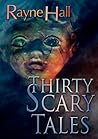
“A leopard may dress as a rabbit, but he will find the garments too small.”
― Thirty Scary Tales
― Thirty Scary Tales
“Four people in a one- bedroom flat. Decent people wouldn’t live like that.”
― Thirty Scary Tales
― Thirty Scary Tales
“I love scaring readers. Don't you?”
― Writing Scary Scenes
― Writing Scary Scenes
“The writer is oblivious to his own actions, speaking in a loud voice in public places in the presence of others, sometimes accompanied by large gestures. Typical is the person who runs down the town’s busiest shopping street, waving the arms wildly, sometimes brandishing a baseball bat or pitchfork, shouting, “Prepare to die!” At this stage, it is too late for intervention. No cure is possible.”
― Dr Rayne's Guide To Writerly Disorders: A Tongue-in-Cheek Diagnosis For What Ails Authors
― Dr Rayne's Guide To Writerly Disorders: A Tongue-in-Cheek Diagnosis For What Ails Authors
“Tension makes the reader care, while suspense makes the reader want to read on. Tension relates mostly to relationships between characters and the situation in which the main character is right now”
― Writing Dark Stories: How to Write Horror and Other Disturbing Short Stories
― Writing Dark Stories: How to Write Horror and Other Disturbing Short Stories
“Real-life duties eat valuable writing time.”
―
―
“Though justice be the solid foundation on which a society may be built, it is the transcendent virtue of mercy that lifts that society above the base stones of its foundation and makes it something great.”
― Fiends: Ten Tales of Demons: Dark Fantasy Stories
― Fiends: Ten Tales of Demons: Dark Fantasy Stories
“It’s best to develop them organically, side by side. Creating first one and then the other can lead to inauthentic stories.”
― Writing Vivid Characters: Professional Techniques for Fiction Authors
― Writing Vivid Characters: Professional Techniques for Fiction Authors