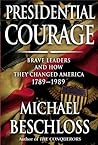
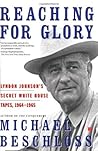
Goodreads helps you follow your favorite authors. Be the first to learn about new releases!
Start by following Michael R. Beschloss.
Showing 1-30 of 80
“not all readers become leaders, but all leaders must be readers”
― Presidents of War: The Epic Story, from 1807 to Modern Times
― Presidents of War: The Epic Story, from 1807 to Modern Times
“On Sunday, November 10, Kaiser Wilhelm II was dethroned, and he fled to Holland for his life. Britain’s King George V, who was his cousin, told his diary that Wilhelm was “the greatest criminal known for having plunged the world into this ghastly war,” having “utterly ruined his country and himself.” Keeping vigil at the White House, the President and First Lady learned by telephone, at three o’clock that morning, that the Germans had signed an armistice. As Edith later recalled, “We stood mute—unable to grasp the significance of the words.” From Paris, Colonel House, who had bargained for the armistice as Wilson’s envoy, wired the President, “Autocracy is dead. Long live democracy and its immortal leader. In this great hour my heart goes out to you in pride, admiration and love.” At 1:00 p.m., wearing a cutaway and gray trousers, Wilson faced a Joint Session of Congress, where he read out Germany’s surrender terms. He told the members that “this tragical war, whose consuming flames swept from one nation to another until all the world was on fire, is at an end,” and “it was the privilege of our own people to enter it at its most critical juncture.” He added that the war’s object, “upon which all free men had set their hearts,” had been achieved “with a sweeping completeness which even now we do not realize,” and Germany’s “illicit ambitions engulfed in black disaster.” This time, Senator La Follette clapped. Theodore Roosevelt and Senator Lodge complained that Wilson should have held out for unconditional German surrender. Driven down Capitol Hill, Wilson was cheered by joyous crowds on the streets. Eleanor Roosevelt recorded that Washington “went completely mad” as “bells rang, whistles blew, and people went up and down the streets throwing confetti.” Including those who had perished in theaters of conflict from influenza and other diseases, the nation’s nineteen-month intervention in the world war had levied a military death toll of more than 116,000 Americans, out of a total perhaps exceeding 8 million. There were rumors that Wilson planned to sail for France and horse-trade at the peace conference himself. No previous President had left the Americas during his term of office. The Boston Herald called this tradition “unwritten law.” Senator Key Pittman, Democrat from Nevada, told reporters that Wilson should go to Paris “because there is no man who is qualified to represent him.” The Knickerbocker Press of Albany, New York, was disturbed by the “evident desire of the President’s adulators to make this war his personal property.” The Free Press of Burlington, Vermont, said that Wilson’s presence in Paris would “not be seemly,” especially if the talks degenerated into “bitter controversies.” The Chattanooga Times called on Wilson to stay home, “where he could keep his own hand on the pulse of his own people” and “translate their wishes” into action by wireless and cable to his bargainers in Paris.”
― Presidents of War: The Epic Story, from 1807 to Modern Times
― Presidents of War: The Epic Story, from 1807 to Modern Times
“One of Wilson’s addresses was clairvoyant. At the Palace Hotel in San Francisco, he told the audience, about his League of Nations, “I have it in my heart that if we do not do this great thing now, every woman ought to weep because of the child in her arms. If she has a boy at her breast, she may be sure that when he comes to manhood, this terrible task will have to be done once more.” Without his treaty, “I can predict with absolute certainty that within another generation, there will be another world war.” Wilson made this forecast exactly two decades, to the month, before the outbreak of a second world war.”
― Presidents of War: The Epic Story, from 1807 to Modern Times
― Presidents of War: The Epic Story, from 1807 to Modern Times
“As Allied forces moved into Hitler’s Fortress Europe, Roosevelt and his circle were confronted with new evidence of the Holocaust. In early 1942, he had been given information that Adolf Hitler was quietly fulfilling his threat to “annihilate the Jewish race.” Rabbi Stephen Wise asked the President that December 1942 to inform the world about “the most overwhelming disaster of Jewish history” and “try to stop it.” Although he was willing to warn the world about the impending catastrophe and insisted that there be war crimes commissions when the conflict was over, Roosevelt told Wise that punishment for such crimes would probably have to await the end of the fighting, so his own solution was to “win the war.” The problem with this approach was that by the time of an Allied victory, much of world Jewry might have been annihilated. By June 1944, the Germans had removed more than half of Hungary’s 750,000 Jews, and some Jewish leaders were asking the Allies to bomb railways from Hungary to the Auschwitz death camp in Poland. In response, Churchill told his Foreign Secretary, Anthony Eden, that the murder of the Jews was “probably the greatest and most horrible crime ever committed in the whole history of the world,” and ordered him to get “everything” he could out of the British Air Force. But the Prime Minister was told that American bombers were better positioned to do the job. At the Pentagon, Stimson consulted John McCloy, who later insisted, for decades, that he had “never talked” with Roosevelt about the option of bombing the railroad lines or death camps. But in 1986, McCloy changed his story during a taped conversation with Henry Morgenthau’s son, Henry III, who was researching a family history. The ninety-one-year-old McCloy insisted that he had indeed raised the idea with the President, and that Roosevelt became “irate” and “made it very clear” that bombing Auschwitz “wouldn’t have done any good.” By McCloy’s new account, Roosevelt “took it out of my hands” and warned that “if it’s successful, it’ll be more provocative” and “we’ll be accused of participating in this horrible business,” as well as “bombing innocent people.” McCloy went on, “I didn’t want to bomb Auschwitz,” adding that “it seemed to be a bunch of fanatic Jews who seemed to think that if you didn’t bomb, it was an indication of lack of venom against Hitler.” If McCloy’s memory was reliable, then, just as with the Japanese internment, Roosevelt had used the discreet younger man to discuss a decision for which he knew he might be criticized by history, and which might conceivably have become an issue in the 1944 campaign. This approach to the possible bombing of the camps would allow the President to explain, if it became necessary, that the issue had been resolved at a lower level by the military. In retrospect, the President should have considered the bombing proposal more seriously. Approving it might have required him to slightly revise his insistence that the Allies’ sole aim should be winning the war, as he did on at least a few other occasions. But such a decision might have saved lives and shown future generations that, like Churchill, he understood the importance of the Holocaust as a crime unparalleled in world history.*”
― Presidents of War: The Epic Story, from 1807 to Modern Times
― Presidents of War: The Epic Story, from 1807 to Modern Times
“Cooking was therapy for Eisenhower: on hearing about Pearl Harbor, he went straight to the kitchen and made vegetable soup.”
― Mayday: Eisenhower, Khrushchev, and the U-2 Affair
― Mayday: Eisenhower, Khrushchev, and the U-2 Affair
“Do they talk of dissolving the Union?… Well may the old man tremble, and his heart beat faint and low, When he thinks of the price it cost us some four score years ago!… If God has forsaken our country, the only boon I crave Is that he will delay its ruin till I have gone down to my grave; For I could not breathe with traitors, nor turn my face to the sun, Nor dwell in the land of the living, when the States are no longer one.”
― Presidents of War: The Epic Story, from 1807 to Modern Times
― Presidents of War: The Epic Story, from 1807 to Modern Times
“Charles de Gaulle once said that John Kennedy was the mask of America but Lyndon Johnson was its real face.”
― Michael Beschloss on the Cold War: The Crisis Years, Mayday, and At the Highest Levels
― Michael Beschloss on the Cold War: The Crisis Years, Mayday, and At the Highest Levels
“Terror and blackmail are in the order of things in that country, Where money is law, power, and force.”
― The Crisis Years: Kennedy and Khrushchev, 1960–1963
― The Crisis Years: Kennedy and Khrushchev, 1960–1963
“no man can keep me from telling the truth. I have no fear of God, man or the Devil.”
― Presidents of War: The Epic Story, from 1807 to Modern Times
― Presidents of War: The Epic Story, from 1807 to Modern Times
“They included Lieutenant Colonel Theodore Roosevelt and his Rough Riders,”
― Presidents of War: The Epic Story, from 1807 to Modern Times
― Presidents of War: The Epic Story, from 1807 to Modern Times
“was “ignorance that causes most mistakes.” He insisted that “not all readers become leaders, but all leaders must be readers”—and that “the only thing new in the world is the history you don’t know.”
― Presidents of War: The Epic Story, from 1807 to Modern Times
― Presidents of War: The Epic Story, from 1807 to Modern Times
“three decades later,”
― The Crisis Years: Kennedy and Khrushchev, 1960–1963
― The Crisis Years: Kennedy and Khrushchev, 1960–1963
“ground war—especially one that led to Baghdad—would be long and extremely bloody.”
― Michael Beschloss on the Cold War: The Crisis Years, Mayday, and At the Highest Levels
― Michael Beschloss on the Cold War: The Crisis Years, Mayday, and At the Highest Levels
“defined.”
― The Crisis Years: Kennedy and Khrushchev, 1960–1963
― The Crisis Years: Kennedy and Khrushchev, 1960–1963
“If East Germany goes, so will Poland and all of Eastern Europe.”
― The Crisis Years: Kennedy and Khrushchev, 1960–1963
― The Crisis Years: Kennedy and Khrushchev, 1960–1963
“John D. Rockefeller”
― Mayday: Eisenhower, Khrushchev, and the U-2 Affair
― Mayday: Eisenhower, Khrushchev, and the U-2 Affair
“You have led public opinion by allowing it to get ahead of you.”
― Presidential Courage: Brave Leaders & How They Changed America 1789-1989
― Presidential Courage: Brave Leaders & How They Changed America 1789-1989
“what’s going to screw the Russians ultimately.”
― The Crisis Years: Kennedy and Khrushchev, 1960–1963
― The Crisis Years: Kennedy and Khrushchev, 1960–1963
“Henry Kissinger, who had concluded, without great joy, that German unification was now “inevitable”
― Michael Beschloss on the Cold War: The Crisis Years, Mayday, and At the Highest Levels
― Michael Beschloss on the Cold War: The Crisis Years, Mayday, and At the Highest Levels
“hip Simon & Schuster,”
― Presidential Courage: Brave Leaders & How They Changed America 1789-1989
― Presidential Courage: Brave Leaders & How They Changed America 1789-1989
“The previous day, Richard Nixon had called the President from New York and asked if it was “imperative” that he go to High Point. Eisenhower had excused him.”
― Mayday: Eisenhower, Khrushchev, and the U-2 Affair
― Mayday: Eisenhower, Khrushchev, and the U-2 Affair
“Dictatorship is coming.… No one knows what kind of dictatorship this will be and who will come”
― Michael Beschloss on the Cold War: The Crisis Years, Mayday, and At the Highest Levels
― Michael Beschloss on the Cold War: The Crisis Years, Mayday, and At the Highest Levels
“this was an old Khrushchev tactic: in Moscow”
― The Crisis Years: Kennedy and Khrushchev, 1960–1963
― The Crisis Years: Kennedy and Khrushchev, 1960–1963
“Washington replied that Randolph could “publish, without reserve, any and every private and confidential letter I ever wrote you; nay more, every word I have ever uttered in your presence.”
― Presidential Courage: Brave Leaders & How They Changed America 1789-1989
― Presidential Courage: Brave Leaders & How They Changed America 1789-1989
“I ask for your help and your advice. I ask for your suggestions”
― The Crisis Years: Kennedy and Khrushchev, 1960–1963
― The Crisis Years: Kennedy and Khrushchev, 1960–1963
“Eisenhower once wrote in his diary that in Knowland’s case, there seemed to be no final answer to the question, “How stupid can you get?”
― Mayday: Eisenhower, Khrushchev, and the U-2 Affair
― Mayday: Eisenhower, Khrushchev, and the U-2 Affair
“generals were in danger of seizing control of the United States government. He lived in a political culture where such things actually happened.”
― The Crisis Years: Kennedy and Khrushchev, 1960–1963
― The Crisis Years: Kennedy and Khrushchev, 1960–1963
“his crusade against the Bank was right, his faith in Providence, and the grim knowledge that, with his cherished Rachel gone, there was little his foes could take from him.”
― Presidential Courage: Brave Leaders & How They Changed America 1789-1989
― Presidential Courage: Brave Leaders & How They Changed America 1789-1989
“He wrote Congress that the Constitution’s framers had not foreseen the “startling” rise and “grave evils” of corporate monopolies. Since the trusts crossed state lines, the U.S. government should oversee them—especially the railroads, “through which the crucial lifeblood of this nation flows.” Before sending his message to Capitol Hill, Roosevelt had politely shown his decree to Hanna, who warned, “I see dynamite in it.” *”
― Presidential Courage: Brave Leaders & How They Changed America 1789-1989
― Presidential Courage: Brave Leaders & How They Changed America 1789-1989
“to preserve real democracy. That’s a tough job. Pretty hard to do here!”
― Michael Beschloss on the Cold War: The Crisis Years, Mayday, and At the Highest Levels
― Michael Beschloss on the Cold War: The Crisis Years, Mayday, and At the Highest Levels