Goodreads helps you follow your favorite authors. Be the first to learn about new releases!
Start by following Laurel Braitman.

Showing 1-30 of 37
“But a tally of years lived and calorically balanced meals eaten doesn’t account for quality of life or the pleasure that can come from making one’s own decisions. It doesn’t even account for the kind of suffering that isn’t lethal but nonetheless may make an animal unhappy and drive him to gnaw on his toes or swim in endless circles. Just because an animal is born into a certain world doesn’t mean that she can’t have an opinion about it.”
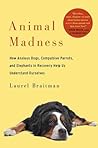
― Animal Madness: How Anxious Dogs, Compulsive Parrots, and Elephants in Recovery Help Us Understand Ourselves
― Animal Madness: How Anxious Dogs, Compulsive Parrots, and Elephants in Recovery Help Us Understand Ourselves
“The problem was that this sort of training took weeks, if not months—and we still had to go through the door in the meantime. We tried to do the exercises. We gave it our best shot. Or to be honest, we gave it our best shot for a while. But it was exhausting, for us and for Oliver. He was so finely attuned to the various stages Jude and I had for getting ready to leave that as soon as we tried to decouple one cue from his “they are leaving me” anxiety, picking up our keys, for example, Oliver would figure out another, such as making our lunches or putting on our work clothes. He may have been dysfunctional and disturbed, but he wasn’t stupid. Sometimes I stored my computer bag in our building’s shared hallway because even the sight of it would make Oliver start vigilantly watching for our departure, panting heavily and pacing. He also reacted to the sight of suitcases. And the putting on of shoes. And the opening of the coat closet. Possibly, if Jude and I had left for work naked, through a window, with no lunches, no keys, no bags, no shoes, and at odd hours, we could have avoided triggering Oliver’s anxiety.”
― Animal Madness: How Anxious Dogs, Compulsive Parrots, and Elephants in Recovery Help Us Understand Ourselves
― Animal Madness: How Anxious Dogs, Compulsive Parrots, and Elephants in Recovery Help Us Understand Ourselves
“Recent magnetic resonance imaging (MRI) of dogs as they’re reunited with their owners or discover food is coming suggests that the neuro-networks that process these positive emotional experiences function similarly in them and us.”
― Animal Madness: How Anxious Dogs, Compulsive Parrots, and Elephants in Recovery Help Us Understand Ourselves
― Animal Madness: How Anxious Dogs, Compulsive Parrots, and Elephants in Recovery Help Us Understand Ourselves
“Dogs have a way of gluing people together, even ones who are already coming unglued.”
― Animal Madness: How Anxious Dogs, Compulsive Parrots, and Elephants in Recovery Help Us Understand Ourselves
― Animal Madness: How Anxious Dogs, Compulsive Parrots, and Elephants in Recovery Help Us Understand Ourselves
“animal suicide accounts gave scientists, natural historians, and the general public a means of reflecting on the concept of human self-destruction as well as ideas about humanity’s relationship to nature without always having to talk about people. Writing and thinking about animal suicides, just as we saw with the cases of animal heartbreak and homesickness, gave people a way to ponder their own afflictions, even if they were doing it unconciously.”
― Animal Madness: How Anxious Dogs, Compulsive Parrots, and Elephants in Recovery Help Us Understand Ourselves
― Animal Madness: How Anxious Dogs, Compulsive Parrots, and Elephants in Recovery Help Us Understand Ourselves
“Our intentions are good. It's simply that falling short is the human condition, and some problems can not be taken care of by hoping.”
― Animal Madness: How Anxious Dogs, Compulsive Parrots, and Elephants in Recovery Help Us Understand Ourselves
― Animal Madness: How Anxious Dogs, Compulsive Parrots, and Elephants in Recovery Help Us Understand Ourselves
“Despite centuries of investigation by everyone from natural historians, psychologists, and psychiatrists, to ethicists, neuroscientists, and philosophers, there is still no universal definition of emotion or consciousness. As I mentioned earlier, a number of researchers have agreed that animals share the capacity for the emotions of fear and enjoyment. It's highly likely, however, as the neuroscientist Jaak Panksepp suggests, that animals experience many more than these. What, for example, is the bee emotion associated with seeing a particularly pleasing ultraviolet pattern inside a flower? What does the dolphin emotion for sensing a sonar ping from a long-lost companion feel like? The octopus emotion associated with performing a sudden, flushing change of skin color? Other animals have different physiological experiences than we do and those may come with their own emotional experiences. Because of this, it's difficult to make a finite list. There isn't consensus even on the universal human emotions. The psychologist Paul Ekman put forth the most famous list of what he called "basic" human emotions: anger, fear, sadness, enjoyment, disgust, and surprise. But what about excitement, shame, awe, relief, jealousy, love, or joy? Attempting to reduce all of these complex states to a grocery list of experiences may be beside the point, especially since we know how useful they can be.”
― Animal Madness: How Anxious Dogs, Compulsive Parrots, and Elephants in Recovery Help Us Understand Ourselves
― Animal Madness: How Anxious Dogs, Compulsive Parrots, and Elephants in Recovery Help Us Understand Ourselves
“Lori Marino is a senior lecturer in the Neuroscience and Behavioral Biology Program at Emory University and has researched primate, dolphin, and whale intelligence and brain evolution for decades. She has also worked on key studies of dolphin cognition, proving, along with Diana Reiss, that dolphins can recognize themselves in mirrors. “I think that emotions "although they are subject to selection" are one of the oldest parts of psychology, laid down in the first animals," Marino told me. "This is because without emotions an individual cannot act or make the kinds of decisions that are key to survival. Of course, some emotions are basic and others are tied into cognitive processes, so some are more complex than others. But every animal has emotions."
The ethologist Jonathan Balcombe believes that emotions likely evolved with consciousness, as the two serve each other. Today, researchers are no longer debating whether other animals are conscious, but, instead, to what degree. Recent studies have attempted to show that consciousness isn't limited to humans, great apes, mammals, or even, perhaps, vertebrates. A subset of these animals has also been shown to be self-conscious in the context of cognitive and behavioral experiments; that is, they were able to conceive of themselves as beings independent from other animals and from the rest of their environment. Mirror recognition tests are the stock in trade of animal cognition research; they consist of drawing or dyeing a mark on an animal's body and then placing a mirror in front of them. If while looking in the mirror the animal touches the marked spot in a statistically significant manner, he or she is demonstrating self-awareness. That is, the animals are using the mirror as a tool to explore the mark that wasn't there before, something the researchers consider proof that the animals conceive of themselves as the beings in the mirror.
As of this writing, the only animals to have been proven self-aware in such a way are chimpanzees, orangutans, elephants, orcas, belugas, bottlenose dolphins, magpies, and humans, but only after the age of two. Pigs have been tested, but the results were inconclusive. One pig looked behind the mirror to find the food reflected in it. And while African Grey parrots used the mirrors as tools to find food in cupboards, it was not obvious that they recognized themselves. These experiments, while helpful, demonstrate only which animals are interested in looking at themselves in mirrors. The actual list of self-aware animals may be much longer. The African Greys, for example, might have known that they were looking at themselves but may have found the mirrors more worthwhile to use as tools for finding snacks. Not caring about what you look like isn't the same as not knowing what you look like.
In 2012 a group of prominent neuroanatomists, cognitive neuroscientists, neurophysiologists, and ethologists released the Cambridge Declaration on Consciousness. The declaration sought to establish, once and for all, that mammals, birds, and even some cephalopods, like octopi, are conscious creatures with the capacity to experience emotions. The authors argued that convergent evolution in animals gave many creatures the capacity for emotional experiences, even if they don't have a cortex, or at least one as complex as the human neocortex.”
― Animal Madness: How Anxious Dogs, Compulsive Parrots, and Elephants in Recovery Help Us Understand Ourselves
The ethologist Jonathan Balcombe believes that emotions likely evolved with consciousness, as the two serve each other. Today, researchers are no longer debating whether other animals are conscious, but, instead, to what degree. Recent studies have attempted to show that consciousness isn't limited to humans, great apes, mammals, or even, perhaps, vertebrates. A subset of these animals has also been shown to be self-conscious in the context of cognitive and behavioral experiments; that is, they were able to conceive of themselves as beings independent from other animals and from the rest of their environment. Mirror recognition tests are the stock in trade of animal cognition research; they consist of drawing or dyeing a mark on an animal's body and then placing a mirror in front of them. If while looking in the mirror the animal touches the marked spot in a statistically significant manner, he or she is demonstrating self-awareness. That is, the animals are using the mirror as a tool to explore the mark that wasn't there before, something the researchers consider proof that the animals conceive of themselves as the beings in the mirror.
As of this writing, the only animals to have been proven self-aware in such a way are chimpanzees, orangutans, elephants, orcas, belugas, bottlenose dolphins, magpies, and humans, but only after the age of two. Pigs have been tested, but the results were inconclusive. One pig looked behind the mirror to find the food reflected in it. And while African Grey parrots used the mirrors as tools to find food in cupboards, it was not obvious that they recognized themselves. These experiments, while helpful, demonstrate only which animals are interested in looking at themselves in mirrors. The actual list of self-aware animals may be much longer. The African Greys, for example, might have known that they were looking at themselves but may have found the mirrors more worthwhile to use as tools for finding snacks. Not caring about what you look like isn't the same as not knowing what you look like.
In 2012 a group of prominent neuroanatomists, cognitive neuroscientists, neurophysiologists, and ethologists released the Cambridge Declaration on Consciousness. The declaration sought to establish, once and for all, that mammals, birds, and even some cephalopods, like octopi, are conscious creatures with the capacity to experience emotions. The authors argued that convergent evolution in animals gave many creatures the capacity for emotional experiences, even if they don't have a cortex, or at least one as complex as the human neocortex.”
― Animal Madness: How Anxious Dogs, Compulsive Parrots, and Elephants in Recovery Help Us Understand Ourselves
“Captive animals suffer disproportionately because in many cases their environment has almost nothing to do with the sort of place they would choose to live themselves. These creatures have hours of empty time every day and often a lack of activity to occupy their minds, hands, paws, or jaws. In response, many develop behaviors that are eerily similar to those of emotionally distraught humans. Champions of the animal display industry wave away such criticism, arguing that zoo animals often live longer than their free counterparts and that wildernesses come with their own stressors like hungry predators, no access to veterinary care, and certainly no prearranged meal times. It is also the case that many animals currently living in captivity were born there and may not be able to survive on their own. These points are all trotted out like show ponies anytime the animal display industry comes under attack. But a tally of years lived and calorically balanced meals eaten doesn't account for quality of life or the pleasure that can come from making one's own decisions. It doesn't even account for the kind of suffering that isn't lethal but nonetheless may make an animal unhappy and drive him to gnaw on his toes or swim in endless circles. Just because an animal is born into a certain world doesn't mean that she can't have an opinion about it.”
― Animal Madness: How Anxious Dogs, Compulsive Parrots, and Elephants in Recovery Help Us Understand Ourselves
― Animal Madness: How Anxious Dogs, Compulsive Parrots, and Elephants in Recovery Help Us Understand Ourselves
“Having been separated from her mother and all other elephants at such a young age, Rara was scared of the park herd. She had no basic elephant culture; she was at a loss when it came to approaching new elephants and didn't know how to show affection or express herself in a nonthreatening way. Because of this, the other elephants were skeptical of her. Rara preferred to spend time with the park's human guests, particularly white women, who had been the font of bananas and affection at the Sheraton. She disliked Thai men, except Gawn, whom she loved fiercely. The rest of the park's male staff gave her a wide berth. Once, when Gawn was unable to come to work and Rara was given a new mahout for the day, she terrified the park employees by throwing an elephant-size tantrum that resulted in a smashed car and overturned baskets of produce.
This behavior isn't particularly surprising if Rara's life history is taken into account. Elephants learn from their mothers, aunties, and other herd members how to be elephants: how to show joy and anger, what to eat and how to eat it, the best ways to stroke a companion, and how to physically protect themselves. Like humans, they're not born knowing how to behave. In the herd Rara also would have been disciplined when she acted inappropriately. After she was taken from her mother, the only teachers she had were humans. She spent most of her time confined, and when she was free it was only to be stroked by tourists and given treats. She interacted with new humans all the time, and each of these people responded to her differently, some with affection and others with fear. The most important relationships, those that would have taught her how to be an elephant, were taken from her. As a result, Rara grew into a sort of human-elephant hybrid, an outsider in both worlds.
And yet she was lovely. I learned to rumble like she did, a sort of rolled-R throaty hum, and she would respond in kind. If I was gone for just a few hours and then ran into her and Gawn in the park, she treated me like a long-lost friend, running her trunk over my head and face, blowing air onto my crotch, rumbling and squeaking, ready to begin whatever game we'd last played. I hoped that she would learn to be an elephant among elephants, but I admit I also enjoyed the fact that she liked me. It's wonderful to make a new human friend, but it's even better to be friends with an elephant. It was also a bit depressing. Didn't human-elephant friendships usually end poorly, with the elephants winding up in circuses or as crop raiders? Shouldn't Rara be less fond of the species that took her from her mother and kept her chained for years? Why on earth did she still like people?”
― Animal Madness: How Anxious Dogs, Compulsive Parrots, and Elephants in Recovery Help Us Understand Ourselves
This behavior isn't particularly surprising if Rara's life history is taken into account. Elephants learn from their mothers, aunties, and other herd members how to be elephants: how to show joy and anger, what to eat and how to eat it, the best ways to stroke a companion, and how to physically protect themselves. Like humans, they're not born knowing how to behave. In the herd Rara also would have been disciplined when she acted inappropriately. After she was taken from her mother, the only teachers she had were humans. She spent most of her time confined, and when she was free it was only to be stroked by tourists and given treats. She interacted with new humans all the time, and each of these people responded to her differently, some with affection and others with fear. The most important relationships, those that would have taught her how to be an elephant, were taken from her. As a result, Rara grew into a sort of human-elephant hybrid, an outsider in both worlds.
And yet she was lovely. I learned to rumble like she did, a sort of rolled-R throaty hum, and she would respond in kind. If I was gone for just a few hours and then ran into her and Gawn in the park, she treated me like a long-lost friend, running her trunk over my head and face, blowing air onto my crotch, rumbling and squeaking, ready to begin whatever game we'd last played. I hoped that she would learn to be an elephant among elephants, but I admit I also enjoyed the fact that she liked me. It's wonderful to make a new human friend, but it's even better to be friends with an elephant. It was also a bit depressing. Didn't human-elephant friendships usually end poorly, with the elephants winding up in circuses or as crop raiders? Shouldn't Rara be less fond of the species that took her from her mother and kept her chained for years? Why on earth did she still like people?”
― Animal Madness: How Anxious Dogs, Compulsive Parrots, and Elephants in Recovery Help Us Understand Ourselves
“Outside of mistreatment, bouts of madness in male elephants may be, at least partially, explained by musth, a hormone-fueled period that can last weeks to months. A male in musth is considered more aggressive and stubborn, their penises may be erect, and a sticky substance leaks from the glands in their temples. Sometimes these males become violent; musth periods have been described as passing bouts of erotic madness.
Chunee, a once docile Asian elephant who lived at Exeter Change in London in the mid-nineteenth century, was killed when his annual attacks of "sexual excitability" made him too violent for the comfort of his keepers. His execution in March 1826 was gory and went on far too long. Chunee refused arsenic, three rifle shots only made him more upset, and repeated volleys of military muskets by a group of soldiers called in at the last minute couldn't finish the job. Eventually a keeper delivered the final blow with a sword.
Gunda too was once an approachable star elephant at the Bronx Zoo just after the turn of the twentieth century. But he became, upon sexual maturity, "most troublesome and dangerous," according to William Hornaday of the New York Zoological Society. His repeated, six-month "bouts of erotic frenzy" made him so violent that he was put under extreme restraints for half of every year. Debates over what to do with him captivated New Yorkers, and articles and editorials about his fate, the ethics of chaining him in place, and his possible execution peppered the New York press on the eve of World War I. In the end Gunda was shot point-blank in the elephant house by the famed elephant hunter and taxidermist Carl Akeley. His folded, dehydrated hide was taken to the American Museum of Natural History in New York, where it remains today, stored on a large metal shelf underneath the Planetarium. Gunda's execution for mad behavior was representative of many other elephants' experiences, their rights to life hinging on how their sanity was perceived by the humans charged with caring for and confining them.”
― Animal Madness by Laurel Braitman (9-Oct-2014) Paperback
Chunee, a once docile Asian elephant who lived at Exeter Change in London in the mid-nineteenth century, was killed when his annual attacks of "sexual excitability" made him too violent for the comfort of his keepers. His execution in March 1826 was gory and went on far too long. Chunee refused arsenic, three rifle shots only made him more upset, and repeated volleys of military muskets by a group of soldiers called in at the last minute couldn't finish the job. Eventually a keeper delivered the final blow with a sword.
Gunda too was once an approachable star elephant at the Bronx Zoo just after the turn of the twentieth century. But he became, upon sexual maturity, "most troublesome and dangerous," according to William Hornaday of the New York Zoological Society. His repeated, six-month "bouts of erotic frenzy" made him so violent that he was put under extreme restraints for half of every year. Debates over what to do with him captivated New Yorkers, and articles and editorials about his fate, the ethics of chaining him in place, and his possible execution peppered the New York press on the eve of World War I. In the end Gunda was shot point-blank in the elephant house by the famed elephant hunter and taxidermist Carl Akeley. His folded, dehydrated hide was taken to the American Museum of Natural History in New York, where it remains today, stored on a large metal shelf underneath the Planetarium. Gunda's execution for mad behavior was representative of many other elephants' experiences, their rights to life hinging on how their sanity was perceived by the humans charged with caring for and confining them.”
― Animal Madness by Laurel Braitman (9-Oct-2014) Paperback
“These neurological processes work similarly in almost every species, including birds and even reptiles. That is, fear responses aren't coordinated by the parts of the brain that allow us to achieve particularly human cognitive acts, such as writing novels or solving crossword puzzles, the frontal, temporal, and parietal lobes of the neocortex. This wrinkled layer of gray matter that's highly developed in humans and other great apes, as well as whales, dolphins, and elephants, helps coordinate complex cognitive processes. Our responses to fear and anxiety are different and probably originate in the subcortical regions of the brain, shared by most vertebrates and perhaps other creatures as well. Animals capable of complex thought may have more nuanced and coordinated responses to danger, perceived or real, once we sense it. Humans, and other animals with a lot of brainpower, can construct elaborate escape plans, for example, or develop sophisticated ideas about whatever is agitating or scaring us. But the emotional experience of the anxiety or fear might be similar regardless of intelligence.
These similarities are one set of reasons that nonhuman animals have been used for more than a century as neurophysiology research subjects in the quest to develop therapies for people. In the mid 1930s, the Yale neurophysiologist John Fulton performed the first frontal lobotomies on two anxious and angry chimps named Becky and Lucy. After the operation Fulton reported that Becky in particular looked like she'd joined a "happiness cult." His results helped inspire other researchers to try the surgery on people. Electroconvulsive "shock" therapy was first developed in other creatures as well, not as a treatment for animal schizophrenia but rather to determine safe voltage levels for humans. Italian researchers induced seizures in dogs and, in 1937, visited a pig slaughterhouse in Rome where the animals were stunned into unconsciousness before their throats were cut. If the pigs weren't immediately killed, they experienced the kind of convulsions that the researchers hoped would function as psychiatric cures in human patients. By 1938, a schizophrenic man known as Enrico X was given eighty volts of electricity that caused him to seize, go pale, and, oddly enough, start singing. After two more sets of shocks he called out in clear Italian, "Attention! Another time is murderous!" Within a few years, ECT had taken hold of psychiatry, first in Switzerland, then sweeping through Germany, France, the United Kingdom, Latin America, and, finally, the United States. By 1947, nine out of ten American mental hospitals were using some form of electroshock therapy on patients.”
― Animal Madness: How Anxious Dogs, Compulsive Parrots, and Elephants in Recovery Help Us Understand Ourselves
These similarities are one set of reasons that nonhuman animals have been used for more than a century as neurophysiology research subjects in the quest to develop therapies for people. In the mid 1930s, the Yale neurophysiologist John Fulton performed the first frontal lobotomies on two anxious and angry chimps named Becky and Lucy. After the operation Fulton reported that Becky in particular looked like she'd joined a "happiness cult." His results helped inspire other researchers to try the surgery on people. Electroconvulsive "shock" therapy was first developed in other creatures as well, not as a treatment for animal schizophrenia but rather to determine safe voltage levels for humans. Italian researchers induced seizures in dogs and, in 1937, visited a pig slaughterhouse in Rome where the animals were stunned into unconsciousness before their throats were cut. If the pigs weren't immediately killed, they experienced the kind of convulsions that the researchers hoped would function as psychiatric cures in human patients. By 1938, a schizophrenic man known as Enrico X was given eighty volts of electricity that caused him to seize, go pale, and, oddly enough, start singing. After two more sets of shocks he called out in clear Italian, "Attention! Another time is murderous!" Within a few years, ECT had taken hold of psychiatry, first in Switzerland, then sweeping through Germany, France, the United Kingdom, Latin America, and, finally, the United States. By 1947, nine out of ten American mental hospitals were using some form of electroshock therapy on patients.”
― Animal Madness: How Anxious Dogs, Compulsive Parrots, and Elephants in Recovery Help Us Understand Ourselves
“To create an environment that encourages cat sanity, Daniel suggests his clients reserve places that are cat-only, such as cat trees. They're ugly, but cats like having things that are just theirs. This makes them feel protected. It's best if these places are also tall, like the top of a bookcase or refrigerator, because being able to look down on people and other animals in the house makes them feel secure. This was not particularly surprising.”
― Animal Madness: How Anxious Dogs, Compulsive Parrots, and Elephants in Recovery Help Us Understand Ourselves
― Animal Madness: How Anxious Dogs, Compulsive Parrots, and Elephants in Recovery Help Us Understand Ourselves
“She looked like my mom but she wasn’t. Her grief was a walled room. And inside it, she was no one’s mother.”
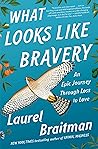
― What Looks Like Bravery: An Epic Journey Through Loss to Love
― What Looks Like Bravery: An Epic Journey Through Loss to Love
“In his beautiful book Dog Years, Mark Doty writes, "Being in love is our most common version of the unsayable; everyone seems to recognize that you can experience it from the outside, not quite. Maybe the experience of loving an animal is actually more resistant to language, since animals cannot speak back to us, cannot characterize themselves or correct our assumptions about them." Caring for animals like Oliver happens outside of verbal language, but it's a descriptive language all the same. Dogs in particular make us more expressive in all kinds of ways. They make us act more like dogs, rolling on the floor or hopping side to side to get them excited, a sort of transspecies basketball drill. They make us stop at good places to pee. They make us go to the park and notice the weather, mouldering bits of trash, entrances to the burrows of small animals. In short, they make us pay attention to what we might otherwise miss.”
― Animal Madness: How Anxious Dogs, Compulsive Parrots, and Elephants in Recovery Help Us Understand Ourselves
― Animal Madness: How Anxious Dogs, Compulsive Parrots, and Elephants in Recovery Help Us Understand Ourselves
“As I watched Oliver's disturbing behavior grow more intense, his nightly relentless paw licking, for example, or his frenzied concern over being left by himself, I puzzled over what was going on in his mind. Like so many other animals, he was a furry enigma. And yet discovering the particularities of what he was actually thinking didn't matter that much when it came to helping him. The reality of Oliver's raw, self-inflicted sores and my inability to distract him from making them worse was enough to tell me that he was too focused on something that was doing him harm. On one particularly bad evening, he gnawed on the base of his tail until he'd made a hole the size of a tennis ball. But he would choose other body parts too, taking a break from his tail to lick some other limb into hairlessness or injury. What I didn't know, what I feared no one may know, was exactly why he was doing this, but I wanted to find out.”
― Animal Madness: How Anxious Dogs, Compulsive Parrots, and Elephants in Recovery Help Us Understand Ourselves
― Animal Madness: How Anxious Dogs, Compulsive Parrots, and Elephants in Recovery Help Us Understand Ourselves
“After decades of research, Panksepp is convinced that most animal brains, from Oliver's to a ticklish mouse's, likely have the capacity for dreaming, for taking pleasure in eating, for feeling anger, fear, love, lust, grief, and acceptance from their mothers, for being playful, and for some conception of selfhood, an argument that might have seemed painfully unscientific just forty years ago. Panksepp believes that emotional capacity evolved in mammals long before the emergence of the human neocortex and its massive powers of cognition. He is careful to say that this doesn't mean that all animal or even mammalian emotions are the same. And when it comes to complex cognitive skills, he believes that the human brain puts all others to shame. But he is convinced that other animals have many special abilities that we don't have and this may extend to emotional states. Rats, for example, have richer olfactory lives, eagles have impressive eyesight, and dolphins can sense the world via sight, sound, sonar, and touch. These abilities may translate into more and different feelings associated with their various sensory or cognitive experiences. Panksepp believes that rabbits, for example, may have bigger or different capacities for fear while cats may have larger capacities for aggression and anger.
Over the past fifteen years the cognitive ethologist Marc Bekoff has published accounts of many types of animal emotions, from compassionate chimps to contrite hyenas. The primatologist Frans de Waal has written of altruism, empathy, and morality in bonobos and other apes. An explosion of recent research on dogs plumbs their ability to mirror the emotions of their owners, and studies of hormonal fluctuations in baboons after the death of their troops' babies have shown monthlong spikes of glucocorticoid stress hormones in the mothers, chemical surges that point toward a long grieving process. A number of recent studies have gone far beyond our closest relatives to argue for the possible emotional capacities of honeybees, octopi, chickens, and even fruit flies. The results of these studies are changing debates about animal minds from "Do they have emotions?"What sorts of emotions do they have and why?"
Perhaps this shouldn't be too surprising. As the neurologist Antonio Damasio has argued, emotions are a necessary part of animal social behavior. Consciously or not, they guide our behavior, helping us to flee from danger, seek pleasure, avoid pain, or bond with the right fellow creatures. Both dolphins and parrots, for example, can exhibit symptoms similar to human sadness and depression after the loss of a companion. They might ignore food or refuse to play with others. Other social animals, like dogs, often do the same. These emotions are consequences of a very helpful evolutionary process: attaching to others who protect you, feed you, play with you, groom you, hunt or forage with you, or otherwise make your life more enjoyable or productive. Affective states, as the emotional expressions of animals are known, are useful whether you're a prairie dog collaborating with other prairie dogs on a tunnel extension or a harried human negotiating who is going to pick up dinner on the way home from work.”
― Animal Madness: How Anxious Dogs, Compulsive Parrots, and Elephants in Recovery Help Us Understand Ourselves
Over the past fifteen years the cognitive ethologist Marc Bekoff has published accounts of many types of animal emotions, from compassionate chimps to contrite hyenas. The primatologist Frans de Waal has written of altruism, empathy, and morality in bonobos and other apes. An explosion of recent research on dogs plumbs their ability to mirror the emotions of their owners, and studies of hormonal fluctuations in baboons after the death of their troops' babies have shown monthlong spikes of glucocorticoid stress hormones in the mothers, chemical surges that point toward a long grieving process. A number of recent studies have gone far beyond our closest relatives to argue for the possible emotional capacities of honeybees, octopi, chickens, and even fruit flies. The results of these studies are changing debates about animal minds from "Do they have emotions?"What sorts of emotions do they have and why?"
Perhaps this shouldn't be too surprising. As the neurologist Antonio Damasio has argued, emotions are a necessary part of animal social behavior. Consciously or not, they guide our behavior, helping us to flee from danger, seek pleasure, avoid pain, or bond with the right fellow creatures. Both dolphins and parrots, for example, can exhibit symptoms similar to human sadness and depression after the loss of a companion. They might ignore food or refuse to play with others. Other social animals, like dogs, often do the same. These emotions are consequences of a very helpful evolutionary process: attaching to others who protect you, feed you, play with you, groom you, hunt or forage with you, or otherwise make your life more enjoyable or productive. Affective states, as the emotional expressions of animals are known, are useful whether you're a prairie dog collaborating with other prairie dogs on a tunnel extension or a harried human negotiating who is going to pick up dinner on the way home from work.”
― Animal Madness: How Anxious Dogs, Compulsive Parrots, and Elephants in Recovery Help Us Understand Ourselves
“Turn-of-the-twentieth-century cases of nostalgia and heartbreak, for example, unfolded alongside an increasing tendency to medicalize and treat mental health. As the century wore on, physicians who treated various forms of insanity became specialists and the process of therapy became more rooted in individual patient-physician relationships. By early midcentury, these physicians were known as psychiatrists.
Efforts to make sense of other animal minds often reflected these shifting ideas about human mental health. People use the concepts, language, and reasoning they have at hand to understand puzzling animal behavior. Disorders such as mortal heartbreak and nostalgia may sound quaint or old-fashioned today but contemporary Internet addictions and attention deficit disorders may, by the twenty-second or twenty-third centuries, seem antiquated. In this way, looking at instances of animal madness in history and how we've mapped ailments such as nostalgia, mortal heartbreak, melancholia, hysteria, and madness onto other creatures is like holding up a mirror to the history of human mental illness. The reflection isn't always flattering.”
― Animal Madness: How Anxious Dogs, Compulsive Parrots, and Elephants in Recovery Help Us Understand Ourselves
Efforts to make sense of other animal minds often reflected these shifting ideas about human mental health. People use the concepts, language, and reasoning they have at hand to understand puzzling animal behavior. Disorders such as mortal heartbreak and nostalgia may sound quaint or old-fashioned today but contemporary Internet addictions and attention deficit disorders may, by the twenty-second or twenty-third centuries, seem antiquated. In this way, looking at instances of animal madness in history and how we've mapped ailments such as nostalgia, mortal heartbreak, melancholia, hysteria, and madness onto other creatures is like holding up a mirror to the history of human mental illness. The reflection isn't always flattering.”
― Animal Madness: How Anxious Dogs, Compulsive Parrots, and Elephants in Recovery Help Us Understand Ourselves
“Labeling an animal mad was not only a way of explaining irrational anger, it also described creatures' strange behavior, aggression, or some other form of insanity, such as hysteria, melancholia, depression, or nostalgia. One small dog, for example, discovered with a pig on a shipwreck afloat in midocean in 1890 was said to have gone mad with loss. Animals could also go mad from a lifetime of abuse, such as Smiles, the Central Park rhinoceros, who reportedly did so in 1903. Maddened horses, as they were known, could simply take off running through Central Park or Williamsburg, Virginia, or anywhere at all, still attached to their carriages or dragging their riders behind, often with fatal consequences. Other horses, suffering from equine insanity, could, in a flash, turn on their grooms or riders and stomp them to death. Madness was also used to explain other seemingly bizarre animal actions. In 1909 Henry, the monkey mascot of a New Orleans baseball team, supposedly went mad when fans of the opposing team taunted him past his breaking point. He broke free from his cage at the stadium and climbed into the grandstand, creating a stampede and causing the game to be called in the seventh inning. As late as the 1920s and 1930s there were mad cats yowling in madder orgies, cows gone mad on the way to slaughter, at least one mad parrot, and some unruly Hollywood primates. In 1937, just a few months before forging an alliance with Hitler, Mussolini made international news when he was attacked by a mad ox during a parade to welcome him to Libya. He escaped unharmed and commended Libyans for their support of fascist Italy.”
― Animal Madness: How Anxious Dogs, Compulsive Parrots, and Elephants in Recovery Help Us Understand Ourselves
― Animal Madness: How Anxious Dogs, Compulsive Parrots, and Elephants in Recovery Help Us Understand Ourselves
“Many people, at least those who could afford it, became more distanced from livestock and working animals in the late nineteenth century and closer to animals who didn’t have to work, like pet dogs and birds. By the early twentieth century dogs were beginning to be considered, at least a bit, like children. The historian Katherine Grier argues that Victorian prints, small decorative statues, cards, and other widely circulated products started to portray animals as friends. Illustrations of babies and puppies playing together as equals, or nursing cats and their kittens alongside nursing human mothers, helped encourage people to use the same kind of endearments to describe their pets that they used for their own children. This shift laid the foundation for the idea of shared emotional problems, evidence that many people were comfortable equating certain animals (pet dogs, for example, as opposed to foxes or coyotes) with humans, not merely as friendly companions but as beings with similar emotional lives, and eventually, similar brain chemistry.”
― Animal Madness by Laurel Braitman (9-Oct-2014) Paperback
― Animal Madness by Laurel Braitman (9-Oct-2014) Paperback
“A large part of what makes a cat happy, Daniel told me, is routine. They like having their expectations met and knowing how the day will unfold. They're well behaved when nothing is different. When things change they often go haywire. I couldn't help but think of so many humans I know with the same problem.”
― What Looks Like Bravery: An Epic Journey Through Loss to Love
― What Looks Like Bravery: An Epic Journey Through Loss to Love
“Daniel sees himself as an interpreter of these sorts of interspecies mysteries. He asks lots of questions, as nonjudgmentally as possible, and pays careful attention to the way a client's house is set up, the dynamics between the people who live there, and how a cat spends his time.
They will tell me everything that I need to know, he says. For example, how do the cats like to use their environment, and are they being provided for in a way that makes them feel at ease? Do they have their own little areas that feel safe and controlled? Do they have the food and the cat litter they like? These things may sound small, but they have a huge impact on their mental health.
To create an environment that encourages cat sanity, Daniel suggests his clients reserve places that are cat-only, such as cat trees. They're ugly, but cats like having things that are just theirs. This makes them feel protected. It's best if these places are also tall, like the top of a bookcase or refrigerator, because being able to look down on people and other animals in the house makes them feel secure. This was not particularly surprising.
Also, these additions to their territory should not be tucked away from the action. They want to be part of everything that's going on. Daniel also encourages his clients to engage in play therapy with their cats, which is really just play. One of the most recommended cat toys for this is something called Da Bird, a miniature fishing pole dangling a garishly colored feather clump. You're meant to wave Da Bird in the air like a demented conductor or someone who's smoked too much of da herb as your cat chases it to and fro. If the original lure becomes boring, you can swap it out for an even more sparkly option that looks like it's been plucked from a Vegas showgirl.
Still, no matter how many Da Birds a cat receives or how many scenic vistas they have to look down upon humans and dogs, they can still develop odd behaviors. Daniel's own cat, a Seal Point Siamese Munchkin named Cubby, has his own issues. He also has the watercolored face of a Siamese and the stubby paws of a Munchkin. Because of his short legs, Cubby can't swat, but he hisses, usually at other cats. To Daniel's dismay, Cubby suffers from feline hyperesthesia, a disorder defined by a sudden, intermittent desire to savagely attack his own tail. Cats with hyperesthesia stalk their twitching tails as if they are menacing objects or invaders and then they pounce so hard that they sometimes rip their own flesh.
Daniel didn't know why Cubby was attacking himself. Their house, where Cubby rules the bedroom and sometimes the hallway and kitchen, has multiple cat trees, a tunnel for running back and forth, and private sleeping quarters in a closet. It is, in short, an ideal cat habitat, and Cubby could not find a human more attuned to his needs. Daniel decided to medicate Cubby. After thirty days on Prozac, the cat stopped acting as if he was possessed. A few years later, Cubby has recovered. He continues to take a small maintenance dose of Prozac, which limits his self-mutilating episodes to a mere thirty seconds or so per week. The rest of the time he sleeps in a sunny window, waiting for Daniel to come home and play Da Bird, or to watch him as he runs on his short little legs through his cat tunnel.”
― Animal Madness: How Anxious Dogs, Compulsive Parrots, and Elephants in Recovery Help Us Understand Ourselves
They will tell me everything that I need to know, he says. For example, how do the cats like to use their environment, and are they being provided for in a way that makes them feel at ease? Do they have their own little areas that feel safe and controlled? Do they have the food and the cat litter they like? These things may sound small, but they have a huge impact on their mental health.
To create an environment that encourages cat sanity, Daniel suggests his clients reserve places that are cat-only, such as cat trees. They're ugly, but cats like having things that are just theirs. This makes them feel protected. It's best if these places are also tall, like the top of a bookcase or refrigerator, because being able to look down on people and other animals in the house makes them feel secure. This was not particularly surprising.
Also, these additions to their territory should not be tucked away from the action. They want to be part of everything that's going on. Daniel also encourages his clients to engage in play therapy with their cats, which is really just play. One of the most recommended cat toys for this is something called Da Bird, a miniature fishing pole dangling a garishly colored feather clump. You're meant to wave Da Bird in the air like a demented conductor or someone who's smoked too much of da herb as your cat chases it to and fro. If the original lure becomes boring, you can swap it out for an even more sparkly option that looks like it's been plucked from a Vegas showgirl.
Still, no matter how many Da Birds a cat receives or how many scenic vistas they have to look down upon humans and dogs, they can still develop odd behaviors. Daniel's own cat, a Seal Point Siamese Munchkin named Cubby, has his own issues. He also has the watercolored face of a Siamese and the stubby paws of a Munchkin. Because of his short legs, Cubby can't swat, but he hisses, usually at other cats. To Daniel's dismay, Cubby suffers from feline hyperesthesia, a disorder defined by a sudden, intermittent desire to savagely attack his own tail. Cats with hyperesthesia stalk their twitching tails as if they are menacing objects or invaders and then they pounce so hard that they sometimes rip their own flesh.
Daniel didn't know why Cubby was attacking himself. Their house, where Cubby rules the bedroom and sometimes the hallway and kitchen, has multiple cat trees, a tunnel for running back and forth, and private sleeping quarters in a closet. It is, in short, an ideal cat habitat, and Cubby could not find a human more attuned to his needs. Daniel decided to medicate Cubby. After thirty days on Prozac, the cat stopped acting as if he was possessed. A few years later, Cubby has recovered. He continues to take a small maintenance dose of Prozac, which limits his self-mutilating episodes to a mere thirty seconds or so per week. The rest of the time he sleeps in a sunny window, waiting for Daniel to come home and play Da Bird, or to watch him as he runs on his short little legs through his cat tunnel.”
― Animal Madness: How Anxious Dogs, Compulsive Parrots, and Elephants in Recovery Help Us Understand Ourselves
“But a tally of years lived and calorically balanced meals eaten doesn't account for quality of life or the pleasure that can come from making one's own decisions. It doesn't even account for the kind of suffering that isn't lethal but nonetheless may make an animal unhappy and drive him to gnaw on his toes or swim in endless circles. Just because an animal is born into a certain world doesn't mean that she can't have an opinion about it.”
― Animal Madness: How Anxious Dogs, Compulsive Parrots, and Elephants in Recovery Help Us Understand Ourselves
― Animal Madness: How Anxious Dogs, Compulsive Parrots, and Elephants in Recovery Help Us Understand Ourselves
“Gorilla physiological and emotional development is similar to ours in that it occurs over a long period and bonding with one's mother teaches a young gorilla how to trust others. A gorilla who is ignored as an infant may have problems connecting to troop members as an adult in a society that is extremely social. The same may be true for elephants, who also develop over long periods of time and form close relationships with family and herd members. This may, in fact, be the case for any creature whose emotional needs are not met when their brains are developing, or for those animals who are hurt by the ones they are supposed to trust.”
― Animal Madness: How Anxious Dogs, Compulsive Parrots, and Elephants in Recovery Help Us Understand Ourselves
― Animal Madness: How Anxious Dogs, Compulsive Parrots, and Elephants in Recovery Help Us Understand Ourselves
“Zarling believes something similar happens with the German Shepherds she rehabilitates. Pups who are abused or neglected often fail to become confident adult dogs, and without good dog behavior modeled for them early on by other dogs or their human companions they're much more difficult to work with and can be more aggressive, and thus are more likely to end up at shelters. After these dogs are adopted, they're returned when their difficult behaviors surface. Elise Christensen calls these canines recycled dogs and says that trying to understand why they behave the way they do feels like watching a dog chase his own tail. Are they problem dogs because they're products of the shelter system, having been adopted only to be returned for their difficult behaviors, often more than once? she said. Or are they in the shelter system because they were born difficult dogs?”
― Animal Madness: How Anxious Dogs, Compulsive Parrots, and Elephants in Recovery Help Us Understand Ourselves
― Animal Madness: How Anxious Dogs, Compulsive Parrots, and Elephants in Recovery Help Us Understand Ourselves
“Most animals cannot narrate their emotional experiences for humans, and even if they could (signing apes, say, or talking parrots), this isn't necessarily the best measure of what they're actually experiencing. There's something of a parallel with people who can't, or won't, articulate their emotional responses or feelings when asked about them. The complex process of making sense of our racing heartbeat, sweaty palms, and surges of good or bad feelings is what undergirds much of psychotherapy and analysis. We simply don't always know what we're feeling while we're feeling it. And yet there's so much value in making educated guesses about animal emotions, especially when the outcome could be restoring their mental health. We know, for example, as Phil said, that fear and anxiety give rise to the majority of mental illnesses in humans, from debilitating phobias to post-traumatic stress disorder (PTSD). According to a recent estimate by the National Public Health Service, half of all mental problems in the United States, besides those related to drug or alcohol addiction, are made up of anxiety disorders. These include phobias, panic attacks, PTSD, obsessive-compulsive disorders, and generalized anxiety.”
― Animal Madness: How Anxious Dogs, Compulsive Parrots, and Elephants in Recovery Help Us Understand Ourselves
― Animal Madness: How Anxious Dogs, Compulsive Parrots, and Elephants in Recovery Help Us Understand Ourselves
“These animal activities remind Grandin of autistic children who sometimes bite their own hands, bang their heads on walls, or slap themselves. She argues that 10 to 15 percent of captive rhesus monkeys housed alone do the exact same thing. She may be right, but Grandin's comparison of autistic children to abnormally behaving animals is controversial. She has categorized autism as a way station on the road from animals to humans, implying that autistic children may be closer to animals than the rest of us, an assertion that uncomfortably echoes the Victorian idea that certain groups of humans are closer to animals than others. Even if they rock back and forth like upset monkeys do, autistic children aren't more closely related to other animals than nonautistic children.
There is, however, the possibility that other animals can be autistic. And if so, autistic humans and autistic nonhumans may have some things in common. The ethologist Marc Bekoff once observed a wild coyote pup he called Harry. Harry's littermates rolled and tumbled, snarling at one another joyfully, but Harry didn't understand their invitations to tussle and didn't seem to know how to play at all. Despite his best efforts, the pup couldn't read coyote social cues. For a long time I simply chalked it up to individual variation, wrote Bekoff, figuring that since behavior among members of the same species can vary, Harry wasnțt all that surprising. But a few years later, someone asked him if he thought other animals could be autistic and Bekoff remembered the odd little pup. Perhaps, he wrote, Harry suffered from coyote autism.
In 2013, biologists at Caltech took a group of anxious lab mice with poor social skills and stereotypic behaviors and dosed them with a gut microbe, Bacteroides fragilis. Their anxiety seemed to lessen, they appeared to communicate better with one another, and they spent less time engaging in odd behaviors. The researchers concluded that the bacteria might help more than mice and suggested that people with developmental disorders like autism should try taking probiotics. This study built on earlier research, also at Caltech, that linked autism spectrum disorders to intestinal problems in both mice and humans. Mice who squeaked at other mice in strange ways, for example, had less Bacteroides fragilis in their intestines. So did humans with autism. The lack of this bacteria may not cause autism but adding it back in may help animals with their symptoms.”
― Animal Madness: How Anxious Dogs, Compulsive Parrots, and Elephants in Recovery Help Us Understand Ourselves
There is, however, the possibility that other animals can be autistic. And if so, autistic humans and autistic nonhumans may have some things in common. The ethologist Marc Bekoff once observed a wild coyote pup he called Harry. Harry's littermates rolled and tumbled, snarling at one another joyfully, but Harry didn't understand their invitations to tussle and didn't seem to know how to play at all. Despite his best efforts, the pup couldn't read coyote social cues. For a long time I simply chalked it up to individual variation, wrote Bekoff, figuring that since behavior among members of the same species can vary, Harry wasnțt all that surprising. But a few years later, someone asked him if he thought other animals could be autistic and Bekoff remembered the odd little pup. Perhaps, he wrote, Harry suffered from coyote autism.
In 2013, biologists at Caltech took a group of anxious lab mice with poor social skills and stereotypic behaviors and dosed them with a gut microbe, Bacteroides fragilis. Their anxiety seemed to lessen, they appeared to communicate better with one another, and they spent less time engaging in odd behaviors. The researchers concluded that the bacteria might help more than mice and suggested that people with developmental disorders like autism should try taking probiotics. This study built on earlier research, also at Caltech, that linked autism spectrum disorders to intestinal problems in both mice and humans. Mice who squeaked at other mice in strange ways, for example, had less Bacteroides fragilis in their intestines. So did humans with autism. The lack of this bacteria may not cause autism but adding it back in may help animals with their symptoms.”
― Animal Madness: How Anxious Dogs, Compulsive Parrots, and Elephants in Recovery Help Us Understand Ourselves
“In 2012 a group of prominent neuroanatomists, cognitive neuroscientists, neurophysiologists, and ethologists released the Cambridge Declaration on Consciousness. The declaration sought to establish, once and for all, that mammals, birds, and even some cephalopods, like octopi, are conscious creatures with the capacity to experience emotions.”
― Animal Madness: How Anxious Dogs, Compulsive Parrots, and Elephants in Recovery Help Us Understand Ourselves
― Animal Madness: How Anxious Dogs, Compulsive Parrots, and Elephants in Recovery Help Us Understand Ourselves
“Robert Sapolsky, the wild-haired and charismatic Stanford neuroscientist and author of Why Zebras Don't Get Ulcers and A Primate's Memoir, studies baboons living in the wild in Kenya. His research has demonstrated that changes in their social hierarchy affect not only their behavior but also their physiology. Lower-ranking baboons are often bullied and lead far more stressful lives than the troop's higher-ranking baboons. The brains of these antagonized primates are steeped in a nearly constant stream of stress hormones that, with long-term exposure, cause neurological damage. Sapolsky sees the baboons he studies as individuals, writing extensively about their personal quirks and the various ways their shifting ranks affect their emotional and physical health. His attention to their psychodramas, along with his efforts to gauge personalities of individual baboons, may have helped him conclude that their physiologic responses to stress approximated our own. His research has revolutionized how we think of the affects of chronic and acute stress on the human brain.”
― Animal Madness: How Anxious Dogs, Compulsive Parrots, and Elephants in Recovery Help Us Understand Ourselves
― Animal Madness: How Anxious Dogs, Compulsive Parrots, and Elephants in Recovery Help Us Understand Ourselves
“Chunee, a once docile Asian elephant who lived at Exeter Change in London in the mid-nineteenth century, was killed when his annual attacks of sexual excitability made him too violent for the comfort of his keepers. His execution in March 1826 was gory and went on far too long. Chunee refused arsenic, three rifle shots only made him more upset, and repeated volleys of military muskets by a group of soldiers called in at the last minute couldn't finish the job. Eventually a keeper delivered the final blow with a sword.
Gunda too was once an approachable star elephant at the Bronx Zoo just after the turn of the twentieth century. But he became, upon sexual maturity, most troublesome and dangerous, according to William Hornaday of the New York Zoological Society. His repeated, six-month bouts of erotic frenzy made him so violent that he was put under extreme restraints for half of every year. Debates over what to do with him captivated New Yorkers, and articles and editorials about his fate, the ethics of chaining him in place, and his possible execution peppered the New York press on the eve of World War I. In the end Gunda was shot point-blank in the elephant house by the famed elephant hunter and taxidermist Carl Akeley. His folded, dehydrated hide was taken to the American Museum of Natural History in New York, where it remains today, stored on a large metal shelf underneath the Planetarium. Gunda's execution for mad behavior was representative of many other elephants experiences, their rights to life hinging on how their sanity was perceived by the humans charged with caring for and confining them.”
― Animal Madness by Laurel Braitman (9-Oct-2014) Paperback
Gunda too was once an approachable star elephant at the Bronx Zoo just after the turn of the twentieth century. But he became, upon sexual maturity, most troublesome and dangerous, according to William Hornaday of the New York Zoological Society. His repeated, six-month bouts of erotic frenzy made him so violent that he was put under extreme restraints for half of every year. Debates over what to do with him captivated New Yorkers, and articles and editorials about his fate, the ethics of chaining him in place, and his possible execution peppered the New York press on the eve of World War I. In the end Gunda was shot point-blank in the elephant house by the famed elephant hunter and taxidermist Carl Akeley. His folded, dehydrated hide was taken to the American Museum of Natural History in New York, where it remains today, stored on a large metal shelf underneath the Planetarium. Gunda's execution for mad behavior was representative of many other elephants experiences, their rights to life hinging on how their sanity was perceived by the humans charged with caring for and confining them.”
― Animal Madness by Laurel Braitman (9-Oct-2014) Paperback