Goodreads helps you follow your favorite authors. Be the first to learn about new releases!
Start by following Matthew Lee Anderson.

Showing 1-26 of 26
“The body is not a task to be completed but a gift we receive from God himself.”
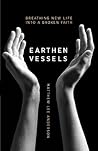
― Earthen Vessels: Why Our Bodies Matter To Our Faith
― Earthen Vessels: Why Our Bodies Matter To Our Faith
“There’s a reason why many people feel most loved and cared for in the therapists’s or counselor’s office: few people ask us questions as well as they do, with the interest that they do. We should consider deprofessionalizing that task, though, and restore it to the context of friendship and mentorship where it originally belonged.”
―
―
“If we do not question well then those who follow behind will almost certainly question badly. And if we are not confidently proclaiming the shape of our faith, then our faith will be of little use to those who desperately need it.”
―
―
“We want all the benefits of the resurrection without acknowledging our dependence on God as mortal creatures.”
― Earthen Vessels: Why Our Bodies Matter To Our Faith
― Earthen Vessels: Why Our Bodies Matter To Our Faith
“In any miracle, chase the causation back far enough and eventually you'll find yourself irrepressibly singing in praise of the marvelous goodness of God's creation.”
― Earthen Vessels: Why Our Bodies Matter To Our Faith
― Earthen Vessels: Why Our Bodies Matter To Our Faith
“We are free within the confines of the cross to love God and ask what we want.12”
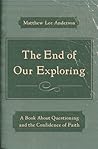
― The End of Our Exploring: A Book about Questioning and the Confidence of Faith
― The End of Our Exploring: A Book about Questioning and the Confidence of Faith
“The path between faith and understanding demands both obedience and inquiry. If Christianity is true, if it goes to the center of the universe and explains every stone and leaf the way we Christians think, then the more we search it out and explore it the more reasons we will have to be confident in that truth.”
―
―
“Apparently, the easiest way to overcome any awkwardness of speaking about sex is to sterilize it and outsource it to the professionals.”
― Earthen Vessels: Why Our Bodies Matter To Our Faith
― Earthen Vessels: Why Our Bodies Matter To Our Faith
“A questioning community helps authorities avoid becoming authoritarian, for it reminds us of the gap between our interpretation of the infallible Word and the infallibility of that Word. The question of what this text says is not the same as whether this text is inerrant or inspired. It is no infringement on the infallible, inspired, authoritative Word of God to inquire about our pastor’s interpretations of”
― The End of Our Exploring: A Book about Questioning and the Confidence of Faith
― The End of Our Exploring: A Book about Questioning and the Confidence of Faith
“The ability to question alongside someone else is a form of “intellectual empathy.” When we have it, we imaginatively enter into how another person is looking at the world. We go beyond the willing suspension of disbelief to momentarily granting premises and commitments that we might otherwise reject to see how their framework holds together—if the whole framework holds together—and to discern how to respond in light of that. Intellectual empathy is a form of seeing how. As in, “Oh, I see how you could think that. It’s wrong, but I can see how it might make sense.” Or as in, “Oh, I see how you’re thinking there. That’s wrong for the following seventeen reasons!” Or, “Yes, that does make sense. That’s a good point.” It is an act that is aimed first toward the good of understanding, a good that persuasion may flow from but can never precede.”
― The End of Our Exploring: A Book about Questioning and the Confidence of Faith
― The End of Our Exploring: A Book about Questioning and the Confidence of Faith
“Communities that prematurely close down questions produce reactionary questioners. A faith that is not oriented toward understanding is a faith in name only. And if a community shows no interest in understanding the revelation that it purports to follow, then its children will react accordingly. When communities are reduced to repeating clichés, those with eager intellects who are raised in those communities will want to ask questions but have no sense of questioning well. We know there is something vital missing. But reactions can quickly become overreactions, as when a teetotaler first takes up drink. Or like Shakespeare’s monkish Angelo in Measure for Measure, whose repressed sexual desires run rampant after years of being dormant. If people do not learn to question well, then they will almost certainly question badly.”
― The End of Our Exploring: A Book about Questioning and the Confidence of Faith
― The End of Our Exploring: A Book about Questioning and the Confidence of Faith
“When Jesus warns His followers to beware the teaching of the Pharisees, He exhorts them to “watch” it, not ignore it altogether.12”
― The End of Our Exploring: A Book about Questioning and the Confidence of Faith
― The End of Our Exploring: A Book about Questioning and the Confidence of Faith
“What’s more, the focus on answers and arguments in apologetics sometimes has made us inattentive to the questions being asked. There are times and places to have arguments that are won or lost (namely, in formal settings when those are the rules). But with our neighbors, conversations are more fun and instructive when they take the form of mutual reason-giving and explaining. When the impulse to defend takes hold, we tend to short-circuit the work of understanding. Which, ironically, makes it harder to engage in spirited, lively, and open discussion with those who think about the world very differently than we do. Our instinctive disposition will be to reach into the argumentative bag of tricks rather than to listen attentively and dialogue in love.13”
― The End of Our Exploring: A Book about Questioning and the Confidence of Faith
― The End of Our Exploring: A Book about Questioning and the Confidence of Faith
“Questioning is a form of our desire. Even while our inquiries often take an intellectual form, they come from wellsprings deeper than the mind.”
― The End of Our Exploring: A Book about Questioning and the Confidence of Faith
― The End of Our Exploring: A Book about Questioning and the Confidence of Faith
“we must do more than pay lip service to questioning well; within the church, questioning must be modeled, integrated into the lives of our saints so that those who are young, and young in the faith, can see what the sanctification of our exploration looks like. If people are given little by way of formation, then it is folly to expect much from them. And if we do not like the intellectual fruit our communities produce, then we would do well to begin by reexamining their vines.”
― The End of Our Exploring: A Book about Questioning and the Confidence of Faith
― The End of Our Exploring: A Book about Questioning and the Confidence of Faith
“Augustine writes, “It is more accurate to say that [the curious] hate the unknown because they want everything to become known, and thus nothing to remain unknown.”22”
― The End of Our Exploring: A Book about Questioning and the Confidence of Faith
― The End of Our Exploring: A Book about Questioning and the Confidence of Faith
“as long as we live in a fallen world, our faith must include tears and sorrow for evils and injustices. Lamentation keeps doubt at bay. The absence of genuine, sorrowful mourning in our worship services and communities is more to blame for the rise of doubt and instability among younger Christians than any French philosopher ever could be.33”
― The End of Our Exploring: A Book about Questioning and the Confidence of Faith
― The End of Our Exploring: A Book about Questioning and the Confidence of Faith
“Our bodies are not amorphous lumps that we shape and sculpt into our own self-image—they are divine gifts, given to us by God himself. The body opens the world to us and enables us to experience its goodness and beauty.”
― Earthen Vessels: Why Our Bodies Matter to Our Faith
― Earthen Vessels: Why Our Bodies Matter to Our Faith
“Over the past twenty years, evangelicals have balkanized into several different schools of thought, each of which has their own approach to theology, culture, and church practices. Despite the disagreements, though, almost everyone agrees on this point: Traditional evangelicalism has deeply Gnostic tendencies.”
― Earthen Vessels: Why Our Bodies Matter to Our Faith
― Earthen Vessels: Why Our Bodies Matter to Our Faith
“the recovery of the practice of catechesis is one of the most hopeful signs for Christians interested in cultivating their ability to question and live into the answers. Christians throughout history have used catechisms to train those new to the faith in the fundamentals. Answers were often memorized, with the goal that they would be internalized so that the catechumen could have a lively dialogue with the teacher. As Christians recover the practice of catechesis, our questions will become more sophisticated because we will have a more robust framework through which to look at the world. The apologetics movement, in fact, could think of its own work through this lens. Answers and particular reasons almost never persuade people. But internalizing them lays a helpful foundation that allows for the more lively and productive back-and-forth of dialoguing together.”
― The End of Our Exploring: A Book about Questioning and the Confidence of Faith
― The End of Our Exploring: A Book about Questioning and the Confidence of Faith
“Faith does not close off questioning—it reforms and orients it. It is not the bunker mentality of fundamentalism, which shuts down inquiry because it is afraid. Faith seeks understanding, and the form of its seeking is the questions that it asks within the life of the practices of the church. Faith is the presupposition to questions and inquiry, the ground that we stand on as we look out and survey the world. It is not the end of our exploring but the beginning, for it engenders a love that longs to see the one whose life gives us life.”
― The End of Our Exploring: A Book about Questioning and the Confidence of Faith
― The End of Our Exploring: A Book about Questioning and the Confidence of Faith
“But our body is not simply a gift from God—it is the place where God himself dwells within his people. The physical body was the place of Jesus Christ’s presence in the world.”
― Earthen Vessels: Why Our Bodies Matter to Our Faith
― Earthen Vessels: Why Our Bodies Matter to Our Faith
“The fundamentalist Christian stance has sometimes taken shape as an overreaction against a skeptical climate. In the face of intellectual and other challenges, the fundamentalist impulse is to preserve faith at any and all costs. Fundamentalism takes the form of a worry that on some level reason or science will undermine Christianity—which seems to mean ignoring them altogether. In such an environment, “faith” takes the form of holding on to a particular stance as a certainty, such that the possibility of questioning is immediately foreclosed. Such an impulse is often tied to particular views of Scripture or Genesis, but it shouldn’t be. As we have seen play out in culture, the most permissive approaches to Scripture’s teaching about sex sometimes lead to a rigid fundamentalism that endorses a liberal creed. The paradox is that while the fundamentalist’s faith is frequently loud and comes off as very certain, it lacks the prudential confidence to wisely, but truly, face up to the questions that confront it. It is driven by a vague sense of threats that it does not know how to respond to effectively and so ends up being reduced to shouting its answers while running away.7”
― The End of Our Exploring: A Book about Questioning and the Confidence of Faith
― The End of Our Exploring: A Book about Questioning and the Confidence of Faith
“Our tendency is to avoid, to inoculate ourselves against unsettling questions with an endless titillation of trivialities.”
― The End of Our Exploring: A Book about Questioning and the Confidence of Faith
― The End of Our Exploring: A Book about Questioning and the Confidence of Faith
“It’s hard to have interesting and meaningful conversations about the Bible with Christians. Really hard.3 Biblical literacy isn’t a strong point of American culture, but most active small group participants have a healthy familiarity with the text. Rather than make for more interesting discussions, though, our proximity to Scripture often has the reverse effect. People who know the “right answers” often think they are sufficient. Or people feel like they should have the right answers, making them reluctant to speak up.”
― The End of Our Exploring: A Book about Questioning and the Confidence of Faith
― The End of Our Exploring: A Book about Questioning and the Confidence of Faith
“The unexamined question is not worth asking.”
― The End of Our Exploring: A Book about Questioning and the Confidence of Faith
― The End of Our Exploring: A Book about Questioning and the Confidence of Faith