Goodreads helps you follow your favorite authors. Be the first to learn about new releases!
Start by following Richard Pipes.

Showing 1-30 of 37
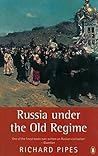
“In 1854, during the Crimean War, Chaadaev wrote these words: Talking about Russia one always imagines that one is talking about a country like the others; in reality, this is not so at all. Russia is a whole separate world, submissive to the will, caprice, fantasy of a single man, whether his name be Peter or Ivan, no matter - in all instances the common element is the embodiment of arbitrariness. Contrary to all the laws of the human community, Russia moves only in direction of her own enslavement and the enslavement of all the neighbouring peoples. For this reason it would be in the interest not only of other peoples but also in that of her own that she be compelled to take a new path.”
― Russia Under the Old Regime
― Russia Under the Old Regime
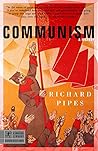
“Because totalitarian rule strives for the impossible and wants to place at its disposal the personality of man and destiny, it can be realized only in a fragmentary manner. It lies in its being that its goal can never be attained and made total but must remain a tendency, a claim to rule. . . . Totalitarian rule is not a thoroughly rationalized apparatus, that works with equal effectiveness in all its parts. This is something it would well like to be and in some places it may perhaps approach this ideal, but seen as a whole, its claim to power is realizable only in a diffuse manner, with very different intensities at various times in various realms of life; at the same time, totalitarian and non-totalitarian features are always commingled. But this is precisely why the consequences of the totalitarian claim to power are so dangerous and oppressive, because they are so hazy, so incalculable, and so difficult to demonstrate. . . . This contortion follows from the unfulfillable aspiration to power: it characterizes life under such a regime and makes it so exceedingly difficult for all outsiders to grasp.”
― Communism: A History
― Communism: A History
“Judged in terms of its own aspirations, the Communist regime was a monumental failure; it succeeded in one thing only - staying in power. But since for Bolsheviks power was not an end in itself but means to en end, its mere retention does not qualify the experiment as a success. The Bolsheviks made no secret of their aims: toppling everywhere regimes based on private property and replacing them with a worldwide union of socialist societies. They succeeded nowhere outside the boundaries of what had been the Russian Empire in spreading their regime until the end of World War II, when the Red Army stepped into the vacuum created in Eastern Europe by the surrender of Germany, the Chinese Communists seized control of their country from the Japanese, and Communist dictatorships, aided by Moscow, established themselves in a number of recently emancipated colonial areas.”
―
―
“Stalin first teamed up with Kamenev and Zinoviev, members of the triumvirate that had run the party during Lenin’s illness, to be rid of their common rival, Trotsky. By slander, intimidation of his supporters, and similar underhanded methods they stripped Trotsky of his posts, expelled him from the party, and then exiled him, first to Central Asia and finally, in 1929, abroad, where, in 1940, Stalin had him murdered. Stalin next turned on Kamenev and Zinoviev, whom he had removed from the Politburo. His victims’ ability to defend themselves against fabricated accusations was fatally weakened by their acceptance of the principle that “the party is always right.”
― Communism: A History
― Communism: A History
“Within a year or two of Lenin’s death he was clearly the party’s boss: having solidified his power, he was ready to resume the drive for Communism interrupted in 1921 by the introduction of the NEP. He had three related objectives: to build a powerful industrial base, to collectivize agriculture, and to impose on the nation complete conformity.”
― Communism: A History
― Communism: A History
“Of course, the lower classes do not acquiesce peaceably to their exploitation; they resist, although for as long as there is private property they merely succeed in replacing one form of exploitation with another. For this reason, in the words of the Communist Manifesto, so far all the history of societies has been the history of class struggles.”
― Communism: A History
― Communism: A History
“The theory and practice of socialism, and its offshoot, communism, postulate that all the existing ways of humanity are irrational and that it is the mission of those in the know to make out of them something radically different: mankind’s entire past is but a long detour on the road to its true destiny.”
― A Concise History of the Russian Revolution
― A Concise History of the Russian Revolution
“From time to time there emerged in the West voluntary communist societies. One of them was the Virginia Company in Jamestown (1607); another, New Harmony of Indiana, founded in 1825 by the British philanthropist Robert Owen. All such attempts broke down sooner or later, largely because of their inability to resolve the problem of “free riders,” members who drew a full share of the community’s harvest while doing little if any work.”
― Communism: A History
― Communism: A History
“In his address at Marx’s funeral Engels described “the law of human history” his friend is said to have discovered: that mankind must first of all eat, drink, have a shelter and clothing, before it can pursue politics, science, art, religion etc; that therefore the production of the immediate material means of subsistence . . . form[s] the foundation upon which the state institutions, the legal conceptions, art, and even ideas on religion of the people concerned have evolved, and in the light of which they must, therefore, be explained, instead of vice versa, as had hitherto been the case. In short, economics is the foundation of organized life: all else is “superstructure.”
― Communism: A History
― Communism: A History
“Marxism, the theoretical foundation of Communism, carried within it the seeds of its own destruction, such as Marx and Engels had wrongly attributed to capitalism. It rested on a faulty philosophy of history as well as an unrealistic psychological doctrine.”
― Communism: A History
― Communism: A History
“It needs to be stated at this point that the ideal of a propertyless Golden Age is a myth—the fruit of longing rather than memory—because historians, archaeologists, and anthropologists concur that there never was a time or place when all productive assets were collectively owned. All living creatures, from the most primitive to the most advanced, in order to survive must enjoy assured access to food and, to secure such access, claim ownership of territory.”
― Communism: A History
― Communism: A History
“Through much of her history she was ruled by an extreme form of autocracy, under which the tsar not only enjoyed unlimited legislative, judiciary, and executive powers but literally owned the country, in that he could, at will, exploit its human and material resources—the type of regime that the German sociologist Max Weber labeled “patrimonial.” The administration of the vast empire was entrusted to a bureaucracy that, along with the armed forces and police, maintained order without being accountable to the people. Until 1905, when civil disorders compelled the tsar to grant his subjects a constitution and civil rights, Russians could be arrested and exiled without trial for merely contemplating changes in the status quo.”
― Communism: A History
― Communism: A History
“Industrialization not only caused painful social dislocations but fundamentally and permanently altered relations between employers and employees. Landlords and their tenants had been neighbors and in some respects partners. Although on occasion tenants suffered mass expulsions, as during the Enclosure Acts in England, by and large the countryside was stable, especially in such countries as the United States, where the great majority of farmers owned the soil they cultivated. In industrial societies, the relationship of owner to employee turned tenuous and volatile, as the former felt free to dismiss workers whenever demand grew slack. Differences in lifestyle became more glaring as the nouveaux riches flaunted their wealth. These developments led to a growing hostility to “capitalism.” Socialism, until then an ideal with particular appeal to intellectuals, now acquired, in addition to a theoretical foundation, a social base among certain segments of the working class.”
― Communism: A History
― Communism: A History
“As Fidel Castro, the leader of Communist Cuba, would explain with a frankness that his Russian mentors preferred to avoid: “The revolution needs the enemy. . . . The revolution needs for its development its antithesis, which is the counterrevolution.”9 And if enemies were lacking, they had to be fabricated.”
― Communism: A History
― Communism: A History
“We shall trace the history of Communism in this sequence both because it makes sense logically and because it is in this manner that it has evolved historically: first the idea, then the plan of realization, and finally the implementation. But we will concentrate on the implementation because the ideal and the program, taken by themselves, are relatively innocuous, whereas every attempt to put them into practice, especially if backed by the full power of the state, has had enormous consequences.”
― Communism: A History
― Communism: A History
“The Communists in December 1917 introduced a novel (for the time) divorce law that allowed either partner to terminate a marriage on grounds of incompatibility. They did not, as yet, legalize abortion, but they tolerated it and it was widely practiced. Generally carried out under unhygienic conditions by unqualified personnel, the procedure claimed numerous victims. To remedy the situation, in November 1920 the government legalized abortions performed under medical supervision. This law, authorizing abortion on demand, was also the first of its kind.”
― A Concise History of the Russian Revolution
― A Concise History of the Russian Revolution
“But the propaganda accompanying collectivization placed emphasis on the elimination of rural “exploiters,” to divert attention from the fact that by far the most numerous victims of collectivization were ordinary peasants.”
― Communism: A History
― Communism: A History
“The French socialist Jean Jaurès predicted: The proletariat will come to power not through an unanticipated blow of political agitation, but by the methodical and legal organization of its own powers under democratic conditions and the universal right to vote. Our society will gradually develop towards Communism, not through the collapse of the capitalist bourgeoisie but by a gradual and inexorable strengthening of the proletariat.”
― Communism: A History
― Communism: A History
“These ambitious objectives provoked a crisis in the country, which was finally recovering from the turmoils of World War I, revolution, and civil war. But this did not trouble Stalin, because Communist regimes thrived on crises. Crisis alone permitted the authorities to demand—and obtain—total submission and all necessary sacrifices from its citizens. The system needed sacrifices and sacrificial victims for the good of the cause and the happiness of future generations. Crises enabled the system in this way to build a bridge from the fictional world of utopian programs to the world of reality.”
― Communism: A History
― Communism: A History
“Originally, there was no private property in these means: all land was held in common. But in time, the “primitive communal” order gave way to class differentiation as one group succeeded in monopolizing the vital resources and used its economic power to exploit and dominate the rest of the population by erecting political and legal institutions protecting its class interests. It also employed culture—religion, ethics, the arts and literature—to the same end. Such devices have enabled the ruling class to exploit the rest of the population.”
― Communism: A History
― Communism: A History
“More important still was the introduction of state-sponsored welfare schemes. The industrial democracies, alarmed by socialist strides in organizing labor and gaining seats in parliamentary elections, instituted social legislation in the form of unemployment and health insurance and other benefits that kept the working class from sinking into destitution.”
― Communism: A History
― Communism: A History
“Life turned out to be very different from theory. But they would not admit they were wrong: whenever things did not turn out as desired, they did not compromise but instead intensified the violence. To admit to being wrong would threaten to unravel the whole theoretical foundation of their regime, since it claimed to be scientifically correct in all its parts.”
― Communism: A History
― Communism: A History
“From the day the Bolsheviks seized power in Russia in 1917, there have been dozens of attempts made in every part of the world to install societies based on Communist principles. Moscow generously supported them with money, weapons and guidance. Virtually all failed.”
― Communism: A History
― Communism: A History
“Thus the Bolsheviks who five years earlier in a noisy campaign of blasphemy and ridicule exposed as sham the relics of Orthodox saints, created a holy relic of their own. Unlike the church's saints, whose remains were revealed to be nothing but rags and bones, their god, as befitted the age of science, was composed of alcohol, glycerin, and formalin.”
― A Concise History of the Russian Revolution
― A Concise History of the Russian Revolution
“To spur productivity, Stalin appealed to traditional capitalist methods of motivation. In 1931, he assailed the principle of “egalitarianism,” which called for workers to be paid identical wages regardless of competence, as an “ultra-left” notion. It meant, he went on to explain, that the unqualified worker had no incentive to acquire skills, while the skilled worker moved from job to job until he found one where his talents were properly rewarded; both hurt productivity. Accordingly, the new wage scale drew great distinctions between the least and the most skilled workers”
― Communism: A History
― Communism: A History
“The elaborate and rather flexible political police system established in Russia in the early 1880s was unique in at least two respects. Before the First World War no other country in the world had two kinds of police, one to protect the state and another to protect its citizens. Only a country with a deeply rooted patrimonial mentality could have devised such a dualism. Secondly, unlike other countries, where the police served as an arm of the law and was required to turn over all arrested persons to the judiciary, in imperial Russia and there alone police organs were exempt from this obligation.”
― Russia Under the Old Regime
― Russia Under the Old Regime
“In the words of Morelly, the author of the influential treatise Le Code de la Nature, published in 1755: The only vice which I know in the universe is avarice; all the others, whatever name one gives them, are merely forms, degrees of it. . . . Analyze vanity, conceit, pride, ambition, deceitfulness, hypocrisy, villainy; break down the majority of our sophisticated virtues themselves, [they] all dissolve in this subtle and pernicious element, the desire to possess.”
― Communism: A History
― Communism: A History
“The Russian Language has two words for education: obrozovanie, which means "instruction," and vospitanie, which means "upbringing." The first refers to the transmission of knowledge; the second to the molding of personality. The entire Soviet regime dedicated itself to vospitanie in the sense that all the institutions of the state, whether trade unions or the Red Army, had the mission of inculcating in the citizenry the spirit of communism and creating a new type of human being - so much so that to some contemporaries Soviet Russia appeared like one gigantic school.”
― A Concise History of the Russian Revolution
― A Concise History of the Russian Revolution
“The word communism, coined in Paris in the 1840s, refers to three related but distinct phenomena: an ideal, a program, and a regime set up to realize the ideal.*1 The ideal is one of full social equality that in its most extreme form (as in some of Plato’s writings) calls for the dissolution of the individual in the community. Inasmuch as social and economic inequalities derive primarily from inequalities of possession, its attainment requires that there be no “mine” and “thine”—in other words, no private property. This ideal has an ancient heritage, reappearing time and again in the history of Western thought from the seventh century b.c. to the present. The program dates back to the middle of the nineteenth century and is most closely associated with the names of Karl Marx and Friedrich Engels. In their Communist Manifesto of 1848 Marx and Engels wrote that “the theory of the Communists may be summed up in a single sentence: Abolition of private property.” Engels claimed that his friend had formulated a scientific theory that demonstrated the inevitable collapse of societies based on class distinctions. Although throughout history there had been sporadic attempts to realize the communist ideal, the first determined effort to this effect by using the full power of the state occurred in Russia between 1917 and 1991. The founder of this regime, Vladimir Lenin, saw a propertyless and egalitarian society emerging from the “dictatorship of the proletariat” that would eliminate private property and pave the way for Communism.”
― Communism: A History
― Communism: A History
“Bribing was a subtle and even gracious art. It was considered in better taste to bribe indirectly. For example, one could offer a generous donation to a 'charitable' cause, chaired by the official's wife; or sell him a piece of property at a fraction of its actual value; or buy something from him (e.g. a painting) for a sum far in excess of its value.”
― Russia Under the Old Regime
― Russia Under the Old Regime