Goodreads helps you follow your favorite authors. Be the first to learn about new releases!
Start by following Michael F. Bird.

Showing 1-30 of 60
“Theology is speaking about God while in the very presence of God. We are intimately engaged with the subject of our study.”
―
―
“Now while “Jesus wins in the end” is certainly true, it is a rather terse and vague slogan and does not capture the full breadth of what eschatology means.”
― Evangelical Theology: A Biblical and Systematic Introduction
― Evangelical Theology: A Biblical and Systematic Introduction
“In other words, the Niceno-Constantinopolitan creeds of the fourth century are not purely politically driven and radically innovative statements of faith. They are, instead, contextualized clarifications of New Testament teaching.”
― How God Became Jesus: The Real Origins of Belief in Jesus' Divine Nature—A Response To Bart Ehrman
― How God Became Jesus: The Real Origins of Belief in Jesus' Divine Nature—A Response To Bart Ehrman
“Paul was not a white, suburban, middle-class, liberal arts teacher, educated in the 1960s, and neither does every reference to Jesus as Kurios (“Lord”) automatically demand the antiphon, “and Caesar is not.” 45 Yet there can be no denying the theopolitical dimension to Paul’s theology and the counter-imperial implications of much of his thought. 46 If, as tradition tells us, Paul was executed in Rome, it was not because he practiced some kind of interiorized spirituality to the effect that “Jesus is Lord of my heart,” but something of his message and conduct brought him to the attention of the imperial authorities and warranted capital punishment in their eyes.”
― Colossians and Philemon: A New Covenant Commentary
― Colossians and Philemon: A New Covenant Commentary
“It was not the fault of Christian censors or a theological thought-police that the “other” Gospels were criticized and rejected. The “other” Gospels were not recognizable as “gospel,” and they failed to capture the hearts, minds, and imaginations of Christians in the worldwide church. The proof of this is the limited number of extant manuscripts for many of these “other” Gospels and the fact that many Jesus books were not known beyond their own immediate circles. The exclusion of other Gospels was not the result of the victory of the orthodox. It was rather based on an objective claim as to who more properly transmitted the teaching of Jesus and the Apostles. In the end, the reason the “other” Gospels lost out is that they simply failed to convince the majority of their antiquity and authenticity as stories of Jesus.”
― The Gospel of the Lord: How the Early Church Wrote the Story of Jesus
― The Gospel of the Lord: How the Early Church Wrote the Story of Jesus
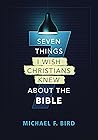
“Hope is the cheering in triumph for what others deem a lost cause. Hope denies that our lives don’t matter. Hope is currency in the land of melancholy. Hope is the dancing when the music has long ceased. Hope is bread for the starved soul. Hope is the voice that whispers to us that “all things are possible.” Hope is the grace to face our fears knowing that there is someone greater than the sum of all fears. Hope holds out a light rather than curses the dark. Hope is the physician of a terrified soul. Hope is the hero of the weak. Hope is defiance in the face of the tyrant.”
― Seven Things I Wish Christians Knew about the Bible
― Seven Things I Wish Christians Knew about the Bible
“This Christology of divine identity shows that Jesus Christ was regarded as being intrinsic to the unique and eternal identity of the God of Israel. The theological reflection of the church fathers did not so much develop this theme as transpose it into a conceptual framework to be readily explored in terms of essences and natures.”
― How God Became Jesus: The Real Origins of Belief in Jesus' Divine Nature—A Response To Bart Ehrman
― How God Became Jesus: The Real Origins of Belief in Jesus' Divine Nature—A Response To Bart Ehrman
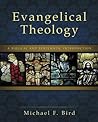
“Perichoresis is our way of describing how the life of each divine person flows through each of the others, so that each divine person infuses the others and each has direct access to the consciousness of the others. It implies that the three persons of the Trinity exist only in a mutual reciprocal relatedness to each other.”
― Evangelical Theology: A Biblical and Systematic Introduction
― Evangelical Theology: A Biblical and Systematic Introduction
“The later Logos Christology of the John the Evangelist at the end of the first century and Justin Martyr in the mid-second century represent a genuine development that attempts to flesh out Jesus’ divine functions and to explain them in terms relatable to Greek metaphysics. Yet these developments are based on a logical fusion of Jesus’ preexistent sonship with Jewish wisdom traditions, and so they are not derived from an interface with pagan sources.”
― How God Became Jesus: The Real Origins of Belief in Jesus' Divine Nature—A Response To Bart Ehrman
― How God Became Jesus: The Real Origins of Belief in Jesus' Divine Nature—A Response To Bart Ehrman
“According to the Gospels, Christianity is not a system of neo-platonic philosophy lodged inside a Jewish casing, not German existentialism waiting to be set free from its religious mythology, not a conservative or liberal political program looking for legitimation in religious tracts. Rather, the Gospels show that Christianity is about following Jesus the Christ. Finally, the Gospels are reminders that the words and deeds of Jesus must be uppermost in the minds, hearts, prayers, thoughts, and devotion of the church. The Gospels urge that those who bear Christ’s name must be willing to believe in him and follow him, through Galilee and Judea, through Gethsemane and Golgotha, through to the empty tomb and one day into the kingdom of heaven.”
― The Gospel of the Lord: How the Early Church Wrote the Story of Jesus
― The Gospel of the Lord: How the Early Church Wrote the Story of Jesus
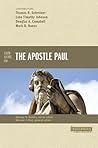
“Furthermore, this triune God is known in an act of redemption as Christ enters into a hostile world to rescue it. This God is saving the cosmos through Christ—and in a humiliating and costly way. Hence salvation, in this sense, is part of the being and identity of God. Moreover, Paul has grasped helpfully that this saving dynamic is rooted in divine love (e.g., 5:8). God’s extravagant love led to God’s extraordinary and self-sacrificing salvation.”
― Four Views on the Apostle Paul
― Four Views on the Apostle Paul
“What is more, the Trinity is not an esoteric doctrine forged in an unholy marriage of Greek metaphysical speculation and dodgy biblical interpretation. Rather, to experience the salvific blessings of the gospel is to be immersed in a Trinitarian reality.”
― Evangelical Theology: A Biblical and Systematic Introduction
― Evangelical Theology: A Biblical and Systematic Introduction
“Fourth, the ascension demonstrates that God has placed a human being as vice-regent of the universe. Jesus was the preexistent Son of God and was incarnated as a human being. When he was resurrected, he was still God incarnated as a human being, except now he had a glorified human body. When he ascended into heaven, he did not cease to be human, though he does remain the second person of the Trinity. Jesus ascended as a human being, and he remains in this glorified humanity for all of eternity. Hence the one enthroned beside God is a human being. In other words, it is human person who is at the helm of the universe.7”
― Evangelical Theology: A Biblical and Systematic Introduction
― Evangelical Theology: A Biblical and Systematic Introduction
“The motto of Wheaton College, “For Christ and His Kingdom,” is based on a postmillennial belief that the church can advance Christ’s kingdom in their revivalist crusades and social work until the present age becomes a millennium of Christ reigning on earth through the church militant.3 Ken Gentry avers: “The historical prospect of gospel victory bringing blessing on all nations comes by gradualistic conversion, not by catastrophic imposition (as in premillennialism) or by apocalyptic conclusion (as in amillennialism).”4”
― Evangelical Theology: A Biblical and Systematic Introduction
― Evangelical Theology: A Biblical and Systematic Introduction
“In any case, we can speak of a single “salvation” in the Old Testament, understood as entering the promises of God, which consist of God’s dwelling with his people, in his especially prepared place and under his reign. The form of that promise can vary from Adam to Ezra, but the substance remains consistent. Israel’s “gospel” announces that God’s grace precedes human action, faith is the appropriate response to God’s promises, obedience to divine commandments permits the perpetuation of divine blessings, and the goal of salvation is the restoration of communion between Creator and humanity through the chosen people. It is from this story, and not despite it, that we encounter the gospel of God, the gospel of Christ, the gospel of the Son, the gospel of the kingdom, the gospel of salvation, and the gospel of peace.”
― Evangelical Theology: A Biblical and Systematic Introduction
― Evangelical Theology: A Biblical and Systematic Introduction
“The sequence of events described in the gospel is the work of Father, Son, and Holy Spirit. This is hardly my own discovery. Consider this statement from the Martyrdom of Polycarp 22.1: “We wish you well, brothers and sisters, while you walk according to the doctrine of the gospel of Jesus Christ; with whom be glory to God the Father and the Holy Spirit, for the salvation of His holy elect.” The early church recognized that the saving event announced in the gospel was the combined and unified effort of all three members of the Godhead. The Father chooses, the Son redeems, and the Spirit sanctifies.”
― Evangelical Theology: A Biblical and Systematic Introduction
― Evangelical Theology: A Biblical and Systematic Introduction
“The first Christians held to the Jewish belief in one God, but this God was now known as God the Father, the Lord Jesus, and (eventually) the Holy Spirit.”
― How God Became Jesus: The Real Origins of Belief in Jesus' Divine Nature—A Response To Bart Ehrman
― How God Became Jesus: The Real Origins of Belief in Jesus' Divine Nature—A Response To Bart Ehrman
“EVANGELICALS AND KARL BARTH You may have noticed that we’ve been talking a lot about this “Karl Barth” chap (pronounced “Bart,” not “Barth”!). For many Protestant theologians Karl Barth simply is modern theology. For some Barthian acolytes everything that we say about theology now is really just a footnote to Karl Barth. When I was teaching in Scotland, I learned that at Aberdeen University there were more people writing doctoral theses on Karl Barth than writing doctoral studies on Jesus and Paul combined!52 For many evangelicals, however, Karl Barth is the bogeyman. The initial reception of Barth by American theologians such as J. G. Machen, Cornelius Van Til, and Carl F. Henry was far from positive. In fact, when I began doctoral studies at university, my pastor prayed that I would not come under the influence of the neoorthodox! I can honestly say that given the many weirdos and whackos that I met in the religious studies department of a secular university, sharing an office with a Barthian postgrad student would have been an absolute delight.53 There are four things young evangelicals need to know about Karl Barth.54”
― Evangelical Theology: A Biblical and Systematic Introduction
― Evangelical Theology: A Biblical and Systematic Introduction
“What this means is that Jesus was the real deal; but not only that, God’s whole deal with the world had changed. The new age that began as Jesus’ resurrection was the firstfruits of the future resurrection, and he was the firstborn of the new creation (Rom 8:29; 1 Cor 15:20, 23; Col 1:15, 18; Heb 12:23; Rev 1:5). So when the first Christians proclaimed Jesus’ resurrection to outsiders, it wasn’t a case of, “Well, chaps, you’ll never guess what happened last Sunday, our dear friend Yeshua ben Joseph, who got a raw deal at his trial, came back to life after his horrible execution. Isn’t God really nice!” The resurrection meant that Jesus was the climax of God’s plan.”
― Evangelical Theology: A Biblical and Systematic Introduction
― Evangelical Theology: A Biblical and Systematic Introduction
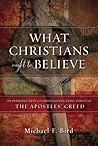
“Profession of a “lord” is not merely religious language for adoration on some spiritual plane; it is also a matter of social and political allegiance. When it came to who was running the show, the Christians knew that there were only two options, either the son of Augustus or the son of David. By singing and preaching about Jesus as Lord, they were opting for the latter, a claim regarded by political authorities as seditious. As N. T. Wright suggests, “For Paul, Jesus is Lord and Caesar is not.”
― What Christians Ought to Believe: An Introduction to Christian Doctrine Through the Apostles’ Creed
― What Christians Ought to Believe: An Introduction to Christian Doctrine Through the Apostles’ Creed
“Stick that in your zealot pipe and smoke it!”
― Evangelical Theology: A Biblical and Systematic Introduction
― Evangelical Theology: A Biblical and Systematic Introduction
“theology is not the study of ideas about God; it is the study of the living God.”
― Evangelical Theology: A Biblical and Systematic Introduction
― Evangelical Theology: A Biblical and Systematic Introduction
“First, we have to remember that the gospel itself is implicitly Trinitarian. The gospel points to a God who exists as Father, Son, and Holy Spirit. The salvation that the gospel promises portrays the Father as choosing, Christ as redeeming, and the Spirit as renewing—all in a unified work by distinct persons in a single godhead.”
― What Christians Ought to Believe: An Introduction to Christian Doctrine Through the Apostles’ Creed
― What Christians Ought to Believe: An Introduction to Christian Doctrine Through the Apostles’ Creed
“Furthermore, putting the heading “Gospel” on a document does not really determine its genre any more than inscribing “Recent Observations on Nocturnal and Hematophagic Humanoids” on the cover of a Twilight novel turns it into a scientific research paper.”
― The Gospel of the Lord: How the Early Church Wrote the Story of Jesus
― The Gospel of the Lord: How the Early Church Wrote the Story of Jesus
“In contrast to the thesis of Ehrman and others that a “high Christology,” which identified Jesus as a fully divine figure, was an evolutionary development, a cohort of scholars has argued for something more akin to a “big bang” approach to the origins of a fully divine Christology.”
― How God Became Jesus: The Real Origins of Belief in Jesus' Divine Nature—A Response To Bart Ehrman
― How God Became Jesus: The Real Origins of Belief in Jesus' Divine Nature—A Response To Bart Ehrman
“The problem is that this “doctrinal grid,” which refers to an eternal, conscious punishment of the wicked in hell, is itself not a metaphor taken too seriously but part of the fabric of the biblical warnings about judgment. Daniel contrasts “everlasting life” with “everlasting contempt” (Dan 12:2), and Paul similarly contrasts “death” with “eternal life” (Rom 6:23). The final state is described as “eternal fire” (Matt 18:8; 25:41; Jude 7), and “eternal judgment” (Heb 6:2). Concerning the destruction of God’s enemies, John says that the “smoke of their torment will rise for ever and ever” (Rev 14:11; cf. 19:3). It seems, then, that conditionalists disparage those scriptural passages that speak clearly of a never-ending state for those who reject the worship of the true God and the way of humanness that follows from it.27 Eternal punishment is not injurious to God’s justice and love; rather, it upholds it, as Robert Gundry writes: The NT doesn’t put forward eternal punishment of the wicked as a doctrine to be defended because it casts suspicion on God’s justice and love. To the contrary, the NT puts forward eternal punishment as right, even obviously right. It wouldn’t be right of God not to punish the wicked, so that the doctrine supports rather than subverts his justice and love. It shows that he keeps faith with the righteous, that he loves them enough to vindicate them, that he rules according to moral and religious standards that really count, that moral and religious behavior has consequences, that wickedness gets punished as well as righteousness rewarded, and that the eternality of punishment as well as of reward invests the moral and religious behavior of human beings with ultimate significance. We’re not playing games. In short, the doctrine of eternal punishment defends God’s justice and love and supplies an answer to the problem of moral and religious evil rather than contributing to the problem.28”
― Evangelical Theology: A Biblical and Systematic Introduction
― Evangelical Theology: A Biblical and Systematic Introduction
“In sum, to study the God of the gospel—the God who handed over his Son, who raised him up again, and who sent his Spirit into our hearts—is to be propelled toward the study of God’s triune being, his divine attributes, his actions of creation and revelation, as well the divine purpose and plan for all things.”
― Evangelical Theology: A Biblical and Systematic Introduction
― Evangelical Theology: A Biblical and Systematic Introduction
“The gospel is the summit of the wisdom of God as it reveals the folly of human religion and the bankruptcy of worldly philosophy.”
― Evangelical Theology: A Biblical and Systematic Introduction
― Evangelical Theology: A Biblical and Systematic Introduction
“early Christians included Jesus, precisely and unambiguously, within the unique identity of the one God of Israel” so that “the earliest Christology was already the highest Christology.”
― How God Became Jesus: The Real Origins of Belief in Jesus' Divine Nature—A Response To Bart Ehrman
― How God Became Jesus: The Real Origins of Belief in Jesus' Divine Nature—A Response To Bart Ehrman
“The new covenant is the eschatological fulfillment of the Abrahamic and Mosaic covenants by bringing the Abrahamic promises to bear on Jews and Gentiles through faith in Jesus Christ. What is new in the new covenant is the death and resurrection of Jesus as the means of salvation, Jesus as the object of faith, God’s people as multiethnic, and the permanent indwelling of the Holy Spirit. The obligations of the new covenant are not the moral law of the Decalogue but the example of Jesus, the teaching of Jesus, and life in the Spirit. Those things represent the “law of Christ” (Gal 6:2) and their performance fulfills the Mosaic law. Nonetheless, the law remains as a type of wisdom for Christian living, but it no longer defines the constitution or conduct for God’s people.”
― Evangelical Theology: A Biblical and Systematic Introduction
― Evangelical Theology: A Biblical and Systematic Introduction