Goodreads helps you follow your favorite authors. Be the first to learn about new releases!
Start by following Emily Wilson.

Showing 1-30 of 54
“Tell me about a complicated man.
Muse, tell me how he wandered and was lost
when he had wrecked the holy town of Troy,
and where he went, and who he met, the pain
he suffered in the storms at sea, and how
he worked to save his life and bring his men
back home. He failed to keep them safe; poor fools,
they ate the Sun God’s cattle, and the god
kept them from home. Now goddess, child of Zeus,
tell the old story for our modern times.
Find the beginning.”
― The Odyssey
Muse, tell me how he wandered and was lost
when he had wrecked the holy town of Troy,
and where he went, and who he met, the pain
he suffered in the storms at sea, and how
he worked to save his life and bring his men
back home. He failed to keep them safe; poor fools,
they ate the Sun God’s cattle, and the god
kept them from home. Now goddess, child of Zeus,
tell the old story for our modern times.
Find the beginning.”
― The Odyssey
“Poets are not to blame for how things are.”
― The Odyssey
― The Odyssey
“You already know the story. You will die. Everyone you love will also die. You will lose them forever. You will be sad and angry. You will weep. You will bargain. You will make demands. You will beg. You will pray. It will make no difference. Nothing you can do will bring them back. You know this. Your knowing changes nothing. This poem will make you understand this unfathomable truth again and again, as if for the very first time.”
― The Iliad
― The Iliad
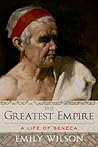
“Consumerism provides no psychological satisfaction, because there is no limit to our desires for things that we never needed in the first place.”
― The Greatest Empire: A Life of Seneca
― The Greatest Empire: A Life of Seneca
“The goddess did not shoot me in my home,
aiming with gentle arrows. Nor did sickness
suck all the strength out from my limbs, with long
and cruel wasting. No, it was missing you,
Odysseus, my sunshine; your sharp mind,
and your kind heart. That took sweet life from me.
— The Odyssey (11.198-203)”
― The Odyssey
aiming with gentle arrows. Nor did sickness
suck all the strength out from my limbs, with long
and cruel wasting. No, it was missing you,
Odysseus, my sunshine; your sharp mind,
and your kind heart. That took sweet life from me.
— The Odyssey (11.198-203)”
― The Odyssey
“His lies were like the truth,
and as she listened, she began to weep.
Her face was melting, like the snow that Zephyr
scatters across the mountain peaks; then Eurus
thaws it, and as it melts, the rivers swell
and flow again. So were her lovely cheeks
dissolved with tears. She wept for her own husband,
who was right next to her. Odysseus
pitied his grieving wife inside his heart,
but kept his eyes quite still, without a flicker,
like horn or iron, and he hid his tears
with artifice. She cried a long, long time,
then spoke again.”
― The Odyssey
and as she listened, she began to weep.
Her face was melting, like the snow that Zephyr
scatters across the mountain peaks; then Eurus
thaws it, and as it melts, the rivers swell
and flow again. So were her lovely cheeks
dissolved with tears. She wept for her own husband,
who was right next to her. Odysseus
pitied his grieving wife inside his heart,
but kept his eyes quite still, without a flicker,
like horn or iron, and he hid his tears
with artifice. She cried a long, long time,
then spoke again.”
― The Odyssey
“This is absurd, that mortals blame the gods! They say we cause their suffering, but they themselves increase it by their folly.”
― The Odyssey
― The Odyssey
“Young men often behave oafishly, but they may mature in time--unless they get an arrow through the neck first.”
― The Odyssey
― The Odyssey
“There are two gates of dreams: one pair is made
of horn and one of ivory. The dreams
from ivory are full of trickery;
Their stories turn out false. The ones that come
through polished horn come true.”
― The Odyssey
of horn and one of ivory. The dreams
from ivory are full of trickery;
Their stories turn out false. The ones that come
through polished horn come true.”
― The Odyssey
“His lies were like the truth,
and as she listened, she began to weep. / Her face was melting, like the snow that Zephyr / scatters across the mountain peaks; then Eurus / thaws it, and as it melts, the rivers swell / and flow again. So were her lovely cheeks / dissolved with tears. She wept for her own husband, / who was right next to her.”
― The Odyssey
and as she listened, she began to weep. / Her face was melting, like the snow that Zephyr / scatters across the mountain peaks; then Eurus / thaws it, and as it melts, the rivers swell / and flow again. So were her lovely cheeks / dissolved with tears. She wept for her own husband, / who was right next to her.”
― The Odyssey
“My Homer does not speak in your grandparents’ English, since that language is no closer to the wine-dark sea than your own. I have tried to keep to a register that is recognizably speakable and readable, while skirting between the Charybdis of artifice and the Scylla of slang.”
― The Odyssey
― The Odyssey
“He held his love, his faithful wife, and wept. As welcome as the land to swimmers, when Poseidon wrecks their ship at sea and breaks it with great waves and driving winds; a few escape the sea and reach the shore, their skin all caked with brine. Grateful to be alive, they crawl to land. So glad she was to see her own dear husband, and her white arms would not let go his neck.”
― The Odyssey
― The Odyssey
“What is distinctive about the customs surrounding hospitality in [archaic Greek] culture is that elite men who have entered one another's homes and have been entertained appropriately are understood to have created a bond of "guest-friendship" (xenia) between their households that will continue into future generations. ... It is created not by proximity and kinship, but by a set of behaviors that create bonds between people who are geographically distant from each other. Xenia is thus a networking tool that allows for the expansion of Greek power, from the unit of the family to the city-state and then across the Mediterranean world. It is the means by which unrelated elite families can connect to one another as equals, without having to fight for dominance. ... The poem's episodes can be seen as a sequence of case studies in the concept of xenia.”
― The Odyssey
― The Odyssey
“Stoicism, the intellectual movement with which Seneca most closely associated, was designed to create a possibility of individual happiness in times of vast social unrest.”
― The Greatest Empire: A Life of Seneca
― The Greatest Empire: A Life of Seneca
“Being poor is not having too little,” he declares: “it is wanting more” (Epistle 2).”
― The Greatest Empire: A Life of Seneca
― The Greatest Empire: A Life of Seneca
“It is a story, as the first word of the original Greek tells us about "a man" (andras). He is not "the" man, but one of many men-- albeit a man of extraordinary cognitive, psychological, and military power, one who can win any competition, outwit any opponent, and manage, against all odds, to survive. The poem tells us how he makes his circuitous way back home across stormy seas after many years at war. We may expect the hero of an "epic" narrative to confront evil forces, perform a superhuman task, and rescue vast numbers of people from an extraordinary kind of threat. Failing that, we might hope at least for a great quest unexpectedly achieved, despite perils all around; an action that saves the world, or at least changes it in some momentous way-- like Jason claiming the Golden Fleece, Launcelot glimpsing the Holy Grail, Aeanas beginning the foundation of Rome. In 'The Odyssey', we find instead the story of a man whose grand adventure is simply to go back to his own home, where he tries to turn everything back to the way it was before he went away. For this hero, mere survival is the most amazing feat of all.”
― The Odyssey
― The Odyssey
“The Stoics categorized the bad kinds of emotion into four general types: pleasure, pain, desire, and fear. Excessive emotions of these types are, they thought, the most important reason why people may fail to achieve appropriate spiritual tranquility.”
― The Greatest Empire: A Life of Seneca
― The Greatest Empire: A Life of Seneca
“The greatest empire is to be emperor of oneself”
― The Greatest Empire: A Life of Seneca
― The Greatest Empire: A Life of Seneca
“The ultimate form of love is to see no difference between the self and the beloved. Patroclus' journey into battle wearing the armor of Achilles transforms him into his friend, in the eyes of the Trojans. ... Once Patroclus is dead, Achilles tries to transform himself into his dead friend, by rolling in the dust ... He anticipates joining Patroclus again, and becoming indistinguishable from him in death, when their bones are together in one jar.”
― The Iliad
― The Iliad
“In actuality, the current of influence between Pauline Christianity and Roman Stoicism ran in the other direction. Paul was deeply influenced by Stoic philosophy, if not directly by Seneca. He borrowed the notions of indifferent things, of what is properly one’s own (oikeiosis), the ideal of freedom from passion, and the paradoxical notion of freedom through slavery, fairly directly from the Stoics. 4”
― The Greatest Empire: A Life of Seneca
― The Greatest Empire: A Life of Seneca
“Seneca’s account in On Anger of the passions, and especially of the distinction between “first movements” in response to a stimulus (by blushing or shivering or bursting into tears) and actual emotions, was transformed into a list of eight sins based on temptations to yield to bad thoughts 8 —a list that was then transformed again, by Pope Gregory the Great in the seventh century, into the Seven Deadly Sins that we know today.”
― The Greatest Empire: A Life of Seneca
― The Greatest Empire: A Life of Seneca
“the Stoic way is easier and more practical than the alternatives, since it is “easier to exclude dangerous things altogether, than to moderate them” (1.7.2).”
― The Greatest Empire: A Life of Seneca
― The Greatest Empire: A Life of Seneca
“The more substantive criticism Augustine makes is that Stoic ethics depend on human pride. The Stoics, including Seneca, claimed that the wise man can be entirely free from vice and can live in a state of total tranquility, undisturbed by false emotions. This claim, according to Augustine, is fundamentally false: since the Fall, no human being could ever achieve such a state in this world, and if anybody—like the Stoics—believes that he can live without sin, “he does not avoid sin, but rather forfeits pardon” (14).”
― The Greatest Empire: A Life of Seneca
― The Greatest Empire: A Life of Seneca
“i always stand near you and take care of you, in all your hardships.”
― The Odyssey
― The Odyssey
“If we can remember anything of the past, it is through words and stories: the laments of women, and the tales of poets. Words enable the sharing of grief, when there is no other comfort to be found.”
― The Iliad
― The Iliad
“I will not forget
Patroclus, never, while my body moves,
while I am still among those still alive,
and even if the dead forget each other
in Hades, even there I will remember
my friend, the man I love.”
― The Iliad
Patroclus, never, while my body moves,
while I am still among those still alive,
and even if the dead forget each other
in Hades, even there I will remember
my friend, the man I love.”
― The Iliad
“the vast majority of people in the Empire lived at subsistence level or close to it, while the top one and a half percent controlled about a fifth of the total GDP (a proportion that is actually lower than in the contemporary United States but one that still represents a vast socioeconomic gap between rich and poor).”
― The Greatest Empire: A Life of Seneca
― The Greatest Empire: A Life of Seneca
“Seneca’s careful analysis of “first movements” that were absolutely not worthy of moral blame had thus been transformed into its opposite: they were bad thoughts that revealed humanity’s fallen nature.”
― The Greatest Empire: A Life of Seneca
― The Greatest Empire: A Life of Seneca
“In poverty, there is only one kind of virtue—not to be oppressed or crushed by it.”
― The Greatest Empire: A Life of Seneca
― The Greatest Empire: A Life of Seneca