Goodreads helps you follow your favorite authors. Be the first to learn about new releases!
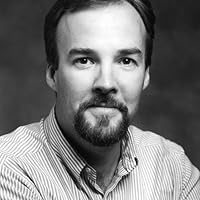
Start by following Matthew Dickerson.
Showing 1-22 of 22
“The moral victory of speaking the truth is more important than any military victory that might be won through lies and deceit.”
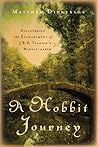
― A Hobbit Journey: Discovering the Enchantment of J.R.R. Tolkien's Middle-earth
― A Hobbit Journey: Discovering the Enchantment of J.R.R. Tolkien's Middle-earth
“Tolkien’s Middle-earth legendarium incarnates a particular philosophy or worldview. It is based on implicit answers to certain questions.”
― A Hobbit Journey: Discovering the Enchantment of J.R.R. Tolkien's Middle-earth
― A Hobbit Journey: Discovering the Enchantment of J.R.R. Tolkien's Middle-earth
“The value of the myth is that it takes all the things we know and restores to them the rich significance which had been hidden by ‘the veil of familiarity.’ . . . By putting bread, gold, horse, apple, or the very roads into a myth, we do not retreat from reality: we rediscover it. As long as the story lingers in our mind, the real things are more themselves.”
― A Hobbit Journey: Discovering the Enchantment of J.R.R. Tolkien's Middle-earth
― A Hobbit Journey: Discovering the Enchantment of J.R.R. Tolkien's Middle-earth
“Gollum was pitiable, but he ended in persistent wickedness, and the fact that this worked good was no credit to him. His marvellous courage and endurance, as great as Frodo and Sam’s or greater, being devoted to evil was portentous, but not honourable. I am afraid, whatever our beliefs, we have to face the fact that there are persons who yield to temptation, reject their chances of nobility or salvation, and appear to be “damnable.” . . . But we who are all “in the same boat” must not usurp the Judge. (Letters, 234)”
― A Hobbit Journey: Discovering the Enchantment of J.R.R. Tolkien's Middle-earth
― A Hobbit Journey: Discovering the Enchantment of J.R.R. Tolkien's Middle-earth
“Nothing?” Faramir asks, when Gollum claims to have done nothing wrong. “Have you never done anything worthy of binding or of worse punishment? However, that is not for me to judge, happily”
― A Hobbit Journey: Discovering the Enchantment of J.R.R. Tolkien's Middle-earth
― A Hobbit Journey: Discovering the Enchantment of J.R.R. Tolkien's Middle-earth
“Again and again, where Tolkien’s heroes make heroic choices, Jackson’s versions of these characters must be tricked or forced or involuntarily stumble into the courses of action that seem to make them heroes. It is important, therefore, to see just how important choice was to Tolkien, and to heroism.”
― A Hobbit Journey: Discovering the Enchantment of J.R.R. Tolkien's Middle-earth
― A Hobbit Journey: Discovering the Enchantment of J.R.R. Tolkien's Middle-earth
“Frodo follows a path toward salvation in his moral choices to do right, even when it is inconvenient or dangerous. Yet ultimately his salvation comes by mercy, when he is unable to complete his task and Gollum does it for him. Indeed, it comes through mercy in two ways: the mercy Frodo has consistently shown to Gollum and the mercy shown to Frodo by Ilúvatar, who intercedes and brings about the destruction of the Ring when he fails. “Blessed are the merciful,” Jesus taught, “for they shall obtain mercy.”
― A Hobbit Journey: Discovering the Enchantment of J.R.R. Tolkien's Middle-earth
― A Hobbit Journey: Discovering the Enchantment of J.R.R. Tolkien's Middle-earth
“In short, the characters in Tolkien’s stories are not responsible for the actions and decisions of others. What they are responsible for—what they have to discern, as Aragorn says—is what to do with the choices given to them.”
― A Hobbit Journey: Discovering the Enchantment of J.R.R. Tolkien's Middle-earth
― A Hobbit Journey: Discovering the Enchantment of J.R.R. Tolkien's Middle-earth
“In order to comprehend the experience one is living in, he must, by imagination and by intellect, be lifted out of it. He must be given to see it whole; but since he can never wholly gaze upon his own life while he lives it, he gazes upon the life that, in symbol, comprehends his own. Art presents such lives, such symbols. Myth especially—persisting as a mother of truth through countless generations and for many disparate cultures, coming therefore with the approval not of a single people but of people—myth presents, myth is, such a symbol, shorn and unadorned, refined and true. And when the one who gazes upon that myth suddenly, in dreadful recognition, cries out, “There I am! That is me!” then the marvelous translation has occurred: he is lifted out of himself to see himself wholly.”
― A Hobbit Journey: Discovering the Enchantment of J.R.R. Tolkien's Middle-earth
― A Hobbit Journey: Discovering the Enchantment of J.R.R. Tolkien's Middle-earth
“For what values are you willing to risk defeat?”
― A Hobbit Journey: Discovering the Enchantment of J. R. R. Tolkien's Middle-Earth
― A Hobbit Journey: Discovering the Enchantment of J. R. R. Tolkien's Middle-Earth
“Despair, or folly?’ said Gandalf. ‘It is not despair, for despair is only for those who see the end beyond all doubt. We do not. It is wisdom to recognize necessity, when all other courses have been weighed, though as folly it may appear to those who cling to false hope. Well, let folly be our cloak, a veil before the eyes of the Enemy!”
― A Hobbit Journey: Discovering the Enchantment of J.R.R. Tolkien's Middle-earth
― A Hobbit Journey: Discovering the Enchantment of J.R.R. Tolkien's Middle-earth
“Thus Gandalf’s wisdom may also be seen in his insistence on allowing the young hobbits Merry and Pippin to join the Fellowship. Without them, the Ents might never have been roused, nor the Nazgûl-Lord slain by Éowyn, nor Faramir rescued from the pyre.”
― A Hobbit Journey: Discovering the Enchantment of J.R.R. Tolkien's Middle-earth
― A Hobbit Journey: Discovering the Enchantment of J.R.R. Tolkien's Middle-earth
“that we can recognize the wisdom of characters through their knowledge of proverbs. Those who are wise know the old proverbs and the wisdom they contain. And those who lack wisdom are shown to be foolish in that they don’t know or don’t believe old proverbs, or else they use pseudo-proverbs that either don’t actually say anything or that say something false.”
― A Hobbit Journey: Discovering the Enchantment of J.R.R. Tolkien's Middle-earth
― A Hobbit Journey: Discovering the Enchantment of J.R.R. Tolkien's Middle-earth
“Blessed are the merciful: for they shall obtain mercy” (Matt. 5:7).”
― A Hobbit Journey: Discovering the Enchantment of J.R.R. Tolkien's Middle-earth
― A Hobbit Journey: Discovering the Enchantment of J.R.R. Tolkien's Middle-earth
“The Valar, though older and more powerful than elves, men, or dwarves, are not given the right to take away this gift of freedom given to the Children. They are allowed to advise the Children, and to teach them, and to share wisdom with them, but any attempt made at compelling the Children to some course of action, no matter what the intention, leads to an evil result.”
― A Hobbit Journey: Discovering the Enchantment of J.R.R. Tolkien's Middle-earth
― A Hobbit Journey: Discovering the Enchantment of J.R.R. Tolkien's Middle-earth
“Good and ill have not changed since yesteryear; nor are they one thing among Elves and Dwarves and another among Men. It is a man’s part to discern them, as much in the Golden Wood as in his own house.” —Aragorn”
― A Hobbit Journey: Discovering the Enchantment of J.R.R. Tolkien's Middle-earth
― A Hobbit Journey: Discovering the Enchantment of J.R.R. Tolkien's Middle-earth
“we see a glory in her courage, “so fair, so desperate.” But Tolkien is working something else in her character. Like her uncle Théoden, Éowyn needs to find healing, but it is a different type of healing. While her uncle is so afraid of death that he has become shameful, she is so afraid of shame that she seeks death.”
― A Hobbit Journey: Discovering the Enchantment of J.R.R. Tolkien's Middle-earth
― A Hobbit Journey: Discovering the Enchantment of J.R.R. Tolkien's Middle-earth
“Tolerance of a certain type in many situations may be virtuous, and a sign of humility, but tolerance of evil is not a virtue.”
― A Hobbit Journey: Discovering the Enchantment of J.R.R. Tolkien's Middle-earth
― A Hobbit Journey: Discovering the Enchantment of J.R.R. Tolkien's Middle-earth
“Gandalf rejoices at Boromir’s “escape” even though it comes about only at Boromir’s death, for what was accomplished on the spiritual plane is more important than what was lost on the physical plane.”
― A Hobbit Journey: Discovering the Enchantment of J.R.R. Tolkien's Middle-earth
― A Hobbit Journey: Discovering the Enchantment of J.R.R. Tolkien's Middle-earth
“For it is said that after the departure of the Valar there was silence, and for an age Ilúvatar sat alone in thought. Then he spoke and said: “Behold I love the Earth, which shall be a mansion for the Quendi and the Atani! But the Quendi shall be the fairest of all earthly creatures, and they shall have and shall conceive and bring forth more beauty than all my Children; and they shall have the greater bliss in this world. But to the Atani I will give a new gift.” Therefore he willed that the hearts of Men should seek beyond the world and should find no rest therein; but they should have a virtue to shape their life, amid the powers and chances of the world, beyond the Music of the Ainur, which is as fate to all things else. . . . But Ilúvatar knew that Men, being set amid the turmoils of the powers of the world, would stray often, and would not use their gifts in harmony; and he said: “These too in their time shall find that all that they do redounds at the end only to the glory of my work.” . . . It is one with this gift of freedom that the children of Men dwell only a short space in the world alive, and are not bound to it, and depart soon whither the Elves know not. Whereas the Elves remain until the end of days, and their love of the Earth and all the world is more single and more poignant therefore, and as the years lengthen ever more sorrowful. For the Elves die not till the world dies, unless they are slain or waste in grief. . . . But the sons of Men die indeed, and leave the world; wherefore they are called the Guests, or the Strangers. Death is their fate, the gift of Ilúvatar, which as Time wears even the Powers shall envy. But Melkor has cast his shadow upon it, and confounded it with darkness, and brought forth evil out of good, and fear out of hope. Yet of old the Valar declared to the Elves in Valinor that Men shall join in the Second Music of the Ainur; whereas Ilúvatar has not revealed what he purposes for the Elves after the World’s end, and Melkor has not discovered it.”
― A Hobbit Journey: Discovering the Enchantment of J.R.R. Tolkien's Middle-earth
― A Hobbit Journey: Discovering the Enchantment of J.R.R. Tolkien's Middle-earth
“Ironically, it is in clinging to the title of Steward that Denethor refuses to do the very thing a steward is called to do: to uphold the king’s authority. “I will not step down to be the dotard chamberlain of an upstart. . . . I will not bow to such a one, last of a ragged house long bereft of lordship and dignity” (V/vii). Ultimately, under the pretense of stewardship, Denethor claims an authority that not even the wise kings of old had: to take his own life and the life of his son. Gandalf chastises him for this, but to no avail. “‘Authority is not given to you, Steward of Gondor, to order the hour of your death,’ answered Gandalf. ‘And only the heathen kings, under the domination of the Dark Power, did thus, slaying themselves in pride and despair, murdering their kin to ease their own death’” (V/vii). It is interesting that Tolkien uses the word heathen to describe Denethor’s behavior; a heathen is an “unbeliever,” one who does not acknowledge God. If Tolkien really meant this word, then it implies that Denethor’s real fault is deeper than his refusal to acknowledge the authority of a king; it is a refusal to acknowledge the divine authority that is over even a king’s, the authority of Ilúvatar.”
― A Hobbit Journey: Discovering the Enchantment of J.R.R. Tolkien's Middle-earth
― A Hobbit Journey: Discovering the Enchantment of J.R.R. Tolkien's Middle-earth
“Ironically, it is in clinging to the title of Steward that Denethor refuses to do the very thing a steward is called to do: to uphold the king’s authority. “I will not step down to be the dotard chamberlain of an upstart. . . . I will not bow to such a one, last of a ragged house long bereft of lordship and dignity” (V/vii). Ultimately, under the pretense of stewardship, Denethor claims an authority that not even the wise kings of old had: to take his own life and the life of his son. Gandalf chastises him for this, but to no avail. “‘Authority is not given to you, Steward of Gondor, to order the hour of your death,’ answered Gandalf. ‘And only the heathen kings, under the domination of the Dark Power, did thus, slaying themselves in pride and despair, murdering their kin to ease their own death’” (V/vii). It is interesting that Tolkien uses the word heathen to describe Denethor’s behavior; a heathen is an “unbeliever,” one who does not acknowledge God. If Tolkien really meant this word, then it implies that Denethor’s real fault is deeper than his refusal to acknowledge the authority of a king; it is a refusal to acknowledge the divine authority that is over”
― A Hobbit Journey: Discovering the Enchantment of J.R.R. Tolkien's Middle-earth
― A Hobbit Journey: Discovering the Enchantment of J.R.R. Tolkien's Middle-earth