Goodreads helps you follow your favorite authors. Be the first to learn about new releases!
Start by following Scott Nearing.

Showing 1-12 of 12
“Under a government which imprisons any unjustly, the true place for a just man is also a prison.”
― The Debs Decision
― The Debs Decision
“Anything that squarely challenges The American Way or western civilization is suspect. After the War of 1914-1918, censorship, secret police and ‘voluntary discipline in the public interest’ took over. Step by step, year by year, war by war, the interests of big business were synchronized with the public interests until big business made the policy decisions which determined what was good for the people to hear, see and read – therefore good for the best interests of the United States Oligarchy and the American Empire.”
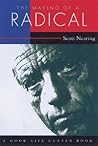
― The Making of a Radical: A Political Autobiography
― The Making of a Radical: A Political Autobiography
“War drags human beings from their tasks of building and improving, and pushes them en masse into the category of destroyers and killers.”
―
―
“In times of economic crisis such as the Great Depression of 1929-38, government dumped millions into the economy to save it from its self-engendered, speculation-mad insolvency. In a word, business adventured, speculated, falsified, and corrupted while the going was good. When the profits were squeezed out of an area business pocketed its gains and moved on to greener pastures, leaving the government to foot the bill.
Muckrakers at the turn of the century described the putrid mess of waste, corruption, pillaging of public property, wholesale destruction, and mass murder that resulted from the greed and mad adventurism of private enterprise on-the-make.
….this era of self-criticism was cut short by the 1914-1918 war.
When the war ended in Novermber, 1918, veterans returning from Europe eagerly joined hands with corporate wealth and slum gangsterism to drive socialists from office and restore the rat race for wealth and power which had occupied the half century between 1865 and 1915…”
― The Making of a Radical: A Political Autobiography
Muckrakers at the turn of the century described the putrid mess of waste, corruption, pillaging of public property, wholesale destruction, and mass murder that resulted from the greed and mad adventurism of private enterprise on-the-make.
….this era of self-criticism was cut short by the 1914-1918 war.
When the war ended in Novermber, 1918, veterans returning from Europe eagerly joined hands with corporate wealth and slum gangsterism to drive socialists from office and restore the rat race for wealth and power which had occupied the half century between 1865 and 1915…”
― The Making of a Radical: A Political Autobiography
“Campaigners for God, Country and the American Way of Life did not stop when they had crushed radical trade unions and jailed socialist, syndicalist and communist spokespeople. They also bought out and took over the communication apparatus: the press, the schools and colleges, the libraries, the churches, civic organizations, the movies, radio and television. The professions, notably education were purged of subversive teachers, textbooks and ideas. The same men who operated mines, factories and department stores became owners, directors and trustees of the entire communication apparatus. Communication, like merchandising and farming became parts of the big business octopus that was reaching its tentacles into every profit-yielding corner of American life.
….Papers that spoke for the Oligarchs and their interests got the advertising. Others died of financial malnutrition….
….Book publishers and magazine editors were members of the American Oligarchy. They were not top-flight members; they held their jobs so long as they built readership, got advertising and showed profits on the investment…”
― The Making of a Radical: A Political Autobiography
….Papers that spoke for the Oligarchs and their interests got the advertising. Others died of financial malnutrition….
….Book publishers and magazine editors were members of the American Oligarchy. They were not top-flight members; they held their jobs so long as they built readership, got advertising and showed profits on the investment…”
― The Making of a Radical: A Political Autobiography
“…above all I had awakened to the quite obvious fact that the masters and shapers of the world and the possessors of the world’s riches were cleverly scattering crumbs of wealth and power among the masses. They gave just enough crumbs to divert, deceive and corrupt each generation to secure its adherence, and to keep it in line, serving the interests of masters and corrupters. This indeed was the essence of the social problem – the success of the Oligarchy in brainwashing the populace to the point where they believed that what is best for the Oligarchy is best for them. So long as the brainwashing worked the masses remained in line and the Oligarchy could follow its program of making the rich richer and the powerful, stronger. Whither mankind?”
― The Making of a Radical: A Political Autobiography
― The Making of a Radical: A Political Autobiography
“In order that children may have a proper respect for the rights of others the school should teach ethics by means of simple stories about people. Teachers should explain how men live in groups, and how, if group life is to be tolerable, men must respect each other’s rights.”
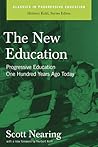
― The New Education: A Review of Progressive Educational Movements of the Day [1915]
― The New Education: A Review of Progressive Educational Movements of the Day [1915]
“Of course,” you exclaim, “we knew that before.” Did you? Then why was my friend forced to choose between the wreck of his daughter’s health and the disarrangement of a bit of school machinery? Why is Dr. Chancellor able to describe a situation existing “generally and characteristically,” in which the welfare of children is bartered away for high promotion averages? The truth is that society still tolerates, and often accepts, the belief that the purpose of education is the formation of a school system. We have yet to learn that, to use Herbert Spencer’s phrase, the object of education is the preparation of children for complete living. Education”
― The New Education: A Review of Progressive Educational Movements of the Day [1915]
― The New Education: A Review of Progressive Educational Movements of the Day [1915]
“There is not, and never will be, an average child; hence, a school system planned to meet the needs of the average child fits the needs of no child at all.”
― The New Education: A Review of Progressive Educational Movements of the Day [1915]
― The New Education: A Review of Progressive Educational Movements of the Day [1915]
“For at least six thousand years one civilization after another has sought to achieve centralization and universality. In every instance of which history provides a legible record, centralized, universalized institutions and practices have fragmented into diversity and stubborn localism.”
― Civilization and Beyond Learning from History
― Civilization and Beyond Learning from History
“Elizabeth Gurley Flynn, then a young, enthusiastic, fiery union organizer announced that she would speak in Paterson. Chief of Police Bimba stated publicly that she would not. “But I have a right under the Constitution to speak,” Elizabeth protested. “You may have the right,” the police chief rejoined, “but we have the power, and we will prevent you.” Elizabeth did not speak. That has been my situation for the past half century. I have had the ‘right’ to speak, write, print, publish but my words dropped into the well of oblivion. I have had the ‘right’ to teach, but no university or school in the country would accept me…”
― The Making of a Radical: A Political Autobiography
― The Making of a Radical: A Political Autobiography
“But must sex hygiene be taught in the school?” you will ask. Undoubtedly it must. If it were a choice between sex instruction in the home or in the school, there would be no hesitation about delegating it to the home; but since most homes neglect the discussion of sex matters, leaving the children to gain their knowledge of sex from unreliable sources on the streets, the choice lies between the perversion of sex as it is taught on the streets, and the science of sex as it should be taught in the schools. III”
― The New Education: A Review of Progressive Educational Movements of the Day [1915]
― The New Education: A Review of Progressive Educational Movements of the Day [1915]