Goodreads helps you follow your favorite authors. Be the first to learn about new releases!
Start by following Michael Ignatieff.

Showing 1-30 of 30
“Memory is the only afterlife I have ever believed in. But the forgetting inside us cannot be stopped. We are programmed to betray.”
― Scar Tissue: A Novel
― Scar Tissue: A Novel
“One of the greatest feelings in life is the conviction that you have lived the life you wanted to live-with the rough and the smooth, the good and the bad-but yours, shaped by your own choices, and not someone else's.”
―
―
“...our species is one, and each of the individuals who compose it are entitled to equal moral consideration.”
― Human Rights as Politics and Idolatry
― Human Rights as Politics and Idolatry
“I do not know whether it is an act of faithfulness to her or a betrayal of the dignity she never lost, to say that she had bitten her tongue, to say that there was blood flowing across her mouth and lips which my brother kept wiping away. I do not know whether I have the right to say, though I will do so, that her body was shaken with epileptic tremors and that she took enormous, terrifying breaths that went on and on until you could not believe she had the strength for them. I do not know whether, as we thought at the time, she could feel our hands on her forehead and cheek, or whether she had waited until we were both there to die.
I did not say 'I am here'. I did not say anything. Her mouth was open wide, as in those portraits by Francis Bacon of caged prisoners in their final extremity. I watched and listened to those terrifying, rattling, hoarse breaths, wondering at the strength remaining in her aged body and at the violence it still had to endure. I looked over at my brother as if he might know, as if he might understand whether she had the strength to continue. He was stroking her forehead, whispering soundlessly to her, attempting even at this moment to reach behind the veil and find her.
If you believe that she knew we were there, if you believe--I cannot be sure--that she understood what her sons needed at that instant, her eyes which had been shut and which, by being closed, made her seem completely out of our reach, suddenly opened. Blue-grey eyes, staring up into the ceiling above her sons' heads, upwards, ever upwards, fixed like an exhausted swimmer on the shore. Then her eyes closed and she took the largest, most violent breath of all, and we watched and waited, stood and looked at each other, felt for her pulse and slowly, as seconds turned into minutes, realized that she would never breathe again.
There is only one reason to tell you this, to present the scene. It is to say that what happens can never be anticipated. What happens escapes anything you can ever say about it. What happens cannot be redeemed. It can never be anything other than what it is. We tell stories as if to refuse this truth, as if to say that we make our fate, rather than simply endure it. But in truth we make nothing. We live, and we cannot shape life. It is much too great for us, too great for any words. A writer must refuse to believe this, must believe there is nothing that cannot somehow be said. Yet there at last in her presence, in the unending unfolding of that silence, which still goes on, which I still expect to be broken by another drawing in of breath, I knew that all my words could only be in vain, and that all that I had feared and all that I had anticipated could only be lived--without their help or hers.”
― Scar Tissue: A Novel
I did not say 'I am here'. I did not say anything. Her mouth was open wide, as in those portraits by Francis Bacon of caged prisoners in their final extremity. I watched and listened to those terrifying, rattling, hoarse breaths, wondering at the strength remaining in her aged body and at the violence it still had to endure. I looked over at my brother as if he might know, as if he might understand whether she had the strength to continue. He was stroking her forehead, whispering soundlessly to her, attempting even at this moment to reach behind the veil and find her.
If you believe that she knew we were there, if you believe--I cannot be sure--that she understood what her sons needed at that instant, her eyes which had been shut and which, by being closed, made her seem completely out of our reach, suddenly opened. Blue-grey eyes, staring up into the ceiling above her sons' heads, upwards, ever upwards, fixed like an exhausted swimmer on the shore. Then her eyes closed and she took the largest, most violent breath of all, and we watched and waited, stood and looked at each other, felt for her pulse and slowly, as seconds turned into minutes, realized that she would never breathe again.
There is only one reason to tell you this, to present the scene. It is to say that what happens can never be anticipated. What happens escapes anything you can ever say about it. What happens cannot be redeemed. It can never be anything other than what it is. We tell stories as if to refuse this truth, as if to say that we make our fate, rather than simply endure it. But in truth we make nothing. We live, and we cannot shape life. It is much too great for us, too great for any words. A writer must refuse to believe this, must believe there is nothing that cannot somehow be said. Yet there at last in her presence, in the unending unfolding of that silence, which still goes on, which I still expect to be broken by another drawing in of breath, I knew that all my words could only be in vain, and that all that I had feared and all that I had anticipated could only be lived--without their help or hers.”
― Scar Tissue: A Novel
“It's good to be afraid occasionally. Fear is a great teacher.”
―
―
“I admit I must have been impossible to live with. It was the self-righteousness of the grieving--my idea that I would betray him if I carried on as before, if I went through the motions of living--that must have driven my family apart from me. I still do not understand those instincts that lead you to flee the ones who want to help you, that lead you to take revenge upon them for a sorrow that is not their fault.”
― Scar Tissue: A Novel
― Scar Tissue: A Novel
“She painted because she loved to paint. She never exhibited. She had no career, no ambitions for her work except that it be good, and she didn't care what we thought of it.”
― Scar Tissue: A Novel
― Scar Tissue: A Novel
“Family traditions are more than arguments with the dead, more than collections of family letters you try to decipher. A tradition is also a channel of memory through which fierce and unrequited longings surge, longings that define and shape a whole life. ”
― True Patriot Love: Four Generations in Search of Canada
― True Patriot Love: Four Generations in Search of Canada
“Because we remain a land of hope and opportunity, and new Canadians see in our unfinished destiny an image of their own unfinished destines.”
― True Patriot Love: Four Generations in Search of Canada
― True Patriot Love: Four Generations in Search of Canada
“To imagine Canada as a citizen requires that you enter into he mind of someone who does not believe what you believe or share what matters to you. ”
― True Patriot Love: Four Generations in Search of Canada
― True Patriot Love: Four Generations in Search of Canada
“Once you begin throwing your life away, you have to go through it until the compulsion to destroy has run its course.”
―
―
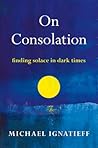
“Hope is definitely not the same thing as optimism. It is not the conviction that something will turn out well, but the certainty that something makes sense, regardless of how it turns out.”
― On Consolation: Finding Solace in Dark Times
― On Consolation: Finding Solace in Dark Times
“There is a subtle yet profound difference between giving up and letting go' Just let go. Look at me, Moe seems to say. I can't speak, I can't move, but by my soul I know what this life is for.”
― Scar Tissue: A Novel
― Scar Tissue: A Novel
“The [articles of the Genva Convention] adopted by The International Committee drew upon...the codes of a warrior's honour...these codes vary from culture to culture and their common features are the oldest artifacts of human morality: from Christian chivalry... to the Japanese Bushido or way of the warrior... The codes acknowledged the moral paradox of battle: that those who fight ...bravely are bound [by]...mutual respect...”
―
―
“It is fear that turns minor difference into major, that makes the gulf between ethnicities into a distinction between species, between human and non-human.”
―
―
“Fascism is not just any politics you don't like. Fascism is the explicit use of political violence, hitting people, killing people, knocking people over, invading an assembly with armed thugs.”
―
―
“I had a feeling of shame about my grief, as if I was making false amends for the bitterness I felt towards him when he was alive.”
― Scar Tissue: A Novel
― Scar Tissue: A Novel
“It is not the development of material need which sets the modern vocabulary of aspiration apart from anything which has gone before, but rather the transformation of our spiritual needs. It is our spirits, not our clothes and houses and cars, that set us so radically apart from our own past and form much of the rest of the world. Imagine what we must be like to the primitive peoples who receive our attentions as anthropologists. We come upon them armed with our mastery of nature, and yet they can disarm us with the simplest metaphysical inquiry: what happen when people die? where do they go? what are the duties of the living to the dead? Their cultures are as rich in answers to these questions as our culture is rich in answers to the technical and scientific problems which baffle them.
It has always been a truism of the Western bad conscience that we have purchased our mastery of nature at the price of our spirits. The conservative and romantic critique of Western progress has always used the example of the savage - rich in cosmology, poor in goods - to argue for an inverse historical relationship between the development of material and spiritual needs. Certainly this view could draw upon the dark side of the Christian theology of need. While secular optimists have trust in the permanence of spiritual need, Augustinian Christians have fixed their gaze on the nightmare of the happy slave: the being so absorbed by the material that all spiritual needs have perished.
Yet human needing is historical, and who can predict what forms the needs of the spirit may take? There is a loss of nerve in the premature announcements of the death of the spirit, the easy condemnations of materialist aspiration in capitalist society. Western societies have continued the search for spiritual consolation in the only manner consistent with the freedom of the seeking subject: by making every person the judge of his own spiritual satisfaction. We have all been left to choose what we need, and we have pushed the search for private meaning to the limits of what a public language can contain if it is to continue to be a means of communication. We have Augustine's first freedom, and because we have it, we cannot have his second. We can no longer offer each other the possibility of metaphysical belonging: a shared place, sustained by faith, in a divine universe. All our belonging now is social.”
― The Needs of Strangers
It has always been a truism of the Western bad conscience that we have purchased our mastery of nature at the price of our spirits. The conservative and romantic critique of Western progress has always used the example of the savage - rich in cosmology, poor in goods - to argue for an inverse historical relationship between the development of material and spiritual needs. Certainly this view could draw upon the dark side of the Christian theology of need. While secular optimists have trust in the permanence of spiritual need, Augustinian Christians have fixed their gaze on the nightmare of the happy slave: the being so absorbed by the material that all spiritual needs have perished.
Yet human needing is historical, and who can predict what forms the needs of the spirit may take? There is a loss of nerve in the premature announcements of the death of the spirit, the easy condemnations of materialist aspiration in capitalist society. Western societies have continued the search for spiritual consolation in the only manner consistent with the freedom of the seeking subject: by making every person the judge of his own spiritual satisfaction. We have all been left to choose what we need, and we have pushed the search for private meaning to the limits of what a public language can contain if it is to continue to be a means of communication. We have Augustine's first freedom, and because we have it, we cannot have his second. We can no longer offer each other the possibility of metaphysical belonging: a shared place, sustained by faith, in a divine universe. All our belonging now is social.”
― The Needs of Strangers
“Nationalism is a distorting mirror in which believers see their simple ethnic, religious, or territorial attributes transformed into glorious attributes and qualities.”
― The Warrior's Honor: Ethnic War and the Modern Conscience
― The Warrior's Honor: Ethnic War and the Modern Conscience
“Believers in liberal freedom should worry not whether their regime can prevail in competition with authoritarian ones, but whether they can prevail against their own forms of institutional entropy: elite capture, corruption, and inequality.”
― The Ordinary Virtues: Moral Order in a Divided World
― The Ordinary Virtues: Moral Order in a Divided World
“(...) en política las explicaciones siempre llegan demasiado tarde. Nunca debes dar explicaciones ni quejarte. Como mucho, si eres afortunado, lograrás vengarte.”
―
―
“«erradicar la aristocracia de nuestras opulentas empresas, que se atreven a echar un pulso al Gobierno y a desafiar las leyes de nuestro país»”
― Fuego y cenizas. Éxito y fracaso en política
― Fuego y cenizas. Éxito y fracaso en política
“By extrapolating a little from Freud, it becomes possible to think of nationalism as a kind of narcissism. A nationalist takes the neutral facts about a people - their language, habitat, culture, tradition and history- and turns these facts into a narrative, whose purpose is to illuminate the self-consciousness of a group, to enable them to think of themselves as a nation with a claim to self-determination. A nationalist, in other words, takes "minor differences"- indifferent in themselves- and transforms them into major differences. For this purpose, traditions are invented, a glorious past is gilded and refurbished for public consumption, and a people who might not have thought of themselves as a people at all suddenly begin to dream of themselves as a nation.”
― The Warrior's Honor: Ethnic War and the Modern Conscience
― The Warrior's Honor: Ethnic War and the Modern Conscience
“An ethnic minority can live in peace with an ethnic majority as long as the majority does not use its preponderance to turn the institutions of the state into an instrument of ethnic favoritism or ethnic justice.”
― The Warrior's Honor: Ethnic War and the Modern Conscience
― The Warrior's Honor: Ethnic War and the Modern Conscience
“No human difference matters much until it becomes a privilege, until it becomes the basis for oppression. Power is the vector that turns minor into major.”
― The Warrior's Honor: Ethnic War and the Modern Conscience
― The Warrior's Honor: Ethnic War and the Modern Conscience
“Todos somos escritores de códigos morales. Lo que decimos y hacemos en nuestras interacciones cotidianas crea expectativas y marcos de referencia para los demás, que a su vez cambian la forma en que se comportan.”
― Las virtudes cotidianas
― Las virtudes cotidianas
“The problem with nationalism is not the desire for self-determination itself, but the particular epistemological illusion that you can be at home, you can be understood, only among people like yourself. What is wrong with nationalism is not the desire to be a master in your own house, but the conviction that only people like yourself deserve to be in the house.”
― The Warrior's Honor: Ethnic War and the Modern Conscience
― The Warrior's Honor: Ethnic War and the Modern Conscience
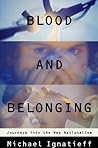
“To belong is to understand the tacit codes of the people you live with; it is to know that you will be understood without having to explain yourself.”
― Blood and Belonging: Journeys into the New Nationalism
― Blood and Belonging: Journeys into the New Nationalism
“Intolerance is a form of divided consciousness in which abstract, conceptual, ideological hatred vanquishes concrete, real and individual moments of identification.”
― The Warrior's Honor: Ethnic War and the Modern Conscience
― The Warrior's Honor: Ethnic War and the Modern Conscience
“Whatever we think of Job and his God, we must begin any history of the idea of consolation here, for the story describes the human situation so clearly. Job's story tells us we are fated to endure sorrow and suffering that have no apparent meaning, moments when existence is a torment, when we know what it is to be truly inconsolable. But like Job, we must learn to endure, we must hold on to the truth of what we have lived and refuse false consolations, like believing that we deserve to suffer. We should refuse the burden of guilt and struggle as best we can to understand the meaning of our lives. We are not condemned to eternal silence, to meaninglessness. There is an answer to be found in the whirlwind, in human beings' unendingly troubled encounter with our fate, but to find the answer that is true for us we will have to be as courageous as the man in rags who dared raise his fist to the sky.”
― On Consolation: Finding Solace in Dark Times
― On Consolation: Finding Solace in Dark Times