Goodreads helps you follow your favorite authors. Be the first to learn about new releases!
Start by following Kate Burridge.

Showing 1-11 of 11
“Shakespeare often violated rules of Latin word formation and this may well have got up the noses of the purists of the time. However, some expressions would simply have outlived their usefulness. There is not much call these days for a questrist ‘one who goes in quest of another’.”
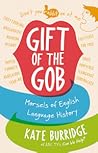
― Gift of the Gob: Morsels of English Language History
― Gift of the Gob: Morsels of English Language History
“These days we are so immersed in the printed word, and so used to seeing white spaces between words, that this sort of boundary shifting seems surprising. Yet, to my mind, more astonishing is just how well little children figure out where these imaginary white spaces occur in the streams of sound that surround them. Speech is a biological miracle.”
― Gift of the Gob: Morsels of English Language History
― Gift of the Gob: Morsels of English Language History
“Sniglet: a word that should be in the dictionary, but isn’t.”
― Gift of the Gob: Morsels of English Language History
― Gift of the Gob: Morsels of English Language History
“The English word nickname comes from ekename. It meant literally ‘also-name’ or ‘additional name’. Here the ‘n’ from the preceding ‘an’ has stuck onto the noun that follows. In speech, there’s no difference between an ekename and a nekename.”
― Gift of the Gob: Morsels of English Language History
― Gift of the Gob: Morsels of English Language History
“My all-time favourite example of an invalid backformation comes from Shakespeare. The example is the verb to grovel, which Shakespeare ‘backformed’ from the word groveling. He (and probably many others) mistook the end of this word to be the -ing ending of something like swimming. If the verb swim gives us swimming, then there must be a verb grovel that gives us groveling. But no; groveling was an adverb derived from the verb to groof, a gorgeous word meaning ‘to lie on the ground face downwards’.”
― Gift of the Gob: Morsels of English Language History
― Gift of the Gob: Morsels of English Language History
“Student bloopers from exams and essays are a great source of these, so common in fact that they have their own name. I first heard of them as pullet surprises. According to one student, Eugene O’Neill apparently won, not a Pulitzer Prize, but ‘a pullet surprise’.”
― Gift of the Gob: Morsels of English Language History
― Gift of the Gob: Morsels of English Language History
“When someone says, ‘That’s just semantics’, it is usually when they are trying to belittle another person’s argument. It means something like ‘That’s just nit-picking’ — the suggestion being ‘Let’s move on and deal with something important’. Suddenly, semantics starts to look like something very trivial — which the study of meaning is not at all!”
― Gift of the Gob: Morsels of English Language History
― Gift of the Gob: Morsels of English Language History
“The word mondegreen is itself a mondegreen, in this case from a 17th-century ballad ‘The Bonnie Earl O’Murray’. The lyrics should go ‘They have slain the Earl of Murray and laid him on the green’, but this has been misheard as ‘They have slain the Earl of Murray and Lady Mondegreen’.”
― Gift of the Gob: Morsels of English Language History
― Gift of the Gob: Morsels of English Language History
“Lead on Oh Kinky Turtle’ is a gorgeous mishearing of the line ‘Lead on, Oh King Eternal’.”
― Gift of the Gob: Morsels of English Language History
― Gift of the Gob: Morsels of English Language History
“The English language is like a fleet of juggernaut trucks that goes on regardless. No form of linguistic engineering and no amount of linguistic legislation will prevent the myriads of change that lie ahead.”
― Gift of the Gob: Morsels of English Language History
― Gift of the Gob: Morsels of English Language History
“In a recent bout of assignment marking, I came across the gem ‘first person singular obsessive pronoun’.”
― Gift of the Gob: Morsels of English Language History
― Gift of the Gob: Morsels of English Language History