Goodreads helps you follow your favorite authors. Be the first to learn about new releases!
Start by following Azadeh Moaveni.

Showing 1-30 of 77
“As a prominent conservative told me that year, "We need to go out into the wilderness for a long time, and figure out how we can one day return.”
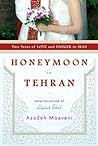
― Honeymoon in Tehran: Two Years of Love and Danger in Iran
― Honeymoon in Tehran: Two Years of Love and Danger in Iran
“This is not to say that torture mechanically reshapes all individuals to make them capable of greater cruelty. But scholars of psychopathology, like the great Simon Baron-Cohen, have found strong links that show enduring trauma can cause a person to lose empathy. To lose empathy is to view other human beings as objects, which is necessary to the infliction of cruelty and violence upon them. Baron-Cohen’s research shows that torturing a person, rendering him an object, a vessel out of which intelligence can be extracted, radically dulls that person’s ability to focus on another person’s interests at the same time as his own.”
― Guest House for Young Widows: Among the Women of ISIS
― Guest House for Young Widows: Among the Women of ISIS
“We had slipped into each others lives seamlessly, as though we had known each other for years.”
― Honeymoon in Tehran: Two Years of Love and Danger in Iran
― Honeymoon in Tehran: Two Years of Love and Danger in Iran
“You're perfect for each other, she had insisted. "both of you act like you're already retired, always stuck at home reading books.”
― Honeymoon in Tehran: Two Years of Love and Danger in Iran
― Honeymoon in Tehran: Two Years of Love and Danger in Iran
“If they wanted to know why she had tried to go, why were they asking about the “Islamic thoughts” in her head? Didn’t they realize a naïve, broken-bird of a girl might follow a beloved brother to the very ends of the earth? Didn’t they realize abused girls were easy prey for charismatic men with dubious intentions?”
― Guest House for Young Widows: Among the Women of ISIS
― Guest House for Young Widows: Among the Women of ISIS
“In this age, women like Khaled and Bouhired would certainly be called terrorists. But in the 1960s and 1970s, their popular appeal reflected a worldview that was more understanding of armed struggle. Such opposition, in those years, was seen as an expression of legitimate political aspirations—a symptom of asymmetrical conflict rather than evil ideology.”
― Guest House for Young Widows: Among the Women of ISIS
― Guest House for Young Widows: Among the Women of ISIS
“If the widows were widows twice or even thrice over, as was the case with many women, the problem of envy took on monstrous dimensions. To be a widow in the Islamic State was to be condemned to a rough, deprived existence in a guest house for widows.”
― Guest House for Young Widows: Among the Women of ISIS
― Guest House for Young Widows: Among the Women of ISIS
“The argument in response often went like this: Such brutality was certainly not desirable, but the West had left the militants no choice, there was no other way left to resist; nonviolent protest would not sway the dictator Assad, whose military was torturing and killing scores in detention centers, nor would it sway the United States, which had invaded and occupied Iraq, killed countless civilians, and sustained and protected Arab tyrants.”
― Guest House for Young Widows: Among the Women of ISIS
― Guest House for Young Widows: Among the Women of ISIS
“Leaving to do jihad in Syria became a dignified exit from a life that offered nothing else, Emad said, which made vulnerable young men easy prey for militant recruiters.”
― Guest House for Young Widows: Among the Women of ISIS
― Guest House for Young Widows: Among the Women of ISIS
“To the public, they were either naive jihadi brides or calculating monsters. But most of the women in this book were neither passive nor predatory, and trying to pin down their degree of agency seemed to be only one line of inquiry, and certainly not the most revealing. Some collaborated or acted knowingly; some were so young that, despite the outward appearance of deliberate choice, they were not mature enough to exercise anything approaching adult judgement.”
― Guest House for Young Widows: Among the Women of ISIS
― Guest House for Young Widows: Among the Women of ISIS
“The UK Home Office argued this was “in the public good” and that citizenship was “a privilege, not a right,” even as it rendered these individuals stateless, leaving them without the recourse or oversight of any state’s legal process or rules. As a security measure intended simply to block the return of European citizens who had fought in Syria, it worked. But it was an approach bound to fuel more conflict and more resentment.”
― Guest House for Young Widows: Among the Women of ISIS
― Guest House for Young Widows: Among the Women of ISIS
“But there were hundreds of thousands of families who were already barely surviving, or who were making it within the strictest of margins, who felt they had little choice but to stay. Taken together there would be 6.2 million Syrians displaced within their own country—the largest displaced population anywhere in the world.”
― Guest House for Young Widows: Among the Women of ISIS
― Guest House for Young Widows: Among the Women of ISIS
“But in the words of Olfa, who struggled with this question every day, “What is the difference between an extremist and a very upset Muslim?”
― Guest House for Young Widows: Among the Women of ISIS
― Guest House for Young Widows: Among the Women of ISIS
“The point of freedom was that everyone could dress however they wanted, was it not? Was it genuinely such a point of offense to women who dressed more liberally that she, Nour, chose not to?”
― Guest House for Young Widows: Among the Women of ISIS
― Guest House for Young Widows: Among the Women of ISIS
“As ISIS grew more savage, many Salafi clerics condemned its acts of violence. Nour seemed perplexed by not having any theological evidence for what she felt—politically, emotionally, morally—to be right.”
― Guest House for Young Widows: Among the Women of ISIS
― Guest House for Young Widows: Among the Women of ISIS
“Terrorism, as the word is presently used, is a condition of ideological wickedness, stripped of any rational or legitimate context or motivation, and associated culturally with Islam and racially with Muslims.”
― Guest House for Young Widows: Among the Women of ISIS
― Guest House for Young Widows: Among the Women of ISIS
“Jamal, the Communist in Kram, said around five hundred men from the district had gone, and that the recruiters received a generous fee, about $3,000, for each young man they sent to a battlefield. Female recruits garnered slightly less.”
― Guest House for Young Widows: Among the Women of ISIS
― Guest House for Young Widows: Among the Women of ISIS
“These experts sought to promote the idea, which culminated after 9/11 in the War on Terror, that the West was up against enemies of such unfathomable evil that engaging with their causes or motivations was pointless, and that virtually anything the national security state did to combat them, including a dramatic rise in civilian deaths, was justified. To the millions of people whom it impacted - Arabs, Iranians, Afghans, Pakistanis, and Africans of secular background or various faiths - the terrorism paradigm created a painful double existence. Those who believed that, in many instances, violence committed in their countries of origin stemmed from legitimate grievances - that the violence was not legitimate, but the underlying pathologies and grievances were - felt themselves unable to acknowledge this in public life.”
― Guest House for Young Widows: Among the Women of ISIS
― Guest House for Young Widows: Among the Women of ISIS
“Add to this poverty and broken families, absent fathers, unemployed fathers, fathers who couldn’t provide for and protect their families and marinated in that humiliation—realities that cut across all these girls’ lives. Immigration often meant long years of separation that caused marriages to fail, as Sharmeena’s parents’ had; it meant marriages not surviving the strains of arrival, through which women often coped better and men languished in shame-faced, low-wage bitterness; it meant having to dedicate vast time and energy to basic things like securing the rent, navigating the health service, caring for ill relatives, all within a bureaucratic system that was foreign and confusing.”
― Guest House for Young Widows: Among the Women of ISIS
― Guest House for Young Widows: Among the Women of ISIS
“European converts to Islam were more vulnerable to extremist groups because many lacked this lifelong socialization. Many came from deprived social backgrounds and were primed to be drawn to aggressive, militant strains of anything, from local gangs to local extremist ideologues. They were quick to subsume their personal grudges against family and society into transnational political grudges against the West.”
― Guest House for Young Widows: Among the Women of ISIS
― Guest House for Young Widows: Among the Women of ISIS
“Had they stayed in Pakistan and moved to cities, being exposed to education and work in a language they already spoke, the women in these families might have arguably secured greater independence and decision making than they did in Britain. Two generations after arrival, British Muslim women often remained less educated and less likely to work than women from British Indian families of Hindu or Sikh background, who had emigrated from urban centers and were already better educated.”
― Guest House for Young Widows: Among the Women of ISIS
― Guest House for Young Widows: Among the Women of ISIS
“She didn’t feel even a beat of resentment when pulling on the hijab in the mornings. Best of all, she no longer felt herself superior to Muslim women who didn’t wear it. Now she viewed it as her individual choice, and felt no disdain for girls who wore turban-style hijab or bandanna-style hijab or hijab over lacquered faces and blatantly sexy outfits. No one was perfect. Everyone sinned differently. For herself, she felt blessed from the very first day she put it back on. The massive drop in daily comments, come-ons, harassment, eyes perving their way up and down her body:”
― Guest House for Young Widows: Among the Women of ISIS
― Guest House for Young Widows: Among the Women of ISIS
“Wearing the hijab has given me freedom from constant attention to my physical self. Because my appearance is not subject to public scrutiny, my beauty, or perhaps my lack of it, has been removed from the realm of what can legitimately be discussed.”
― Guest House for Young Widows: Among the Women of ISIS
― Guest House for Young Widows: Among the Women of ISIS
“Out of this historic interlude of hope and chaos, into the resulting vacuum of instability, the Islamic State emerged. It was sophisticated, organized, and determined to exploit all the grievances, cracks, and disorder the lost revolutions so generously offered. And it had perceptively noted women as a rising political force, even as it proposed a radically patriarchal form of family organization and politics that stripped women of their autonomy.”
― Guest House for Young Widows: Among the Women of ISIS
― Guest House for Young Widows: Among the Women of ISIS
“Conventional wisdom in the West held that nominally secular Arab generals and royal autocrats were “better” for women than political Islamists, but under the rule of such leaders, women faced multiple binds: they had to contend with the patriarchy of their culture, which frowned on women being educated and working; they had to struggle with the structural barriers to accessing work and education in societies like Tunisia that rejected religious women accessing public life—and at the very same time could not organize to challenge these norms through politics, because secular dictators didn’t allow any politics at all.”
― Guest House for Young Widows: Among the Women of ISIS
― Guest House for Young Widows: Among the Women of ISIS
“There is a necessary debate to be had about gender equality among Muslims. Britain’s largely South Asian Muslim community is highly conservative in a way that often makes life unbearable for some of its young women, and to a different and less immediate extent, for young men. There are suffocating proscriptions around marriage, problems with forced marriage, domestic violence, stark double standards in the treatment of daughters and sons, and taboos around confronting and reporting sexual abuse. (Many of these behaviors are imported from South Asia and, interestingly, rejecting them has encouraged young people to seek religious knowledge and identity from urban, Mecca-trained imams.)”
― Guest House for Young Widows: Among the Women of ISIS
― Guest House for Young Widows: Among the Women of ISIS
“It was a fake, mash-up concept of layered misrepresentations: one, that women were traveling to Syria as comfort women to fighters; two, that they justified this behavior theologically.”
― Guest House for Young Widows: Among the Women of ISIS
― Guest House for Young Widows: Among the Women of ISIS
“How little they knew what awaited them. They would soon find out that the caliphate ruled by Abu Bakr al-Baghdadi troubled itself little with the Prophet’s law. That his men used the ancient punishments meant to instill an otherworldly fear—the chopping off of hands, of heads—as bloody, nihilistic gang rituals. The girls seemed to imagine they were en route to some Romeo and Juliet scenario in the desert. How could they not know?”
― Guest House for Young Widows: Among the Women of ISIS
― Guest House for Young Widows: Among the Women of ISIS
“In 2015, the government redefined its thinking around counterterrorism, declaring that radicalism wasn’t fueled by economic marginalization or political grievances, but by the ideology of conservative Islam. Prime Minister David Cameron set out the new approach in a speech that year: Britons who rejected “liberal values” were “providing succor” to violent extremists.”
― Guest House for Young Widows: Among the Women of ISIS
― Guest House for Young Widows: Among the Women of ISIS
“In Syria, being poor narrowed the world, especially for women. Dua never could have hoped to attend university, couldn’t even have explained, probably, what a marketing course would entail or set her up for.”
― Guest House for Young Widows: Among the Women of ISIS
― Guest House for Young Widows: Among the Women of ISIS