Goodreads helps you follow your favorite authors. Be the first to learn about new releases!
Start by following Adam S. Miller.

Showing 1-30 of 66
“Faith is more like being faithful to your husband or wife than it is like believing in magic. Fidelity is key. You may fall in love with someone because of how well they complement your story, but you’ll prove yourself faithful to them only when you care more for the flawed, difficult, and unplotted life you end up sharing with them. Faith isn’t the opposite of knowledge. Rather, like love, faith perfects knowledge by practicing fidelity to it.”
―
―
“In itself, doubt is neither good nor bad. Its value depends on what you do with it.”
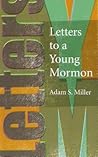
― Letters to a Young Mormon
― Letters to a Young Mormon
“Grace doesn't grease the wheels of the law. Grace isn't God's way of jury rigging a broken law. It's the other way around. The law is just one small cog in a world animated entirely--from top to bottom, from beginning to end--by grace.”
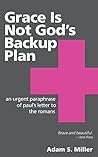
― Grace Is Not God's Backup Plan: An Urgent Paraphrase of Paul's Letter to the Romans
― Grace Is Not God's Backup Plan: An Urgent Paraphrase of Paul's Letter to the Romans
“At some point, God will ask you to sacrifice on his altar not only your stories about your own life but your version of his stories as well. Your softly lit watercolor felt-board version of scripture stories and church history must, like all your stories, be abandoned at his feet, and the messy, vibrant, and inconvenient truths that characterize God's real work with real people will have to take center stage. If they don't, then how will God's work in your hungry messy, and inconvenient life ever do the same?
When God knocks, don't creep to the door and look through the peephole to see if he looks like you thought he would. Rush to the door and throw it open.”
―
When God knocks, don't creep to the door and look through the peephole to see if he looks like you thought he would. Rush to the door and throw it open.”
―
“Work, chained to its outcome, is misery. Do what you can, do it better than you’re able, and let things happen as they may. The action, not its fruit, is your business. The outcome is not your concern. If God is going to show himself to you in the work that you shoulder, he will only do so if you’ve stopped craving an approving audience and, instead, work out your own salvation.”
―
―
“In the temple, I promise to consecrate everything to God. Part of this promise is financial. I promise, for instance, to consecrate all my money. But, in the end, the law of consecration isn’t about money—it’s about time. By working, I convert my time into money. Money is just time made fungible. In the end, the only thing I have to give is my time. If I cling to it, time will ruin me. If I think of my time as my own, then every unchosen obligation will feel like theft. Every call to give my time will feel like I’m being robbed of what ought to have been mine. I’ll roll out of bed in the morning expecting to do as I please instead of looking to serve. Occasions for care will look like failures to succeed. Quiet moments will look like boredom. Ordinary work will look like a waste of time. The only way to be saved from this ruin is to return this time to Christ. The only way to care for time is to give it away.”
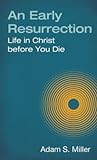
― An Early Resurrection: Life in Christ before You Die
― An Early Resurrection: Life in Christ before You Die
“I won't deny that it is possible for our restless hearts to find rest in God, but I do want to deny that this rest results from the satisfaction of our desires. God does not save us from our hungers by satisfying them. God saves us from the tyranny of our desires by saving us from the impossible work of satisfying them.
[from the essay "The God Who Weeps: Notes, Amens, and Disagreements)”
― Future Mormon: Essays in Mormon Theology
[from the essay "The God Who Weeps: Notes, Amens, and Disagreements)”
― Future Mormon: Essays in Mormon Theology
“In sin, we come unplugged. When we refuse the givenness of life and withdraw from the present moment, we’re left to wander the world undead. Zombie-like, we wander from one moment to the next with no other goal than to get somewhere else, be someone else, see something else—anywhere, anyone, anything other than what is given here and now. We’re busy. We’ve got goals and projects. We’ve got plans. We’ve got fantasies. We’ve got daydreams. We’ve got regrets and memories. We’ve got opinions. We’ve got distractions. We’ve got games and songs and movies and a thousand TV shows. We’ve got anything and everything other than a first-hand awareness of our own lived experience of the present moment.”
― Rube Goldberg Machines: Essays in Mormon Theology
― Rube Goldberg Machines: Essays in Mormon Theology
“In the body of Christ our weakness is an occasion for care rather than judgment. The body of Christ isn’t strong because it has no weaknesses. The body of Christ is strong because it’s the place where weakness is shared. And our weakness, our need for each other, is the very thing that seals this sharing. When I live in Christ, things get turned upside down. The end arrives at the beginning. The last becomes first. The greatest become the least, and the least become types of Christ. In Christ, we’re all bound together. If “one member suffer, all the members suffer with it” (1 Corinthians 12:26).”
― An Early Resurrection
― An Early Resurrection
“The essence of care is to pay attention. Rather than being distracted by the past or the future, I pay attention in the present. I take care. I attend. I’m careful. My eyes are focused. My hands are deft and gentle. I can tie my shoes without rushing—over, under, loop, pull. I can wash a dish without fidgeting. I can stop and listen without daydreaming. I can sit in traffic without anger. Whatever I’m doing, I can do it with care.”
― An Early Resurrection: Life in Christ before You Die
― An Early Resurrection: Life in Christ before You Die
“According to Isaiah it is necessary, at least for a time, that the messiah go unrecognized. It is crucial that, at least for a while, he remain hidden, that he not shine forth, that he have “no form, nor comeliness” and that he possess “no beauty that we should desire him” (Isa. 53:2). The Messiah’s coming must be delayed. This is necessary, at least in part, because the very act of recognition has messianic force. The shock of recognition changes us. The advent of the messianic depends on our seeing what was previously unseen. It should be no surprise, then, if the messianic is initially obscure, hidden under a rock, given in a grove, or stowed in a stable.”
― Rube Goldberg Machines: Essays in Mormon Theology
― Rube Goldberg Machines: Essays in Mormon Theology
“Grace isn’t God’s improvised response to sin. Sin is our ongoing refusal of God’s already given grace.”
― Grace Is Not God's Backup Plan: An Urgent Paraphrase of Paul's Letter to the Romans
― Grace Is Not God's Backup Plan: An Urgent Paraphrase of Paul's Letter to the Romans
“As F. Enzio Busche beautifully describes it: [If we are] enlightened by the Spirit of truth, we will then be able to pray for the increased ability to endure truth and not to be made angry by it (see 2 Ne. 28:28). In the depth of such a prayer, we may finally be led to that lonesome place where we suddenly see ourselves naked in all soberness. Gone are all the little lies of self-defense. We see ourselves in our vanities and false hopes for carnal security. We are shocked to see our many deficiencies, our lack of gratitude for the smallest things. We are now at that sacred place that seemingly only a few have courage to enter, because this is that horrible place of unquenchable pain in fire and burning. . . . This is the place where suddenly the atonement of Christ is understood and embraced. . . . With this fulfillment of love in our hearts, we will never be happy anymore just by being ourselves or living our own lives. We will not be satisfied until we have surrendered our lives into the arms of the loving Christ, and until He has become the doer of all our deeds and He has become the speaker of all our words.3”
― Rube Goldberg Machines: Essays in Mormon Theology
― Rube Goldberg Machines: Essays in Mormon Theology
“Words can be powerful, but talkative fools make things worse. They don’t know how to shut up. They’re incapable of silence. They think that if they keep talking, they’ll eventually say something true. But even if they hit the truth, they won’t have the sense to know it. They can’t tell where they’re going or where they’ve been. They can’t even tell where they are! Fools drift aimlessly. A nation is in big trouble if its rulers are demagogues and its lawmakers are drunks. Laziness in high places leads to broken windows, leaky roofs, and weak walls. Given”
― Nothing New Under the Sun: A Blunt Paraphrase of Ecclesiastes
― Nothing New Under the Sun: A Blunt Paraphrase of Ecclesiastes
“Wisdom depends on a measure of good fortune. Broken by poverty and illness, even the wise become fools. But riches don’t guarantee wisdom either. Wisdom is just as easily destroyed by greed and bribes. As a result, no one is safe from idiocy until they’re dead. This is another reason why ends are better than beginnings. Patience”
― Nothing New Under the Sun: A Blunt Paraphrase of Ecclesiastes
― Nothing New Under the Sun: A Blunt Paraphrase of Ecclesiastes
“Let God grow in you. Hear his voice in your need. Let Jesus resurrect you right now, in this life, even before you’re done dying. Let him put your spirit back in your hungry body.”
―
―
“In this way, the law is like water. There is no life without water. I have to have water. I have to learn how to keep the law. But without Christ, the law works against itself. It works against life,. It freezes solid. Without Christ, the law turns to ice and traps me in sin. Frozen, I die. Only as a type of Christ, only as a servant of Christ's love, does the law thaw. Christ is not only the light and life of the world. He is the life and light of the law.”
― An Early Resurrection: Life in Christ before You Die
― An Early Resurrection: Life in Christ before You Die
“The gospel is a promise and God’s promises aren’t bound by time. Promises defy time. They bring the future into the present. Promises are a certain way of looking forward. When I promised myself to my wife, I didn’t just bind myself to her in the present. I gave her my future. Without waiting for that future to arrive, without waiting to see what sorrows or joys would come, I promised. Dressed in white, we knelt at an altar in the temple and joined hands. We were terribly young. The mirrors, set face to face, reflected endless futures at which we couldn’t guess. Still, I loved her. I gave her all those futures as a gift. And we kissed. Now, promised to each other and sealed by a holy ordinance, we live as though those futures had already come. Now, in a very real way, our futures are already given as gifts in the present. And, now, we’re empowered by those promises to love each other in the present.”
― An Early Resurrection: Life in Christ before You Die
― An Early Resurrection: Life in Christ before You Die
“What may surprise many is that one of Lincoln’s greatest obstacles in preserving the Union was anti-war sentiment from folks not in the South, but in the North. Many Americans in the North saw no reason why States could not withdraw peacefully, if they wanted, from a political union freely entered into. These persons were called “Copperheads” by abolitionists and all others who supported Lincoln’s war policy. What is not well known is the fact that the four living former presidents of the time (Zachary Taylor, Millard Fillmore, Franklin Pierce, and James Buchanan) all supported the Southern cause and disagreed with Lincoln’s aggressive policies. (John Brechinridge, Vice-President under Buchanan, 1856–1860, became a Confederate General in November of 1861.) They all recognized the Constitutional principle that the federal government does not have the authority to force a State to stay in the Union. Was”
― The North & the South and Secession: An Examination of Cause and Right
― The North & the South and Secession: An Examination of Cause and Right
“Flag icon
It’s tempting to think that my present weakness makes me fundamentally different from Christ. And then, as a result, it’s tempting to think that such weakness must be incompatible with Christ’s divine strength. If this is true, then, to be like Christ, I would have to be untroubled by time and untouched by cares. I would have to avoid suffering rather than caring for it. But this is backwards. Christ’s strength doesn’t simply rescue me from my weakness and vulnerability. As I’ve argued, it seems clear that his strength doesn’t even save him from his own power to be acted upon. Christ is strong enough to be vulnerable. Similarly, my weakness leaves me exposed to Christ, vulnerable to his care, and open to sharing a life with him. This weakness is the ground we share. It’s the ground of life. It’s ground zero for God’s promise. Without this weakness, I wouldn’t need him. I’d be walled up, alone, inside my own perfect strength.”
― An Early Resurrection: Life in Christ before You Die
It’s tempting to think that my present weakness makes me fundamentally different from Christ. And then, as a result, it’s tempting to think that such weakness must be incompatible with Christ’s divine strength. If this is true, then, to be like Christ, I would have to be untroubled by time and untouched by cares. I would have to avoid suffering rather than caring for it. But this is backwards. Christ’s strength doesn’t simply rescue me from my weakness and vulnerability. As I’ve argued, it seems clear that his strength doesn’t even save him from his own power to be acted upon. Christ is strong enough to be vulnerable. Similarly, my weakness leaves me exposed to Christ, vulnerable to his care, and open to sharing a life with him. This weakness is the ground we share. It’s the ground of life. It’s ground zero for God’s promise. Without this weakness, I wouldn’t need him. I’d be walled up, alone, inside my own perfect strength.”
― An Early Resurrection: Life in Christ before You Die
“The only way to save myself from the future’s tyranny is to willingly sacrifice that future on God’s altar. I have to give the future away. I have to let it go. I have to stop trusting in it or hoping for it. I have to hand it over to Christ. I have to consecrate the whole of it. And I have to do so while remaining alive and embedded in time.”
― An Early Resurrection: Life in Christ before You Die
― An Early Resurrection: Life in Christ before You Die
“Also, don’t be that fool who runs around yelling: “The sky is falling, the sky is falling! Once upon a time the world was good! The old days were so much better! The world is about to end!” This is nonsense. There is nothing new under the sun. The world is as it has ever been: full of hungry, selfish, ignorant people who can’t see what’s right in front of them. Wisdom, like a windfall, can be good if you find it. It can help you see things for what they are. It can help protect you from your own foolishness. But wisdom has its limits. Consider”
― Nothing New Under the Sun: A Blunt Paraphrase of Ecclesiastes
― Nothing New Under the Sun: A Blunt Paraphrase of Ecclesiastes
“People just want to feel full. Hunger, though, is eternal. On this score, what advantage do the wise have over fools? What advantage comes from knowing how to get ahead? It’s better to learn how to be content with what’s right in front of your eyes than to perpetually stoke your cravings with plans and fantasies. Nothing’s more futile than daydreams. Wishing things were different can’t change the fact that things happen as they must. Wishing for a different world can’t change the fact that God knew from the start how everything would end. It’s useless to argue with God about your fate. God’s plans are unfathomable. The more time you spend propping up your fantasies with fancy words and careful arguments, the less you’ll actually accomplish. What made you think more words would help? Words can’t fix this! You can barely tie your shoes, why would you think that you—you of all people!—would be the one who finally, actually, understood the world and knew what was best in life? No. Life is short. Wisdom is rare. The future is obscure.”
― Nothing New Under the Sun: A Blunt Paraphrase of Ecclesiastes
― Nothing New Under the Sun: A Blunt Paraphrase of Ecclesiastes
“The gospel: a promise that joy does not depend on what is given but on its givenness.”
― Rube Goldberg Machines: Essays in Mormon Theology
― Rube Goldberg Machines: Essays in Mormon Theology
“I’ve spent a lot of time trying not to be weak. I’ve spent a lot of time trying to put myself beyond the need for care. I’ve worked hard. I’ve exercised. I’ve earned degrees. I’ve written books. I’ve bought new clothes. I’ve driven new cars. These things aren’t bad in themselves. They can be good. They can, in fact, be done with care. They can be undertaken as acts of love, as means of service. But, as a rule, I haven’t done this. I’ve treated these things more as idols than as occasions for care. I’ve pursued them as props for projecting a fiction of worthiness, independence, and strength. But I am tired—so tired—of pretending not to be weak. I’m tired of pretending I’m not going to die. I’m tired of pretending I don’t need Christ. If I’m serious about Christ, then my only hope is to let these idols die. My only hope is to practice living with as much care and patience and attention as I can. In this sense, care is the work of no longer pretending to be strong. Care depends on finally being honest.”
― An Early Resurrection: Life in Christ before You Die
― An Early Resurrection: Life in Christ before You Die
“They say in Zen, waking up to life requires three things: great faith, great doubt, and great effort. Faith isn’t a way of going to sleep. It’s the work of waking up. And, in order to wake up, you’ll need both great faith and great doubt. In itself, doubt is neither good nor bad. Its value depends on what you do with it. You can doubt what’s real in order to stay asleep or you can doubt your daydreams in order to wake up. You can use doubt to protect you from the truth or you can use doubt to leave you vulnerable to it. You’ll have doubts regardless. Repurpose them for the sake of faith. Saving doubt is a strong solvent that can burn holes in your [worldview] and lead you back to the work of being faithful to life and, thus, to God. Practicing doubt for the sake of faith is hard work and it demands great effort. Great faith, great doubt, great effort.”
―
―
“Love is a useful measure for distinguishing guilt from responsibility. Guilt is about me. It centers me on myself and weakens my power to care for myself and for other people. But responsibility faces the opposite direction. Responsibility is an act of love. It recognizes wrongdoing and repents of it. But rather than acting penitent out of fear or shame, it lets those self-centered feelings be crucified with Christ. Then, alive in Christ rather than in myself, I become capable of responding—even to my own weakness—with love.”
― An Early Resurrection: Life in Christ before You Die
― An Early Resurrection: Life in Christ before You Die
“People love some things and hate others, but they don’t know why they loved or hated in the first place. Even these strong emotions are empty.”
― Nothing New Under the Sun: A Blunt Paraphrase of Ecclesiastes
― Nothing New Under the Sun: A Blunt Paraphrase of Ecclesiastes
“Christ tells Moroni that “if men come unto me I will show unto them their weakness” (Ether 21:27). And, more than that, he tells him that “I give unto men weakness that they may be humble; and my grace is sufficient for all men that humble themselves before me; for if they humble themselves before me, and have faith in me, then will I make weak things become strong unto them”
― An Early Resurrection
― An Early Resurrection
“The gift of the Spirit is a kind of down payment on eternal life.”
― An Early Resurrection: Life in Christ before You Die
― An Early Resurrection: Life in Christ before You Die