Goodreads helps you follow your favorite authors. Be the first to learn about new releases!
Start by following Jean-Luc Marion.

Showing 1-13 of 13
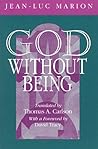
“I hope the amazed reader will be patient for a while—in order simply to read.”
― God Without Being
― God Without Being
“Indeed, theological discourse offers its strange jubilation only to the strict extent that it permits and, dangerously, demands of it wokman that he speak beyond his means, precisely because he does not speak of himself. Hence the danger of a speech that, in a sense, speaks against the one who lends himself to it. One must obtain forgiveness for every essay in theology. In all senses.”
― God Without Being
― God Without Being
“To free "God" from his quotation marks would require nothing less than to free him from metaphysics, hence from the Being of beings.”
― God Without Being
― God Without Being
“Commonly, that is to say metaphysically, either faith takes the place of reason when reason can no longer establish plainly what faith then assumes in a simple holding-for-true, namely by belief and opinion: the hierarchy of the genres of knowledge authorizes the weaker one when the surer one falters.
Or one will say that our faith (our adhesion by will to a statement) will increase to the very extent that it can be grounded on a clear and distinct knowledge of this statement, obtained by reason and its evidence: from a great light in the intellect there follows a great propensity in faith.
Thus faith and reason either grow in inverse proportion or in direct proportion, but always starting from reason, which serves as the positive or negative condition of faith.”
― Believing in Order to See: On the Rationality of Revelation and the Irrationality of Some Believers
Or one will say that our faith (our adhesion by will to a statement) will increase to the very extent that it can be grounded on a clear and distinct knowledge of this statement, obtained by reason and its evidence: from a great light in the intellect there follows a great propensity in faith.
Thus faith and reason either grow in inverse proportion or in direct proportion, but always starting from reason, which serves as the positive or negative condition of faith.”
― Believing in Order to See: On the Rationality of Revelation and the Irrationality of Some Believers
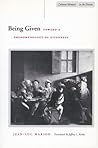
“The flesh auto-affects itself in agony, suffering, and
grief, as well as in desire, feeling, or orgasm. There is no sense in asking if these affects come to it from the body, the mind, or the Other, since originally it always auto-affects itself first in and by itself. Therefore, joy, pain, the evidence of love, or the living remembrance (Proust), but also the call of
consciousness as anxiety in the face of nothing (Heidegger), fear and trembling (Kierkegaard), in short, the numen in general (provided that one assigns it no transcendence), all arise from the flesh and its own immanence. Two points allow us to distinguish the saturated phenomenon of the flesh. First, in contrast to the idol, but perhaps like the historical event, it cannot be regarded or even seen. The immediacy of auto-affection blocks the space
where the ecstasy of an intentionality would become possible. Next, in contrast to the historical event, but no doubt more radically than the idol, the
flesh provokes and demands solipsism; for it remains by definition mine, unsubstitutable—nobody can enjoy or suffer for me (even if he can do so in my place). Mineness (Jemeinigkeit) does not concern first or only my possibility as the possibility of impossibility (dying), but my flesh itself. More,
it belongs only to my flesh to individualize me by letting the immanent succession of my affections, or rather of the affections that make me irreducibly
identical to myself alone, be inscribed in it. In contrast with the interobjectivity to which the historical event gives rise and more radically than the indefinite revision that the idol demands of me, the flesh therefore shows itself only in giving itself—and, in this first "self," it gives me to myself.”
― Being Given: Toward a Phenomenology of Givenness
grief, as well as in desire, feeling, or orgasm. There is no sense in asking if these affects come to it from the body, the mind, or the Other, since originally it always auto-affects itself first in and by itself. Therefore, joy, pain, the evidence of love, or the living remembrance (Proust), but also the call of
consciousness as anxiety in the face of nothing (Heidegger), fear and trembling (Kierkegaard), in short, the numen in general (provided that one assigns it no transcendence), all arise from the flesh and its own immanence. Two points allow us to distinguish the saturated phenomenon of the flesh. First, in contrast to the idol, but perhaps like the historical event, it cannot be regarded or even seen. The immediacy of auto-affection blocks the space
where the ecstasy of an intentionality would become possible. Next, in contrast to the historical event, but no doubt more radically than the idol, the
flesh provokes and demands solipsism; for it remains by definition mine, unsubstitutable—nobody can enjoy or suffer for me (even if he can do so in my place). Mineness (Jemeinigkeit) does not concern first or only my possibility as the possibility of impossibility (dying), but my flesh itself. More,
it belongs only to my flesh to individualize me by letting the immanent succession of my affections, or rather of the affections that make me irreducibly
identical to myself alone, be inscribed in it. In contrast with the interobjectivity to which the historical event gives rise and more radically than the indefinite revision that the idol demands of me, the flesh therefore shows itself only in giving itself—and, in this first "self," it gives me to myself.”
― Being Given: Toward a Phenomenology of Givenness
“But for all that, it is not certain that by passing from Being to ethics (or to the body’s flesh) phenomenology has made sufficient progress in the direction of the possibility of revelation, of possibility as revelation. In any case, possibility actually submits straightaway to the restriction of a horizon. Any horizon that determines the scene of incoming phenomena in a priori fashion delimits the possible, hence limits (or forbids) revelation.”
― The Visible and the Revealed
― The Visible and the Revealed
“When a philosophical thought expresses a concept of what it then names “God,” this concept functions exactly as an idol. It gives itself to be seen, but thus all the better conceals itself as the mirror where thought, invisibly, has its forward point fixed, so that the invisable finds itself, with an aim suspended by the fixed concept, disqualified and abandoned”
― God Without Being
― God Without Being
“The idol is determined as the first indisputable visible because its splendor stops intentionality for the first time; and this first visible fills it, stops it, and even blocks it, to the point of returning it toward itself, after the fashion of an invisible obstacle—or mirror. The privileged occurrence of the idol is obviously the painting (or what, without the frame of the frame, takes its place), not to speak too generically of the work of art. Saturation marks the painting essentially. In it, intuition always surpasses the concept or the concepts proposed to welcome it. It is never enough to have seen it just once to have really seen it, in contrast to the technical object and the product. Totally opposite this, each gaze at the painting fails to bring me to perceive what I see, keeping me from taking it into view as such—so that it always again conceals the essential from visibility”
― Being Given: Toward a Phenomenology of Givenness
― Being Given: Toward a Phenomenology of Givenness
“The gift cannot be received unless it is given, for otherwise it would cease to merit its name. The basin is not filled up by the cascade from above unless it ceaselessly empties itself into the basin below. Only the abandonment of that which fills it permits that the stream to come should fill it without cease.”
― The Idol and Distance: Five Studies
― The Idol and Distance: Five Studies
“To understand is ultimately to see. To speak is to speak in order to render visible, thus to speak in order to see. Otherwise, to speak means nothing. But how are we to see? How does the statement make itself seen, taking on the status of a phenomenon? Husserl will respond more explicitly to this second question in the opening of the /deas of 1913, where he posits the “principle of principles,” which states “that every originarily giving intuition is a source of right for cognition, that everything that offers itself [sich darbietet] to us in originary ‘intuition’ (so to speak, in its fleshly actuality) must be received exactly as it gives itself out to be [als was es sich (da) gibt].”'* To be realized as a phenomenon means to be given in an actuality without reserve, a “fleshly [/esbhaft] actuality.”
For a statement to appear phenomenally amounts to its assuming flesh; the phenomenon shows the flesh of the discourse. How does a statement
obtain this phenomenal flesh? Through intuition (Anschaung or Intuition, equally). One intuition of whatever kind is sufficient for the phenomenon, the flesh of the discourse, to occur. Indeed, intuition operates an absolutely indisputable hold and an ultimate cognition, since only another intuition can contradict a first intuition, so that in the final instance an intuition always remains. Intuition accomplishes the most fleshly acts of cognition. The flesh of the discourse appears to the flesh of the mind—the phenomenon to intuition. Phenomenology calls this encounter a givenness [donation]: intuition gives the phenomenon, the phenomenon gives itself through intuition. To be sure, this givenness can always be examined, can always be authenticated or not, can always admit limits—but it can never be questioned or denied, except by the authority of another intuitive givenness. The universal validity of the “principle of principles” confirms this.”
― The Visible and the Revealed
For a statement to appear phenomenally amounts to its assuming flesh; the phenomenon shows the flesh of the discourse. How does a statement
obtain this phenomenal flesh? Through intuition (Anschaung or Intuition, equally). One intuition of whatever kind is sufficient for the phenomenon, the flesh of the discourse, to occur. Indeed, intuition operates an absolutely indisputable hold and an ultimate cognition, since only another intuition can contradict a first intuition, so that in the final instance an intuition always remains. Intuition accomplishes the most fleshly acts of cognition. The flesh of the discourse appears to the flesh of the mind—the phenomenon to intuition. Phenomenology calls this encounter a givenness [donation]: intuition gives the phenomenon, the phenomenon gives itself through intuition. To be sure, this givenness can always be examined, can always be authenticated or not, can always admit limits—but it can never be questioned or denied, except by the authority of another intuitive givenness. The universal validity of the “principle of principles” confirms this.”
― The Visible and the Revealed
“So, when people say that after the end of the representation of God there is no God, they remain within metaphysics, which presupposes that there could be something that gives itself as representation. They miss the point.”
―
―
“This is why we are not Manicheans: the same God who has created the world also saves it.”
― Believing in Order to See: On the Rationality of Revelation and the Irrationality of Some Believers
― Believing in Order to See: On the Rationality of Revelation and the Irrationality of Some Believers
“There is nothing surprising in the fact that we may not be able to speak of God; for, if speaking is equivalent to stating a well-constructed proposition, then by definition that which is defined as ineffable, inconceivable, and unnameable escapes all speech. The surprising thing, therefore, is not our difficulty in speaking of God but indeed our difficulty in keeping silent. For in fact, with regard to God, overwhelmingly, we speak. In a sense we speak only about that, and much too much, with neither modesty nor precaution.”
― God Without Being
― God Without Being