Goodreads helps you follow your favorite authors. Be the first to learn about new releases!
Start by following Nan Goldin.

Showing 1-11 of 11
“I used to think that I could never lose anyone if I photographed them enough. In fact, my pictures show me how much I’ve lost.”
―
―
“You are who you pretend to be.”
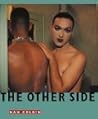
― Nan Goldin: The Other Side
― Nan Goldin: The Other Side
“For me it is not a detachment to take a picture. It’s a way of touching somebody—it’s a caress, I think that you can actually give people access to their own soul.”
―
―
“It’s easy to make your life into stories. But it’s harder to sustain real memories…The difference between a story and a real memory, the real experience has a smell and is dirty and is not wrapped up in simple endings. The real memories are what effects me now. Things can appear that you don’t want to see, where you’re not safe, and even if you don’t actually unleash the memories, the effect is there. It’s in your body.”
―
―
“It takes nerve to walk down the street when you fall between the cracks.”
― Nan Goldin: The Other Side
― Nan Goldin: The Other Side
“Sex is only one aspect of sexual dependency. Pleasure becomes the motivation, but the real satisfaction is romantic. Bed becomes a forum in which struggles in a relationship are defused or intensified. Sex isn't about performance; it's about a certain kind of communication founded on trust and exposure and vulnerability that can't be expressed any other way.”
― The Ballad of Sexual Dependency
― The Ballad of Sexual Dependency
“The pictures in this book are not of people suffering gender dysphoria but rather expressing gender euphoria. This book is about new possibilities and transcendence. The people in these pictures are truly revolutionary; they are the real winners of the battle of the sexes because they have stepped out of the ring.”
― Nan Goldin: The Other Side 1972-1992
― Nan Goldin: The Other Side 1972-1992
“When I was eighteen I started to photograph. I became social and started drinking and wanted to remember the details of what happened. For years, I thought I was obsessed with the record-keeping of my day-to-day life. But recently, I've realized my motivation has deeper roots: I don't really remember my sister. In the process of leaving my family, in recreating myself, I lost the real memory of my sister. I remember my version of her, of the things she said, of the things she meant to me. But I don't remember the tangible sense of who she was, her presence, what her eyes looked like, what her voice sounded like.
I don't ever want to be susceptible to anyone else's version of my history.
I don't ever want to lose the real memory of anyone again.
This book is dedicated to the real memory of my sister, Barbara Holly Goldin.”
― The Ballad of Sexual Dependency
I don't ever want to be susceptible to anyone else's version of my history.
I don't ever want to lose the real memory of anyone again.
This book is dedicated to the real memory of my sister, Barbara Holly Goldin.”
― The Ballad of Sexual Dependency
“It's commonly said that this book is about 'marginalized' people. We were never marginalized. We were the world. We were our own world, and we couldn't have cared less about what 'straight' people thought of us. I made my people into superstars, and the Ballad maintains their legacy.
In the '80s, there was a certain freedom, and a sense of immortality, that ended with that decade. AIDS cracked the earth. With everyone dying, everything shifted. Our history got cut off. We lost a whole generation. We didn't just lose the actors, we lost the audience. There are few people left with that kind of intensity. There was an attitude towards life that doesn't exist anymore, everything's been so cleaned up.
Lately when I'm working with the photos of my missing friends, it's as if they are frozen in amber. For long periods of time I forget they're not on this planet. But the pictures show me how much I've lost; the people who knew me the best, the people who carried my history, the people I grew up with and I was planning to get old with are gone. They took my memory with them. The pictures in the Ballad haven't changed. But Cookie is dead. David is dead. Greer is dead. Kenny is dead. I talk to them all the time, but they don't talk back anymore. Mourning doesn't end, it continues and it transmutes. This book is now a volume of loss, as well as a ballad of love.”
― The Ballad of Sexual Dependency
In the '80s, there was a certain freedom, and a sense of immortality, that ended with that decade. AIDS cracked the earth. With everyone dying, everything shifted. Our history got cut off. We lost a whole generation. We didn't just lose the actors, we lost the audience. There are few people left with that kind of intensity. There was an attitude towards life that doesn't exist anymore, everything's been so cleaned up.
Lately when I'm working with the photos of my missing friends, it's as if they are frozen in amber. For long periods of time I forget they're not on this planet. But the pictures show me how much I've lost; the people who knew me the best, the people who carried my history, the people I grew up with and I was planning to get old with are gone. They took my memory with them. The pictures in the Ballad haven't changed. But Cookie is dead. David is dead. Greer is dead. Kenny is dead. I talk to them all the time, but they don't talk back anymore. Mourning doesn't end, it continues and it transmutes. This book is now a volume of loss, as well as a ballad of love.”
― The Ballad of Sexual Dependency
“When I was fifteen, the perfect world seemed a place of total androgyny, where you wouldn't know a person's gender until you were in bed with him or her. I've since realized that gender is so much deeper than style.”
― The Ballad of Sexual Dependency
― The Ballad of Sexual Dependency
“The construction of gender roles is one of the major problems that individuals bring into a relationship.
As children, we're programmed into the limitations of gender distinction: little boys to be fighters, little girls to be pretty and nice. But as we grow older, there's a self-awareness that sees gender as a decision, as something malleable. You can play with the traditional options - dressing up, cruising in cars, the tough posturing - or play against the rules, by displaying your tenderness or toughness to contradict stereotypes. When I was fifteen, the perfect world seemed a place of total androgyny, where you wouldn't know a person's gender until you were in bed with him or her. I've since realized that gender is much deeper than style. Rather than accept gender distinction, the point is to redefine it. Along with playing out the clichés, there is the decision to live out the alternatives, even to change one's sex, which to me is the ultimate act of autonomy.”
― The Ballad of Sexual Dependency
As children, we're programmed into the limitations of gender distinction: little boys to be fighters, little girls to be pretty and nice. But as we grow older, there's a self-awareness that sees gender as a decision, as something malleable. You can play with the traditional options - dressing up, cruising in cars, the tough posturing - or play against the rules, by displaying your tenderness or toughness to contradict stereotypes. When I was fifteen, the perfect world seemed a place of total androgyny, where you wouldn't know a person's gender until you were in bed with him or her. I've since realized that gender is much deeper than style. Rather than accept gender distinction, the point is to redefine it. Along with playing out the clichés, there is the decision to live out the alternatives, even to change one's sex, which to me is the ultimate act of autonomy.”
― The Ballad of Sexual Dependency